Jannik Sinner Withdraws from U.S. Open: 2026 Injury Analysis
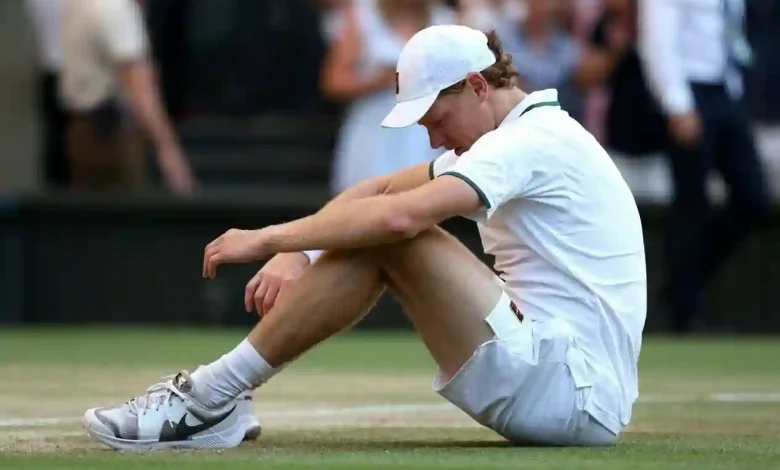
Table of Contents
Jannik Sinner, the world number one tennis player, has officially withdrawn from the 2026 U.S. Open, plunging the international tennis community into a state of shock just days before the main draw gets underway in New York on August 30. The 25-year-old Italian superstar announced on Friday that a persistent right knee injury will prevent him from competing at Flushing Meadows, depriving the season’s final Grand Slam of its top-ranked competitor and most dominant hard-court force of the year. This devastating announcement has completely reshaped the tournament landscape and reignited the intense global debate surrounding the physical demands of the modern professional tennis calendar. Fans who had been eagerly anticipating Sinner’s signature power game and relentless court coverage are now left to wonder how this injury will impact his legacy and the trajectory of his prime playing years.
The Statement: Why Jannik Sinner is Sidelined
In a heartfelt statement shared with his fans across social media platforms, Sinner outlined the painful reality that led to his withdrawal. He revealed that despite undergoing aggressive physical therapy and working alongside his elite medical team, recent practice sessions on the court in Monte Carlo proved that his right knee was simply not ready for the brutal, best-of-five-set matches that define a Grand Slam. ‘Even though I have been working hard with my team and my medical staff, we have now had to make the difficult decision that I will not be able to compete at the US Open this year,’ Sinner wrote. He added that New York holds a special place in his heart and that he was deeply saddened to miss the electric atmosphere at Flushing Meadows.
This knee issue has been lingering for several weeks, forcing Sinner to skip key hard-court tune-up events, including the National Bank Open in Montreal and the Cincinnati Open. Despite taking a brief hiatus in Milan to seek specialized medical evaluation, the healing process has not progressed quickly enough to guarantee safe competitive play. His team ultimately prioritized his long-term career longevity over the immediate allure of defending his hard-court dominance.
A Season of Extreme Highs and Physical Tolls
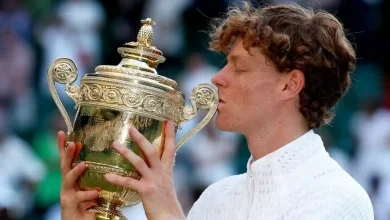
The physical breakdown of the Italian superstar comes at the end of what has otherwise been an extraordinary, albeit grueling, 2026 campaign. Sinner has dominated the ATP Tour, compiling an astonishing 44-3 match record. He won five major singles titles throughout the season, with the absolute peak of his year occurring just last month when he defended his Wimbledon crown by defeating Alexander Zverev in a spectacular, hard-fought final.
However, Sinner’s physical vulnerabilities were laid bare earlier this year. During a punishing, heatwave-afflicted French Open, the Italian suffered an alarming physical collapse in his second-round match against Juan Manuel Cerundolo, highlighting the extreme physiological limits elite tennis players are currently pushing. While he successfully recovered to storm through the grass-court season, the underlying wear and tear on his joints—specifically his right knee—finally caught up with him during the transition back to North American hard courts. His team has noted that moving from the soft, forgiving grass of Wimbledon to the unforgiving concrete of North American hard courts exacerbated the joint inflammation, making competitive movement impossible.
How the U.S. Open 2026 Men’s Singles Draw Reshapes
With Sinner officially out of the mix, the entire draw at Flushing Meadows has undergone a radical transformation. Sinner’s absence removes the absolute favorite from the top half of the bracket. The development is particularly monumental for his primary rival, world number two Carlos Alcaraz. Intriguingly, Alcaraz confirmed his own return to competitive play just one day before Sinner’s withdrawal. The young Spaniard has been sidelined for four months with a serious wrist injury but has declared himself fit for the tournament, saying ‘here we go’ as he heads to New York. Alcaraz, who defeated Sinner in the 2025 U.S. Open final, now becomes the de facto highest-ranked player and the heavy favorite to claim his eighth Grand Slam title.
Other top-tier competitors, including Novak Djokovic and Alexander Zverev, also see their championship pathways significantly eased, as they no longer have to worry about facing Sinner’s devastating baseline groundstrokes in the latter stages of the tournament. The tournament organizers at the official US Open website have adjusted seedings, thrusting younger talents into highly anticipated spotlight matches.
Analysis of Player Withdrawals: Jack Draper and Holger Rune Also Out
Sinner is far from the only high-profile casualty ahead of the 2026 tournament. In a shocking cascade of announcements on Friday, several other elite men’s players pulled out of the year’s final major. British number one Jack Draper withdrew due to a persistent left arm injury, which has plagued him since a bone bruise cut his previous season short. Furthermore, former world number four Holger Rune announced his withdrawal due to a severe left Achilles tendon injury. These high-profile dropouts mean that the 2026 U.S. Open will begin without several of its most marketable young stars, casting a shadow over the event and leading critics to question if the current athletic expectations on professional tennis players are sustainable. The sheer attrition rate at the top of the sport has left the tournament with a highly unpredictable field.
The Growing Crisis of the ATP Tennis Calendar
The sheer volume of injuries at the top of the sport has brought the debate over the ATP Tour’s taxing schedule to a boiling point. Unlike team sports that feature structured off-seasons, tennis players are subjected to an 11-month grind that spans multiple continents, court surfaces, and climates. This relentless pace leaves virtually no time for proper muscular recovery or joint rehabilitation.
Structural Demands of Modern Sports
In other athletic realms, leagues and players place a premium on rest and recovery. For example, in the NFL, the historic classic Bears vs Packers football rivalry showcases physical intensity but operates under structured weekly intervals and a defined multi-month off-season. Similarly, in basketball, stars like those driving Sophie Cunningham’s stellar WNBA run benefit from specialized rest protocols designed to preserve their joints over a long season.
Tennis players, conversely, must play nearly year-round to defend their ranking points, leading to a high rate of attrition. The continuous pounding on hard courts is particularly brutal on the knees and ankles, and without a mandatory, extended off-season, elite players are increasingly forced to choose between maintaining their rankings or preserving their long-term health.
Key Statistics and Comparison Table of Contenders
To understand how the tournament dynamics have shifted following Sinner’s withdrawal, we can examine the revised outlook for the top contenders heading into Flushing Meadows. Sinner’s departure leaves a massive power vacuum, particularly in terms of hard-court form. The table below outlines the adjusted competitive field for the season’s final Grand Slam.
| Player | Current ATP Rank | 2026 GS Titles | U.S. Open Status / Preparation | Championship Odds Outlook |
|---|---|---|---|---|
| Jannik Sinner | No. 1 | 1 (Wimbledon) | Withdrawn (Knee Injury) | Out of Tournament |
| Carlos Alcaraz | No. 2 | 0 | Returning from 4-month Wrist Injury | Primary Favorite |
| Alexander Zverev | No. 3 | 1 (French Open) | Fully Fit (Played Cincinnati) | Strong Contender |
| Novak Djokovic | No. 4 | 0 | Fully Fit | High Contender |
| Jack Draper | No. 143 (due to injury) | 0 | Withdrawn (Left Arm Injury) | Out of Tournament |
Sinner’s Road to Recovery and Future Outlook
Sinner’s decision to pull out of the U.S. Open, while painful, is part of a calculated strategy to protect his long-term health. The Italian plans to remain in Europe to focus on low-impact conditioning and targeted physical therapy. The immediate objective of his medical team is to prepare him for the upcoming Asian swing, which includes high-profile tournaments in Beijing and Shanghai. Because Sinner holds a massive points lead at the top of the ATP rankings—currently ahead of Alcaraz by over 5,000 points—this withdrawal will not immediately threaten his world number one status. He is virtually guaranteed to finish the 2026 calendar year as the top-ranked player, giving him the luxury of prioritizing complete biological healing. The primary concern is ensuring that this persistent right knee injury does not develop into a chronic, degenerative condition that could derail his prime years.
Broader Sports and Cultural Reflections in 2026
The conversation around elite athlete longevity often transcends the tennis courts, entering a broader cultural sphere of sports history and media coverage. When modern superstars are sidelined, fans are reminded of how fleeting athletic greatness can be, and how public narratives shift. In previous generations, the sports world witnessed massive cultural shifts, such as how O.J. Simpson was excluded from sporting discussions as legacy narratives were rewritten entirely. Similarly, fans often celebrate the rise of rising athletic nations, such as Norway’s historic run in international sports, showcasing that competitive excellence requires a delicate balance of physical development and meticulous load management. For Jannik Sinner, avoiding the pitfalls of over-exertion is critical to ensuring he cements his place among the all-time greats of Italian sport.
External Market Pressures and Athlete Monetization
The immense pressure on players to compete despite carrying injuries is also driven by the commercialization of modern sports. High-stakes sponsorships, broadcast rights, and global athletic branding create an ecosystem where sitting out is financially discouraged. In the background of these athletic dilemmas, the financial world continues to fluctuate. While fans track tennis scores, global markets experience major shifts, mirroring how economic trends like when oil prices slipped on Friday can impact corporate sports sponsorships, or how volatile markets where crypto and Trump-aligned ventures continue to reshape sports team investments. Even the daily lives of the next generation of tennis fans are changing rapidly due to technology and health initiatives. This is reflected in safety policies such as the introduction of ChatGPT for teens online safety features and community health protocols like recent kindergarten vaccination health guidelines, which stress that physical health and digital safety must go hand-in-hand. In the end, Jannik Sinner’s decision to put his physical health first is a powerful reminder that no amount of commercial pressure should ever supersede an athlete’s physical well-being. By taking the necessary time to heal, Sinner is setting a vital precedent for future generations of players, proving that long-term career viability should always be prioritized over short-term glory.