Inflation Threatens Economy as War in Iran and Tariffs Surge Gas Prices
Table of Contents
Inflation pressures have returned to the forefront of the global economy, as the compounding effects of the ongoing military conflict in the Middle East and protectionist trade policies send shockwaves through domestic markets. Across the United States, consumers are feeling an immediate squeeze as gas prices surge once again, officially hitting an average of $4.10 per gallon on Friday. This rapid escalation in energy costs at the pump has ignited worries that the hard-won progress made in cooling consumer prices could be completely undone. Despite recent reports indicating that consumer inflation had eased to 3.5%, economists warn that the explosive combination of the war with Iran and President Donald Trump’s aggressive global tariff agenda is creating a perfect storm for sustained price hikes.
As the conflict widens, shipping lanes and energy supply lines are facing unprecedented disruptions. This week, global oil markets reacted with sharp volatility. Brent crude oil, the international benchmark, briefly surged past the critical threshold of $100 per barrel for the first time in two months, driven by reports of targeted attacks on commercial vessels. Domestic crude followed a similar trajectory, with West Texas Intermediate (WTI) rising as high as $92 per barrel. Financial markets are now on high alert, bracing for a potential feedback loop where elevated fuel costs translate directly into higher shipping, manufacturing, and transport expenses across all sectors of the American economy.
Inflation :Under Fire: Red Sea Tanker Attacks Ignite Oil Price Surge
The immediate catalyst for the sudden jump in global oil prices was a series of highly coordinated attacks on maritime trade routes. The security of major maritime corridors has deteriorated drastically, culminating in a dramatic escalation in the Red Sea. Reports emerged this week of targeted drone and missile strikes hitting at least two large crude tankers transiting the crucial Bab al-Mandeb Strait. The incident caused immediate panic in physical oil markets, raising severe concerns over whether shipping companies will be forced to entirely abandon the short route through the Suez Canal in favor of the much longer, costlier voyage around the southern tip of Africa.
This Red Sea shipping crisis has injected massive risk premiums into global energy futures. Traders are pricing in the reality that shipping times could double, tying up global tanker capacity and driving freight insurance rates to astronomical highs. When transit times increase from 20 days to over 50 days for essential energy shipments, the net effect is a sudden contraction in available global oil supply, irrespective of nominal production numbers in the Gulf. This supply strain is why Brent crude was able to breach $100 per barrel, a level many analysts hoped wouldn’t be seen again this year.
Inflation :Houthi Attacks on Saudi Tankers Open a Dangerous Second Front
The escalation reached a critical point when Yemen’s Houthi movement claimed responsibility for targeting Saudi Arabian oil tankers, the Encelia and the Layla, alleging they violated a naval blockade. This represents a dangerous expansion of the regional theater, shifting the focus from localized skirmishes directly to global energy transport. As regional forces retaliate and the U.S. maintains its posture, the threat of a full-scale blockade on critical waterways looms large. A prolonged blockade on Iran and its surrounding waters could permanently isolate significant portions of Middle Eastern oil from Western markets, forcing a dramatic reallocation of global supply chains that will inevitably keep energy prices elevated for the foreseeable future.
Inflation :Donald Trump’s Tariff Agenda and the Threat of Global Trade Wars
While geopolitical conflict in the Middle East is driving the supply-side shock, domestic trade policy is threatening to amplify demand-side price increases. President Donald Trump has doubled down on his sweeping global tariff agenda, promising to implement high baseline tariffs on goods imported from major trading partners. By penalizing imports of raw materials, electronics, steel, and consumer products, the administration intends to protect domestic manufacturing. However, prominent economists argue that the immediate consequence of these tariffs is a direct increase in the price of imported intermediate goods, which companies will inevitably pass down to American consumers.
The combination of tariffs and high energy costs creates a structural headwind for U.S. businesses. Industrial manufacturers require vast amounts of energy to run factories and rely on foreign supply chains for key components. When both energy inputs and imported parts become more expensive simultaneously, the threat of stagflation—stagnant economic growth coupled with rising inflation—becomes a very real possibility. Prominent market commentators, including analysts discussing how a global depression risk could emerge from unchecked geopolitical and trade friction, have warned that policy mismatches at this juncture could trigger severe economic contractions.
Inflation :Expanding Trade Tensions and Consumer Impacts
These protectionist policies also risk retaliatory measures from key trade partners, including Canada, Mexico, and the European Union. If these nations implement reciprocal tariffs on U.S. agricultural exports and manufactured goods, American businesses will face a double blow: higher input costs at home and reduced demand for their products abroad. This trade friction, coupled with $4.10 gas, is eating away at disposable consumer income, forcing families to make tough spending trade-offs that could dampen retail sales and broader economic activity in the coming quarters.
Inflation :Analyzing the Fuel Shock: A Comparative Cost Structure
To understand the depth of the current pricing pressure, it is helpful to examine how global crude prices directly influence domestic gasoline prices. When crude benchmarks rise, the refining margins, transit costs, and taxes combine to create a significant burden at the retail pump. The table below outlines the relationship between energy benchmarks and domestic averages over the last several quarters:
| Time Period | Brent Crude (per barrel) | WTI Crude (per barrel) | U.S. Gas Price (Avg/gal) | U.S. Inflation Rate (CPI) |
|---|---|---|---|---|
| Q1 2026 (Baseline) | $82.50 | $76.00 | $3.45 | 3.1% |
| Q2 2026 (Conflict Escalation) | $91.00 | $84.50 | $3.80 | 3.3% |
| Mid-July 2026 (Red Sea Crisis) | $100.80 | $92.00 | $4.10 | 3.5% |
Inflation :The Anatomy of $4.10 Gasoline
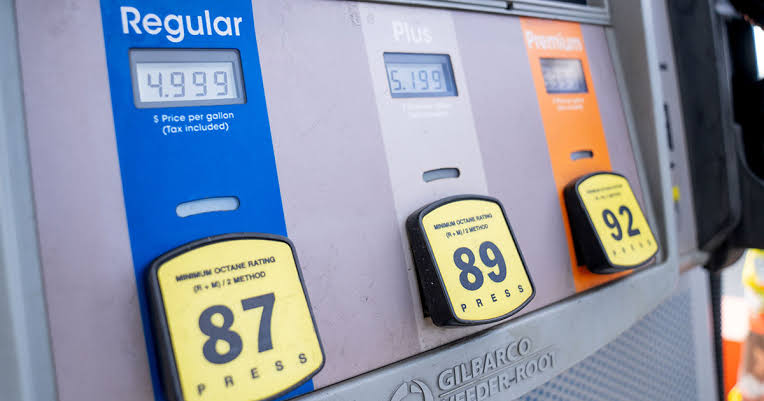
The data clearly illustrates that retail gas prices are highly sensitive to crude benchmarks. For every $10 increase in the price of a barrel of crude oil, gasoline prices typically rise by about 25 to 30 cents per gallon. With Brent crude passing $100, the baseline cost for refineries has jumped, making sub-$4.00 gasoline almost impossible to maintain in many states. This pricing pressure is compounded by seasonal refinery maintenance and localized regional fuel specifications, ensuring that the spike at the pump is felt uniformly across the nation.
Inflation :Market Reactions and the Federal Reserve’s Looming Dilemma
The Federal Reserve now faces a highly delicate policy environment. Over the last year, central bankers have carefully navigated a pathway toward a “soft landing,” attempting to bring inflation down to their 2% target without triggering a major recession. The recent drop in the Consumer Price Index (CPI) to 3.5% gave Wall Street hope that the Fed might begin a cycle of interest rate cuts. However, the sudden surge in energy costs threatens to derail this outlook entirely. Because energy is a foundational input for almost every good and service, a prolonged spike in oil will inevitably bleed into core inflation metrics, forcing the central bank to keep interest rates higher for longer.
Higher interest rates increase the cost of borrowing for mortgages, auto loans, and corporate debt, which naturally slows down economic expansion. If the Fed is forced to pause rate cuts—or worse, raise rates again—it could severely impact consumer confidence and corporate investment. Stock indices have already exhibited heightened volatility, with major averages sliding as investors recalibrate their expectations for corporate earnings in a high-cost environment.
Wall Street on Edge Over Renewed Inflationary Pressures
Market analysts are noting that the current situation represents a supply-driven inflation shock, which is historically the most difficult type of inflation for central banks to combat. While raising interest rates can successfully cool demand, it does nothing to clear shipping lanes in the Red Sea or lower the price of global crude. Consequently, the risk of “policy error” remains high, as over-tightening could push an already stressed economy into a recession while failing to resolve the underlying energy supply issues.
The Spiraling Costs of the Military Escalation in Iran
Compounding the economic anxieties is the direct financial toll of the ongoing military campaign. As the United States sustains its naval presence and continues active operations in the Gulf, defense expenditures are mounting rapidly. Analysts estimate that the cost rises to 37.5b for the war in Iran, placing a tremendous burden on the federal budget. This massive capital outflow comes at a time when national debt levels are already a major point of political contention in Washington.
The operational reality of maintaining a high-alert military posture across multiple carrier strike groups is straining resources. Indeed, recent reports indicate that the Defense Department cash running out is becoming a critical talking point in Congress, as emergency funding requests compete with domestic spending priorities. To maintain the security of these global shipping routes, the administration is forced to allocate billions of dollars that might otherwise support infrastructure, domestic manufacturing, or tax relief initiatives.
National Security vs. Economic Stability
The strategic challenge for policymakers is balancing national security objectives with domestic economic health. The U.S. State Department issued a sweeping State Department warning to travelers and commercial entities worldwide, highlighting the elevated risk of retaliatory actions against American interests. This state of constant geopolitical readiness is not only expensive in terms of active military deployment, but it also creates an atmosphere of deep uncertainty that discourages long-term business investments and drags down economic sentiment.
Furthermore, the active involvement of U.S. forces in ongoing conflicts, including high-frequency airstrikes against Iran, guarantees that the geopolitical risk premium embedded in oil prices will remain a permanent fixture of the market. Every time an airstrike is reported or a retaliatory threat is issued, algorithmic trading programs automatically bid up crude futures, creating immediate upward pressure on the prices American consumers pay at the pump the very next day.
Looking Ahead: Can the U.S. Economy Avoid a Growth Shock?
As the summer progresses, the intersection of military conflict, trade protectionism, and monetary tightening will define the trajectory of the U.S. economy. For consumers, the immediate outlook is challenging; gas prices are highly likely to remain above the $4.00 mark through the travel season, and the secondary effects of Donald Trump’s global tariffs will slowly start appearing on retail shelves as old inventory is depleted and replaced with newly taxed goods.
For businesses, adaptability will be key. Companies with highly localized supply chains and low energy dependency may find ways to thrive, but heavy industries, logistics providers, and global retail giants will face severe margin compression. Whether the U.S. can successfully navigate this geopolitical minefield without tipping into a full-scale recession remains to be seen, but one thing is certain: the era of cheap energy and frictionless global trade has, at least temporarily, come to an end.





2 Comments