US airstrikes hit Iran for 12th night as Red Sea escalates
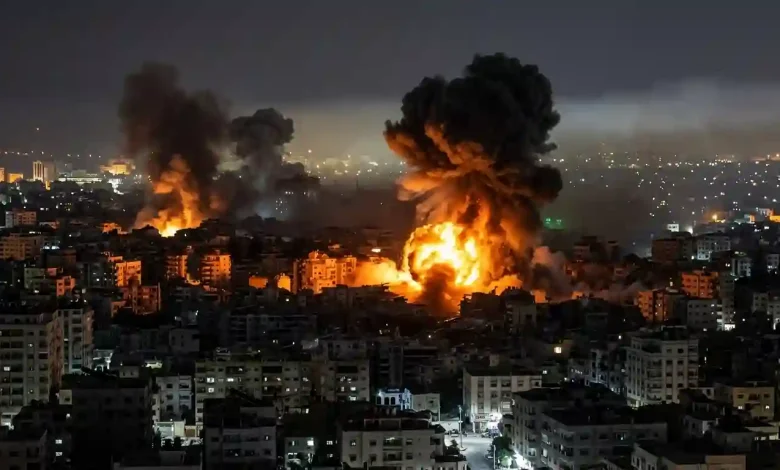
Table of Contents
US airstrikes have hit targets across Iran for a 12th consecutive night, significantly escalating hostilities and driving the Middle East closer to an all-out regional catastrophe. What began as a series of limited engagements has evolved into a highly complex, multi-front military campaign. The latest round of strikes has not only resulted in confirmed civilian casualties on the Iran-Iraq border but has also triggered a massive retaliatory wave from regional proxy groups. With Yemen’s Houthi movement joining the fray by launching devastating attacks on Saudi Arabian oil tankers, the global energy market is facing its most severe crisis in years. These rapidly unfolding developments are part of the broader 2026 Middle East war, which has redefined security dynamics from the Mediterranean to the Persian Gulf.
The campaign has expanded with unprecedented velocity. Following the eleventh consecutive night of bombing, Washington’s decision to continue targeting key logistical and transport hubs indicates a strategic shift. Observers note that any hope for a peaceful resolution is rapidly diminishing, following the total collapse of the fragile cease-fire agreement that briefly offered a glimmer of hope. The current cycle of violence represents an alarming acceleration compared to the escalation that marked the tenth consecutive night of hostilities, as both sides appear to have abandoned all diplomatic channels.
Underpinning this entire military campaign is the ongoing blockade of key Persian Gulf shipping routes, designed to starve Tehran of oil revenues while isolating its military capabilities. The Pentagon has argued that these actions are necessary in retaliation for recent lethal attacks on American forces stationed in the region. However, critics argue that the sheer scale of the bombardment, which is now nine days into the campaign beyond initial expectations, risks pushing the entire global economy into a tailspin. With Defense Secretary Pete Hegseth overseeing the naval operations, the maritime standoff in the Persian Gulf has reached a boiling point, transforming one of the world’s most critical energy chokepoints into an active warzone.
The Shalamcheh Border Crossing Strike and Civilian Casualties
On the night of July 22, US missiles targeted the Shalamcheh border crossing, located along the highly sensitive Iran-Iraq border. According to reports from the Khuzestan provincial administration, the strike occurred near the passenger terminal, a critical transit hub utilized daily by thousands of Shia Muslim pilgrims traveling to the holy city of Karbala in Iraq. The attack resulted in at least two deaths and left 11 others wounded, sparking intense outrage across both nations. The Shalamcheh crossing is not merely a political boundary but a vital humanitarian and economic gateway, meaning its disruption carries profound social consequences.
By targeting such a high-profile border station, the US military has signaled its willingness to strike logistical infrastructure connected to regional transit, raising fears that subsequent operations will increasingly encroach upon civilian-populated zones. Local healthcare systems are struggling to cope with the influx of shrapnel-wounded patients, as transport systems near the crossing are frozen under intense security sweeps. Humanitarian organizations are warning that a prolonged closure of this border crossing will severely restrict civilian mobility and block essential medical supplies from reaching the border populations.
President Trump’s Infrastructure Deterrence and Strategic Directives
This transition toward targeting dual-use transport and utility hubs follows an explicit directive from Washington. On Wednesday, President Donald Trump delivered a dramatic warning, stating that any subsequent Iranian action against maritime vessels in the Strait of Hormuz would result in the systematic destruction of major civilian infrastructure inside Iran. Trump explicitly warned that the United States would bomb and destroy one bridge or power plant for every single projectile, missile, or drone launched by Iranian forces at commercial shipping. This infrastructure-centric deterrence policy represents an aggressive shift in military doctrine, moving away from purely tactical counter-force strikes to strategic economic punishment.
Legal scholars have raised concerns that targeting civilian energy grids and transport links could violate international humanitarian law, which strictly limits strikes on civilian infrastructure unless a direct military necessity can be demonstrated. Nevertheless, the administration remains firm in its belief that only overwhelming, asymmetrical consequences can force Tehran to halt its maritime interdiction efforts. Military planners believe that degrading Iran’s internal distribution systems will severely hamper the logistical support chain supplying proxy militias throughout the region.
Expansion of the Conflict and Regional Blowback
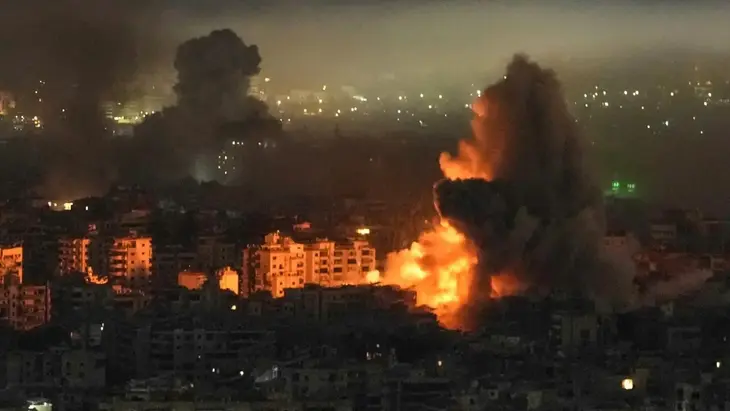
The 12th night of US airstrikes was not confined to the Iraqi border. Explosions vibrated through several key Iranian cities, including the coastal energy hub of Bushehr, where a strike landed near the outskirts of the major nuclear power facility. Local authorities, including Bushehr Governor Mohammad Mozaffari, confirmed that while investigations into the explosions were underway, basic public services and energy grids remained operational. Further missile impacts were reported in Ahvaz, Sirik, Bandar Mahshahr, and the Eslamabad-e Gharb region in Kermanshah province.
In response to this vast aerial bombardment, Iranian forces and their regional allies launched a coordinated wave of retaliatory strikes. US military installations in Jordan and Kuwait were targeted by suicide drones and tactical missiles, while a key water desalination plant in Kuwait was also struck, reflecting Tehran’s eye-for-an-eye retaliation strategy. The Kuwaiti military confirmed it had activated air defense systems to intercept incoming drone threats over the northern border, emphasizing how rapidly the geographical boundaries of the war are widening. The rising casualty rate since late June has raised alarm globally, with civilian tolls mounting on all sides.
The Battle for the Strait of Hormuz and Naval Blockades
At the core of this military clash is a fierce struggle for control over the Strait of Hormuz, the narrow waterway through which roughly a fifth of the world’s petroleum transit passes. In tandem with its air campaign, US Central Command (CENTCOM) has implemented a stringent naval blockade of Iranian ports. According to a recent CENTCOM briefing, American naval assets have successfully redirected nine commercial vessels and disabled one ship in an active effort to block all import and export shipping connected to Iranian harbors. Over 50,000 highly vigilant US service members remain forward-deployed across the theater, maintaining a continuous watch over regional waters.
However, Iran’s Islamic Revolutionary Guard Corps (IRGC) has retaliated by stopping commercial oil tankers, forcing multiple ships to turn back or drop anchor. Ship-tracking data reveals that Hormuz transit volumes have collapsed from an average of 16 tankers per day down to a sparse seven, as maritime insurance rates skyrocket and shipping conglomerates instruct their fleets to avoid the volatile waterway entirely. The economic cost of this blockade is rising daily, threatening to disrupt industrial supply lines in Europe and Asia.
Red Sea Escalation: Houthis Target Saudi Tankers Encelia and Layla
As the situation in the Persian Gulf deteriorated, a dangerous new front materialized on the opposite side of the Arabian Peninsula. In a coordinated show of force, Yemen’s Houthi rebels announced that they had targeted two Saudi Arabian oil tankers, the Encelia and the Layla, as they sailed through the Red Sea. The Houthis asserted that these vessels had violated a newly declared naval blockade intended to punish Saudi Arabia for its alignment with Western coalition forces.
The Saudi government confirmed that the tanker Encelia was struck by an unknown projectile approximately 130 kilometers southwest of the Saudi port of Al Shuqaiq, near Jizan. The strike caused a massive fire on the bow of the ship, prompting the crew to transmit an urgent VHF distress call. While Riyadh assured the public that all crew members were safely evacuated and the blaze was brought under control, the strike proved that Saudi attempts to bypass the Strait of Hormuz by transporting oil through Red Sea pipelines are highly vulnerable. By threatening both the Strait of Hormuz and the Bab el-Mandeb, the Iran-aligned alliance has established a double-maritime chokehold that could cripple global energy distribution.
Comparative Overview of Recent Developments
To understand the velocity of this escalatory cycle, we can examine how the conflict has transformed over the last several days. The systematic widening of target profiles and the emergence of proxy strikes in secondary waterways illustrate how quickly a localized maritime dispute has transformed into an unrestricted regional war.
| Date / Phase | Operational Details & Main Targets | Key Casualties / Damages Reported | Regional Impacts & Shipping Status |
|---|---|---|---|
| Night 9 | Air defense assets and drone storage facilities in western Iran | Coastal radars damaged; minor infrastructure disruptions | Shipping insurance rates surge; tankers proceed with transponders off |
| Night 10 | Maritime capabilities and patrol bases near Bandar Abbas and Qeshm Island | Several patrol boats disabled; 4 personnel wounded | Strait of Hormuz transit volume drops by 40% |
| Night 11 | Missile launch sites, command hubs, and communications infrastructure | Radar networks disrupted in southern coastal provinces | Severe shipping diversions; US naval presence in Gulf reinforced |
| Night 12 (Latest) | Shalamcheh border crossing (passenger terminal), Bushehr power station outskirts, Sirik, Bandar Mahshahr, Eslamabad-e Gharb | 2 killed, 11 wounded near Shalamcheh; 2 search-and-rescue vessels damaged | Houthi missile strikes on Saudi tankers Encelia and Layla in Red Sea; oil rises to $96/bbl |
Geopolitical Ramifications and the Threat to Global Shipping
The economic consequences of this dual-waterway blockade were felt instantly across global financial centers. Brent crude futures jumped by nearly two dollars to reach $96 a barrel, marking their highest level in several months, while US West Texas Intermediate (WTI) climbed over $88 a barrel. Energy analysts warn that if the Strait of Hormuz and the southern Red Sea remain closed for an extended period, oil prices could easily surge past $120 a barrel, triggering global inflation and disrupting supply chains that rely on maritime transport.
Historically, Saudi Arabia relied on its East-West pipeline to route oil to the Red Sea port of Yanbu, bypassing the Persian Gulf entirely. However, with the Houthis demonstrating their capability to strike fully laden supertankers in the Red Sea, this alternative route is no longer secure. Geopolitically, the conflict has polarized international players; while Western nations scramble to provide naval escorts for commercial vessels, Eastern superpowers have called for an immediate cessation of hostilities, pointing out that military blockades only worsen the humanitarian and economic toll.
Conclusion: A Dangerous New Front in the 2026 Conflict
As the United States concludes its 12th consecutive night of airstrikes on Iran, the Middle East stands on the precipice of an unmanageable crisis. The tragic loss of life at the Shalamcheh border crossing, combined with the bold Houthi strikes on Saudi tankers in the Red Sea, demonstrates that the conflict has transitioned into a highly synchronized regional battle. President Trump’s warnings of targeted infrastructure destruction suggest that the worst may be yet to come, as energy installations and utility grids become the primary targets of modern warfare.
Without an immediate diplomatic intervention or a willingness from both Washington and Tehran to make concessions, the ongoing military campaign risks transforming from a series of tactical strikes into a protracted, devastating war of attrition that will affect every corner of the global economy. As energy infrastructures are pulled directly into the crosshairs, the stability of the global economic system remains deeply tied to the strategic choices made in the coming hours.