Strait of Hormuz Conflict Escalates as Hegseth and Caine Face Congressional Fury 2026
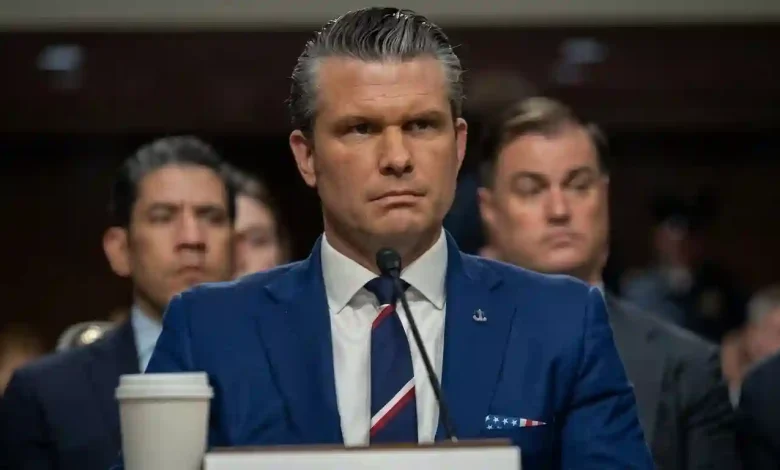
Table of Contents
Strait of Hormuz shipping channels have become the high-stakes focal point of a rapidly intensifying military and economic crisis, pushing the United States and Iran to the brink of an all-out regional war. As the Trump administration struggles to break Tehran’s maritime blockade, top defense officials faced a torrent of bipartisan skepticism and aggressive questioning on Capitol Hill. The highly anticipated hearing before the Senate Appropriations Committee marked the first public oversight of the escalating war since a fragile ceasefire collapsed, laying bare deep divisions over the administration’s strategy, military objectives, and the rapidly ballooning cost of the conflict.
Testifying before the panel, Defense Secretary Pete Hegseth and General Dan Caine, Chairman of the Joint Chiefs of Staff, defended a massive supplementary funding request of $87.6 billion, the bulk of which is earmarked for the ongoing conflict. However, rather than reassuring lawmakers, their testimonies sparked frustration as they repeatedly demurred on critical strategic questions, including whether the Pentagon is preparing for a potential ground invasion of Iran. With the strategic waterway closed and global markets in turmoil, the session highlighted a growing congressional demand for strategic clarity and accountability from the nation’s military leadership.
Strait of Hormuz: The Epicenter of Global Conflict
The physical geography of the region makes the waterway uniquely vulnerable. Controlling this narrow passage means controlling a vital artery of global commerce. Over the last several months, the situation has rapidly deteriorated into a hot war. Early Tuesday morning, another commercial vessel was struck off the coast of Oman, adding to the list of casualties. The Strait of Hormuz tanker attacked forced its crew to flee on lifeboats, underscoring the extreme hazards currently facing commercial shipping. This latest maritime attack occurred just hours after U.S. airstrikes against Iran entered their seventh night, with American forces attempting to degrade the Islamic Revolutionary Guard Corps’ (IRGC) missile and drone launch capabilities.
The escalation has been building rapidly, with the Pentagon executing six consecutive nights of airstrikes prior to the latest round, targeting critical infrastructure in southern Iran. The human toll of the conflict has also hit home. Recently, the Pentagon released details regarding the American soldiers killed in the Iranian-backed drone strike on a military outpost, an incident that galvanized domestic political pressure to take decisive military action. The situation reached a boiling point after the initial Iran-US conflict escalates following the deaths of two service members, dismantling any hope of salvaging the previous administration’s diplomatic arrangements.
Hormuz :The Congressional Showdown: Hegseth and Caine Under the Microscope
The Senate Appropriations Committee hearing was charged with tension from the outset. Senator Susan Collins (R-Maine), the chair of the committee, opened the session with sharp criticisms, not only targeting the war’s trajectory but also addressing controversies surrounding the Pentagon’s management, including stalled promotions for military officers. Democratic lawmakers, led by Senator Jeanne Shaheen (D-New Hampshire), questioned why the administration was requesting such massive sums when the department had yet to spend nearly half of the $150 billion previously allocated by Congress. According to official figures released by the Department of Defense, the initial operations were meant to be highly targeted, but the scope has expanded dramatically.
Hegseth defended the request as an “urgent, necessary injection of resources” to restock depleted precision weaponry and avoid critical budget shortfalls. His opening statement, however, had to be restarted multiple times due to disruptions from anti-war protesters in the gallery. Despite the administrative defense, lawmakers from both sides of the aisle expressed frustration over the lack of a clear exit strategy. The administration’s focus has shifted from protecting shipping to a broader campaign aimed at dismantling Tehran’s military infrastructure, including critical sites in southern Iran.
Hormuz :Senator Kennedy Demands “Straight Answers”
The most dramatic exchange of the hearing occurred during questioning by Senator John Kennedy (R-Louisiana). Known for his sharp, direct style, Kennedy pressed the officials on the long-term consequences of a potential U.S. withdrawal or cessation of operations. He demanded to know if Iran would impose tolls on the waterway if U.S. naval assets withdrew. General Caine demurred, characterizing the scenario as a hypothetical political calculation rather than a military certainty.
Kennedy was visibly perturbed by the vague responses. “This is serious as four heart attacks and a stroke,” Kennedy retorted, emphasizing the gravity of the situation. He then turned his line of questioning to Defense Secretary Hegseth, asking whether Iran would immediately reconstitute and accelerate its nuclear weapons development if the U.S. halted its military campaign. When Hegseth also failed to provide a direct, definitive answer, Kennedy cut him off, stating flatly, “We need straight answers.” The exchange highlighted the growing impatience of lawmakers who feel the administration is withholding vital details about the war’s objectives.
Hormuz The Ground Invasion Question: Caine’s Tactical Demurral
Beyond the immediate financial costs, the primary concern among lawmakers is the potential for ground troops to be drawn into the conflict. Under intense questioning regarding the ultimate limits of the military campaign, General Caine declined to say whether the war would continue to escalate, including when it came to a possible ground invasion. This refusal to rule out a ground campaign has intensified fears of mission creep among congressional watchdogs.
To disrupt Iran’s nuclear and conventional military ambitions, the U.S. has expanded its target list, with major airstrikes hitting targets in Bushehr, a move that Tehran warned would trigger “unlimited” retaliation against Western interests. Caine conceded that current military operations have limits, stating that “air power’s got limits” and cannot single-handedly secure maritime routes or force a hostile regime to yield. This admission has led analysts to conclude that the administration may eventually face a choice between a humiliating withdrawal or a highly risky ground intervention.
Hormuz :Beyond Oil and Fertilizer: The Far-Reaching Economic Upheaval

While the military conflict dominates the headlines, the economic shockwaves are being felt globally. The closure of the waterway has paralyzed the transit of both petroleum and agricultural products. The Middle East is a primary exporter of sulfur, urea, and other critical elements used in global fertilizer production. With these supply lines severed, agricultural costs are projected to spike, threatening global food security and crop yields for the upcoming seasons.
The impact on domestic consumers is already severe. As a direct consequence of the shipping freeze, energy markets have reacted violently, with U.S. gasoline prices climbing above $4 per gallon, sparking fears of broader stagflation. The economic upheaval is no longer a distant threat; it is actively shaping domestic political debates and increasing pressure on the administration to find a swift resolution, whether through total military victory or diplomatic concession.
Hormuz :Project Freedom and the Limits of Airpower
The administration’s primary maritime initiative, dubbed “Project Freedom,” was launched with the goal of establishing a secure convoy system for commercial vessels transiting the region. Under the direction of the U.S. Central Command strikes on Iran, naval destroyers have attempted to escort commercial ships through the channel. Hegseth previously boasted that the U.S. had established a “powerful red, white, and blue dome” over the channel, guaranteeing safe passage.
However, the reality on the water has painted a much different picture. Iran’s deployment of low-cost, asymmetrical maritime tactics—including fast-attack boats, sea mines, and loitering munitions—has effectively neutralized the convoy system’s efficacy. Commercial shipping companies and insurers have largely rejected the U.S. escorts as insufficient, with most major cargo carriers choosing to bypass the Middle East entirely, opting instead for the longer, more expensive route around the Cape of Good Hope.
Hormuz :Timeline and Costs of the Escalating Conflict
The financial trajectory of the war remains a major point of contention. While Hegseth publicly cited a war cost of $37.5 billion through the end of the fiscal year, congressional aides and independent watchdogs assert that the true figure is significantly higher. The current estimate notably excludes long-term military construction costs required to rebuild damaged American bases in Jordan, Iraq, and Syria that have been targeted by Iranian proxy forces during the hostilities.
| Conflict Dimension | Pentagon / Administration Position | Congressional Concerns / Critiques |
|---|---|---|
| Total War Cost to Date | Estimated at $37.5 billion through September 30, 2026. | Sources suggest actual costs are much higher; ignores base repairs and long-term military construction. |
| Funding Requests | $87.6 billion supplemental request (primarily for restocking precision munitions). | Questioning why prior funds (half of last year’s $150 billion) remain unspent. |
| Strait of Hormuz Status | “Project Freedom” established to guard commercial vessels and bypass Iranian harassment. | Waterway remains effectively closed; insurance rates have skyrocketed and global tankers are stranded. |
| Escalation & Ground Option | Relying on surgical air strikes; claims Iranian military is at its weakest in decades. | Refusal to rule out a ground invasion; warnings that “air power has limits.” |
Geopolitical Ramifications and Future Outlook
The ongoing impasse in the channel has fundamentally altered global geopolitical alliances. European and Asian allies, who rely heavily on Persian Gulf oil and petrochemicals, are growing increasingly impatient with the lack of progress. While the administration insists that Iran’s military capabilities have been degraded to their weakest point in decades, Tehran’s continued ability to disrupt shipping and strike U.S. assets suggests a highly resilient adversary prepared for a protracted conflict.
The lack of clear answers from Hegseth and Caine has left both allies and domestic lawmakers in a state of deep uncertainty. Without a defined political objective or a realistic plan to reopen the shipping lanes, the U.S. risks finding itself trapped in another open-ended conflict in the Middle East. As Senator Kennedy and his colleagues made clear, the American public and the global economy cannot afford vague assurances when the stakes are, quite literally, as serious as a heart attack.