Airstrikes Against Iran Enter Eighth Night After US Troop Casualties 2026
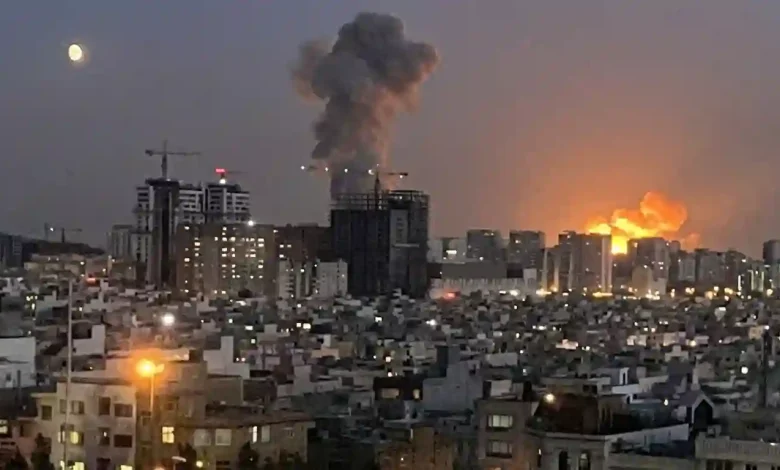
Table of Contents
Airstrikes conducted by the United States military against Iranian-backed positions have reached a critical and highly volatile peak, with Saturday marking the eighth consecutive night of sustained bombardment. This massive retaliatory campaign, ordered directly by President Donald Trump, represents a swift and severe response to the tragic deaths of two American service members and the disappearance of another during a devastating drone and ballistic missile assault on a military base in Jordan. As geopolitical tensions throughout the Middle East threaten to spill over into a broader regional war, the fragile diplomatic achievements of the previous month have been utterly dismantled, leaving both Washington and Tehran locked in a dangerous escalatory spiral.
The unfolding military campaign has fundamentally reshaped the security landscape of the Persian Gulf and the wider Levant. While the preceding operations, as U.S. airstrikes against Iran entered their seventh night, were already pushing the regional infrastructure to its absolute limits, the transition into the eighth night represents a significant intensification of direct combat operations. The strategic focus of the American military has shifted from localized deterrence to active degradation of Iran’s military capabilities, targeting high-value infrastructure and launch facilities used by the Islamic Revolutionary Guard Corps (IRGC) to threaten regional shipping lanes and coalition forces.
Eighth Consecutive Night: CENTCOM Intensifies Retaliatory Campaign
According to an official statement released by U.S. Central Command (CENTCOM), the latest wave of strikes commenced at approximately 6:00 p.m. Eastern Time on Saturday, executing a series of precision strikes aimed at Iranian military infrastructure. The targets included coastal surveillance systems, advanced air defense installations, naval capabilities, and critical storage sites housing drones and ballistic missiles. Defense officials noted that the primary objective of these strikes is to degrade Tehran’s capacity to threaten commercial shipping lanes in the critical waterways of the region and to mete out swift punishment to the IRGC units responsible for the deadly attack in Jordan.
Defense Secretary Pete Hegseth reacted to the military action in a statement published on social media, expressing deep resolve and emphasizing that the sacrifice of American troops would not be in vain. “Godspeed, heroes. Their sacrifice only stiffens our resolve,” Hegseth wrote. Meanwhile, President Donald Trump expressed solemn regret regarding the losses, labeling the event as a “very sad thing” but emphasizing that military action was absolutely necessary to safeguard national security and re-establish a credible deterrent posture. Prior to this weekend’s massive surge, the sixth consecutive night of U.S. strikes had focused on supply depots, but the loss of life has triggered a far more punitive and expansive targeting matrix.
The Tragic Toll in Jordan: American Fatalities and the Missing Soldier
The immediate catalyst for this latest escalatory cycle was a highly coordinated ballistic missile and kamikaze drone strike targeting the Muwaffaq Salti Air Base (MSAB) in Jordan. Located in close proximity to the Syrian border, MSAB has long served as a vital hub for coalition forces, housing dozens of American fighter aircraft and serving as a launchpad for strategic air operations across the region. On Friday, July 17, 2026, the base came under heavy fire, resulting in the first direct combat deaths of American personnel by Iranian forces since March of this year. In addition to the two confirmed fatalities, CENTCOM officials confirmed that four service members were wounded and medically evacuated to local hospitals, while another service member remains missing in action, prompting an active and highly dangerous search-and-rescue operation.
These latest casualties bring the total American death toll in the conflict to 16 service members since direct hostilities erupted on February 28, 2026. The Pentagon has withheld the identities of the deceased and missing personnel pending the standard 24-hour notification window for next of kin. The strike on Friday demonstrated a level of precision and coordination that has deeply alarmed defense analysts, indicating that Iranian forces and their regional proxies possess highly sophisticated guidance systems capable of bypassing advanced air defenses. On Friday, the U.S. military strikes Iran for a seventh consecutive time before launching this eighth retaliatory wave, yet the cycle of violence continues unabated.
A Tenuous Ceasefire in Tatters: Diplomatic Failures and Escalation
The outbreak of direct military confrontations marks the formal collapse of the interim diplomatic agreement established just one month ago. The memorandum of understanding, which had extended a fragile April ceasefire by 60 days, was designed to provide a diplomatic pathway toward a permanent reduction in hostilities. This sudden collapse has left the U.S.-Iran ceasefire on the verge of collapse, completely undoing weeks of painstaking behind-the-scenes negotiations and plunging the international community back into a state of high-stakes crisis management.
In a defiant address broadcast on Iranian state television, Supreme Leader Ayatollah Mojtaba Khamenei issued a stern warning to the United States, describing the signature of President Donald Trump as “worthless and invalid.” Concurrently, Iranian negotiators announced that Tehran was suspending all commitments under the short-lived interim memorandum, effectively freeing its military and proxy networks to resume operations at will. Citing the Quranic imperative of equal retaliation, the IRGC declared that they have “no path before us except to attack them in the same manner,” signaling an era of unchecked, tit-for-tat military actions across multiple fronts.
Regional Blowback: Gulf Cooperation Council and Proxy Strikes
The geographical scope of the conflict has widened dramatically, with Iranian forces launching retaliatory strikes against U.S. allies throughout the Persian Gulf. In Kuwait, direct hits were reported at a desalination plant, and operations at Kuwait International Airport were temporarily suspended due to incoming missile and drone threats. The IRGC claimed to have successfully targeted the U.S. military support center at Camp Arifjan and destroyed critical radar installations at Ali Al Salem Air Base and Camp Udairi. This regional escalation has drawn sharp condemnation from the Gulf Cooperation Council (GCC), with Secretary General Jasem Mohamed Albudaiwi warning that the targeting of civilian infrastructure represents a dangerous and unacceptable escalation.
Furthermore, Iranian state media reported successful operations against Sheikh Isa Air Base in Bahrain, where U.S. combat aircraft and intelligence centers are situated. To the south, Saudi Arabia also reported coming under attack for the first time in nearly four months, signaling that Tehran is prepared to enforce a regional blockade of its own. These expansive maneuvers are reminiscent of the tactical maneuvers seen during the heavy airstrikes against Iran on the sixth night of this campaign, which initially sought to isolate the regional actors but instead catalyzed a much broader conflict loop.
Geopolitical and Strategic Impact of the Ongoing Campaign
The economic ramifications of this widening conflict are reverberating globally, with particular focus centered on the Strait of Hormuz. Prior to the outbreak of hostilites, the strait served as the transit point for nearly 20% of the world’s global oil supply. The breakdown of the ceasefire and the enforcement of a tight naval blockade on Iran as strikes escalate in the Gulf have severely restricted maritime transit, leading to a sharp rise in global energy prices and renewing fears of systemic global inflation. Shipping conglomerates have diverted tankers around the Cape of Good Hope, adding significant transit times and operational costs to global trade routes.
The volatile maritime theater of the Strait of Hormuz conflict intensified after President Trump reinstated the naval blockade on Iranian ports, a move that Tehran viewed as an act of war. Domestically, the Trump administration faces mounting political pressure. Confronting record-low approval ratings and a public increasingly weary of another foreign military intervention, the administration has struggled to articulate a clear end-state for its air campaign. With no diplomatic channel currently functioning, the risk of a miscalculation leading to a full-scale regional war remains extraordinarily high.
Comparative Analysis of the Evolving US-Iran Escalation
To better understand the scale and trajectory of the 2026 conflict, it is helpful to examine the progression of the military campaign across its key phases. The following table provides a comprehensive overview of the escalating operational metrics and diplomatic outcomes.
| Conflict Phase | Key Tactical Incidents | Casualties & Infrastructure Impact | Diplomatic Status / Outcomes |
|---|---|---|---|
| Phase 1: Initial Outbreak (Feb 28 – Apr 2026) | Surprise U.S. and Israeli air strikes on Iranian nuclear and military installations. | Moderate military casualties; minimal civilian infrastructure disruption. | Ad-hoc ceasefire established after localized back-channel mediation. |
| Phase 2: Fragile Ceasefire (May – June 2026) | Signing of the 60-day Memorandum of Understanding in Geneva. | No reported combat fatalities; shipping in the Strait of Hormuz briefly resumes. | Brief diplomatic opening; Trump suspends the maritime port blockade. |
| Phase 3: The Breakdown (Early July 2026) | Ceasefire negotiations collapse; Trump reinstates the strict naval blockade. | Resumption of drone attacks on Gulf commercial tankers; localized skirmishes. | Diplomatic channels freeze; both capitals return to aggressive rhetoric. |
| Phase 4: Active Escalation (Mid-July 2026) | Tragic attack on Muwaffaq Salti Air Base in Jordan; 8 consecutive nights of U.S. strikes. | 2 U.S. soldiers killed, 1 MIA, 4 wounded; heavy damage to IRGC maritime assets and Gulf civilian facilities. | Tehran formally suspends the MoU; Supreme Leader declares Trump’s signature worthless. |
Conclusion and Geopolitical Outlook
As the U.S. military enters its second week of consecutive airstrikes against Iranian forces, the region stands on the precipice of a potentially uncontrollable conflagration. The loss of American lives in Jordan has removed any immediate possibility of diplomatic compromise, forcing the Trump administration to prioritize military deterrence and punitive actions. However, without a clear diplomatic roadmap or an articulated strategy for political resolution, the air campaign risks becoming an open-ended engagement that drains military resources and destabilizes global markets.
With global travel alerts in effect and regional defense systems on high alert, the upcoming days will be critical in determining whether international partners can successfully establish a de-escalation pathway. For now, the thunder of airstrikes over the Persian Gulf remains the dominant voice in a dialogue that has long abandoned the negotiating table.