Iranian drone attack on cargo ship shatters Strait of Hormuz peace deal 2026
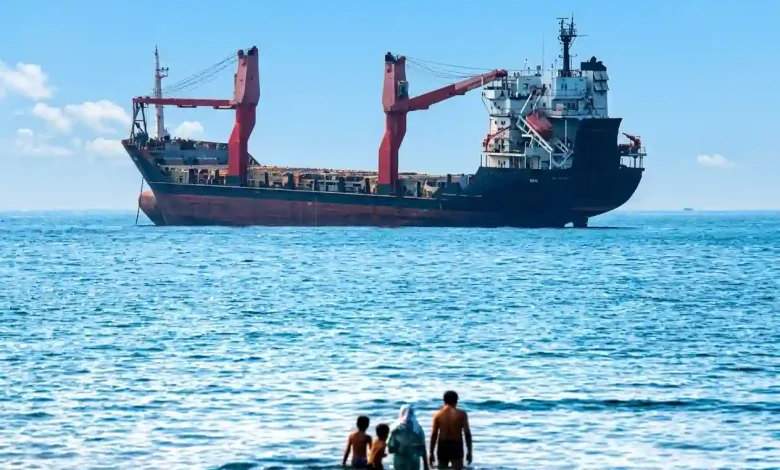
Table of Contents
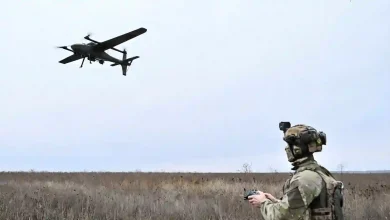
Iranian drone attack forces have dramatically reignited tensions in the Middle East, striking a major commercial vessel just one week after the United States and Iran signed a highly anticipated preliminary deal aimed at bringing a diplomatic end to their destructive war. An Iranian drone slammed into a cargo ship sailing through the vital Strait of Hormuz on Tuesday, exposing the fragility of the 60-day ceasefire and illustrating the deep-seated strategic divisions that continue to define the Persian Gulf corridor. The incident occurred in a highly contested sector of the waterway, where the cargo vessel was navigating along a newly established maritime route designed by Western powers to bypass Tehran’s direct territorial oversight. This unexpected assault has placed the global community on high alert, with international observers expressing immediate concerns that the us-iran ceasefire on the verge of collapse could trigger a devastating return to unrestricted maritime and aerial warfare.
The attack has once again drawn the focus of military analysts to the complex geographic realities of the Persian Gulf. Commercial shipping had only recently begun to cautiously resume standard routes through the region, following months of intense naval skirmishes. Indeed, the shipping sector is still reeling from the events of earlier this year, when the iran war escalates as us strikes central region forced major global transport syndicates to completely abandon their operations in the Gulf, resulting in historic surges in maritime insurance premiums and cargo delivery times. The cargo vessel, bearing the flag of an international shipping conglomerate, was reportedly carrying a massive payload of industrial machinery and manufacturing components when the kamikaze-style drone hit its upper deck, causing a massive explosion and localized fires.
This direct escalation marks a bold refusal by Tehran to accept any Western military presence or alternate shipping routes near its southern coastline. Analysts suggest that the target selection reflects Iran’s desire to show its continued strike capability despite months of intense bombardment. Earlier phases of the war had already seen deep-penetration strikes across both national boundaries, with the iran-us conflict as airstrikes hit bushehr and other critical nuclear-associated installations pushing the two nations to the precipice of total war. By targeting commercial transport within what Tehran claims to be its sovereign security perimeter, the Islamic Revolutionary Guard Corps (IRGC) has signaled that it will not tolerate any ongoing Western naval coordination designed to strip Iran of its historic chokehold over the Strait.
The strategic environment in 2026 has been heavily influenced by the emergence of new military coalitions, highlighting the systemic shift in regional power dynamics. Many defense planners have noted that the 2026 iran war how us-israel coalition reshaped the security architecture of the Middle East by establishing a unified command structure among the United States, Israel, and several Gulf allies. This coalition was designed to maintain freedom of navigation in the face of persistent asymmetric threats, yet the latest drone strike demonstrates that neutralizing Iran’s coastal assets remains an exceptionally difficult challenge. During the early summer months, the coalition launched severe counter-offensives, notably when u.s. airstrikes against iran enter seventh night of operations to disrupt rocket-launching networks along the coastal cliffs.
The intense bombardment of Iranian military assets was not without significant political fallout. In Washington, foreign policy debates intensified as human rights organizations scrutinized the operational parameters of the air campaign, especially during controversial episodes where the us airstrikes white house denies hitting civilian casualties claims became a focal point of contentious international diplomacy. At the same time, the domestic situation inside Iran deteriorated rapidly under the weight of the air campaign, leading to widespread power outages, critical medical supply shortages, and even localized municipal closures such as the iranian exam cancellations southern provinces experienced during the peak of the offensive. These internal crises have further hardened the resolve of Tehran’s military leadership, who view the Strait of Hormuz as their ultimate asymmetric lever to compel the United States to withdraw its forces.
The Strait of Hormuz Incident: A Fragile Peace Shattered
The geopolitical landscape of the Persian Gulf has been thrust back into uncertainty. Just as global energy markets began stabilizing in the wake of the initial 60-day ceasefire, the unilateral action of an unmanned aircraft has compromised months of painstaking diplomatic efforts. Tuesday’s event represents the first major operational challenge to the preliminary peace treaty, which was intended to establish a demilitarized zone and a monitored shipping corridor. Under the terms of the memorandum, both nations had agreed to cease active hostilities while working toward a final resolution. However, the decision by regional actors to deploy lethal military hardware against commercial vessels indicates a deep-seated resistance to external oversight and underscores the underlying tension that continues to threaten regional stability.
The Cargo Ship Target and the Drone Strike Details
The targeted vessel, identified by naval intelligence as an international container transport ship, was navigating along the southern edge of the Strait when the strike occurred. Armed with high-explosive payloads, the drone bypassed local air defense nets by flying at an extremely low altitude, successfully impacting the starboard side of the vessel. Immediate damage reports indicate that while the vessel suffered significant structural harm and localized fires, the crew was able to contain the blaze and prevent a catastrophic oil spill. This specific mode of asymmetric warfare highlights the ongoing vulnerability of heavy commercial shipping in narrow channels. Western naval commanders have warned that while larger military vessels possess advanced defense systems, civilian commercial transport remains highly exposed to low-cost, high-precision drone technology.
Chronology of the Escalation: From Ceasefire to New Confrontation
The path leading to this latest naval crisis is marked by repeated diplomatic breakthroughs followed by swift military escalations. Since the initial outbreak of conflict, the international community has struggled to maintain open channels of communication with Tehran. The signing of the preliminary peace agreement was hailed as a major breakthrough, but regional experts cautioned that without strict enforcement mechanisms, any minor incident could serve as a catalyst for renewed fighting. This skepticism proved prophetic when local maritime authorities reported multiple unauthorized drone flights in the days leading up to the strike. The subsequent attack has effectively halted the implementation of subsequent diplomatic phases, leaving negotiators with the difficult task of reviving a treaty that many now believe is fundamentally compromised.
The Significance of the Feb 28 Shock Attack
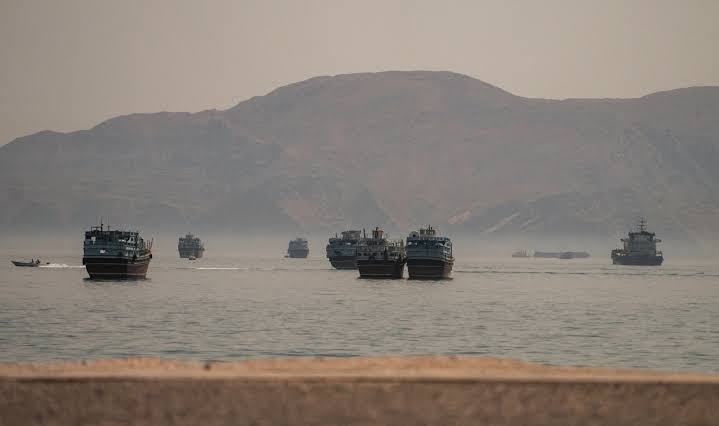
To fully comprehend the strategic motivations behind the recent strike, one must look back to the surprise joint offensive launched on February 28, 2026. This initial military action, carried out by a coordinated coalition, severely damaged key Iranian command structures, coastal defense facilities, and radar installations. It was this massive, unprovoked assault that triggered the wider regional conflict and prompted Tehran to implement a near-total shutdown of the Strait of Hormuz. In the months that followed, Iranian forces utilized a sophisticated mix of naval mines, coastal missile batteries, and fast-attack craft to deny access to the waterway. For Tehran, the February 28 attack demonstrated the extreme threat posed by Western military coordination, prompting a defensive doctrine centered around total maritime denial and economic leverage over global trade routes.
Geopolitical Stakes: The Battle Over Safe Transit Corridors
The battle for dominance over maritime transit routes is as much a political struggle as it is a military one. For decades, the Strait of Hormuz has served as the primary choke point for international energy shipments, allowing regional powers to exert substantial influence over global market pricing. The establishment of alternative, internationally monitored shipping routes is viewed by Western nations as a vital necessity to protect global supply chains from geopolitical volatility. Conversely, Tehran perceives these alternative corridors as an infringement on its sovereign domain and a direct threat to its national security architecture. By actively targeting vessels utilizing these alternative routes, Iranian forces are asserting that no commercial transit can safely occur in the region without their explicit consent and cooperation.
The US-Controlled Alternative Route Explained
The alternative route in question was established under a joint military initiative led by the United States and several regional allies. Designed to run primarily through the territorial waters of Oman, this corridor was intended to operate completely outside the operational control of Iranian coastal defense units. By utilizing advanced aerial surveillance, satellite tracking, and naval escorts, the coalition aimed to guarantee safe passage for commercial shippers, thereby bypassing the heavily mined standard traffic separation schemes. However, maintaining this alternative corridor requires continuous military patrols and significant logistical resources. The latest drone strike proves that despite high-tech monitoring systems, securing a narrow waterway against determined asymmetric attacks remains an elusive objective, forcing many shipping lines to reconsider the safety of the route.
Economic Shockwaves: Global Trade and Oil Disruption
The economic ramifications of a closed or contested Strait of Hormuz are immediate and far-reaching. During peacetime, the waterway carries approximately one-fifth of the world’s traded oil and liquefied natural gas, making it the single most important energy choke point on the planet. Any disruption to this flow instantly triggers a spike in global energy prices, leading to increased manufacturing and transport costs worldwide. Following the latest drone strike, global oil benchmarks surged significantly, reflecting market anxiety over a potential return to prolonged blockade conditions. Shippers are also facing skyrocketing insurance premiums, with many maritime underwriters refusing to provide coverage for vessels transiting the Gulf without explicit military escorts.
| Transit Route / Chokepoint | Peacetime Daily Oil Flow (Million b/d) | Primary Controlling Authority / Security Scheme | Strategic Geopolitical Risk Level (2026) |
|---|---|---|---|
| Strait of Hormuz (Main TSS) | ~20.0 – 21.0 | Sovereign Territorial Waters (Iran / Oman) | Critical / High-Risk |
| US-Escorted Southern Route (Omani Waters) | ~12.0 – 15.0 | US Navy Fifth Fleet / Coalition Escort | Very High (Active Target) |
| East-West Pipeline Bypass (Saudi Arabia) | ~5.0 | Kingdom of Saudi Arabia | Moderate |
| Bab el-Mandeb Strait | ~4.0 – 9.0 | Yemen Coastal Forces / International Patrols | High (Proxy Threat) |
As the table above demonstrates, the alternatives to the primary Strait of Hormuz route are highly limited in capacity and fraught with their own strategic risks. Pipelines running across Saudi Arabia can only handle a fraction of the daily volume, leaving the global economy heavily dependent on the physical security of the maritime channels. When these channels are threatened, the impact is felt not only in Western capitals but also across major Asian economies that rely heavily on Middle Eastern crude imports to fuel their industrial output.
Diplomatic Fallout: Can the Preliminary Deal Survive?
In the halls of diplomacy, the drone strike has been met with swift condemnation and intense debate. United Nations representatives have called for immediate restraint from all parties, warning that a return to active conflict would have catastrophic humanitarian and economic consequences. However, domestic political pressure in both Washington and Tehran is making compromise increasingly difficult. Hardline factions in Iran are pointing to the strike as a successful demonstration of national defense capabilities, while critics of the preliminary deal in the United States are demanding immediate retaliatory military action. The coming days will be critical as diplomatic envoys attempt to salvage the framework of the ceasefire and establish stronger, more verifiable security guarantees along the shipping lanes.
Military Postures and Regional Coalitions in 2026
The current military posture of the coalition forces in the Gulf is one of heightened readiness. Naval assets, including guided-missile destroyers and carrier strike groups, have been redeployed to positions closer to the transit lanes to provide immediate air defense support to commercial vessels. At the same time, regional intelligence agencies are monitoring Iranian coastal bases for any signs of further mobilization. The situation remains highly fluid, with the potential for miscalculation on either side threatening to spark a larger conflict. As long as the fundamental geopolitical disputes regarding sovereignty, maritime control, and regional influence remain unresolved, the Strait of Hormuz will continue to be a dangerous flashpoint where a single tactical decision can have global consequences.