Iran airstrikes escalate 2026: US launches seventh night of military operations
Table of Contents
Iran airstrikes have dramatically escalated after the United States Central Command (CENTCOM) launched a seventh consecutive night of precision military operations, drawing severe threats of a full-scale offensive from Tehran [1]. The nocturnal bombardment, which commenced on Friday, signals an aggressive and highly coordinated effort by Washington to degrade the Islamic Republic’s military logistics, air defenses, and maritime capabilities. As the geographic scope of the conflict widens, both nations stand on the precipice of an all-out war that could fundamentally reshape the security architecture of the Middle East [1].
According to an official statement released by CENTCOM, the latest waves of strikes began precisely at 19:00 GMT (10:30 PM local time in Iran) [1]. The operation, authorized under the direct command of the President of the United States, was explicitly “designed to continue degrading Iranian military capabilities at the Commander in Chief’s direction” [1]. The persistence of these operations highlights a significant shift in American foreign policy—transitioning from reactive posturing to a proactive, sustained campaign aimed at neutralizing Iran’s regional power projection.
Strategic Escalation on the Persian Gulf
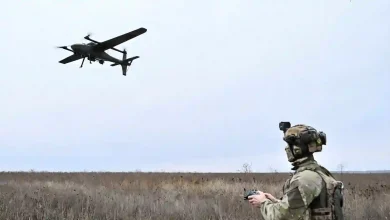
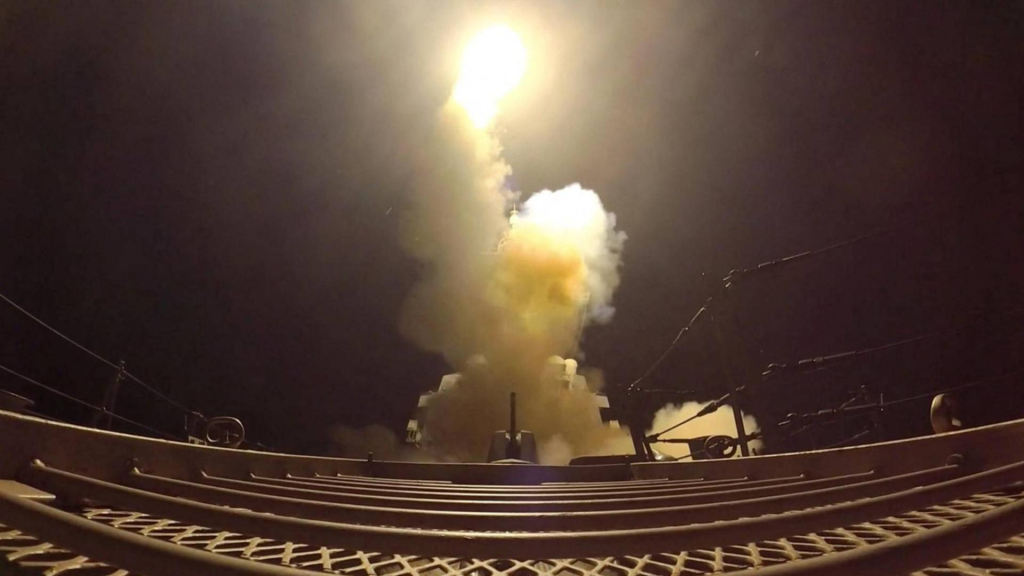
The tactical execution of this campaign relies on a formidable array of modern military assets. CENTCOM confirmed that the operations utilized a synchronized combination of fighter aircraft, aerial unmanned aerial vehicles (drones), and naval warships stationed in adjacent waters [1]. This multi-domain approach allows coalition forces to overwhelm Iranian radar systems, conduct real-time damage assessment, and strike heavily fortified targets with pinpoint accuracy.
By maintaining a continuous, high-intensity operational tempo, the Pentagon is attempting to deny the Islamic Revolutionary Guard Corps (IRGC) the operational pause necessary to regroup or repair damaged installations. This strategy unfolds as the U.S. airstrikes against Iran enter seventh night of relentless kinetic engagement, establishing a dangerous precedent of protracted direct conflict between the two long-standing adversaries.
CENTCOM Statement and Tactical Targets
CENTCOM’s public disclosure offered granular details regarding the nature of the targets. Coalition forces concentrated their ordnance on highly specific components of Iran’s defense apparatus, including surveillance sites, military logistics infrastructure, underground weapons storage facilities, and key maritime capabilities [1]. This selective targeting indicates a sophisticated intelligence collection effort designed to minimize collateral civilian damage while maximizing the operational impact on the IRGC’s command structure.
Among the primary focus areas was the degradation of naval and fast-attack craft facilities [1]. By disabling these assets, the U.S. military aims to secure international shipping corridors that have been repeatedly threatened by asymmetric naval tactics. This development comes in a series of retaliatory measures where the US strikes target key ports and regional naval bases, effectively neutralizing Iran’s ability to easily deploy sea mines or coordinate swarm attacks against commercial vessels in the Gulf of Oman.
Geographic Breadth of Operations
The geographical distribution of the target list covers almost the entire southern coastline of Iran, as well as critical logistical nodes deeper inland [1]. The targeted locations officially included Jask, Sirik, Bushehr, Bandar Abbas, Qeshm Island, Ahvaz, and Yazd [1]. The inclusion of inland regions like Yazd and Ahvaz indicates that the U.S. campaign has expanded far beyond immediate coastal or border defense structures, directly striking deep-seated storage hubs and command centers.
The sustained nature of these strikes has caused widespread alarm within the civilian populations of these metropolitan centers. The persistent hum of military aircraft and the reverberation of heavy explosions have severely disrupted daily life, even as Tehran reports multiple deaths in six nights of preceding bombardments. These casualties have fueled domestic outrage, hardening the Iranian leadership’s resolve and narrowing the pathway toward any potential diplomatic resolution.
Iranian Response: Threats of a Full-Scale Offensive
The reaction from Tehran has been swift, uncompromising, and highly alarming. A senior military adviser to the Iranian Supreme Leader issued a stark warning via a post on the social media platform X (formerly Twitter) on Friday, declaring that Iran would launch a “full-scale offensive” if the United States does not immediately halt its aggressive operations [1]. This marks a fundamental departure from Iran’s typical reliance on proxy forces, indicating that the Islamic Republic is prepared to engage in direct, overt conventional warfare if its core national security assets continue to face degradation.
Strategic analysts suggest that a “full-scale offensive” from Iran could involve coordinated ballistic missile barrages targeting U.S. bases in Iraq, Syria, and the Gulf States, alongside synchronized operations by its regional allies. Military installations in areas like Bushehr have been placed on high alert. Notably, in the northern Persian Gulf where airstrikes hit Bushehr‘s surrounding defensive installations, Iranian forces have reportedly mobilized mobile surface-to-air missile batteries and repositioned their remaining naval assets to underground bunkers.
The Role of the Supreme Leader’s Military Adviser
The Supreme Leader, Ayatollah Ali Khamenei, holds ultimate authority over all major military and foreign policy decisions in Iran. The public warning delivered by his military adviser carries the weight of a direct executive decree. It signals to the international community that the upper echelon of the Iranian state perceives the current U.S. campaign not as a series of isolated tactical retributions, but as an existential threat to the regime’s survival.
By communicating this warning publicly, Tehran is attempting to establish a clear threshold of deterrence. However, with Washington showing no signs of scaling back, this rhetoric leaves little room for retreat without a significant loss of face for the Iranian leadership. The situation is further complicated as the US strikes central region facilities like Yazd, proving that no geographic sanctuary exists within the borders of Iran.
Impact on Regional Stability and Global Energy
The escalation of direct hostilities between the world’s preeminent military superpower and a heavily armed regional power has sent shockwaves through global energy markets and international shipping corridors. The Strait of Hormuz, through which approximately one-fifth of the world’s petroleum passes daily, is now a highly active combat zone. Major maritime insurance syndicates have exponentially increased premiums for commercial vessels navigating the Gulf, forcing several global shipping conglomerates to reroute vessels around the African continent.
This threshold represents a severe crisis, particularly as the US military strikes Iran for seventh consecutive night, signaling to global markets that a diplomatic off-ramp is nowhere in sight. The prolonged nature of this conflict threatens to trigger a global economic slowdown if energy supply lines are disrupted for an extended period.
Analytical Breakdown of Targeted Facilities
To better understand the strategic logic behind the U.S. military operations, it is necessary to examine the tactical significance of each location targeted during this extensive campaign. The table below outlines the primary objectives of the strikes across the various Iranian provinces [1].
| Target Location | Tactical Significance | Primary Asset Types Targeted | Strategic Goal |
|---|---|---|---|
| Bandar Abbas | Headquarters of the IRGC Navy; primary naval base [1] | Warships, fast-attack craft, naval command centers [1] | Neutralize Iran’s ability to block maritime shipping lanes |
| Qeshm Island | Choke point island overlooking the Strait of Hormuz [1] | Coastal defense missile sites, radar installations, UAV launchers [1] | Deny sea-denial capabilities and protect commercial shipping |
| Bushehr | Key maritime port and air defense umbrella zone [1] | Logistics infrastructure, surface-to-air missile batteries [1] | Degrade regional air defense networks to secure airspace |
| Jask & Sirik | Eastern flank coastal security outposts [1] | Early-warning surveillance sites, coastal patrol facilities [1] | Deafen regional radar capabilities and prevent early warning |
| Ahvaz | Southwestern logistical hub [1] | Military transportation routes, warehouses, supply depots [1] | Sever logistical flow from inland reservoirs to the coast |
| Yazd | Central geographic province [1] | Deep underground weapons storage, ballistic missile bunkers [1] | Degrade strategic long-term retaliatory weapon stockpiles |
Geopolitical Fallout and the Diplomatic Vacuum
The ongoing military campaign has effectively dismantled whatever remaining diplomatic backchannels existed between Washington and Tehran. Regional mediators, including Oman and Qatar, have expressed deep concern over the lack of communication, warning that the absence of a direct dialogue increases the probability of catastrophic miscalculation. The international community remains highly divided, with Western allies offering tacit support for the American actions, while rival superpowers urge immediate restraint and respect for national sovereignty.
This vacuum of diplomacy has aggravated the ongoing Strait of Hormuz crisis, transforming a regional maritime dispute into a global security emergency. European nations, highly dependent on Middle Eastern energy, are working frantically to establish a humanitarian corridor for commercial tankers, though such efforts remain entirely dependent on the cessation of kinetic operations.
Concluding Assessments: Where Does the Conflict Go From Here?
As the international community watches with bated breath, the question remains whether either side possesses a viable exit strategy. The United States maintains that its operations are strictly defensive and designed to degrade offensive capabilities, yet the sheer scale and geographic reach of the strikes suggest a broader campaign of military containment. For Iran, the strategic calculus is increasingly dominated by regime survival and the preservation of national honor [1].
The execution of this highly coordinated campaign during this critical seventh night of US military actions indicates that the United States is willing to absorb significant geopolitical risks to reshape the regional balance of power. If Tehran follows through on its threat of a “full-scale offensive,” the Middle East will enter a new, highly destructive era of open warfare [1].