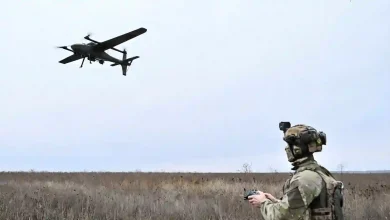
Iran war escalates 2026: US Strikes Central Region, Strait of Hormuz Ablaze
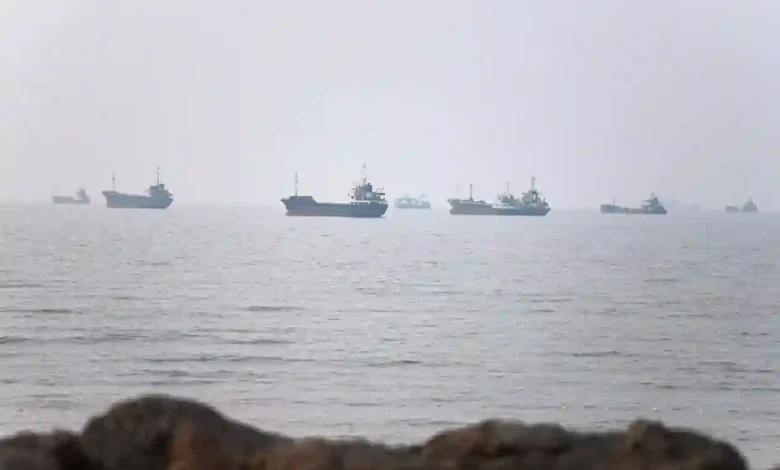
Table of Contents
Iran war escalates as the United States military expanded its devastating air campaigns deep into the central regions of the country, marking a dramatic seventh consecutive night of relentless bombardment. What began as localized border confrontations and maritime containment operations has now spiraled into an all-out regional conflagration with massive geopolitical ramifications. After several nights of targeted strikes along the periphery, the Pentagon has authorized an expansion of strategic targets, hitting communication networks, ballistic missile command hubs, and drone manufacturing facilities deep within the Iranian heartland. Concurrently, maritime supply lines are descending into chaos, with reports confirming that at least two commercial oil tankers have caught fire in the heavily mined waters of the Strait of Hormuz. As Gulf nations brace for retaliatory strikes, and international observers monitor severe damage at Iran’s Bushehr nuclear site, the entire Middle East stands on the precipice of a wider global conflict.
The Seventh Night of Airstrikes: Expanding the Theater to Central Iran
The geopolitical landscape altered fundamentally on the night of July 17, 2026, when the United States Air Force and Navy assets unleashed a coordinated, multi-axis assault that pierced deep into the heart of sovereign Iranian territory. For the previous six days, coalition forces had focused primarily on coastal defenses, radar installations, and forward proxy bases. However, the transition to the seventh night signifies a calculated pivot by the Pentagon to systematically dismantle Iran’s strategic depth. Military installations near Isfahan, Shiraz, and Yazd were lit up by precision-guided munitions, sending shockwaves through the regional security apparatus. This escalation follows multiple deaths in six nights of intense combat that had already devastated coastal military installations.
According to Pentagon officials speaking under the condition of anonymity, the decision to expand strikes to central Iran was prompted by intelligence indicating that the Islamic Revolutionary Guard Corps (IRGC) was preparing a massive wave of medium-range ballistic missile launches targeting coalition assets across the region. By executing pre-emptive strikes on these deeply buried silos and assembly plants, the U.S. military aimed to neutralize Tehran’s retaliatory capabilities. However, military analysts warn that attacking the geographical center of Iran signals a shift from defensive containment to an active degradation campaign, raising the stakes of the conflict to unprecedented heights. This follows closely on the heels of the sixth night of U.S. attacks, which laid the groundwork for this deep-penetration offensive.
Targeting Deep Inside the Iranian Heartland
In central Iran, high-altitude stealth bombers, including B-2 Spirits deployed from global staging grounds, targeted subterranean command-and-control bunkers. These facilities, often buried under hundreds of feet of granite, have long been considered invulnerable to standard munitions. However, the deployment of advanced earth-penetrating warheads has reportedly caused significant structural collapse within these complexes. This phase of the air campaign represents a massive progression from the initial sixth night of U.S. strikes, shifting the conflict from a border skirmish into a comprehensive campaign targeting the regime’s command hierarchy.
Strait of Hormuz: Minefields and Burning Oil Tankers
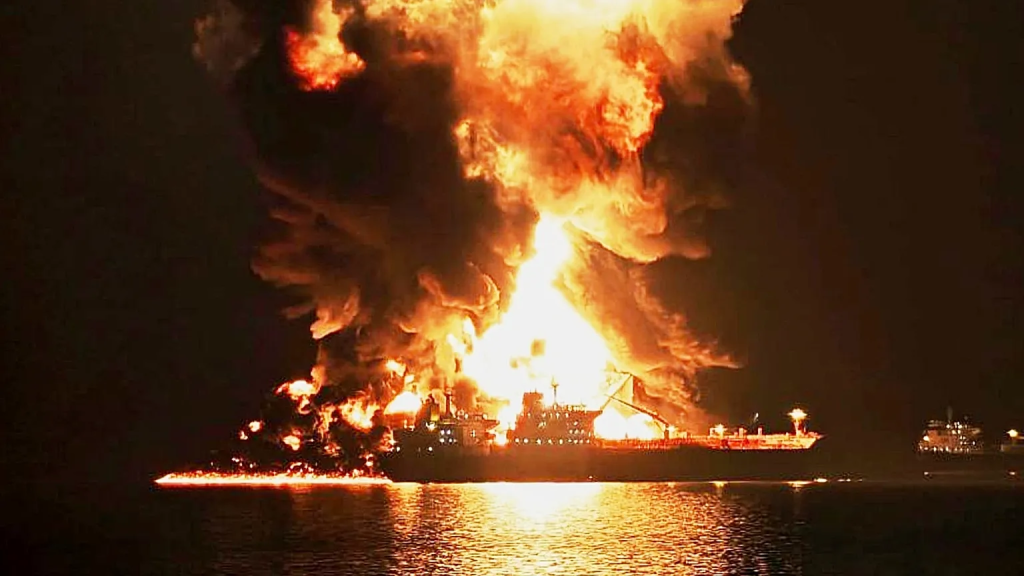
As the aerial bombardment intensifies on land, the maritime domain has transformed into a high-risk zone. On the morning of July 18, 2026, international maritime monitoring agencies reported that two large oil tankers—one flying a Panamanian flag and the other registered in Liberia—caught fire after navigating through newly laid minefields in the critical Strait of Hormuz conflict zone. Thick black smoke could be seen billowing across the shipping lanes, visible from both the Iranian and Omani coastlines, signaling a catastrophic failure of international maritime transit security.
The deployment of naval mines in the Strait of Hormuz has long been feared as the “nuclear option” of asymmetric naval warfare. Tehran has historically warned that if its ability to export oil were compromised, it would ensure that no other nation in the Persian Gulf could export petroleum either. The enforcement of a de facto U.S. blockade on Iran has seemingly pushed the regime to execute this threat. The presence of unmapped, drifting sea mines has effectively paralyzed commercial shipping in the region, driving global Brent crude oil prices up by over 12% in a matter of hours. The situation mirrors the height of the 1980s Tanker War, but with far more advanced mine technology and drone-delivered explosives. This maritime crisis also recalls the volatility seen when a prominent tanker seized in Gulf of Aden disrupted southern trade routes earlier in the year, highlighting the extreme vulnerability of global energy chokepoints.
Regional Spillover: Attacks on Kuwait and Gulf State Reactions
The conflict is no longer contained within the borders of Iran and the immediate maritime pathways. In a series of retaliatory maneuvers, Iran has launched dozens of one-way attack drones and cruise missiles at several Gulf Cooperation Council (GCC) countries. Among the most severe of these incidents occurred in Kuwait, where local military authorities confirmed that an explosive drone struck a military outpost, injuring several Kuwaiti service personnel. The government of Kuwait has placed its armed forces on the highest state of alert, condemning the strike as an unprovoked violation of its sovereignty.
This direct targeting of Gulf nations represents a severe escalation. For years, states like Kuwait, the United Arab Emirates, and Qatar have attempted to maintain a delicate diplomatic balance, hosting U.S. military personnel and installations while keeping communication channels open with Tehran. However, as the truce collapses as Trump warns of devastating consequences for states aiding either side, that balance has completely shattered. Iranian state media has warned that any nation allowing its airspace or military bases to be used for coalition airstrikes will be treated as an active combatant in the war, placing the entire Arabian Peninsula under a direct security threat.
Bushehr Nuclear Plant: Satellite Imagery Reveals Severe Damage
Perhaps the most alarming development of the past 24 hours is the release of commercial satellite imagery showing fresh damage inside the highly fortified Bushehr nuclear power plant complex. The images, analyzed by independent defense intelligence firms, show a collapsed warehouse, structural damage to an auxiliary administrative building, and cratering within the high-security perimeter of the facility, which sits on the coast of the Persian Gulf.
While initial assessments suggest that the primary reactor containment dome remains intact and there are currently no reported leaks of radioactive materials, the strike on the Bushehr complex has sent panic through neighboring Gulf states. A radiological incident at Bushehr could contaminate the waters of the Persian Gulf, which serve as the primary source of desalinated drinking water for millions of residents in Kuwait, Bahrain, Qatar, and Saudi Arabia. The targeting of such critical facilities marks a dangerous threshold in the U.S. military strikes in Iran, indicating that the coalition is willing to accept high operational risks to neutralize Tehran’s dual-use nuclear infrastructure.
The Broader Middle East Conflict: Funeral Attack in Gaza’s Nuseirat
The escalation in the Persian Gulf is occurring alongside continued violence in the Levant, illustrating the deeply interconnected nature of the regional security architecture. In the Gaza Strip, at least seven Palestinians were killed and dozens of others wounded when an Israeli airstrike hit a funeral gathering in the Nuseirat refugee camp. Eyewitnesses described scenes of absolute devastation as mourners were forced to flee amid secondary explosions and crumbling infrastructure.
This strike on a civilian gathering in Gaza has added fuel to the regional fire. Iranian-aligned proxy groups, including Hezbollah in Lebanon and the Houthi movement in Yemen, have pointed to the ongoing tragedy in Gaza to justify their continued operations against Western and Israeli assets. Analysts emphasize that as long as the violence continues unabated in Gaza, the diplomatic space required to de-escalate the broader U.S.-Iran conflict will remain entirely out of reach.
International Condemnation: UN Chief Slams Civilian Infrastructure Attacks
As the humanitarian and environmental risks mount, United Nations Secretary-General Antonio Guterres has issued a powerful and urgent condemnation of the ongoing hostilities. Speaking through his chief spokesperson, Guterres characterized the strikes on critical civilian infrastructure in both Iran and the wider Gulf region as “unacceptable” and a flagrant violation of international humanitarian law.
The UN chief called upon all combatants to exercise immediate restraint and return to the negotiating table before the conflict triggers an irreversible regional catastrophe. According to the Reuters news agency, the UN Security Council is scheduled to hold an emergency closed-door meeting to discuss the deteriorating security situation in the Strait of Hormuz and the environmental threat posed by the damaged Bushehr nuclear plant. However, veto power dynamics among the permanent members mean that decisive collective action remains highly unlikely.
Strategic Analysis of the Escalating Regional Crisis
To fully comprehend the magnitude of this multi-front crisis, it is essential to analyze the conflict across its various operational dimensions. The following table provides a comprehensive overview of the key conflict zones, active forces, and immediate strategic outcomes recorded as of July 18, 2026.
| Conflict Zone | Primary Targets & Incident Details | Key Operational & Strategic Impact |
|---|---|---|
| Central Iranian Heartland | Silos, missile assembly plants, and communication hubs in Isfahan and Yazd. | Significant degradation of Iran’s deep-strike capabilities; seventh night of expanding bombardments. |
| Strait of Hormuz | Two commercial oil tankers heavily damaged by naval mines; shipping lanes ablaze. | Commercial shipping paralyzed; global Brent crude prices surge by over 12%; heightened risk of blockade. |
| Gulf States (Kuwait) | Direct drone and missile strikes on regional military outposts; multiple personnel injured. | Shuttering of diplomatic neutrality; GCC states placed on maximum combat readiness. |
| Bushehr Nuclear Plant | Perimeter structures and auxiliary buildings damaged, as shown by satellite imagery. | High environmental anxiety; threat of regional water contamination from potential future reactor damage. |
| Gaza Strip (Nuseirat Camp) | Israeli airstrike on a funeral gathering, killing at least seven civilian mourners. | Deepening regional resentment; justification of asymmetric attacks by proxy groups. |
As the situation continues to unfold, the international community faces a critical choice. The military logic of escalating deterrence has failed to bring either side to a compromise. Instead, the expansion of the air campaign to central Iran, the mining of the Strait of Hormuz, and the direct strikes on regional states like Kuwait suggest that the conflict has taken on a momentum of its own, threatening to reshape the Middle East for decades to come.