US military strikes Iran 2026: Strait of Hormuz Crisis Deepens
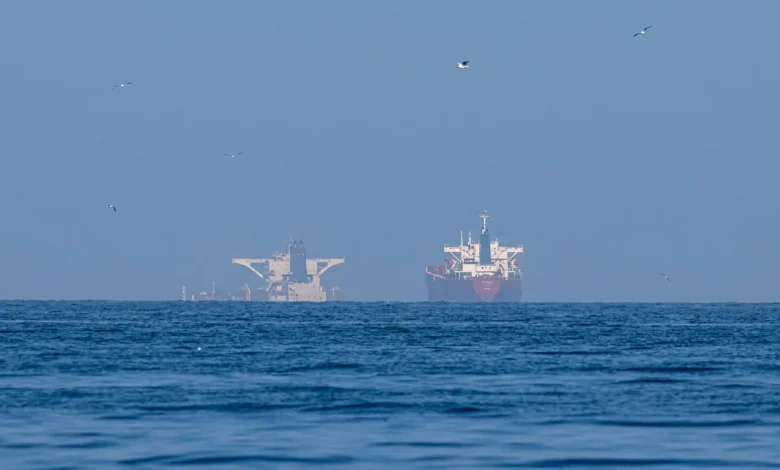
Table of Contents
US military strikes Iran have escalated into a highly volatile second wave of military operations, pushing the Middle East closer to a full-scale regional conflict. Under direct orders from the White House, the U.S. Central Command (CENTCOM) has intensified its air and sea campaign against the Islamic Republic, aiming to dismantle coastal defense installations, missile storage hubs, and maritime threat networks. This severe escalation follows a brief and now-shattered ceasefire mediated by international actors, demonstrating that both Washington and Tehran are prepared for a long-term trial of military and strategic endurance. While Washington asserts that its actions are purely defensive and designed to maintain freedom of navigation, Tehran has responded with aggressive missile salvos targeting American bases across several neighboring Arab states.
The geopolitical fallout is already reverberating worldwide. As shipping companies reassess the security of transit lanes, oil prices are climbing, raising anxieties that a prolonged blockade of the Strait of Hormuz could trigger a severe global volatile energy prices threat. The conflict comes at a time when the global system is already struggling with trade friction, such as Washington’s implementation of Section 301 tariffs to bypass judicial constraints, and broader market challenges like those seen where China’s economy slows to 4.3% in Q2. Both sides have abandoned previous diplomatic off-ramps, and the immediate future of the region now hangs on whether regional diplomacy can survive the ongoing military exchange.
The Strategic Context of CENTCOM’s Second Wave
The latest military operations represent a major shift in the Pentagon’s approach to neutralizing asymmetric maritime threats. According to official communications from CENTCOM, the primary objective of this wave is to systematically degrade Iranian military capabilities utilized to threaten commercial shipping. By striking command nodes, radar tracking stations, and mobile missile launcher bases, the U.S. military hopes to restore safe transit through the Persian Gulf’s narrow chokepoint.
Protecting the Strait of Hormuz Transit Corridor
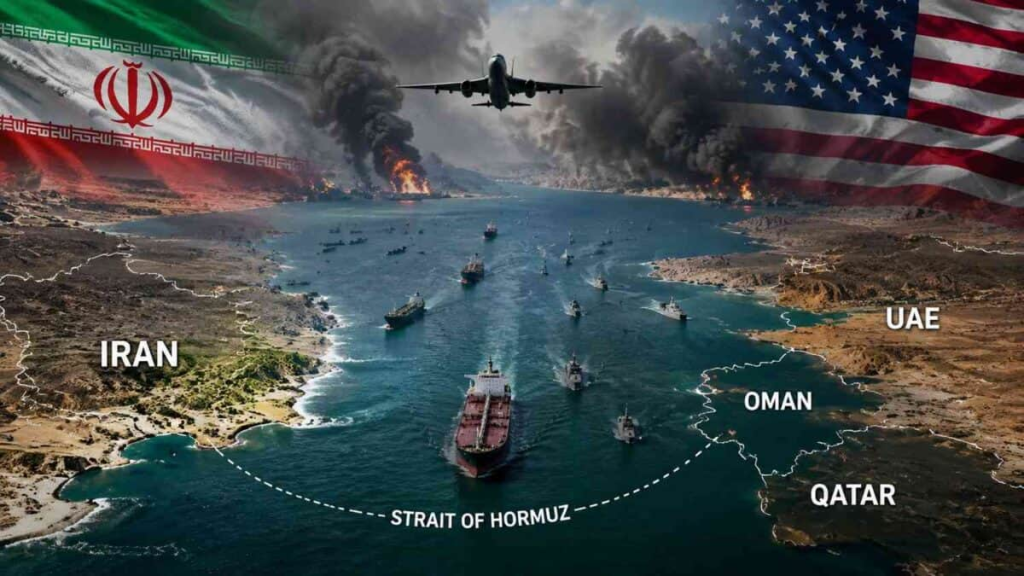
The Strait of Hormuz serves as the lifeblood of international maritime commerce, with nearly twenty percent of the world’s petroleum transiting through its narrow waters daily. When hostilities originally broke out earlier this year, Iran’s rapid deployment of coastal anti-ship missiles and sea-skimming drones effectively choked off access, driving international shipping insurance rates to unprecedented highs. CENTCOM’s second wave of strikes specifically targeted these anti-access/area-denial (A2/AD) capabilities. The U.S. military has also tightened its naval blockade around key Iranian shipping hubs to restrict the flow of military hardware, mirroring actions like the Iran naval blockade enforced on southern ports. According to the U.S. Energy Information Administration, this narrow chokepoint is the world’s most important oil transit path. Military planners have emphasized that the operations are not intended to trigger a regime-change war but are focused on keeping this vital waterway open to global commerce.
Tactical Targets and Munitions Deployed
Tactical reports indicate that the second wave involved a complex mix of manned fighter aircraft, naval cruise missiles, and advanced unmanned aerial vehicles. For the first time in combat, the U.S. Navy utilized one-way attack sea drones alongside air-launched Hellfire missiles to disable hostile assets. Key targets struck included underground cruise missile storage bunkers on Greater Tunb Island, air defense radar installations near Bandar Abbas, and launch sites in the southern Hormozgan province. Additionally, a U.S. 13-missile barrage struck a military barracks near the southeastern city of Iranshahr, killing seven Iranian troops. Tehran’s military leadership immediately condemned the strike as “cowardly aggression,” vowing that the deaths of their service members would be met with an equivalent, devastating response.
Tehran’s Stand: Existential War and Diplomatic Deadlocks
As the bombs fell on southern and western Iran, political and military leaders in Tehran assumed a defiant posture. They characterized the current confrontation not as a localized dispute over shipping rights, but as an existential war initiated by Western powers designed to fragment and destroy the Islamic Republic. Consequently, the brief period of diplomatic dialogue that once seemed promising has completely collapsed, with both sides reverting to hardline stances.
Mohammad Bagher Ghalibaf on National Sovereignty
Addressing the nation, Iran’s parliamentary speaker and top nuclear negotiator, Mohammad Bagher Ghalibaf, delivered a stern assessment of the crisis. He stated unequivocally that while Iran has “never welcomed war, nor do we now,” the nation must “always be prepared for battle and stand firm to protect our national security and interests”. Ghalibaf argued that the United States is pursuing strategic goals that go far beyond political pressure, aiming instead to partition and break up the country. He warned that diplomacy is no longer a tool for compromise but must instead run parallel to military resistance, ensuring that Iran only engages in dialogue from a position of absolute strength. This rhetoric suggests that the Iranian leadership is preparing its public for a protracted conflict with no immediate diplomatic end in sight.
The Status of the U.S.–Iran Memorandum of Understanding
The current escalation has effectively nullified the Pakistan-mediated memorandum of understanding (MoU) that had previously established a fragile framework for peace. Iranian foreign ministry officials announced that because the United States repeatedly violated its commitments through ongoing airstrikes and the reimposition of port bans, Tehran has suspended all of its corresponding obligations under the agreement. This diplomatic breakdown leaves the region without any structured communication channel, drastically increasing the risk of miscalculation. The suspension of the MoU has also frozen progress on other bilateral issues, such as past diplomatic efforts that led to the release of detained American Dena Karari. Today, the focus in Tehran has shifted entirely from negotiation to active territorial defense.
Casualties and Humanitarian Impact in Southern Iran
The human cost of the renewed airstrike campaign is rising rapidly. Unlike previous rounds of targeted strikes, the intensity and geographic spread of this wave have resulted in significant collateral damage and civilian casualties, according to reports emerging from the region.
Damage Reports Across Hormozgan and Khuzestan Provinces
Iran’s Health Ministry reported that the recent U.S. attacks on southern regions have killed at least 35 people and wounded over 300 others over the past few days. The provinces of Hormozgan, Sistan and Baluchestan, and Khuzestan have borne the brunt of the devastation. Local hospitals in Bandar Abbas and Chabahar are reportedly overwhelmed by the influx of wounded individuals, including women and children. In addition to civilian casualties, the strikes have severely damaged civilian infrastructure. At least six major bridges in Hormozgan province were targeted and destroyed, cutting off key transit routes and isolating local communities. The Ministry of Energy also confirmed that airstrikes on power grids have caused widespread blackouts across the south, leaving thousands of families without electricity or access to clean drinking water amid sweltering summer temperatures.
IRGC’s Retaliatory Barrage and Regional Fallout
True to its warnings, the Islamic Revolutionary Guard Corps (IRGC) launched a coordinated series of retaliatory strikes within hours of the U.S. offensive. Utilizing its vast arsenal of ballistic missiles and kamikaze drones, the IRGC targeted American military assets and allied nations across the Gulf, demonstrating its capability to project power beyond its borders.
attacks on U.S. Bases in Kuwait, Jordan, and Bahrain
The IRGC claimed responsibility for a multi-front missile and drone assault, striking what it described as U.S. operational hubs in Bahrain, Kuwait, and Jordan. In Bahrain, the IRGC claimed to have inflicted heavy damage on the U.S. Fifth Fleet headquarters in Manama, a claim that prompted emergency sirens to echo across the capital. Kuwaiti air defense systems reportedly intercepted multiple incoming targets overnight, while Jordanian military officials confirmed the interception of several ballistic missiles traversing their airspace. The escalation has placed Gulf cooperation Council nations in an incredibly difficult position, as they are caught in the crossfire of a superpower conflict. This regional network of hostile action shows how deeply embedded Iran’s influence remains, reminiscent of the security challenges posed when an Iran-backed proxy banned by the UK threatened Western assets in Europe and the Levant.
Global Maritime Blockade and Energy Market Dynamics
As the fighting intensifies, the threat to global energy security has become a harsh reality. The closure of the shipping lanes and the ongoing exchange of fire have caused crude oil prices to surge past eighty dollars a barrel. Analysts warn that if the Strait of Hormuz remains contested, the global economy could face an inflationary shock worse than any seen in recent decades. The disruption of maritime traffic is not happening in a vacuum; it coincides with profound shifts in international trade, domestic policy changes in Washington—including when Roger Rogoff fired by Trump signaled administrative friction—and complex congressional scrutiny, such as when Jay Clayton faces Senate Intelligence Committee hearings on supply chain vulnerabilities. The interconnectedness of global trade means that a prolonged military standoff in the Persian Gulf will eventually be felt by consumers at gas stations and retail outlets worldwide.
Summary of Key Military Developments
The following table outlines the key military exchanges, casualty reports, and strategic impacts observed during the latest wave of the conflict:
| Category / Indicator | United States & Allied Actions | Iran & IRGC Response |
|---|---|---|
| Primary Strategic Objective | Degrade Iranian maritime threat capabilities and enforce freedom of navigation in the Strait of Hormuz. | Protect national sovereignty, resist the naval blockade, and project retaliatory power across the Gulf. |
| Weapons & Systems Deployed | Fighter aircraft, precision-guided cruise missiles, Hellfire missiles, and one-way attack sea drones. | Ballistic missiles, coastal radar defense systems, and kamikaze drone swarms. |
| Reported Casualties & Damage | Minimal physical damage reported at key bases; minor civilian injuries from intercepted debris in Qatar. | At least 35 killed and 300 wounded; seven military personnel killed in southeast Iranshahr; six bridges destroyed. |
| Geopolitical Consequences | Increased coordination with Gulf allies; potential deployment of further naval assets to secure shipping lanes. | Complete suspension of commitments under the Pakistan-mediated MoU; threats to shut down the Bab al-Mandeb Strait. |
The conflict has entered a dangerous cycle of action and reaction, with neither Washington nor Tehran showing any willingness to take the first step toward de-escalation. As long as both sides view the dispute as a zero-sum game, the threat of an all-out regional war remains high, with devastating implications for the global economy and international security.