Seattle’s U.S. Attorney Roger Rogoff Fired by Trump Within Hour of Appointment 2026
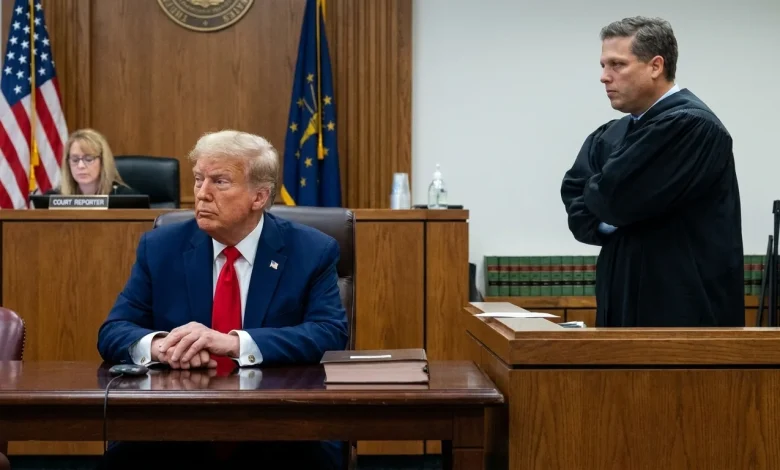
Table of Contents
Seattle’s U.S. Attorney Roger Rogoff was summarily dismissed from office by President Donald Trump on Wednesday, July 15, 2026, marking an unprecedented and highly volatile escalation of the ongoing struggle between the executive branch and the federal judiciary. The termination took place less than an hour after Rogoff, a highly respected former Washington state judge and veteran prosecutor, was unanimously sworn in by the federal judges of the U.S. District Court for the Western District of Washington. This extraordinary move has sent shockwaves through the American legal system, bringing to light long-simmering constitutional questions regarding who has the final authority to seat and remove top federal prosecutors. The dramatic confrontation is not merely an isolated personnel dispute; rather, it represents a deep structural conflict over the boundaries of presidential authority and the independence of the federal courts.
The sequence of events unfolded with astonishing speed. Sworn in at the federal courthouse in downtown Seattle shortly before 8:00 a.m., Rogoff walked over to the U.S. Attorney’s Office to assume his new responsibilities and request a meeting with Charles Neil Floyd, whose statutory 120-day term as interim U.S. Attorney had expired months prior. While waiting in the lobby of the office he was appointed to lead, Rogoff received an email from the Trump administration abruptly notifying him of his removal. The sudden action highlights how aggressively the administration is willing to challenge established legal norms and judicial appointments, raising immediate concerns among legal experts and congressional leaders alike. As constitutional scholars dive deep into the legalities of the firing, Rogoff himself has confirmed that he is actively consulting with attorneys about initiating a lawsuit over his abrupt termination.
The Dramatic Swearing-In and Near-Instant Dismissal of Roger Rogoff
The morning of Wednesday, July 15, began like any other historic judicial transition in Western Washington. Rogoff, whose sterling career as a trial lawyer, King County prosecutor, and state judge made him a consensus choice, was sworn in as U.S. Attorney before 8:00 a.m. at the federal courthouse in downtown Seattle. The atmosphere of professional decorum was quickly shattered, however, when Rogoff crossed the street to the U.S. Attorney’s Office. Having expected a professional handover from Charles Neil Floyd, the outgoing interim U.S. Attorney, Rogoff was left waiting in the reception area. Within 54 minutes of his official swearing-in, an email arrived from the White House, bluntly stating that he was removed from his post. Such swift actions reflect a broader systemic tension that has previously manifested in other controversial federal judge rulings on political cases where judicial oversight clashed with political interests.
Historically, transitions in the Department of Justice are handled with a high degree of bureaucratic courtesy. Nominees are put forward, vetted, and eventually confirmed or replaced through structured, predictable timelines. The direct intervention by the President to fire a court-appointed official within an hour of their swearing-in marks a dramatic departure from this norm. This sudden purge has prompted massive debate among constitutional lawyers about the boundaries of executive power and whether a president can unilaterally override a statutory appointment made by a federal court under its own statutory authority.
The Executive vs. Judiciary Power Struggle Over U.S. Attorney Appointments
At the heart of this confrontation lies a fundamental disagreement over the separation of powers between the executive and judicial branches of the federal government. Traditionally, the President has the constitutional authority under Article II to appoint U.S. Attorneys, subject to the advice and consent of the Senate. However, when vacancies arise and remain unfilled due to political gridlock or administrative delay, Congress has established statutory backups to ensure the continuous operation of federal law enforcement. Over the years, these debates show how much the judicial system has become a primary battlefield for major presidential power struggles, where statutory rules are tested to their limits.
The Trump administration, however, has taken an expansive view of unitary executive theory, which posits that the President maintains complete and absolute control over all executive branch officers, including those appointed via alternative legal mechanisms. By firing Rogoff immediately, the White House has signaled that it will not tolerate any judicial encroachment on what it considers its exclusive domain—even if that encroachment is explicitly sanctioned by federal law.
Understanding 28 U.S.C. § 546 and Judicial Appointment Authority
To understand the legal battleground, one must look closely at federal law, specifically 28 U.S.C. § 546. This statute outlines how vacancies in the office of the U.S. Attorney are to be handled. Under subsection (c), the Attorney General may appoint an interim U.S. Attorney for a period of up to 120 days. If the President does not submit a nominee or if the Senate fails to confirm a permanent replacement before those 120 days expire, subsection (d) comes into play. This crucial provision states: “If an appointment expires under subsection (c)(2), the district court for such district may appoint a United States attorney to serve until the vacancy is filled.”
This statutory mechanism prevents the executive branch from bypassing the legislative branch, especially during key periods of political deadlock surrounding senate races and confirmations. It ensures that the Department of Justice cannot run local offices indefinitely using unconfirmed, temporary political appointees who have not undergone rigorous congressional scrutiny. However, by firing Rogoff, the Trump administration has directly challenged the validity and duration of court-appointed U.S. Attorneys, setting up a major legal showdown.
The Administration’s Workarounds: The Case of Charles Neil Floyd
The conflict in Seattle did not emerge in a vacuum. It was the direct result of a long-standing dispute over Charles Neil Floyd, who was named interim U.S. Attorney by President Trump last October. Floyd, a former immigration judge, served his statutory 120-day interim term, which ended in February. Under normal circumstances, the administration would have submitted a formal nomination to the Senate. Instead, they opted for an administrative workaround: they simply shifted Floyd’s title to First Assistant U.S. Attorney while leaving the top position officially vacant, allowing him to continue directing the office. The administration has frequently utilized such administrative shifts, mirroring other highly contested unilateral policy directives that avoid conventional review channels.
Frustrated by this continuous bypass of the statutory framework, the 17 active and senior judges of the Western District of Washington took matters into their own hands. Following a unanimous vote, they exercised their statutory authority under 28 U.S.C. § 546(d) to appoint Rogoff, hoping to restore regular order. The administration’s swift and aggressive retaliation demonstrates their commitment to preserving unilateral executive authority over federal prosecution offices at all costs.
Who is Roger Rogoff? A Career Built on the Rule of Law
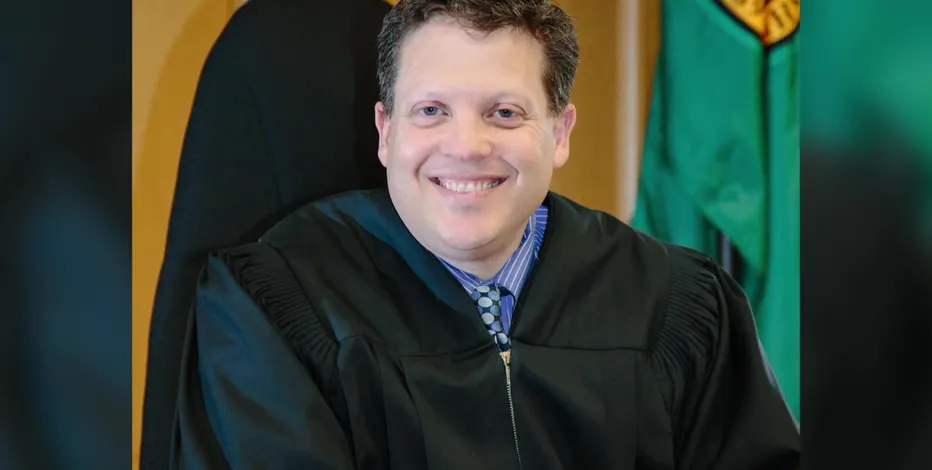
Roger Rogoff is widely recognized as one of Washington state’s most experienced and respected legal figures. His career spans over two decades as a state prosecutor, followed by six years as a federal prosecutor in the very district he was recently appointed to lead. He also served with distinction as a King County Superior Court judge and was later chosen to lead the Washington State Office of Independent Investigations. His selection by the federal judges of the Western District of Washington was the result of an exhaustive, bipartisan search process designed to identify a leader of unquestionable integrity, showing how seasoned legal professionals are often thrust into interim political appointments that carry massive national implications.
Reflecting on his selection by the bench, Rogoff expressed deep humility. “I’m really proud of my career,” he said in a press interview. “The fact that the judges of this district — most of whom I’ve spent my career appearing in front of, or trying cases against, or working with — believed that I was the right person to do this work is just really humbling.” This local support, however, was not enough to shield him from the highly politicized environment of the federal Department of Justice, where loyalty to the administration’s political agenda has increasingly become the primary requirement for holding office.
Strong Political Reactions in Washington State and Capitol Hill
The swift firing of Rogoff immediately ignited a political firestorm, drawing sharp criticism from local leaders and national figures. Democratic lawmakers quickly condemned the administration’s actions as a direct assault on the rule of law and an abuse of executive power. This intense political pushback highlights the growing role of local and national legislators monitoring executive authority to prevent overreach. The situation has also caused concern even among key members of the republican congressional leadership who seek to preserve the institutional balance and avoid a constitutional crisis that could paralyze the Department of Justice.
Senator Patty Murray’s Scathing Critique of the Firing
Washington State Senator Patty Murray released a blistering statement condemning the administration’s decision. Murray emphasized that Rogoff was “eminently qualified” and had been appointed entirely in accordance with federal law. “He should have never been fired, but the President wants to appoint an out-of-touch extremist who will put Trump over the rule of law,” Murray wrote. She further argued that the administration was attempting to bypass the Senate’s constitutional role of advice and consent, seeking instead to install loyalists to carry out a partisan agenda. Murray’s statement underscores the deep anger among legislative leaders who view the firing as a dangerous step toward the politicization of federal law enforcement.
Todd Blanche and the Justice Department’s Stance
In contrast, the Trump administration and the Department of Justice defended the firing as a standard exercise of presidential authority. Acting U.S. Attorney General Todd Blanche asserted that the President’s constitutional powers under Article II override any statutory authority granted to federal judges. “District court judges can appoint a temporary U.S. Attorney, and POTUS can fire them,” Blanche stated in a social media post on Wednesday. He accused the judges who appointed Rogoff of abandoning the traditional process of consulting with the executive branch to ensure that the selected U.S. Attorney is qualified and aligned with the administration’s goals. The administration’s defense is rooted in the belief that the President must have absolute control over all federal prosecutors to ensure the consistent execution of the nation’s laws.
The Legal Frontier: Can Rogoff Successfully Sue the Trump Administration?
The firing of Rogoff has set the stage for an unprecedented legal battle that could ultimately reach the Supreme Court. Rogoff has confirmed that he is actively consulting with legal scholars and attorneys about suing the administration over his removal. The core of his lawsuit would center on whether a president has the constitutional authority to immediately terminate a U.S. Attorney appointed by a federal district court under 28 U.S.C. § 546(d).
While the Supreme Court has historically favored broad presidential removal powers for executive branch officials, this specific scenario presents a unique legal question. Because Rogoff’s appointment was made by the judicial branch under a specific congressional statute designed to prevent executive overreach, his lawyers may argue that the President cannot unilaterally nullify a valid court order. If successful, such a lawsuit could redefine the limits of executive power and establish a crucial precedent for the independence of the federal judiciary. Conversely, a ruling in favor of the administration would solidify the President’s absolute authority over the Department of Justice, effectively neutralizing the courts’ statutory power to appoint temporary prosecutors.
Summary of Key Events and Legal Conflicts
The table below provides a comprehensive summary of the opposing arguments and legal bases surrounding the appointment and subsequent firing of Roger Rogoff as U.S. Attorney for the Western District of Washington.
| Issue / Dimension | Judicial Branch & Supporters (The Court) | Executive Branch & Supporters (The President) |
|---|---|---|
| Appointing Authority | Unanimous vote by the 17 active and senior judges of the Western District. | Claims exclusive Article II authority to select and confirm U.S. Attorneys. |
| Statutory Basis | 28 U.S.C. § 546(d), which allows courts to appoint when interim terms expire. | Asserts that Article II removal power overrides statutory appointment mechanisms. |
| Charles Neil Floyd’s Role | Considered his continued leadership as First Assistant an evasion of Senate review. | Used administrative maneuvers to keep Floyd in charge without Senate confirmation. |
| Core Argument | The law must be followed to ensure local, independent, and lawful prosecution. | The President must have complete control over executive officers to enforce the law. |
As this high-stakes constitutional drama continues to play out, the legal community watches with bated breath. The resolution of this conflict will have far-reaching implications not only for the state of Washington but for the entire nation, potentially reshaping the balance of power between the President and the federal courts for generations to come.