Mitch McConnell Breaks Silence 2026: Fall Caused Hospitalization
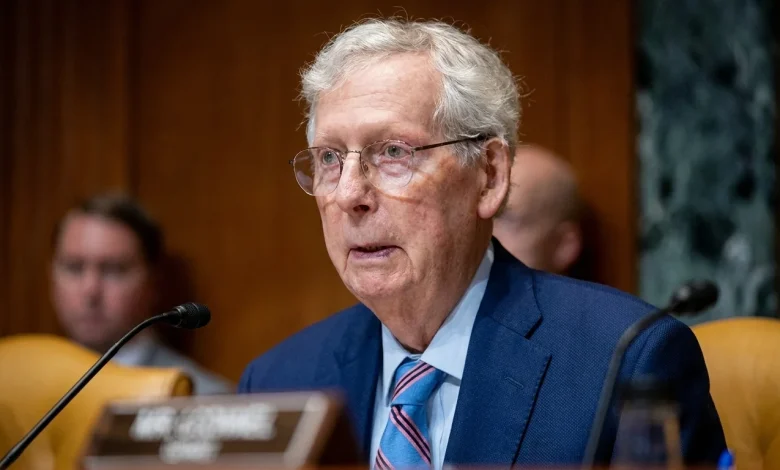
Table of Contents
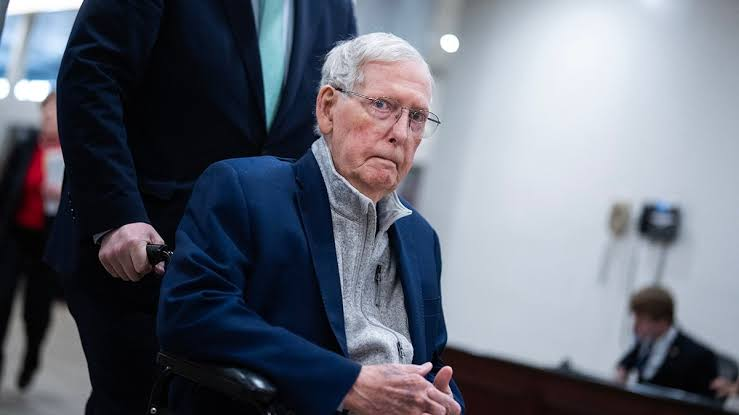
Mitch McConnell, the veteran 84-year-old Senator from Kentucky and former Senate Republican Leader, has officially broken nearly four weeks of public silence following his sudden hospitalization on June 14, 2026. In a comprehensive statement released on Sunday, July 12, 2026, McConnell disclosed that a fall at his home left him “briefly unconscious” and prompted his extended medical stay. The revelation, which was accompanied by a highly discussed photo alongside his wife, Elaine Chao, marked his first direct communication with the public since his hospitalization, seeking to quiet intensifying rumors regarding his health and political future.
Mitch McConnell Breaks Weeks of Speculation with Statement
For nearly a month, the health of Senator Mitch McConnell remained shrouded in mystery, triggering widespread anxiety, intense political speculation, and calls for transparency from both allies and opponents. Since his emergency admission to the hospital on June 14, 2026, his press office had released only sparse, repetitive updates stating that he was “receiving excellent care” and recovering. This lack of clear information led to mounting concern across Washington, D.C., particularly as critics and commentators debated whether the long-serving lawmaker was permanently incapacitated or even dead.
The silence finally ended on Sunday evening when McConnell’s office distributed a deeply personal and detailed letter addressed to his constituents. Acknowledging the “honest questions” surrounding his prolonged absence, McConnell addressed the natural hesitation many of his peers face when dealing with aging. “You all know how folks of my generation often hesitate to share the vulnerability that comes with growing older,” McConnell remarked in his statement. “Even in the public eye, I feel that same instinct — I can’t help it”. This candid admission served as a rare moment of personal vulnerability for a political figure known for his stoic and guarded demeanor throughout his seven terms in the Senate.
The Nature of the Fall and Brief Unconsciousness
In his statement, McConnell clarified the exact sequence of events that led to his emergency hospitalization. He revealed that he had suffered a fall at his home last month, which resulted in a brief period of unconsciousness. The announcement aligned with public emergency medical services (EMS) dispatch logs from June 14, which indicated that emergency responders had been dispatched to his Washington residence to treat an unconscious individual.
Despite the severity of losing consciousness, McConnell reassured his constituents that a battery of comprehensive diagnostic tests had ruled out the most severe cardiovascular and neurological emergencies. “My doctors have confirmed that I didn’t break any bones or suffer a concussion,” McConnell’s statement read. “I didn’t have a heart attack or a stroke. I don’t have any tumors or hemorrhages”. To isolate the root cause of the incident, the senator explained that he has cooperatively “submitted to every test” his medical team could devise. While the tests have yet to pinpoint a singular cause for the fall, McConnell’s mobility struggles—stemming from a childhood battle with polio—have historically made managing balance and movement increasingly difficult with age.
Developing a Mild Case of Pneumonia
In addition to recovering from the physical impact of the fall, McConnell revealed that his stay at the hospital was further prolonged by a secondary medical issue. While hospitalized, the senator contracted and was treated for a “mild case of pneumonia”. Secondary respiratory infections are common among elderly patients undergoing prolonged hospital stays or recovering from trauma, presenting additional hurdles to a swift discharge.
McConnell emphasized that he has been cooperative throughout his medical journey. “I can assure you that I’ve been a good patient. At my age, I tend to do what my doctors tell me to do,” he noted. The successful treatment of his pneumonia, combined with continued physical progress, ultimately allowed his medical team to transition him from acute hospital care to an inpatient rehabilitation facility. In this new setting, McConnell plans to focus on physical therapy to rebuild his physical strength and regain his mobility.
The ‘Proof of Life’ Photograph and Online Reaction
To substantiate his recovery and directly counter the rumors circulating on social media, McConnell’s office accompanied his written statement with a photograph. The image depicts a smiling McConnell sitting in a hospital chair, flanked by his wife, former Labor and Transportation Secretary Elaine Chao. In his hand, McConnell holds a copy of the Sunday edition of the Washington Post, specifically displaying the sports section. This classic “proof of life” tactic was designed to demonstrate that the image was authentic and recently captured, rather than an archival photo or an artificial intelligence-generated image.
The release of the photograph immediately became a focal point of intense discussion across the political spectrum. While supporters welcomed the visual update as reassuring evidence of his ongoing recovery, internet skeptics and political commentators scrutinized the image’s details. Some critics pointed out the blurry appearance of the newspaper text, while late-night television hosts and social media users posted parodies of the photo. Notably, comedian Jimmy Kimmel shared an edited version of the image with his own face super-imposed over McConnell’s to poke fun at the highly staged nature of the snapshot. Despite the online ridicule, the photograph served its strategic purpose by providing a clear, dated visual of the senator actively engaged and smiling alongside his spouse.
Elaine Chao and the Sunday Washington Post
The inclusion of Elaine Chao in the photograph was highly symbolic. As a prominent political figure in her own right, Chao’s presence underscored the family’s unified front during a difficult personal period. The decision to display the sports section of the Washington Post was also interpreted by political observers as a calculated move to keep the focus away from the grim political news of the weekend, while still definitively dating the image to Sunday, July 12, 2026. In the highly polarized world of modern politics, even a simple health update photograph undergoes rigorous deconstruction by media analysts and the public alike.
Chronology of Mitch McConnell’s Hospitalization and Health Milestones
To understand the full context of Senator McConnell’s recent health events, it is helpful to look at the timeline of his hospitalization alongside key political milestones. The table below outlines the timeline and critical details of the senator’s recovery progress.
| Key Date | Event / Milestone | Details and Clinical Findings |
|---|---|---|
| June 14, 2026 | Emergency Hospitalization | McConnell suffers a fall at home; EMS responds to a report of an unconscious individual. He is admitted to an acute care hospital. |
| Late June 2026 | Treatment for Secondary Infection | While hospitalized, the senator is diagnosed with and treated for a mild case of pneumonia. |
| Early July 2026 | Transition to Rehabilitation | Showing signs of physical improvement, McConnell is discharged from acute hospital care and transferred to an inpatient rehabilitation center. |
| July 12, 2026 | Official Health Statement & Photo | McConnell breaks his silence with a written update and a photo with Elaine Chao, holding a Sunday Washington Post. |
| January 2027 | Planned Retirement | McConnell is set to complete his seventh Senate term and officially retire from his Senate seat, having already stepped down from leadership. |
The Legislative Consequences on Capitol Hill
The timing of McConnell’s health update coincided with a period of extraordinary grief and legislative tension in the upper chamber. Just hours before McConnell’s statement was released, the political world was shocked by the sudden death of veteran Republican Senator Lindsey Graham of South Carolina. Graham, 71, passed away unexpectedly on Sunday from an aortic dissection caused by arteriosclerotic cardiovascular disease. The loss of Graham, coupled with McConnell’s ongoing absence, has major operational implications for the Senate as it reconvenes.
With Graham’s seat temporarily vacant and McConnell unable to return to the Senate floor to cast votes, the Republican majority in the Senate has been temporarily whittled down to 51-47. This narrow margin presents a major challenge for the Senate Republican leadership. The party is currently working to advance key elements of President Donald Trump’s legislative agenda, confirm several of Trump’s judicial and executive nominees, and navigate the highly contentious appropriations process. Every vote is critical, and the absence of two veteran lawmakers could stall key legislative packages.
How the GOP Majority is Impacted
In a closely divided Senate, the absence of even a single member can disrupt committee votes and delay floor action. Because McConnell’s medical team has not yet cleared him to return to the physical Senate floor, Republican leadership must carefully coordinate with their caucus to ensure they have the necessary numbers to pass party-line measures. The loss of Lindsey Graham’s reliable vote makes McConnell’s eventual return even more critical. While a state-level process will eventually fill Graham’s seat, the immediate vacuum has placed a premium on McConnell’s health and remote legislative coordination.
Continuing Senate Business and Long-term Plans
Despite his physical absence from the Capitol, McConnell insisted that he remains fully engaged in daily Senate operations. He reassured his constituents that he is not taking a break from the legislative business that matters to them, explaining that he is utilizing modern communication channels to keep in constant contact with his staff and colleagues. As CBS News reported, McConnell has been actively working with his legislative aides and keeping in touch with fellow senators on appropriations, midterm politics, and other pressing issues.
McConnell, who previously spent 18 years as the Republican leader before stepping down from the leadership post last year, remains a highly influential backbench senator. He is currently serving out the final months of his seventh term, which is scheduled to conclude in January. In his statement, McConnell reiterated his absolute commitment to completing the remainder of his term. “Part of my decision to retire at the end of my term this coming January was being honest about the demands of Senate work,” McConnell said. “But I still have unfinished business to complete on your behalf, and I have every intention of finishing the job you elected me to do”.
Growing Calls for Transparency and Political Future
The decision to issue a detailed statement and photograph was not merely a response to internet rumors, but also a reaction to formal political pressure. As McConnell’s hospitalization stretched past the three-week mark with minimal updates, public figures began demanding greater transparency. Kentucky Governor Andy Beshear, a Democrat, publicly called on the senator’s office to provide a clear, transparent, and detailed account of the senator’s condition. Given the critical role McConnell plays in representing Kentucky’s interests in Washington, Beshear and other state leaders argued that constituents had a right to know the status of their senior senator’s health.
By disclosing his brief unconsciousness, the lack of neurological damage, his bout with pneumonia, and his transition to a rehabilitation center, McConnell’s statement directly addressed the concerns raised by Governor Beshear and the public. The update also highlights the ongoing debate surrounding the advanced age of many of America’s federal leaders. At 84, McConnell is one of the oldest sitting members of the Senate, and his recent health struggles emphasize the physical demands of high-level political office. However, by maintaining remote involvement in the appropriations process and midterm strategy, McConnell hopes to prove that his cognitive capabilities and legislative drive remain intact, even as his physical body recovers from a serious fall.