Washington AI Honors Gala: Inside the Elite Tech Summit
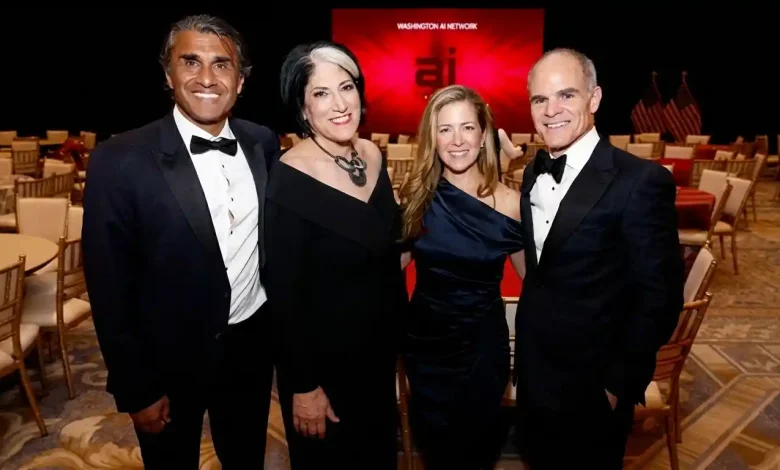
Table of Contents
Washington AI Honors celebrated its second-annual black-tie gala at the historic Waldorf Astoria—formerly the Trump International Hotel—located just steps away from the White House in Washington, D.C. Complete with a shimmering red carpet and a highly advanced dancing humanoid robot, the prestigious gathering felt less like a typical policy reception and more like a high-concept science fiction Hollywood premiere. As artificial intelligence continues to assert its presence across virtually every facet of modern life, the evening’s attendees, organizers, and honorees displayed an overwhelmingly optimistic attitude toward the trajectory of machine learning and its ultimate societal outcomes.
“AI is a transformative technology that’s going to enable so many advancements, from healthcare to engineering to energy production to security,” U.S. Energy Secretary Chris Wright remarked to NBC News on the red carpet. Addressing the growing societal conversations and friction surrounding these advancements, Wright added: “I understand people’s concerns about it, but it’s going to be overwhelmingly positive for our society. It’s a beautiful event.” This sentiment of profound excitement set the tone for an evening where the nation’s political class met with the vanguard of Silicon Valley’s innovation ecosystem to network, formulate partnerships, and debate the boundaries of regulatory oversight.
The Elite Guest List: Power Players, Politicians, and Papal Nuncios
The black-tie gala was organized by the Washington AI Network, a prominent organization that hosts regular fireside chats and networking opportunities for the capital’s most influential tech policy advocates, political strategists, and industrial leaders. Underwritten and sponsored by some of the most deep-pocketed tech giants in the world—including Anthropic, Microsoft, and Meta—the guest list read like a who’s-who of the modern technological and administrative elite.
High-Profile Administration Attendees
Among the attendees mingling beneath the gilded chandeliers of the Waldorf Astoria were several highly placed administration officials. Energy Secretary Chris Wright spearheaded discussions around the immense power grids required to sustain the country’s next-generation data centers. Beside him was National Cyber Director Sean Cairncross, who engaged in conversations focused on securing critical infrastructure and protecting public-sector data networks against foreign algorithmic threats.
Additionally, Dr. Mehmet Oz, the newly appointed Administrator of the Centers for Medicare & Medicaid Services (CMS), attended to witness firsthand how healthcare systems are utilizing diagnostic machine learning to optimize patient care and streamline complex administrative pipelines. The presence of these decision-makers highlighted how deeply entrenched AI policy has become within the federal government, extending far past defense departments into national energy, health systems, and cyber defense sectors.
The Vatican’s Vision for Human-Centered AI
Perhaps the most unexpected but compelling presence of the evening was Archbishop Gabriele Caccia, who recently assumed his role as the Apostolic Nuncio to the United States. Speaking before an audience of over 400 technology executives, lobbyists, and lawmakers, Archbishop Caccia delivered a message regarding Pope Leo XIV’s vision for the ethical boundaries of automated systems.
According to international news outlet Decode39, Archbishop Caccia presented the core philosophies of Pope Leo XIV’s first encyclical, titled Magnifica Humanitas, which was officially published on May 15. The Archbishop emphasized that artificial intelligence must remain firmly anchored in human dignity and directed toward the collective common good. Presenting a humanitarian framework to a room heavily occupied by venture capitalists and corporate policy lobbyists served as a powerful reminder that the ethical development of AI is not merely a technical challenge, but a deeply moral, cultural, and spiritual responsibility.
Recognizing the Trailblazers: The 2026 AI Honors Awardees
A focal point of the evening was the formal presentation of the 2026 AI Honors, which recognized seven outstanding Americans whose efforts are steering the development, governance, and public integration of artificial intelligence.
Bipartisan and Public Sector Achievements
The event underscored that legislative movement on AI requires a cross-aisle effort. Senators Mark Warner (D-VA) and Mike Rounds (R-SD) were honored with the Bipartisan Leadership on AI Award, a trophy presented to them by acclaimed actor Michael Kelly. Both senators have been highly active in the Senate’s AI Working Group, striving to construct robust legislative guardrails that protect American intellectual property and national security while avoiding the stifling of domestic commercial innovation.
In the public sector and military defense category, Major General Patrick J. Ellis, the commanding general of the 4th Infantry Division and Fort Carson, accepted the AI Leadership Award, presented by Army Secretary Dan Driscoll. Major General Ellis has championed the integration of tactical machine learning and automated analytics to protect ground personnel and optimize logistics on the modern battlefield. Meanwhile, the Civic Technology Leadership Award was presented by Washington, D.C. Mayor Muriel Bowser to Michele Jawando, the CEO of Omidyar, for her relentless work in expanding civic technology accessibility and addressing algorithmic bias in marginalized communities.
Corporate and Academic Pioneers
The technical and business sectors were equally celebrated. NVIDIA co-founder Chris Malachowsky accepted the prestigious Founder’s Education Accelerator Award from CNN anchor Pamela Brown. Under Malachowsky’s guidance, NVIDIA has played an instrumental role in donating hardware and establishing educational curriculums designed to train the next generation of American engineers.
To honor academic contributions, Dr. Katherine (Kathy) Yelick received the Public Science Award, presented by Dr. Darío Gil, who serves as the Under Secretary for Science at the U.S. Department of Energy (DOE) and Director of the Genesis Mission. Dr. Yelick’s research has revolutionized supercomputing methodologies and helped the national laboratory system process complex scientific simulations with unprecedented speed. Lastly, billionaire entrepreneur Kevin O’Leary, widely recognized as “Mr. Wonderful” from the television series Shark Tank, was presented with the AI Global Ambassador Award by Geraldine Byrne Nason, Ireland’s Ambassador to the United States, acknowledging his international efforts to fund and promote robust, enterprise-level AI applications globally.
The Core Paradox: Elite Optimism vs. Public Apprehension
While the atmosphere inside the Waldorf Astoria was filled with champagne, high-society handshakes, and unyielding optimism, it stood in stark contrast to the growing anxiety felt by everyday communities across the United States. This underlying tension highlights a major paradox: while political elites and Silicon Valley executives celebrate AI as a revolutionary catalyst for progress, many citizens view it as a direct threat to their livelihoods, privacy, and local environments.
Rising Local Concerns: Energy, Emissions, and Infrastructure
Outside the ballroom doors, local communities are increasingly souring on the physical infrastructure required to keep complex AI architectures alive. Hyperscale data centers require enormous amounts of electrical energy and water for cooling, leading to local permitting disputes and escalating tensions over resource allocation.
A newly published United Nations University report paints a sobering picture of this reality, projecting that by the year 2030, the world’s data centers will consume approximately 3% of global electricity—surging to a staggering 935 trillion watt-hours, up from roughly 448 trillion watt-hours in previous years. Furthermore, the report attributes 208 million tons of carbon dioxide (CO2) emissions directly to data center operations last year alone, with projections showing that number doubling to nearly 440 million tons by 2030. Importantly, the AI share of this massive energy demand is projected to jump from 20% today to a whopping 40% by 2030. These numbers explain why local municipalities are growing increasingly resistant to hosting massive data center developments in their backyards.
Public Polling Exposes a Deeply Divided America
To accompany the gala, the Washington AI Network released exclusive survey findings detailing public opinions on the technology. Polling over 1,500 U.S. adults, the data revealed a massive societal divide. Heavy AI users—who utilize chatbots, automated productivity programs, and generative systems on a daily basis—reported immense optimism about their professional futures and the general trajectory of tech integration.
In contrast, the broader American public expressed strong apprehension. Concerns over chatbot-driven misinformation, job displacement, corporate surveillance, and the erosion of human interaction dominated the survey responses. This wide perception gap suggests that tech developers and federal policymakers have a steep mountain to climb to convince ordinary citizens that the benefits of the algorithmic age will be distributed equitably.
Summary of the 2026 Washington AI Honors Gala
Below is a structured overview of the key recipients, presenters, and awards highlighted during the second-annual gala:
| Award Category | 2026 Honoree / Recipient | Presenter | Key Focus & Significance |
|---|---|---|---|
| Bipartisan Leadership on AI Award | Sen. Mark Warner (D-VA) & Sen. Mike Rounds (R-SD) | Michael Kelly (Actor) | Drafting regulatory guardrails while promoting domestic tech innovation. |
| AI Global Ambassador Award | Kevin O’Leary (“Mr. Wonderful”) | Geraldine Byrne Nason (Irish Ambassador) | International funding and scaling of enterprise AI solutions. |
| Founder’s Education Accelerator Award | Chris Malachowsky (NVIDIA Co-founder) | Pamela Brown (CNN Anchor) | Pioneering educational curriculum and donating compute power for student engineers. |
| Civic Technology Leadership Award | Michele Jawando (CEO of Omidyar) | Muriel Bowser (DC Mayor) | Addressing algorithmic bias and broadening access to technology across communities. |
| AI Leadership Award | Major General Patrick J. Ellis (4th Inf. Div.) | Dan Driscoll (Army Secretary) | Integrating automated analytics and tactical AI for military defense. |
| Public Science Award | Dr. Katherine (Kathy) Yelick (Supercomputing Expert) | Dr. Darío Gil (Under Sec. for Science, DOE) | Revolutionizing national supercomputing research and AI scientific simulation. |
Conclusion: Navigating the Delicate Path of AI Integration
Balancing the dazzling promise of high-tech breakthroughs with the everyday realities of local infrastructure demands and public uncertainty remains the defining challenge of the decade. The Washington AI Honors gala proved that the technological elite and government leadership are deeply committed to driving AI adoption forward. From the Department of Energy exploring new power solutions for data networks to the Vatican reminding creators to anchor automated models in fundamental humanism, the event showed that a complex, multifaceted conversation is taking place in the nation’s capital.
However, for artificial intelligence to achieve its full potential in a way that benefits everyone, the positive energy felt inside the Waldorf Astoria must extend beyond those walls. Policymakers and technology developers will need to address the very real, localized challenges of carbon emissions, power consumption, and public trust. Only by bridging the gap between elite optimism and community concerns can the future of AI truly become as bright as the organizers of the Washington AI Honors envision it to be.