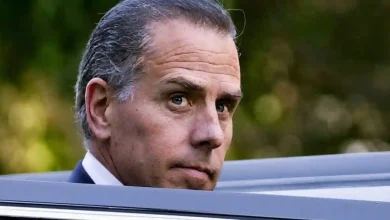
Graham Platner Rally: Maine Candidate Addresses Scandals
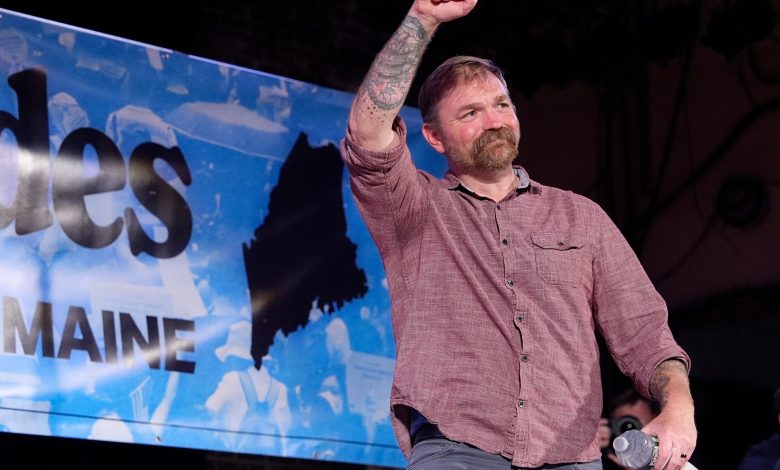
Graham Platner Rally: The Bar Harbor Campaign Event Amidst a Political Storm
Graham Platner, the presumptive Democratic nominee for the U.S. Senate in Maine, stood before a packed audience in Bar Harbor on June 5, 2026, attempting to stabilize a campaign heavily buffeted by successive waves of personal scandal. With only days remaining before the pivotal Democratic primary on June 9, Platner’s political future hangs in a delicate balance. What was once envisioned as a textbook progressive insurgent campaign to unseat five-term Republican Senator Susan Collins has instead evolved into a national media spectacle. This town hall meeting, co-hosted with California Representative Ro Khanna, served as a crucial litmus test of Platner’s remaining support among local grassroots voters. The intense scrutiny from national media outlets, including the Wall Street Journal and The New York Times, has prompted several prominent members of the Democratic establishment in Washington to quietly, and sometimes publicly, question his viability as a candidate. Despite the heavy political headwinds, Platner used his platform not to retreat, but to frame the deluge of negative coverage as a weaponized effort to suppress his populist platform, which focuses on healthcare, corporate taxation, and working-class empowerment.
A Deeper Look at the Bar Harbor Town Hall Event
The atmosphere inside the Bar Harbor theater was charged with emotion, defying the narrative of a campaign on the verge of collapse. Hundreds of local supporters gathered to signal their unwavering alignment with Platner, demonstrating that the grassroots movement that propelled him to prominence remains deeply entrenched. Throughout his address, the candidate was greeted with multiple standing ovations, indicating that the personal and political narratives surrounding him have created a defensive, protective posture among his core constituency. Platner spoke directly to the crowd about Maine’s unique role in his life, describing the state as a sanctuary that provided the personal strength necessary to rebuild himself after returning from military combat. “Since the beginning, Maine, you had my back,” Platner told the cheering crowd, emphasizing that the community’s support had been instrumental as his past struggles with post-traumatic stress disorder (PTSD), alcohol abuse, and historical online statements were systematically exposed to the public. He directly addressed the newest reports, stating that as “every single piece of that past and journey gets dug up, litigated, and weaponized,” the steadfastness of Maine voters remained his primary source of political resilience.
Show of Support for Wife Amy Gertner
A defining moment of the evening occurred when Platner paused his political remarks to single out his wife, Amy Gertner, who has recently found herself at the center of the campaign’s most invasive controversies. Gertner, who married Platner in 2023, received a resounding chant of support from the audience as they called out her name in unison. This public display of solidarity comes in the wake of leaked reports concerning sexually explicit text messages Platner exchanged with other women early in their marriage. The couple’s personal challenges became public after a former campaign staffer shared details of the text messages with national media outlets. In response to the crowd’s vocal support, Platner acknowledged the emotional toll the campaign has exacted on his family, praising Gertner’s strength and resilience. Gertner has previously defended her husband in public statements, describing the media’s obsession with their early marital difficulties as “shameful gossip” and noting that “being married is hard,” but emphasizing that they had successfully resolved the issue through intensive marriage counseling before the launch of the Senate bid.
The Timeline of Controversies Surrounding Graham Platner
To understand the intense drama surrounding Platner’s candidacy, one must examine the rapid succession of controversies that have emerged since he launched his campaign in August 2025. Platner, a 41-year-old Marine Corps veteran and coastal oyster farmer, was initially viewed as a fresh, non-traditional candidate capable of generating viral progressive enthusiasm. However, his background as a political outsider also meant his past had not been subjected to the rigorous vetting processes typical of career politicians. Over the past ten months, opposition researchers and national journalists have unearthed a series of problematic elements from Platner’s earlier life. These disclosures have created a challenging narrative for the campaign, forcing Platner to balance his populist message with constant explanations of his personal history. The controversies span a wide spectrum, ranging from offensive social media activity and a controversial military-era tattoo to allegations of marital infidelity and historical interpersonal relationship difficulties.
The Early Struggles: Combat PTSD and Online Posts
Among the first significant challenges to emerge were several offensive posts made by Platner on the online platform Reddit approximately a decade ago. These deleted comments, which contained racist, sexist, and homophobic language, were brought to light shortly after his campaign gained national traction. Rather than denying the posts, Platner chose to address them by sharing details of a dark period in his life. He explained that after returning from multiple combat tours—including three in Iraq as a Marine and one in Afghanistan with the Maryland National Guard—he suffered from severe, undiagnosed PTSD. During this difficult transition back to civilian life, he admittedly self-medicated with alcohol, leading to reckless behavior and offensive online commentary. While Platner has taken responsibility for those statements, apologizing publicly and describing them as reflective of a person he no longer is, the posts continue to serve as ammunition for political opponents who argue that they reveal underlying character flaws.
The Nazi Symbol Tattoo Controversy
In October 2025, the campaign faced another crisis when details emerged regarding a chest tattoo Platner obtained in 2007. The tattoo featured a skull and crossbones resembling the “Totenkopf,” a symbol widely recognized for its association with the Nazi SS. The revelation led to immediate demands for his withdrawal from the race. Platner responded by explaining that he had received the tattoo while heavily intoxicated with fellow Marines during his military service and had been entirely unaware of its historical or political significance. He subsequently had the tattoo professionally covered up to prevent further association with extremist groups. The controversy was reignited, however, by a recent New York Times report in which a former girlfriend, Lyndsey Fifield, claimed that Platner was well aware of the symbol’s Nazi origins and had joked about it during their relationship. Platner has vehemently denied Fifield’s claims, asserting that her allegations are politically motivated and pointing out that he had openly displayed the tattoo at his brother’s wedding to a Jewish woman—an act he contends he would never have committed had he known of its offensive nature.
The Texting Leaks and Marital Counseling
The personal life of the Platner family became a national talking point in late May 2026, when the Wall Street Journal and The New York Times reported that Platner had exchanged sexually explicit text messages with multiple women shortly after his marriage to Gertner in 2023. The leak originated from Genevieve McDonald, a former political director for the campaign. Gertner had originally confided in McDonald in August 2025 about the text messages to ensure that the campaign was prepared for any potential political vulnerabilities. Although the campaign aides ultimately determined that the matter was private and had been successfully addressed through marriage counseling, the details were eventually shared with reporters. This disclosure prompted intense debate over campaign ethics and the boundaries of political reporting, with some supporters expressing outrage at the betrayal of Gertner’s trust, while critics viewed the messages as evidence of a pattern of untrustworthy behavior.
The New York Times Report on Past Relationships
The most damaging blow to Platner’s campaign came on Thursday, June 4, 2026, with the publication of an extensive New York Times investigative report detailing his past romantic relationships. The article, which compiled interviews with more than two dozen individuals, featured serious allegations of physical and emotional misconduct from his former partner, Lyndsey Fifield. Fifield, a conservative activist who dated Platner from 2013 to 2015, alleged that Platner regularly grabbed her by the shoulders hard enough to leave marks, once twisted her arm behind her back, and pulled her from a taxi by her wrist. According to a report published by The Guardian, Platner has flatly denied these allegations, calling them “simply not true” and attributing them to Fifield’s political motivations as a Republican operative. Another ex-girlfriend, Jenny Racicot, described Platner as “reckless” and “unsettling” during an incident in 2021 when he arrived at her home while intoxicated. Conversely, several other former partners interviewed for the piece described Platner in highly positive terms, referring to him as a “gentle giant” and a supportive partner with whom they remain on friendly terms.
Inside the Political Strategy: Populism vs. Establishment Concerns
The unfolding drama has created a profound ideological split within the Democratic Party. Progressive champions like Vermont Senator Bernie Sanders have maintained their strong endorsements of Platner, arguing that the focus of the election should remain on critical economic issues affecting working-class Americans, such as universal healthcare, housing affordability, and rising utility costs. Sanders has dismissed the media’s focus on Platner’s personal life, urging voters to prioritize policy over personal histories. Similarly, Senate Minority Leader Chuck Schumer met with Platner in Washington, indicating that the party establishment is hesitant to abandon a candidate who possesses significant grassroots momentum in a race that is critical to securing a Democratic majority. However, other prominent Democrats, such as New Jersey Senator Cory Booker and Michigan Senator Elissa Slotkin, have expressed public reservations, with Slotkin noting that she is “sick of” the constant stream of negative stories distracting from the party’s broader legislative goals.
Comparing the Controversies: A Detailed Campaign Timeline
The rapid succession of disclosures has forced the campaign into a perpetual state of crisis management. Below is a comprehensive summary of the major controversies that have impacted the Platner campaign, detailing the nature of the allegations, the candidate’s explanation, and the resulting political impact:
| Controversy | Key Allegations / Disclosures | Platner’s Explanation / Defense | Current Political Impact |
|---|---|---|---|
| Historical Online Posts | Racist, sexist, and homophobic comments on Reddit. | Attributed to a dark period of combat PTSD and alcohol self-medication a decade ago. | Led to public apologies and initial concerns over candidate viability. |
| SS-Linked Chest Tattoo | Tattoo resembling the Nazi Totenkopf symbol. | Got it while drunk as a Marine in 2007; was unaware of the meaning and has covered it up. | Reignited by ex-girlfriend’s claims that he knew the historical meaning. |
| Explicit Marital Texts | Exchanged explicit messages with women early in marriage. | Private matter resolved through counseling; condemned the leak as a betrayal of his wife’s trust. | Strained relations with former campaign staff; raised questions among mainstream Democrats. |
| NYT Relationship Report | Physical restraint and emotional volatility alleged by an ex-partner. | Flatly denied any physical misconduct; characterized allegations as politically motivated. | Prompted criticisms from incumbent Susan Collins; split voter opinions on candidate viability. |
The Voter Sentiment: Redemption vs. Disqualification
Voters in Maine are grappling with a complex ethical dilemma as they head to the polls for the primary election. The reactions among the Democratic electorate reflect a deep division over the concepts of redemption, transparency, and political viability. For many progressive voters, Platner’s willingness to discuss his struggles with PTSD, alcoholism, and personal failure is seen not as a liability, but as a rare sign of political authenticity. Supporters like Valerie Tate have argued that personal growth and accountability are precisely the qualities that make a candidate fit for public office. Conversely, other voters express a growing weariness regarding the continuous cycle of scandals, worrying that the general election campaign against Susan Collins will be dominated by personal controversies rather than discussions on policy. The concern remains that further disclosures could emerge, making it difficult for the party to mount a successful challenge in November.
The Impact on the Critical Maine Senate Race
The outcome of the Maine Senate primary will have profound implications for the national political landscape. The race to unseat Republican Senator Susan Collins is widely considered one of the most critical contests for Democrats seeking to gain control of the Senate. Collins has already capitalized on the recent allegations, calling the New York Times report “troubling” and stating that Platner has “a lot of questions to answer”. As the campaign enters its final days before the primary, Platner’s strategy relies heavily on bypassing national media narratives and appealing directly to the economic anxieties of working-class Mainers. Whether this strategy will be sufficient to overcome the mounting weight of his personal controversies remains to be seen, but the passionate crowd in Bar Harbor demonstrated that his populist movement is far from defeated.