Henry Nowak Case: Outrage Over Handcuffed Dying Student
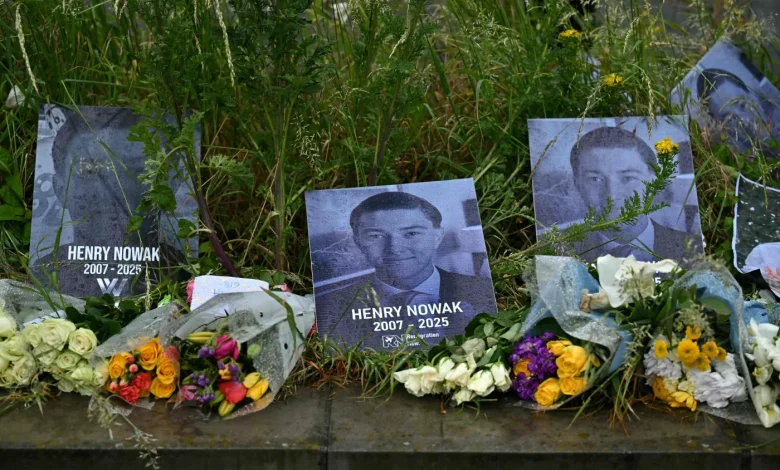
Henry Nowak: Tragedy, Deception, and Systemic Failure
Henry Nowak, an 18-year-old first-year accountancy and finance student at the University of Southampton, was tragically murdered on December 3, 2025. What began as a horrific act of violence on a quiet residential street quickly escalated into a profound national tragedy and a systemic scandal that has shaken the United Kingdom’s confidence in public institutions. After being stabbed five times, Nowak was handcuffed and arrested by responding police officers as he lay dying on a driveway. His killer, 23-year-old Vickrum Digwa, a British Sikh man, had fabricated a story, claiming he was the victim of a racially motivated assault. As bodycam footage of the incident was released following Digwa’s sentencing, the British public watched in horror as officers ignored the dying student’s desperate pleas that he had been stabbed and could not breathe. The resulting outrage has ignited fierce debates over race, policing protocols, and the controversial concept of “two-tier policing” in modern Britain.
The Tragic Night on Belmont Road
On the night of December 3, 2025, Henry Nowak was walking home alone after spending an evening celebrating with his university football teammates. Nowak, originally from Chafford Hundred in Essex, was described by his family and peers as a careful, principled, and ambitious young man who was the first in his family to attend university. While walking down Belmont Road, a residential street in Southampton, at approximately 11:30 PM, Nowak recorded a lighthearted Snapchat video of himself singing. He was well below the legal driving limit for alcohol, demonstrating his characteristic sense of responsibility.
A Fatal Confrontation Captured on Snapchat
By chance, Nowak crossed paths with Vickrum Digwa, who was 22 at the time. Nowak noticed a large, visible ceremonial knife attached to Digwa’s belt. Intrigued or concerned, Nowak began to film Digwa, asking him if he was a “bad man”. Digwa replied in the affirmative, stating, “I am a bad man,” before aggressively snatching Nowak’s phone to prevent the interaction from being recorded or shared. This action sparked an intense physical struggle over the device.
The Fabricated Accusation of Racism
The court would later find that during this altercation, Digwa drew a large, non-compulsory dagger associated with the Nihang order of the Sikh faith. Digwa stabbed Nowak five times. The most devastating of these wounds was a catastrophic chest puncture that pierced Nowak’s lung and severed a major vein behind his collarbone. Bleeding heavily, Nowak managed to escape Digwa’s initial reach and scrambled over a nearby fence, collapsing onto the driveway of an adjacent property. In the immediate aftermath, Digwa did not seek medical assistance for the dying teenager. Instead, he filmed Nowak’s desperate attempts to escape. Soon after, Digwa’s brother, Gurpreet, and his parents arrived at the scene. While Digwa’s father reportedly made some attempt to assist the dying teenager, a calculated plan of deception was set in motion.
The Controversial Police Intervention and Bodycam Footage
When officers from the Hampshire and Isle of Wight Constabulary arrived, they were greeted by Digwa and his family, who claimed that Vickrum had been the victim of a violent, racially motivated attack launched by Nowak. They falsely alleged that Nowak had hurled racist insults at Digwa and knocked his turban off his head. This deliberate deception capitalized on the police force’s heightened sensitivity to racial issues, leading the responding officers to make a series of fatal, biased assumptions.
Ignoring Pleas of “I Can’t Breathe”
The release of the police body-worn camera footage has sent shockwaves through the nation. The distressing video reveals the sheer disconnect between the reality of Nowak’s physical state and the actions of the responding officers. As Nowak lay on the cold driveway, struggling to cling to life, officers immediately proceeded to handcuff him behind his back and place him under arrest. Nowak can be heard repeatedly pleading with the officers, stating clearly, “I’ve been stabbed,” and “I can’t breathe”. Despite the obvious distress and physical agony of the teenager, the officers dismissed his cries. One officer can be heard responding to his claims with: “You’ve been stabbed, whereabouts? … Don’t think you have, mate”.
Why Did Officers Believe the False Allegation?
Rather than performing a basic physical examination or administering immediate first aid to stop the internal bleeding, the officers focused entirely on securing Nowak as a suspect of a hate crime. It was only after Nowak lost consciousness that officers began to realize the gravity of his physical injuries. Paramedics eventually took over, but the damage was done; Nowak was pronounced dead at the scene. The complete failure to prioritize medical triage over an unverified allegation of racism has left the public demanding immediate accountability. This tragic handling of Nowak’s final moments has raised uncomfortable questions about modern British policing strategies. Critics and policy analysts have pointed directly to the anti-racism guidelines implemented by UK police forces.
The Impact of Modern Anti-Racism Policing Guidelines
In 2025, in response to the 2022 Policing Race Action Plan published by the National Police Chiefs’ Council (NPCC) and the College of Policing, new guidance was introduced to rebuild trust among minority communities. Crucially, this guidance states that a commitment to racial equity “does not mean treating everyone ‘the same’ or being ‘colour blind'”. While intended to address systemic biases, critics argue that the practical application of this philosophy has created an atmosphere of fear and overcompensation among frontline officers. In this case, the mere accusation of a racist attack appears to have paralyzed the officers’ objective judgment. They chose to validate the claims of a minority accuser without verifying the physical reality of the white teenager who was actively bleeding to death. The concern is that officers feared being labeled racist if they did not immediately act on Digwa’s allegations, ultimately prioritizing political correctness over basic human life and medical duty.
The Judicial Outcome and Sentencing of Vickrum Digwa
The criminal trial at Salisbury Crown Court concluded on May 28, 2026, when a jury found Vickrum Digwa guilty of murder. On Monday, June 1, 2026, His Honour Judge William Mousley KC sentenced Digwa to life imprisonment with a minimum term of 21 years before he can be considered for parole. During his sentencing remarks, Judge Mousley thoroughly dismantled Digwa’s claims of self-defense and racial provocation. The judge stated: “He was careful and principled, full of humour, warmth and promise, and you, Vickrum Digwa, murdered him”. The court established that the weapon used—an eight-inch Nihang dagger—was not a compulsory religious item, but a choice blade Digwa carried that night. Details of the case and subsequent findings can be explored further via the Judiciary of England and Wales, which documented the trial proceedings in full.
Conviction of Kiran Kaur for Assisting an Offender
The trial also highlighted the active role of Digwa’s family in the attempted cover-up. The court convicted Digwa’s mother, Kiran Kaur, of assisting an offender. Kaur had actively attempted to protect her son by hiding the murder weapon after the attack. She is scheduled for sentencing on July 17, 2026. The Crown Prosecution Service has also authorized further charges against other members of the Digwa family as the broader investigation into the conspiracy and obstruction of justice continues.
Political Fallout and the National Debate on Policing
The political repercussions of the Henry Nowak case have reached the highest levels of the British government. Prime Minister Keir Starmer expressed deep revulsion after viewing the bodycam footage, stating that he “felt sick” and that there are serious questions regarding how “accusations of racism informed the decision-making in this case”. Lord Chancellor and Justice Secretary Shabana Mahmood condemned the murder as “an act of pure evil” and described the police treatment of Nowak as “disturbing and tragic”.
The Allegations of “Two-Tier Policing”
The case has also become a focal point for political debate regarding “two-tier policing” in the United Kingdom. Nigel Farage, leader of the right-wing populist Reform Party, claimed that the incident represents clear evidence of “anti-white prejudice” within the police force. Farage argued that the British public is reacting with “pure, cold rage” to a system that appears to treat victims differently based on their race. Prime Minister Starmer, however, urged calm and accused Farage of exploiting a family’s grief to foster societal division. Meanwhile, Police Minister Sarah Jones announced an immediate review of the controversial anti-racism guidance, noting that the current wording gives the “wrong impression” to frontline officers. The Prime Minister’s spokesperson supported this review, agreeing that the language in the guidelines must be revised to prevent similar tragedies.
Civil Unrest and Community Backlash in Southampton
The combination of the sentencing and the public release of the bodycam footage acted as a catalyst for widespread civil unrest. On the evening of Tuesday, June 2, 2026, hundreds of demonstrators gathered outside Southampton Central Police Station to protest the police’s handling of the incident. Demonstrators chanted “I can’t breathe,” drawing direct parallels to high-profile cases of police misconduct worldwide. The peaceful protest quickly deteriorated as a large faction marched to the site where Nowak was killed, clashing violently with riot police. At least 11 police officers and a police dog were injured as protesters pelted authorities with chairs, rocks, cans, and flares. Similar flashpoints and protests occurred outside other police stations, including in Liverpool, reflecting a national crisis of confidence in law enforcement.
In response to the growing public anger, Hampshire Police Chief Constable Alexis Boon issued a formal apology to the Nowak family, stating that the force was “sorry for handcuffing and arresting Henry”. He confirmed that the Independent Office for Police Conduct (IOPC) is conducting a thorough investigation, while a full inquest will examine whether any “act or omission” by the police or delays in medical treatment contributed directly to Nowak’s death. The family of Henry Nowak, while demanding answers, has called for calm, stating they do not want Henry’s death to be used to sow further hatred and division, but rather to make the streets safer for everyone.
| Key Aspect | Details / Facts |
|---|---|
| Victim | Henry Nowak (18-year-old student, University of Southampton) |
| Perpetrator | Vickrum Digwa (23 years old, sentenced to life with a minimum of 21 years) |
| Date of Murder | December 3, 2025 |
| Location of Crime | Belmont Road, Southampton, Hampshire, England |
| False Allegation | That Henry Nowak physically assaulted Vickrum Digwa in a racist hate crime |
| Police Action | Handcuffed and arrested the dying victim, ignoring pleas of “I can’t breathe” |
| Conviction Date | May 28, 2026 (Sentenced on June 1, 2026) |
| Accomplice Conviction | Kiran Kaur (mother), convicted of assisting an offender by hiding the weapon |
| Active Inquiry | Independent Office for Police Conduct (IOPC) and HMICFRS review |