Epstein Truth Commission: 5 Shocking Subpoenas Sent to DOJ, FBI, and Banks
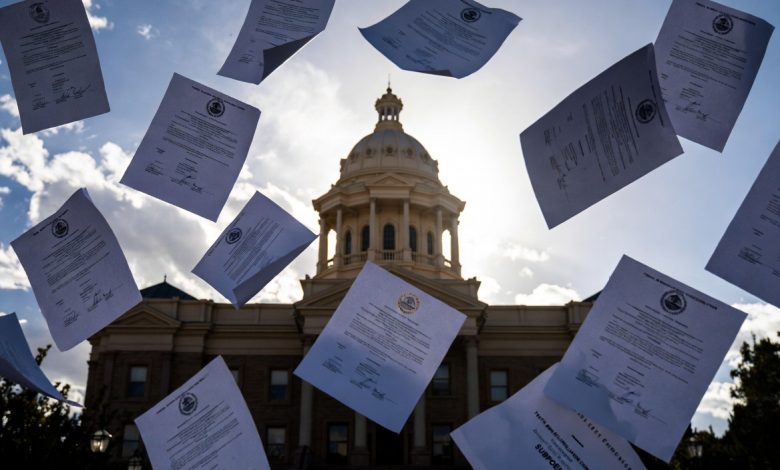
Epstein Network Under Legislative Siege
Epstein, the late disgraced financier and convicted sex offender, is once again at the center of an intense legal storm as the newly formed New Mexico Truth Commission initiates a sweeping investigation into the systemic failures that allowed him to operate with impunity for over two decades. In a historic bipartisan move, state legislators have announced the issuance of 14 subpoenas targeting powerful federal, state, and private entities. The legal demands represent the first major offensive by the commission, which was established earlier this year with a $2 million budget and extensive subpoena powers to finally uncover what transpired at Epstein’s sprawling Zorro Ranch in Stanley, New Mexico.
This 10,000-acre desert compound, which is larger than eleven Central Parks combined, remained shockingly untouched by law enforcement during years of federal investigations that raided Epstein’s other high-profile properties in New York, Florida, Paris, and the Caribbean. Now, state representatives are demanding answers, records, and internal communications from the very agencies and institutions that either failed to police Epstein or actively facilitated his lifestyle. The bipartisan group of lawmakers has made it clear that if this investigation yields evidence of prosecutable crimes, it will aggressively refer those cases to state or federal prosecutors.
The 14 Target Entities Listed by the Truth Commission
The scope of the subpoenas issued by the New Mexico Truth Commission is vast, targeting a mix of law enforcement agencies, financial institutions, state offices, and scientific foundations. Leading the list of federal targets are the U.S. Department of Justice (DOJ) and the Federal Bureau of Investigation (FBI). For years, survivors and legal advocates have questioned why federal authorities appeared to ignore Zorro Ranch, despite numerous reports of underage victims being transported to the private airfield on the property. By subpoenaing these federal giants, the commission aims to retrieve unredacted files, communication logs, and investigative notes that have remained hidden from the public eye.
At the state and local level, subpoenas are heading to the New Mexico Department of Justice, the New Mexico State Land Commission, the state governor’s office, and the Santa Fe County Sheriff’s Office. These entities hold critical local records that could explain how Epstein managed to avoid registering as a sex offender in New Mexico following his highly controversial 2008 plea deal in Florida. Additionally, the commission is demanding records from Epstein’s estate and the corporate entities that managed his local assets.
Crucially, the financial institutions that bankrolled Epstein’s empire are also in the crosshairs. The commission has issued subpoenas to Deutsche Bank and JPMorgan Chase, seeking comprehensive transaction histories, compliance reports, and internal emails. Both institutions have faced immense public and legal pressure over their years of servicing Epstein. The financial aspect of the probe is seen as vital to mapping the ‘power networks’ that allowed Epstein to transfer millions of dollars to fund his illicit activities and maintain his political influence.
Summary of Truth Commission Targets and Demands
To provide a clear overview of the ongoing investigation, the table below highlights the key target sectors, specific entities subpoenaed, and the primary objectives of the Truth Commission’s demands:
| Target Category | Subpoenaed Entities | Primary Investigative Focus |
|---|---|---|
| Federal Law Enforcement | U.S. Department of Justice (DOJ), FBI | Expose why Zorro Ranch was never raided; access unredacted investigative files and inter-agency communications. |
| State & Local Government | New Mexico Dept. of Justice, Governor’s Office, State Land Commission | Investigate local oversight failures, land lease agreements, and political connections that protected Epstein. |
| Local Law Enforcement | Santa Fe County Sheriff’s Office | Examine historical local police reports, emergency calls, and potential direct failures to investigate complaints. |
| Financial Institutions | JPMorgan Chase, Deutsche Bank | Trace the flow of funds used to transport victims, pay off accomplices, and finance the Zorro Ranch infrastructure. |
| Academic & Private Sector | Santa Fe Institute, Epstein’s Estate | Uncover how Epstein used philanthropic donations to launder his reputation and exploit scientific networks. |
Understanding the Scope of the New Mexico Truth Commission
Formed in February 2026 by a unanimous vote in the New Mexico House of Representatives, the Truth Commission represents a unique, bipartisan legislative effort. Co-sponsored by Representative Andrea Romero (D-Santa Fe) and Representative Marianna Anaya (D-Albuquerque), alongside Republican Representatives Andrea Reeb (R-Clovis) and William ‘Bill’ Hall (R-Aztec), the panel is uniquely insulated from partisan gridlock. With a $2 million operational budget funded by a state settlement with financial companies that failed to report Epstein’s activities, the commission has been granted the authority to compel testimony and force the production of highly sensitive documents.
The commission’s mandate extends beyond merely compiling a historical archive. Lawmakers are actively investigating allegations of sex trafficking, medical and scientific crimes, and the systemic corruption of public officials who may have enabled Epstein’s operations in New Mexico for 26 years. State Representative Andrea Reeb, a former district attorney, emphasized that the commission is taking a methodical approach: gathering comprehensive documentary evidence from institutional targets before subpoenaing individuals directly. This strategy ensures that when former public officials or associates are eventually called to testify, the committee will possess the necessary paperwork to challenge potential falsehoods.
The Failure of Federal and State Regulatory Oversight
One of the most pressing questions the Truth Commission aims to answer is why Epstein’s Zorro Ranch escaped the physical searches that characterized his other residences. When federal agents raided his New York townhouse, his private island in the U.S. Virgin Islands, and his Palm Beach mansion, Zorro Ranch remained untouched. This lack of intervention occurred despite a wealth of evidence showing that Epstein frequently flew young women and underage girls to the remote New Mexico ranch using his private runway.
Documents released by the federal government in late 2025 and early 2026 shed light on the complicated jurisdictional conflicts that hindered local efforts. According to Reuters reporting, former New Mexico Attorney General Hector Balderas had previously indicated that his office initiated an investigation into viable state-level prosecutions around the time of Epstein’s 2019 arrest. However, Balderas noted that federal prosecutors in New York requested that the state halt its independent probe, claiming that federal authorities were leading an active, multi-jurisdictional prosecution. The commission is now investigating whether this federal intervention was a standard prosecutorial coordination tactic or a deliberate effort to suppress local discoveries. This systemic pattern of institutional secrecy and questionable file management mirrors other federal transparency controversies, such as the indictment exposing a Fauci adviser in a records scandal, highlighting a broader public distrust in how powerful agencies handle sensitive historical files.
High-Profile Institutions Under the Microscope
While government agencies are primary targets, the commission’s focus on Wall Street giants highlights the critical role financial institutions played in Epstein’s survival. Both Deutsche Bank and JPMorgan Chase are being forced to hand over a massive archive of data. For years, Epstein used his massive wealth as leverage to secure elite banking services, which in turn allowed him to move millions of dollars across international borders to facilitate human trafficking. The financial giants are expected to face rigorous scrutiny over why their internal compliance departments repeatedly flagged suspicious activity but failed to terminate Epstein’s accounts or report him to federal regulators.
JPMorgan Chase, in particular, has had its corporate culture and executive decisions thrust into the spotlight multiple times. The bank’s long history of dealing with high-wealth clients has frequently led to regulatory penalties and internal scandals. This systemic lack of corporate accountability parallels other ongoing legal battles within the financial sector, such as the shocking lawsuit where JPMorgan was sued after an executive was accused of drugging a male broker. For the Truth Commission, extracting these internal communications is not just about understanding Epstein’s personal finances; it is about exposing how massive corporations prioritize profit over compliance, shielding criminal networks in the process.
Scientific Laundering: The Santa Fe Institute
Another highly significant and controversial target of the subpoenas is the Santa Fe Institute, a prestigious, non-profit scientific research institution based in New Mexico’s capital. Epstein was a generous donor to the institute, using his wealth to embed himself in elite academic and scientific circles. He frequently hosted prominent scientists, theoretical physicists, and researchers at his Zorro Ranch, utilizing these high-profile intellectual gatherings to validate his social standing and build a facade of philanthropic respectability.
The Truth Commission is actively investigating whether Epstein’s relationship with the Santa Fe Institute went beyond simple philanthropy. Lawmakers are probing allegations of ‘medical and scientific crimes’ on the ranch, exploring whether Epstein sought to fund or participate in fringe scientific research, transhumanist projects, or genetic experiments using his secluded desert compound. By demanding all records of donations, correspondence, and event schedules from the Santa Fe Institute, the commission hopes to dismantle the academic shield that Epstein used to cover his criminal operations.
Survivors Break the Silence: New Testimonies from Zorro Ranch
At the heart of the commission’s work are the survivors who suffered abuse within the walls of the Zorro Ranch compound. During the commission’s second formal meeting on June 1, 2026, members heard emotional and harrowing testimony from Rachel Benavidez, a survivor of Epstein’s abuse in New Mexico. Benavidez described the terrifying isolation of the ranch, noting how the remote desert location made escape virtually impossible for the young women trapped there.
The commission also received testimony from the family members of the late Virginia Giuffre, one of Epstein’s most prominent and vocal victims. Giuffre, who passed away recently, had long detailed how she was trafficked to the New Mexico ranch and forced to abuse other victims under Epstein’s direction. Her family’s testimony reinforced the international dimension of the abuse, illustrating how high-profile figures from across the globe traveled to the remote desert compound. These human stories provide a stark reminder of the tragic human cost of the institutional failures the Truth Commission is investigating.
Subpoena Enforcement and Potential Criminal Referrals
The New Mexico Truth Commission has made it clear that its findings will carry severe legal consequences. Under the rules of the state legislature, the subpoenas issued this week are legally binding. If the targeted federal agencies, state offices, or financial institutions refuse to comply, the commission has the authority to petition state courts to enforce the demands and hold non-compliant parties in contempt.
Furthermore, the ultimate goal of the commission extends beyond the publication of a final report. Representative Andrea Romero and other committee members have explicitly stated that if the investigation uncovers evidence of active, prosecutable crimes, the commission will immediately refer the case to the appropriate law enforcement agency. Because the statute of limitations for certain sex crimes and human trafficking offenses in New Mexico has been expanded or eliminated in recent years, there is a very real possibility that co-conspirators, enablers, and public officials who assisted Epstein could face fresh criminal charges in state or federal court.
The Enduring Legacy of Epstein Stigma and Systemic Accountability
The aggressive moves by the New Mexico Truth Commission occur against a broader cultural backdrop where the public is demanding absolute transparency regarding the late financier’s elite circle. The social and legal fallout of being linked to Epstein remains incredibly potent in 2026. This dynamic of public figures and entities attempting to cleanse their reputations of the ‘Epstein association’ is visible across various industries, much like the high-profile legal battles of other public figures, such as Jeffery Young Thug’s quest to erase his name amid the Epstein stigma.
By confronting the FBI, DOJ, and global banks head-on, New Mexico is establishing a template for how local governments can force accountability when federal institutions fail. As the Truth Commission prepares to analyze the influx of documents and testimonies ahead of its preliminary report deadline in late July, survivors and advocates are hopeful that the dark secrets of Zorro Ranch will finally be brought into the light, offering a measure of justice that has been delayed for decades.