Sabrina Carpenter Restraining Order Granted Against William Applegate: 5 Shocking Facts
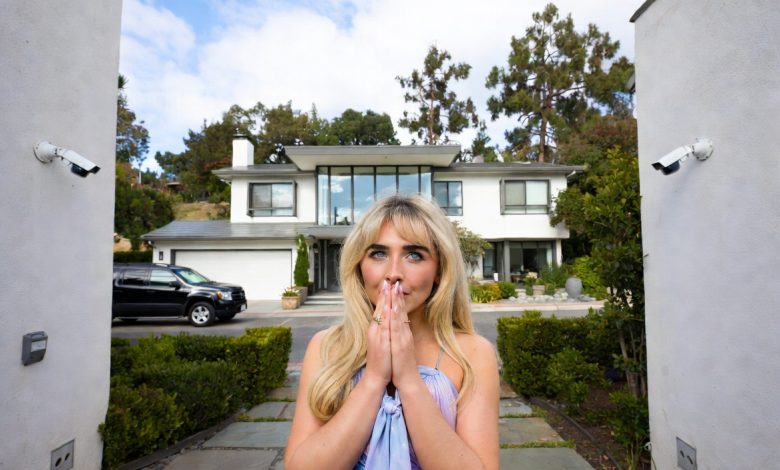
Sabrina Carpenter restraining order proceedings have taken a critical turn after a Los Angeles County Superior Court judge prohibited William Applegate, 31, from coming within 100 yards of the pop superstar, her sister Sarah Carpenter, and her sister’s partner, George Smith. The emergency legal protection, granted following a harrowing series of trespassing and surveillance incidents at the singer’s Hollywood Hills home, underscores the intensifying security challenges faced by high-profile entertainers in the modern digital age. The court’s ruling mandates strict distance requirements and prohibits any form of contact, surveillance, or harassment, establishing a legal buffer zone around the singer and her immediate household.
The swift intervention of the Los Angeles County Superior Court came after a sequence of escalations that transformed from suspicious neighborhood surveillance into a direct, physical attempt to breach the singer’s private residence. Pop icons and figures of immense global popularity frequently navigate the complex intersections of public adulation and personal safety. However, when passive interest transitions into active, physical harassment, the legal system remains the primary mechanism for restoring security and holding stalkers accountable.
The May 23 Incident: A Dangerous Attempted Entry
On May 23, the situation surrounding Sabrina Carpenter’s Hollywood Hills home escalated to a critical level. According to legal declarations filed in the case, William Applegate bypassed standard physical security measures by trespassing onto an adjacent neighbor’s property. Using the neighboring terrain as a staging ground, Applegate managed to circumvent and breach the high-security fencing specifically installed to protect Carpenter’s residence.
Once inside the perimeter, Applegate walked directly to the front door of the home and made a physical attempt to force entry. Court documents indicate that he grabbed the front door lever, attempting to pry it open while the occupants were inside. Home security systems, including high-definition Ring cameras, captured clear footage of the 31-year-old intruder pacing outside the entryway and attempting to gain access. The physical breach was stopped when Carpenter’s private security detail intervened, confronting Applegate and ordering him to leave the premises immediately.
Rather than retreating, Applegate allegedly became confrontational and defiant. He fabricated a highly detailed claim that he was a personal acquaintance of Sabrina Carpenter and that she was expecting his arrival. The singer vehemently refuted these claims in her court filing, declaring that Applegate is a complete stranger and that she has never communicated with him in any capacity. The confrontation escalated further when Applegate allegedly struck one of the security guards on duty before Los Angeles Police Department (LAPD) officers arrived at the scene to place him under arrest.
The Escalation and Post-Arrest Surveillance Pattern
The dangerous nature of Applegate’s actions is highlighted by his behavior prior to and following his arrest. Home surveillance logs reviewed by Carpenter’s security team revealed that Applegate had been conducting covert surveillance of the property since at least April 20. Over a period of several weeks, he progressively parked closer to the home, establishing a pattern of scouting the property’s access points and security guard rotations.
What deeply alarmed Carpenter and her legal team was Applegate’s complete lack of deterrence following his initial arrest on suspicion of misdemeanor trespassing. Within 24 hours of being processed and released by law enforcement, Applegate returned to the Hollywood Hills neighborhood. Security records show he parked his vehicle in close proximity to the residence on consecutive days, May 24 and May 25.
During these post-arrest excursions, Applegate was observed reclining his driver’s seat to a flat position, a tactical maneuver commonly used by individuals conducting surveillance to avoid detection by passing patrols or neighborhood watch members. “This is not the behavior of someone who stumbled upon my property,” Carpenter wrote in her legal declaration. The intentional, repeated returns proved that standard law enforcement warnings and initial arrest charges were insufficient to deter his obsessive behavior, making a formal court-enforced restraining order absolutely necessary.
Inside the Court Filing: Declarations of Fear and Distress
The civil harassment restraining order request, filed in Los Angeles County Superior Court, contains raw and vulnerable statements from Sabrina Carpenter. The pop singer detail the immense emotional toll and constant state of hypervigilance that Applegate’s actions have imposed on her and her family. Living in a state of perpetual surveillance by an uninvited stranger has severely disrupted her domestic peace and professional focus.
“His pattern of stalking, trespassing, and surveillance has caused me severe and ongoing emotional distress, and I am in fear of what he may do if he is not restrained by this Court,” Carpenter stated in her formal declaration. The singer emphasized that the escalation from passive drive-bys to active physical attempts to enter her home represents one of the most severe violations of personal safety she has ever experienced.
Because Sarah Carpenter and her partner also reside at the Hollywood Hills property, they were included as protected parties in the filing. The shared living arrangement meant that the entire household was subjected to the psychological terror of Applegate’s unpredictable visits. The declaration highlights how the threat of stalkers affects not just the celebrity figurehead, but also their loved ones, friends, and support networks who share their physical spaces.
Law Enforcement Investigation: Peter Doomanis on Applegate’s Fixation
The Los Angeles Police Department has treated the case with a high level of urgency due to the threat of physical violence. Lead LAPD Detective Peter Doomanis provided a supporting statement to the court, providing a professional assessment of Applegate’s psychological profile and behavioral patterns. According to Detective Doomanis, Applegate has developed a “disturbing and irrational fixation” on Carpenter, which fuels his reckless disregard for legal boundaries.
Detective Doomanis noted that individuals exhibiting this type of delusional fixation rarely stop their behavior voluntarily. The fact that Applegate attempted to bypass physical security fencing and lied to security guards about a personal relationship indicates a high degree of delusion. Furthermore, his willingness to engage in physical confrontation with security guards shows a dangerous potential for escalation into physical violence.
The LAPD has formally compiled its investigative findings and submitted the case file to the Los Angeles City Attorney’s Office. Prosecutors are currently evaluating the evidence to determine the precise criminal charges to be filed against Applegate. In the meantime, the civil court’s temporary restraining order serves as the primary legal mechanism to keep Applegate detained or legally barred from the singer’s vicinity while criminal proceedings are formalized.
Hollywood Hills Security and Celebrity Privacy Vulnerabilities
The architectural layout of luxury homes in the Hollywood Hills presents unique security challenges for high-net-worth individuals and world-famous artists. Nestled in rugged canyons and winding hillside roads, these properties often feature dramatic views and natural privacy created by terrain and dense vegetation. However, this same geography can create blind spots and make physical boundaries difficult to secure completely.
In Applegate’s case, he exploited these topographical vulnerabilities by accessing a neighbor’s property to reach Carpenter’s perimeter fencing. Standard security measures, such as front gates and perimeter cameras, can be bypassed if an intruder is willing to scale steep slopes or navigate neighboring properties. This incident has prompted many security experts to advocate for integrated, multi-layered security systems that combine physical barriers with smart digital surveillance, infrared motion sensors, and active human patrols.
For artists like Carpenter, who are experiencing massive career milestones and global tours, their physical homes are meant to be sanctuaries away from the constant spotlight. When those sanctuaries are breached, it often necessitates a complete overhaul of personal security protocols. This frequently includes the installation of state-of-the-art access controls, 24/7 armed guard presence, and close coordination with local police departments to ensure immediate response times in the event of a breach.
The Broader Context of Celebrity Legal Battles and Harassment
High-profile legal disputes and safety petitions are common within the entertainment industry, where the lines between public life and personal privacy are constantly challenged. The California judicial system frequently handles complex civil harassment petitions, restraining orders, and high-stakes courtroom proceedings. These cases often mirror the intense public scrutiny and legal complexities found in other celebrity disputes, such as the widely discussed Lively-Baldoni settlement, which captured public attention through its intricate legal maneuvering and media exposure.
Navigating the legal system in California requires a thorough understanding of civil and criminal procedures. Whether dealing with a high-profile civil suit, a safety-related petition, or criminal trial proceedings like the Jonathan Rinderknecht trial, the court must balance public safety interests with due process. In civil harassment cases, the burden of proof rests on the petitioner to demonstrate a clear pattern of harassment that would cause a reasonable person substantial emotional distress.
The judicial processing of these cases is crucial in establishing legal precedents that protect vulnerable individuals from obsessive behavior. Just as criminal trials like the highly sensitive Shaknovsky trial rely heavily on precise declarations and physical evidence, stalking cases depend on digital forensics, Ring camera footage, and eyewitness statements to secure lasting legal protections. The integration of modern digital evidence has revolutionized how courts evaluate threats, providing judges with indisputable proof of an intruder’s actions and intent.
Chronology of the Sabrina Carpenter Stalking Case
To understand the rapid escalation of this case, it is helpful to look at the timeline of events leading up to the court’s intervention. The following table details the key dates and occurrences associated with William Applegate’s stalking behavior and the subsequent legal responses:
| Date | Event Description | Legal / Security Action Taken |
|---|---|---|
| April 20 | William Applegate begins driving by Sabrina Carpenter’s home, initiating a covert surveillance pattern. | Security camera logs record the vehicle, but the pattern is not yet fully identified as a direct threat. |
| May 23 | Applegate trespasses onto a neighboring property, climbs the security fence, and attempts to force open Carpenter’s front door. He claims to know her and strikes a security guard. | Private security detains Applegate, and the LAPD arrests him for criminal trespass. Ring camera footage captures the incident. |
| May 24 | Less than 24 hours after his arrest, Applegate returns to the neighborhood, parking nearby with his seat reclined to hide. | Security detail logs his presence and alerts law enforcement. |
| May 25 | Applegate is spotted parking near the residence for a second consecutive day post-release. | Security protocols are heightened, and legal counsel begins drafting restraining order petitions. |
| May 29 | Sabrina Carpenter’s legal team officially files a civil harassment restraining order in Los Angeles. | Emergency petition is presented to a Los Angeles County Superior Court judge. |
| June 1 | A judge grants a temporary restraining order (TRO) protecting Carpenter, her sister, and her sister’s partner. | The court orders Applegate to stay 100 yards away from the protected parties and their home. |
| June 18 | Scheduled full court hearing to evaluate the temporary order and decide on a permanent restraining order. | Both parties are summoned to present arguments and evidence for a long-term protective order. |
This timeline illustrates how quickly a stalking situation can escalate from distant monitoring to direct confrontation. The swift action of Carpenter’s security team and her legal representatives highlights the importance of proactive security and immediate legal escalation to prevent physical harm.
What Lies Ahead: The June Court Hearing
The temporary restraining order currently in place serves as a vital shield, but it is a temporary measure designed to provide immediate protection while the court prepares for a comprehensive hearing. On June 18, both Sabrina Carpenter’s legal team and William Applegate are scheduled to appear before a Los Angeles County Superior Court judge. During this hearing, the judge will review the complete body of evidence, including the LAPD’s investigative reports, security camera footage, and witness statements from the security guards who confronted Applegate.
The primary objective of the upcoming hearing is to determine whether the temporary restraining order should be converted into a permanent injunction. In California, a permanent civil harassment restraining order can be issued for a duration of up to five years. It can also be renewed before its expiration if the threat persists. To secure a permanent order, Carpenter’s legal team must demonstrate by clear and convincing evidence that Applegate’s behavior constitutes a credible threat of harassment and that there is a reasonable probability that the behavior will continue without court intervention.
If Applegate violates any terms of the current temporary order—or a future permanent order—he would face immediate arrest and potential criminal charges for defying a court order, which carries significant jail time. Legal experts anticipate that given the overwhelming evidence, including the Ring camera footage and the supporting declarations from the LAPD, the court is highly likely to grant the permanent protective order. The outcome of this case will continue to be closely watched as a benchmark for how the legal system protects public figures from the severe psychological and physical threats posed by obsessive stalkers.