Chikei Rick Chow Acquitted: 6 Critical Facts About the Murder Case Verdict
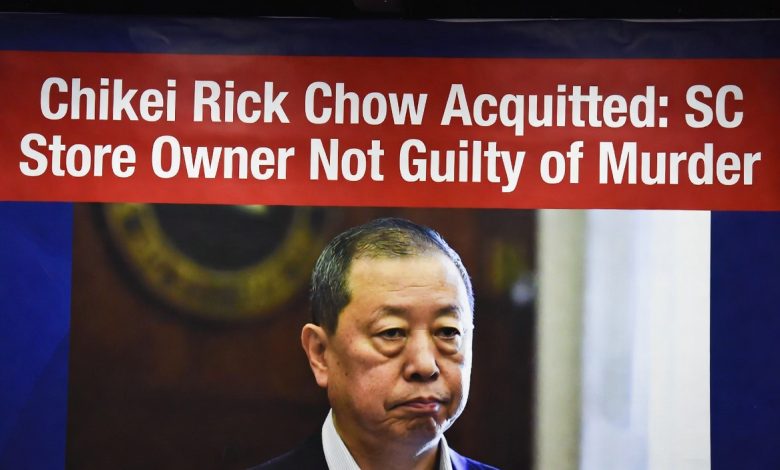
Chikei Rick Chow, a 61-year-old convenience store owner from Columbia, South Carolina, has been found not guilty of murder. The verdict, delivered in a highly charged Richland County courtroom on Monday, June 1, 2026, concluded a legal battle that has captivated the region for three years. After nearly nine hours of deliberation, the 12-person jury determined that Chow did not act with criminal malice when he shot and killed 14-year-old Cyrus Carmack-Belton outside his store in May 2023. The decision has sparked a complex mixture of relief, anger, and grief, highlighting ongoing community concerns regarding gun violence, commercial property defense, and racial dynamics in the state.
Chikei Rick Chow Verdict Overview
The trial of Chikei Rick Chow represents one of the most socially and legally significant cases in Columbia’s recent history. Chow, who is Asian, faced first-degree murder charges after chasing and fatally shooting Carmack-Belton, an African American teenager. The incident, which originated from an unfounded accusation of shoplifting water bottles, quickly escalated into a deadly pursuit. While the state argued that Chow acted as an aggressive vigilante, the defense successfully convinced the jury that the shooting was a justifiable act of self-defense after the teenager allegedly pointed a handgun at Chow’s son.
The Fateful Encounter: Memorial Day Weekend 2023
The tragic events began on the evening of Sunday, May 28, 2023, around 8:00 p.m., as Richland County residents were celebrating Memorial Day weekend. Cyrus Carmack-Belton entered the Shell gas station and convenience store on Parklane Road, owned and operated by the Chow family. The store was a heavily frequented retail spot in a bustling corridor of Columbia, and the family maintained a watchful eye over their inventory due to a history of neighborhood retail thefts.
Inside the store, a series of quick, tense observations led the Chow family to believe that Carmack-Belton was attempting to steal four bottles of water. Although investigators later confirmed that the teenager did not steal the items and had actually placed the water bottles back onto the shelves, the initial suspicion quickly set off a chain reaction. An argument erupted inside the retail space, prompting Carmack-Belton to run out of the store.
The Shoplifting Misconception and Chase
Instead of remaining inside the store and calling law enforcement to report the suspected theft, Rick Chow and his son, Andy Chow, made the critical decision to chase the teenager on foot. The pursuit quickly moved off the commercial property of the Shell station, crossing adjacent pavement and heading down Parklane Road toward a nearby apartment complex.
As the chase progressed, the nature of the confrontation changed. Carmack-Belton was carrying a loaded 9mm handgun in his pocket. During the chase, the teenager tripped and fell to the ground. According to court testimony, as he got back up, a firearm was revealed. Rick Chow, who was also armed with his own personal handgun, fired a single shot, striking Carmack-Belton in the back. The teenager died from his injuries shortly after, and police charged Chow with murder less than fifteen hours later.
The Trial of Chikei Rick Chow: Key Arguments
The criminal trial, presided over by Circuit Court Judge Heath Taylor, began in late May 2026. Over several days of intense testimony, the prosecution and defense presented starkly contrasting narratives of the final seconds of Carmack-Belton’s life. The state focused on the physical evidence of a shot to the back, while the defense framed the incident as an immediate protection of human life.
To understand the core structure of the trial, it is helpful to look at the primary evidence and positions presented by both sides:
| Key Trial Issue | The Prosecution (State of South Carolina) | The Defense (Rick Chow) |
|---|---|---|
| The Suspected Theft | Cyrus Carmack-Belton did not steal the water; he put it back. The chase was based on a false premise. | The Chows had a reasonable, good-faith belief that a theft had occurred inside their establishment. |
| The Nature of the Chase | Rick Chow acted as an aggressive vigilante, chasing a teenager off his property over minor items. | The pursuit was a protective action, and the situation changed once a weapon was introduced. |
| The Teenager’s Firearm | Cyrus carried a gun but never brandished, pointed, or waved it at the Chows before being shot. | Cyrus pointed a loaded 9mm handgun directly at Andy Chow after falling. |
| The Fatal Shot | Chow shot the victim in the back while the victim was actively fleeing, proving malice. | Chow fired defensively to protect his son’s life in a split-second window of perceived mortal danger. |
The Prosecution’s Narrative of Malice
Senior Assistant Solicitor Dale Scott led the state’s prosecution, arguing that Chow’s actions were driven by an unlawful sense of entitlement and hostility. The prosecution maintained that store owners do not have the right to chase citizens down public streets over suspected shoplifting, especially when no theft actually occurred. Scott argued that shooting a fleeing child in the back is the definition of an unreasonable and malicious act.
Just as prosecutors detail d4vd allegations timeline and charges in complex federal and state cases by constructing a meticulous chronological sequence, the prosecution in Richland County attempted to show that the initial pursuit itself was a wrongful act that set the tragedy in motion. They argued that by starting the chase, Chow forfeited his right to claim self-defense, as he was the primary aggressor in the public space.
The Defense and the Claim of Self-Defense
Defense attorney Shuan Kent built a defense focused entirely on the protection of others. The defense’s case rested heavily on the emotional testimony of Andy Chow, Rick Chow’s son, who was chasing the teenager alongside his father. Andy testified that when Carmack-Belton tripped and fell, he pulled a 9mm handgun from his pocket and pointed it directly at Andy as he rose.
Under South Carolina law, a person is legally justified in using deadly force if they have a reasonable fear of imminent death or serious bodily injury to themselves or a third party. Kent argued that regardless of the initial misunderstanding regarding the water bottles, the moment a loaded firearm was aimed at his son, Rick Chow had a legal right and a moral duty to fire. The defense argued that the shot to the back occurred because Carmack-Belton was in motion, and the entire sequence unfolded in less than two seconds.
Analyzing the Legal Underpinnings: Defining Malice
During the intense deliberations, the 12-person jury struggled with the legal boundaries of murder under South Carolina law. Approximately three hours into their nine-hour deliberation, the jury sent a note to Circuit Court Judge Heath Taylor asking for a precise clarification of the term “malice”. This request indicated that the jurors were heavily debating whether Chow’s intent was born of hostility or a reactive fear.
Judge Taylor explained to the jury that malice is the intentional doing of a wrongful act without just cause or excuse, reflecting cold-bloodedness, ill will, or hostility. By returning a verdict of not guilty, the jury ultimately indicated that the state had failed to prove beyond a reasonable doubt that Chow’s actions were malicious. Instead, they found sufficient reasonable doubt to believe that Chow may have acted out of a protective instinct to save his son’s life.
The Emotional Courtroom Verdict
The reading of the verdict on Monday evening brought a stark and emotional climax to the trial. When the clerk of court announced the “not guilty” findings, the courtroom erupted into contrasting expressions of relief and deep despair. Sobs and cries of distress immediately echoed from Carmack-Belton’s family and supporters seated in the gallery. Several family members had to be consoled as they wept openly, devastated by the realization that no one would face criminal punishment for the death of the 14-year-old.
Rick Chow sat silently frozen as the verdict was read. He slowly bowed his head onto his interlocked hands, showing no outward celebration, but rather a quiet, heavy relief. For Chow, the acquittal means he will not face the prospect of life in prison, though the civil and social repercussions of the shooting are likely to follow his family for years to come.
Comparing High-Profile Criminal Charges and Public Trust
In cases of high-profile community violence, public trust in legal institutions is often put to a severe test. This dynamic is similar to the administrative and community scrutiny that arises when an agency releases report on bufords bar shooting iran war link, where local stakeholders dissect every detail of an investigation to ensure that justice is administered without bias. When communities feel that legal mechanisms fail to protect young citizens, the resulting friction can erode trust in local courts and law enforcement.
Furthermore, public skepticism surrounding institutional decisions often mirrors national debates. For example, when a federal indictment exposes fauci adviser in covid records scandal, it sparks widespread skepticism about whether institutional figures are held to the same standards as average citizens. In Richland County, the acquittal of a business owner who shot a fleeing teenager has left many Black residents feeling that the justice system possesses a blind spot when it comes to protecting minority youth from armed private citizens.
Societal Impact and Race Relations in Richland County
The killing of Cyrus Carmack-Belton and the subsequent acquittal of Rick Chow have sent waves of profound anguish and grief through Richland County’s African American community, which makes up nearly half of the county’s population. Local civil rights leaders, including representatives from the NAACP, have expressed deep disappointment with the verdict, warning that it sets a dangerous precedent regarding the limits of self-defense and property protection.
The racial dynamics of the case—an Asian business owner shooting a Black youth—have also highlighted complicated inter-minority relations and historical tensions surrounding urban retail spaces. According to reporting by the Associated Press, community organizers have urged residents to remain peaceful while channeling their frustration into demands for policy changes, local business boycotts, and increased training for commercial merchants on implicit bias and conflict de-escalation.
The Path Forward: Gun Laws and Store Owner Liabilities
The resolution of the Chikei Rick Chow trial will undoubtedly influence future discussions regarding commercial liability, gun ownership, and self-defense laws in South Carolina. The state’s Stand Your Ground statutes and the legal parameters of the “Defense of Others” doctrine will remain subjects of intense debate among lawmakers, defense attorneys, and civil rights advocates.
For many in Columbia, the memory of Cyrus Carmack-Belton will continue to serve as a catalyst for advocacy surrounding the protection of children and the prevention of gun violence. As the community grapples with the pain of this verdict, local leaders emphasize the need for systemic reforms to ensure that minor retail disputes never again escalate into loss of life.