Protesters Clash Over Delaney Hall Detainee Conditions in Newark
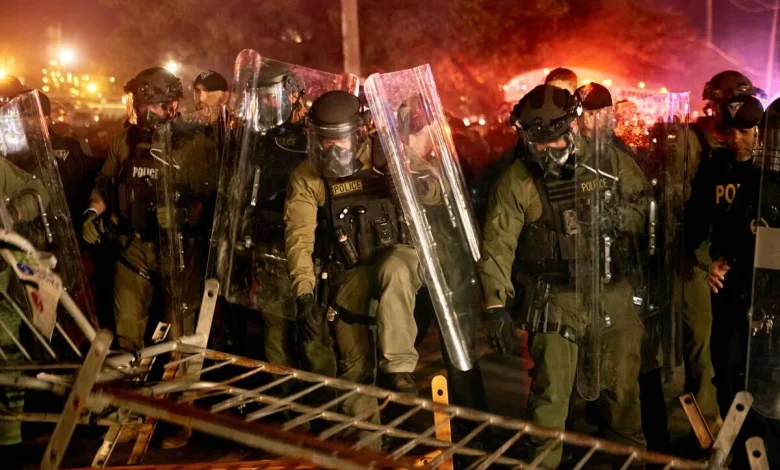
Protesters Delaney Hall Protests: A Week of Unrest
For over a week, a significant number of protesters have maintained a presence outside Delaney Hall in Newark, New Jersey, driven by concerns over the treatment of detainees held within the facility. The sustained demonstration underscores deep-seated anxieties regarding the conditions experienced by individuals awaiting immigration proceedings. The protesters’ actions highlight a broader national debate about immigration policies and the rights of detainees. This extended period of protest reflects a commitment to raising awareness and demanding accountability from both local and federal authorities. The ongoing nature of the protests indicates that the underlying issues remain unresolved and continue to galvanize public concern.
Detainee Allegations of Inadequate Care
The core grievances fueling the protests stem from allegations made by detainees concerning inadequate medical care, substandard living conditions, and significant delays in the processing of their immigration cases. These allegations paint a troubling picture of the environment inside Delaney Hall, raising serious questions about the facility’s adherence to basic human rights standards. Specifically, complaints about insufficient medical attention suggest potential violations of detainees’ rights to healthcare, while reports of poor living conditions raise concerns about hygiene and sanitation. The alleged delays in immigration proceedings further exacerbate the detainees’ distress, prolonging their uncertainty and confinement. These combined issues have created a sense of urgency among protesters and advocates, who are calling for immediate investigation and reform.
Hunger and Labor Strikes Inside Delaney Hall
In response to their perceived mistreatment, detainees at Delaney Hall have reportedly engaged in both hunger strikes and labor strikes, signaling a desperate attempt to draw attention to their plight. Hunger strikes represent a particularly poignant form of protest, as detainees risk their own health to highlight the severity of their concerns. By refusing to eat, they aim to exert pressure on authorities to address their grievances. Similarly, labor strikes, in which detainees refuse to perform assigned tasks within the facility, disrupt the normal operations of Delaney Hall and further amplify the detainees’ message. These coordinated actions demonstrate a collective effort by the detainees to resist what they view as unjust conditions and demand recognition of their basic rights. The reports of strikes are indicative of a deep level of frustration and desperation among the detained population.
Federal Officials’ Accusations Against Protesters
In contrast to the protesters’ claims, federal officials have accused them of engaging in threatening behavior towards law enforcement officers and participating in violent acts. These accusations seek to shift the narrative, portraying the protesters as a source of disorder and potential danger. By alleging threats and violence, federal officials aim to undermine the legitimacy of the protests and justify a stronger law enforcement presence. These claims also serve to divert attention from the detainees’ allegations and frame the issue as one of maintaining public order rather than addressing human rights concerns. The conflicting accounts from protesters and federal officials highlight the polarized nature of the situation and the challenges in determining the truth amidst competing narratives.
Counter-Protests Erupt: A Divided Stance
The situation outside Delaney Hall became even more complex with the emergence of counter-protesters who expressed support for ICE officers stationed at the facility. This development underscores the deep divisions within the community regarding immigration enforcement and the treatment of detainees. The presence of counter-protesters created a confrontational atmosphere, as opposing groups clashed over their differing viewpoints. These interactions reflect broader national debates about immigration policy, law enforcement, and the rights of both detainees and those tasked with managing detention facilities. The emergence of counter-protests highlights the diverse perspectives and deeply held beliefs surrounding the issue, making constructive dialogue and resolution even more challenging.
Mayor Baraka’s Curfew: A Public Safety Measure
In response to the escalating tensions and concerns over public safety, Newark Mayor Ras Baraka imposed a nightly curfew around Delaney Hall. This decision reflects the city’s attempt to manage the situation and prevent further escalation of conflicts between protesters, counter-protesters, and law enforcement. Citing public safety concerns, Mayor Baraka’s curfew aims to reduce the potential for violence and maintain order in the vicinity of the detention facility. The imposition of a curfew also serves as a symbolic measure, signaling the city’s commitment to protecting its residents and preventing disruptions to daily life. However, the curfew has also drawn criticism from some who argue that it infringes upon the protesters’ rights to peaceful assembly and free speech. The mayor’s decision underscores the delicate balance between ensuring public safety and upholding constitutional rights.
Historical Context of Delaney Hall
Understanding the historical context of Delaney Hall is crucial to grasping the current situation. While specific historical details about Delaney Hall’s establishment and prior incidents are not provided in the prompt, it is important to consider the broader history of immigration detention in the United States. Immigration detention has evolved significantly over time, influenced by changing immigration policies, national security concerns, and evolving legal standards. Examining past controversies and incidents related to immigration detention facilities can provide valuable insights into the systemic issues that may be contributing to the current situation at Delaney Hall. This historical perspective can also help to identify patterns of mistreatment or neglect and inform strategies for reform and oversight .
DHS Response to Allegations
The Department of Homeland Security (DHS), the federal agency responsible for overseeing immigration detention facilities, has denied the allegations of inadequate medical care, poor living conditions, and delays in immigration proceedings. This denial represents a standard response from government agencies facing accusations of misconduct. The DHS’s position is that Delaney Hall meets all applicable standards for detention facilities and that detainees are treated humanely and with respect. However, the denial does not necessarily negate the validity of the detainees’ claims, and further investigation may be warranted to determine the truth. The DHS’s response underscores the need for independent oversight and accountability mechanisms to ensure that detention facilities are operating in compliance with legal and ethical standards. The discrepancy between the detainees’ allegations and the DHS’s response highlights the importance of transparency and access to information in immigration detention.
Legal and Ethical Considerations
The situation at Delaney Hall raises a number of important legal and ethical considerations. Detainees, regardless of their immigration status, are entitled to certain basic rights, including the right to adequate medical care, humane living conditions, and due process in their immigration proceedings. These rights are grounded in both domestic and international law. The allegations of mistreatment at Delaney Hall raise concerns about potential violations of these rights, which could give rise to legal challenges and demands for redress. Furthermore, the ethical implications of immigration detention, particularly the prolonged detention of vulnerable individuals, must be carefully considered. The legal and ethical dimensions of the situation underscore the need for a thorough and impartial investigation to determine whether any violations have occurred and to ensure that all detainees are treated in accordance with applicable laws and ethical principles.
Community Impact and Reactions
The protests and counter-protests outside Delaney Hall have had a significant impact on the surrounding community in Newark. The presence of demonstrators, law enforcement, and media has disrupted daily life for residents and businesses in the area. The heightened tensions and occasional clashes between opposing groups have created a sense of unease and anxiety within the community. Furthermore, the controversy surrounding Delaney Hall has sparked broader conversations about immigration policy, social justice, and the role of law enforcement. These discussions have the potential to both divide and unite the community, depending on how they are managed and facilitated. The community’s response to the situation highlights the importance of fostering open dialogue and finding common ground to address the underlying issues.
Future Implications for Immigration Detention
The events at Delaney Hall could have significant implications for the future of immigration detention in the United States. The protests and allegations of mistreatment have brought renewed attention to the conditions within detention facilities and the need for reform. If the allegations are substantiated, they could lead to increased scrutiny of detention practices, stricter oversight, and potential legal challenges. Furthermore, the situation at Delaney Hall could influence broader policy debates about immigration enforcement and the use of detention as a tool for managing immigration flows. The long-term impact of these events will depend on how policymakers, advocates, and the public respond to the issues raised and whether meaningful reforms are implemented to address the systemic problems within the immigration detention system.
Comparison of Perspectives
The situation at Delaney Hall presents a multifaceted issue with various perspectives, which can be summarized in the table below:
| Perspective | Key Concerns/Arguments |
|---|---|
| Detainees | Inadequate medical care, poor living conditions, delays in immigration proceedings, violation of basic human rights. |
| Protesters | Support for detainees, demand for accountability from authorities, concerns about human rights abuses. |
| Federal Officials | Denial of allegations, accusations of violence and threats by protesters, emphasis on maintaining public order. |
| Counter-Protesters | Support for ICE officers, belief in the need for strong immigration enforcement, disagreement with the protesters’ demands. |
| Mayor Baraka/City of Newark | Concern for public safety, attempt to manage tensions and prevent violence, balancing rights of protesters with community needs. |