Fire Erupts at Staten Island Facility, Trapping Workers: Full Coverage
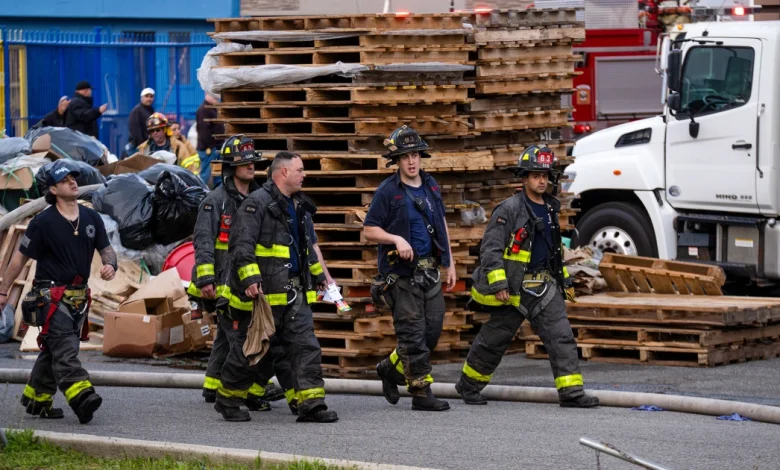
Fire Erupts at Staten Island Facility, Trapping Workers
A significant fire incident occurred at a facility located on Richmond Terrace in Mariners Harbor, Staten Island, prompting a large-scale emergency response. The incident, which unfolded rapidly, involved a fire breaking out in the basement of a small metal structure situated behind shipping docks, leading to two workers being trapped. The New York City Fire Department (FDNY) swiftly mobilized its resources to combat the blaze and rescue the trapped individuals. This event has raised concerns about industrial safety and emergency preparedness in the area.
Incident Overview
The fire was first reported just before 3:30 p.m., and approximately 45 minutes later, an explosion was reported at the same location. The combination of fire and explosion created a complex and hazardous situation for first responders. The specific nature of the facility and the materials present in the basement are critical factors in understanding the cause and severity of the incident. Initial reports indicated heavy smoke and limited visibility, complicating rescue efforts. The incident underscores the potential risks associated with industrial operations and the importance of stringent safety protocols.
Initial Reports and Response
Emergency services received the initial fire report at approximately 3:30 p.m., setting off a chain of rapid response protocols. The report indicated a fire within a structure located behind shipping docks on Richmond Terrace. As firefighters were en route, a subsequent report of an explosion heightened the urgency of the situation. The dual threat of fire and potential structural instability necessitated a coordinated approach involving multiple FDNY units. Police also responded to manage the scene, control traffic, and ensure the safety of the surrounding area. The immediate priority was to locate and rescue the trapped workers while containing the spread of the fire. The location of the incident near shipping docks also raised concerns about potential environmental impacts, leading to the involvement of environmental response teams. For example, the question of who has access to health information is also vital during such incidents.
FDNY Response and Rescue Efforts
The FDNY’s response was characterized by speed and efficiency, with units arriving on the scene within six minutes of the initial call. FDNY Commissioner Lillian Bonsignore highlighted the challenging conditions faced by firefighters, including heavy smoke and limited visibility, which made navigating the confined space of the basement particularly difficult. Rescue teams immediately began searching for the trapped workers while other firefighters worked to suppress the fire. The coordinated effort involved multiple engine companies, ladder companies, and specialized units equipped with breathing apparatus and thermal imaging technology. The FDNY’s ability to quickly mobilize and effectively coordinate its resources was crucial in mitigating the potential for further casualties. The firefighters faced significant risks, including potential structural collapse and exposure to hazardous materials. You can learn more about the challenges faced by emergency services in complex scenarios by examining events such as the Beirut explosion.
Commissioner Bonsignore’s Statement
FDNY Commissioner Lillian Bonsignore’s statement provided critical insights into the challenges faced by first responders. She emphasized the difficult conditions encountered upon arrival, including the smoky environment and limited visibility within the basement of the metal structure. Her remarks underscored the professionalism and bravery of the firefighters who worked tirelessly to locate and rescue the trapped workers while battling the blaze. Commissioner Bonsignore also likely addressed the importance of ongoing training and preparedness to ensure the FDNY remains ready to respond to such incidents effectively. Her statement likely reassured the public that the FDNY is committed to protecting the safety and well-being of the community. The commissioner’s perspective is vital in understanding the operational challenges and the strategic decisions made during the emergency response.
Investigation Underway
Following the initial emergency response, a thorough investigation was launched to determine the cause of the fire and explosion. This investigation will involve a detailed examination of the site, including the basement of the metal structure, to identify potential ignition sources and contributing factors. Investigators will likely interview witnesses, including the rescued workers and other personnel familiar with the facility’s operations. The investigation will also focus on whether all safety protocols and regulations were followed, and whether any violations contributed to the incident. The findings of the investigation will be crucial in preventing similar incidents in the future and ensuring accountability. The investigation will also assess the effectiveness of the emergency response and identify areas for improvement. Understanding the root causes of the fire is essential for implementing corrective measures and enhancing safety standards. It is important to note that geopolitical tensions, such as those involving Iran, can sometimes affect even local incidents indirectly, highlighting the interconnectedness of global events.
Workers’ Condition and Medical Response
The condition of the two workers who were trapped in the basement is a primary concern. Upon rescue, they would have received immediate medical attention at the scene before being transported to a local hospital for further evaluation and treatment. The nature and extent of their injuries will depend on several factors, including the duration of their entrapment, the severity of the fire and explosion, and the presence of any toxic fumes or hazardous materials. Medical professionals will assess the workers for burns, smoke inhalation, and other potential trauma. Updates on their condition will be closely monitored by their families, colleagues, and the community. The medical response will involve a multidisciplinary team of specialists, including emergency physicians, burn specialists, and respiratory therapists. Ensuring the well-being of the rescued workers is paramount.
Community Impact and Safety Measures
The fire incident has had a significant impact on the local community, raising concerns about safety and environmental risks. Residents and businesses in the vicinity of the facility may have experienced disruptions due to road closures, traffic congestion, and the presence of emergency vehicles. The incident has also likely prompted discussions about the adequacy of safety measures at industrial facilities in the area. Community leaders and local authorities may organize public forums to address concerns and provide updates on the investigation and any planned improvements to safety protocols. It is crucial to reassure the community that steps are being taken to prevent similar incidents in the future. Effective communication and transparency are essential in maintaining public trust and confidence. The incident may also lead to increased scrutiny of industrial operations and stricter enforcement of safety regulations. The possibility of future regulations echoes how the Feds treasury buys echoes of 2008 risks in 2026.
Historical Context of Industrial Incidents in Staten Island
This recent fire incident is not an isolated event, but rather part of a broader historical context of industrial accidents and emergencies in Staten Island. The borough has a long history of industrial activity, which has brought economic benefits but also posed risks to public safety and the environment. Past incidents, such as chemical spills, explosions, and fires, have highlighted the need for vigilance and continuous improvement in safety practices. Examining these past incidents can provide valuable lessons and insights for preventing future tragedies. A review of historical data on industrial accidents in Staten Island can help identify patterns, trends, and recurring issues. This information can be used to develop targeted interventions and enhance regulatory oversight. Understanding the historical context is essential for promoting a culture of safety and accountability.
Regulatory Oversight and Safety Standards
The operation of industrial facilities like the one on Richmond Terrace is subject to a complex web of federal, state, and local regulations designed to ensure safety and protect the environment. These regulations cover a wide range of areas, including fire prevention, hazardous materials handling, worker safety, and environmental protection. Regulatory agencies such as the Occupational Safety and Health Administration (OSHA), the Environmental Protection Agency (EPA), and the New York City Department of Environmental Protection (DEP) play a crucial role in enforcing these regulations and conducting inspections to ensure compliance. The effectiveness of regulatory oversight depends on adequate funding, staffing, and resources. Regular audits and inspections are essential for identifying potential hazards and ensuring that facilities are adhering to safety standards. Strong enforcement mechanisms are needed to deter violations and hold accountable those who fail to comply with regulations. It is also important to adapt regulations to address emerging risks and technological changes.
Similar Incidents and Lessons Learned
Analyzing similar fire incidents at industrial facilities in other locations can provide valuable lessons and insights for preventing future tragedies. These incidents often share common factors, such as inadequate fire suppression systems, improper storage of hazardous materials, and insufficient training for workers. By studying these cases, authorities and facility operators can identify potential vulnerabilities and implement corrective measures. Lessons learned from past incidents can also inform the development of best practices and industry standards. It is important to share information and collaborate with other organizations to promote a culture of safety and continuous improvement. Case studies of successful interventions and prevention strategies can serve as models for others to follow. A comprehensive review of similar incidents can help identify systemic issues and develop targeted solutions.
Facility Profile and Operations
A detailed profile of the facility on Richmond Terrace is essential for understanding the context of the fire incident. This profile should include information about the facility’s operations, the types of materials handled or stored on-site, the number of employees, and the safety measures in place. Understanding the facility’s operations is crucial for assessing the potential hazards and risks. Information about the facility’s history, including any past safety violations or incidents, can also be relevant. A thorough assessment of the facility’s safety management system is needed to identify any weaknesses or gaps. This assessment should include a review of training programs, emergency response plans, and maintenance procedures. The profile should also include information about the facility’s ownership and management structure. It is important to ensure that the facility is operating in accordance with all applicable regulations and standards.
| Aspect | Details |
|---|---|
| Time of Initial Report | Just before 3:30 p.m. |
| Type of Incident | Fire and Explosion |
| Location | Richmond Terrace, Mariners Harbor, Staten Island |
| Units Trapped | Two Workers |
| FDNY Response Time | 6 minutes |
| Visibility Conditions | Smoky with limited visibility |
| Commissioner’s Emphasis | Challenging conditions, bravery of firefighters |
| Investigation Focus | Cause of fire and explosion, safety protocol compliance |
The incident serves as a reminder of the ever-present need for vigilance and preparedness in industrial settings. By learning from this event and implementing necessary improvements, it is possible to mitigate risks and protect the safety and well-being of workers and communities. Incidents such as this emphasize the importance of cooperation in geopolitical situations, and highlight the need to consider that there may be impacts from standoffs such as the Iran blockade. For more information on emergency response strategies, one can refer to resources such as those available regarding lithium discovery in the appalachians.