Shooting Near White House: Suspect Dead, Bystander Injured
Shooting Near White House: Suspect Dead, Bystander Injured
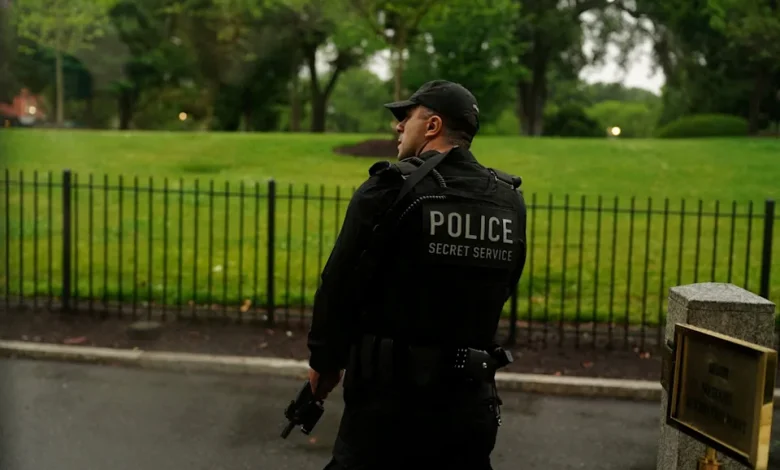
A shooting occurred near the White House on Monday, May 25, 2026, resulting in the death of the suspect and injury to a bystander. The incident took place at approximately 6 p.m. near the Secret Service checkpoint located at 17th Street and Pennsylvania Avenue NW. According to a statement released by the Secret Service, a male individual approached the checkpoint, produced a firearm from a bag, and began firing at officers. Law enforcement officials returned fire, hitting the suspect, who was later pronounced dead at a local hospital. The incident remains under active investigation by the Secret Service.
Initial Reports and Official Statements
The initial reports of the shooting sent shockwaves through Washington D.C., prompting an immediate response from multiple law enforcement agencies. The Secret Service quickly released a statement confirming the incident and assuring the public that there was no ongoing threat. The statement detailed the sequence of events, noting that the suspect had initiated the gunfire. Emergency medical services were promptly dispatched to the scene to provide aid to the injured. The area around the White House was temporarily cordoned off as investigators began to gather evidence and assess the situation. The official statement emphasized the agency’s commitment to conducting a thorough and transparent investigation into the circumstances surrounding the shooting.
Suspect Identification and Background
Law enforcement officials have identified the suspect as Nasire Best. Details regarding Best’s background are still emerging, but authorities have confirmed that he had a documented history with local law enforcement. Six senior law enforcement officials briefed on the matter confirmed his identity shortly after the incident. Investigators are currently examining Best’s past interactions with law enforcement to determine if there were any prior indications of violent tendencies or threats directed towards government officials or institutions. Understanding the suspect’s background is considered crucial in piecing together the motivations behind the attack and preventing similar incidents in the future. The investigation will likely involve a review of his criminal record, interviews with individuals who knew him, and an analysis of any online presence or communications that might shed light on his state of mind.
Mental Health History and Law Enforcement Records
Five senior law enforcement officials have indicated that Nasire Best had a history of mental health concerns. This revelation has prompted a deeper examination of the role mental health may have played in the incident. Investigators are working to gather more information about Best’s mental health history, including any diagnoses, treatments, or hospitalizations he may have undergone. This aspect of the investigation will involve obtaining medical records, interviewing mental health professionals who may have treated him, and assessing whether he was taking any medications at the time of the shooting. Understanding the interplay between mental health issues and acts of violence is a complex and sensitive issue, and investigators will proceed with caution to ensure that their findings are accurate and unbiased. The investigation may also explore whether Best’s mental health issues were known to law enforcement agencies and whether there were any opportunities for intervention or prevention. The FBI has previously been involved in investigations requiring careful handling of sensitive information.
Bystander Injury and Condition
In addition to the suspect, a bystander was also injured during the shooting. The Secret Service has confirmed that a bystander was struck by a bullet, but it remains unclear at this stage of the investigation whose gunfire caused the injury. The condition of the bystander was not immediately available. Medical personnel on the scene provided immediate treatment, and the injured individual was transported to a nearby hospital for further care. The circumstances surrounding the bystander’s injury are a key focus of the investigation, and authorities are working to determine the exact sequence of events that led to the person being shot. This will involve analyzing ballistics evidence, reviewing surveillance footage, and interviewing witnesses to gain a clearer understanding of what happened. The Secret Service has expressed its concern for the well-being of the injured bystander and has pledged to provide support and assistance to the person and their family during this difficult time.
Investigation Details and Secret Service Protocol
The Secret Service is leading the investigation into the shooting, with support from other federal and local law enforcement agencies. The investigation will involve a comprehensive review of all available evidence, including forensic analysis of the firearms used, examination of the crime scene, and interviews with witnesses and law enforcement personnel who were present at the scene. Investigators will also be looking into the suspect’s background, motivations, and any potential connections to extremist groups or ideologies. A key aspect of the investigation will be to determine whether the Secret Service’s security protocols were followed and whether any improvements can be made to prevent similar incidents in the future. The Secret Service is responsible for protecting the President, Vice President, their families, and other high-ranking government officials, as well as safeguarding the White House and other government buildings. The agency has a well-established set of security protocols and procedures designed to deter and respond to potential threats.
White House Security Protocols
The White House and its surrounding area are subject to some of the most stringent security measures in the world. These protocols are constantly reviewed and updated in response to evolving threats and security challenges. The Secret Service maintains a visible presence around the White House, with uniformed officers stationed at checkpoints and along the perimeter. In addition, there are numerous layers of security that are not visible to the public, including surveillance cameras, electronic sensors, and undercover agents. All visitors to the White House are subject to background checks and security screenings, and access to certain areas is restricted. In the event of a security breach or potential threat, the Secret Service has the authority to take immediate action to protect the President and other individuals under its protection. This may include closing down streets, evacuating buildings, and using deadly force if necessary. The security protocols are designed to provide a safe and secure environment for the President and other government officials to carry out their duties. Recent global events have highlighted the need for constant vigilance and adaptability in security measures.
Public Reaction and Media Coverage
The shooting near the White House has generated widespread public reaction and extensive media coverage. News of the incident quickly spread across social media platforms, with many people expressing concern and shock. Cable news networks and online news outlets have provided continuous updates on the investigation, including live coverage of press conferences and interviews with experts. The public’s reaction to the shooting has been varied, with some people expressing anger and outrage, while others have called for calm and unity. There have also been calls for stricter gun control measures and increased funding for mental health services. The media coverage has focused on the details of the incident, the suspect’s background, and the implications for White House security. Some commentators have raised questions about whether the shooting was a random act of violence or part of a larger plot. The media coverage is likely to continue as the investigation progresses and more information becomes available. The flow of information and potential for misinformation are concerns that echo in discussions about global health data access.
Expert Analysis of the Incident
Security experts and law enforcement analysts have offered their insights into the shooting near the White House, providing context and perspective on the incident. These experts have emphasized the importance of understanding the suspect’s motivations and the factors that may have contributed to his actions. They have also highlighted the challenges of securing the White House and other high-profile government buildings in an era of increasing threats and polarization. Some experts have suggested that the shooting may prompt a re-evaluation of security protocols and a renewed focus on threat assessment and prevention. Others have cautioned against drawing broad conclusions or making sweeping policy changes based on a single incident. The expert analysis has also addressed the role of mental health in acts of violence, with many experts calling for increased access to mental health services and greater awareness of mental health issues. The insights provided by these experts can help inform the public’s understanding of the shooting and its implications for national security.
Comparison of Similar Incidents
To provide a broader perspective, it is useful to compare this shooting incident with other similar events that have occurred near the White House or other government buildings in the past. Here’s a comparison table:
| Incident | Date | Location | Description | Outcome |
|---|---|---|---|---|
| Shooting Near White House | May 25, 2026 | 17th Street and Pennsylvania Avenue NW | Suspect opened fire on Secret Service officers. | Suspect dead, bystander injured. |
| White House Fence Jumper | March 10, 2017 | White House North Lawn | Man jumped the White House fence and was apprehended on the North Lawn. | Suspect arrested. |
| 2014 White House Shooting | October 22, 2014 | White House perimeter | A woman in a car led police on a high-speed chase that ended in gunfire near the White House. | Suspect killed. |
| Attempted White House Intrusion | September 19, 2014 | White House North Lawn | An Iraq war veteran scaled the White House fence and made it into the East Room before being apprehended. | Suspect arrested. |
Long-Term Implications for Security
The shooting near the White House is likely to have long-term implications for security protocols and procedures. The Secret Service and other law enforcement agencies will be reviewing their security measures to identify any vulnerabilities and implement necessary improvements. This may include increasing the number of officers stationed around the White House, enhancing surveillance technology, and tightening security screenings for visitors. There may also be a greater emphasis on threat assessment and prevention, with law enforcement agencies working to identify and track individuals who may pose a threat to the White House or other government buildings. The incident could also lead to a broader discussion about gun control measures and mental health services. Some policymakers may call for stricter gun laws to prevent individuals with mental health issues from obtaining firearms, while others may advocate for increased funding for mental health treatment and support services. The long-term implications of the shooting will depend on the findings of the investigation and the policy decisions that are made in response. The potential for escalating tensions and conflicts, as seen in regions like the Strait of Hormuz, underscores the need for robust security measures.
Community Response and Support
The community in Washington D.C. and across the nation has responded to the shooting near the White House with a mix of concern, support, and resilience. Local organizations and community leaders have stepped up to provide assistance to those affected by the incident, including the injured bystander and their family. Mental health professionals have also offered counseling and support services to help people cope with the emotional impact of the shooting. Many people have expressed their solidarity with the Secret Service and other law enforcement agencies, thanking them for their service and dedication to protecting the White House and the nation. There have also been calls for unity and healing, with people from all walks of life coming together to condemn the violence and promote peace. The community’s response to the shooting demonstrates the strength and resilience of the American people in the face of adversity. The community response also serves as a reminder of the importance of addressing the underlying issues that contribute to violence, such as mental health, poverty, and social inequality. External resources and support networks are crucial during such times. The situation in the Ukraine is a good example of the way the international community can come together during periods of crisis. Brookings Ukraine offers many resources to understand the complex issues involved.