California Chemical Incident: State of Emergency Declared in Orange County
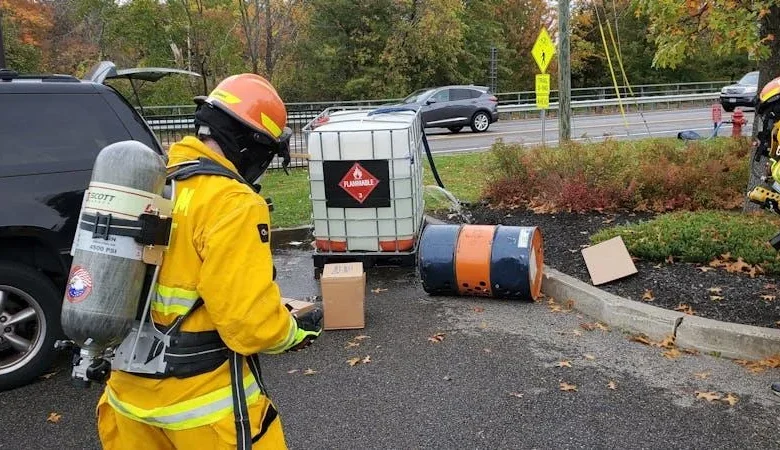
A potential environmental catastrophe is unfolding in Orange County, California, as a significant chemical leak threatens to trigger a massive explosion. On Saturday, a 7,000-gallon tank containing methyl methacrylate, a highly toxic chemical crucial in manufacturing resins and plastics, posed an imminent danger. The situation was further aggravated by its proximity to a 15,000-gallon tank holding the same volatile substance. According to Orange County Fire Authority (OCFA) incident commander Chief Craig Covey, the worst-case scenario could result in “one of the worst chemical incidents in California history.” This looming threat prompted Governor Gavin Newsom to declare a state of emergency in Orange County, mobilizing state resources to support affected residents and mitigate the escalating crisis.
Introduction
The unfolding crisis in Garden Grove highlights the precarious balance between industrial operations and public safety. The potential for a catastrophic chemical incident involving methyl methacrylate has triggered widespread concern and prompted a large-scale evacuation. This article delves into the details of the incident, the properties and risks associated with methyl methacrylate, the emergency response efforts, and the broader implications for environmental safety and regulatory oversight in California. Understanding the complexities of this event is crucial for policymakers, industry stakeholders, and the public to prevent similar incidents in the future.
State of Emergency Declared
Governor Gavin Newsom’s declaration of a state of emergency underscores the severity of the situation in Orange County. This declaration allows for the mobilization of state resources, including the Office of Emergency Services and other relevant agencies, to provide immediate assistance to affected residents. The state of emergency facilitates expedited access to funding, personnel, and equipment necessary to manage the crisis effectively. This decisive action aims to mitigate the immediate threats and address the long-term consequences of the chemical leak. Such declarations are critical in ensuring a coordinated and comprehensive response to large-scale emergencies, reflecting the state’s commitment to protecting its citizens and the environment.
Incident Details: Methyl Methacrylate Threat
The core of the crisis revolves around the instability of the 7,000-gallon tank containing methyl methacrylate. Chief Craig Covey of the OCFA pinpointed the loss of valve control and a dangerous increase in temperature within the tank as primary concerns. Temperatures had already reached a volatile range of 90 to 100 degrees Fahrenheit, heightening the risk of an explosion. The presence of a larger 15,000-gallon tank nearby amplified the potential for a cascading disaster, as an explosion in the initial tank could easily ignite the contents of the second. Methyl methacrylate is a highly flammable and reactive chemical compound, making its containment and stabilization a top priority for emergency responders. The specific details of the valve malfunction and the cause of the temperature increase are under investigation, with experts working to determine the best course of action to prevent a catastrophic outcome.
Evacuation and Emergency Response
The immediate response to the chemical leak involved the evacuation of tens of thousands of residents from Garden Grove and neighboring cities. Evacuation orders were issued to ensure the safety of the public, with emergency shelters set up to accommodate those displaced from their homes. The OCFA, along with other local and state agencies, coordinated the evacuation efforts, providing transportation and support to those in need. Firefighters and hazardous materials teams worked to cool the affected tank and stabilize the chemical, employing specialized equipment and techniques to minimize the risk of an explosion. Air quality monitoring was also conducted to assess the potential health impacts of the leak. The scale and complexity of the evacuation underscored the challenges of responding to a large-scale chemical incident in a densely populated area.
The emergency response also included a multi-agency collaboration, with experts from various fields contributing to the effort. Chemical engineers, environmental scientists, and public health officials worked together to assess the risks and develop strategies for containment and mitigation. This interdisciplinary approach was essential for addressing the multifaceted challenges posed by the incident. Regular briefings were held to keep the public informed of the latest developments and provide guidance on safety precautions. The effectiveness of the emergency response will be crucial in preventing further escalation and minimizing the long-term impacts of the chemical leak.
Methyl Methacrylate: Properties and Risks
Methyl methacrylate (MMA) is an organic compound with the formula CH₂=C(CH₃)COOCH₃. It is a colorless liquid that is primarily used as a monomer in the production of polymethyl methacrylate (PMMA), commonly known as acrylic glass or Plexiglas. MMA is also used in the manufacture of various other polymers, resins, and coatings. Its widespread industrial applications make it a common chemical in many manufacturing facilities.
However, MMA poses significant health and safety risks. It is highly flammable and can form explosive mixtures with air. Exposure to MMA can cause irritation of the skin, eyes, and respiratory tract. Prolonged or repeated exposure can lead to more severe health effects, including dermatitis and respiratory sensitization. Inhalation of high concentrations of MMA can cause central nervous system depression, leading to dizziness, headache, and nausea. The chemical’s Material Safety Data Sheet (MSDS) provides detailed information on its hazards and safety precautions.
The reactivity of MMA also presents challenges for storage and handling. It is prone to polymerization, a process in which the molecules of MMA react with each other to form a solid polymer. This polymerization reaction can be exothermic, generating heat and potentially leading to a runaway reaction or explosion. To prevent polymerization, MMA is typically stored with inhibitors that slow down or prevent the reaction. However, these inhibitors can degrade over time, requiring periodic monitoring and replenishment. The risk of polymerization underscores the importance of maintaining proper storage conditions and implementing strict safety protocols.
Potential Environmental and Health Impact
The potential environmental and health impacts of a large-scale release of methyl methacrylate are significant. If the chemical were to be released into the air, it could contribute to air pollution and pose immediate respiratory hazards to nearby residents. The fumes can cause irritation to the eyes, nose, and throat, and prolonged exposure can lead to more severe respiratory problems. Furthermore, MMA is a volatile organic compound (VOC), which can contribute to the formation of ground-level ozone and smog, exacerbating air quality issues in the region. The article WHO Data Access Concerns Rise as US Navigates Global Health Information Gaps discusses the importance of air quality monitoring in preventing health problems.
If MMA were to spill into the soil or water, it could contaminate these resources and pose risks to ecosystems. MMA is toxic to aquatic life, and a spill could harm or kill fish and other organisms. Soil contamination could also affect plant growth and potentially contaminate groundwater sources. The long-term environmental effects of an MMA release can be complex and may require extensive remediation efforts. Regular monitoring of air and water quality is essential to assess the extent of contamination and protect public health.
Given the potential for both immediate and long-term health and environmental impacts, a comprehensive assessment of the risks is crucial. This assessment should consider the potential pathways of exposure, the toxicity of MMA, and the vulnerability of the surrounding population and environment. The results of this assessment can inform the development of effective mitigation strategies and emergency response plans.
Historical Context of Chemical Incidents in California
California has a history of dealing with industrial accidents and chemical spills, which have shaped the state’s regulatory landscape and emergency response protocols. Past incidents, such as the 2014 Freedom Industries chemical spill in West Virginia and the 1999 Tosco refinery explosion in California, have highlighted the potential for catastrophic consequences and the need for robust safety measures. These events have led to increased scrutiny of industrial facilities and stricter enforcement of environmental regulations. Understanding the lessons learned from these past incidents is essential for preventing future disasters. For example, the article Jonathan Rinderknecht Pleads Not Guilty; Trial Begins for Devastating California Wildfire highlights some of the dangers that can occur in California.
The regulatory framework in California is designed to protect public health and the environment by setting standards for the safe handling, storage, and disposal of hazardous materials. These regulations cover a wide range of activities, from the permitting of industrial facilities to the transportation of hazardous waste. The California Environmental Protection Agency (CalEPA) is responsible for overseeing the implementation of these regulations and ensuring compliance. However, despite these efforts, accidents can still occur, underscoring the need for continuous improvement in safety practices and regulatory oversight.
The historical context of chemical incidents in California provides valuable insights into the challenges and opportunities for improving chemical safety. By learning from past mistakes and adopting best practices, the state can reduce the risk of future disasters and protect its communities and environment.
Community and Government Reaction
The community reaction to the potential chemical disaster in Orange County has been one of anxiety and concern. Residents have expressed frustration over the lack of information and the uncertainty surrounding the situation. Community leaders have called for greater transparency and accountability from both the industrial facility and government agencies. The incident has also sparked renewed debate over the siting of industrial facilities near residential areas and the need for stricter zoning regulations. The article FBI Ballot Seizure: Judge Denies Fulton County’s Request, Cites Flaws highlights another instance of governmental response to emergencies.
Government officials have responded to the crisis by declaring a state of emergency, mobilizing resources, and coordinating the evacuation efforts. They have also pledged to conduct a thorough investigation into the cause of the incident and to hold those responsible accountable. The government’s response has been met with mixed reactions, with some praising the swift action and others criticizing the lack of preparedness. Moving forward, it will be crucial for government agencies to work closely with the community to address their concerns and build trust.
Effective communication is essential during a crisis, and government officials must provide timely and accurate information to the public. This includes explaining the risks involved, the steps being taken to mitigate the situation, and the resources available to affected residents. Transparency and openness can help to alleviate anxiety and build confidence in the government’s ability to manage the crisis.
Review of Safety Regulations and Protocols
In light of the potential chemical disaster in Orange County, a comprehensive review of safety regulations and protocols is warranted. This review should focus on identifying any gaps or weaknesses in the existing regulatory framework and developing recommendations for improvement. The review should also consider the latest scientific knowledge and best practices for chemical safety. One area of focus should be on the permitting process for industrial facilities, ensuring that it includes a thorough assessment of potential hazards and risks. The permitting process should also require facilities to develop and implement comprehensive safety management systems that include regular inspections, training, and emergency response plans.
Another area of focus should be on the enforcement of safety regulations. Regulatory agencies must have the resources and authority to conduct regular inspections and to take enforcement actions against facilities that violate safety standards. Enforcement actions can include fines, penalties, and even the revocation of permits. Strict enforcement of safety regulations is essential for deterring violations and ensuring that facilities are operating safely. The article Grants Halted by Trump Administration Deemed Unconstitutional discusses the importance of regulations in maintaining safety.
In addition to regulatory oversight, industry self-regulation can also play an important role in promoting chemical safety. Industry associations can develop and promote best practices for their members, and companies can implement their own internal safety management systems. By working together, government, industry, and the community can create a culture of safety that reduces the risk of chemical incidents.
Long-Term Implications and Recovery
The long-term implications of the chemical leak in Orange County extend beyond the immediate emergency response. The incident could have lasting effects on the environment, the economy, and the health and well-being of the community. Environmental remediation efforts may be necessary to clean up contaminated soil and water, and these efforts could take years to complete. The economic impact of the incident could include lost jobs, reduced property values, and increased insurance costs. The health and well-being of the community could be affected by exposure to the chemical, as well as by the stress and anxiety caused by the incident. For example, the article China Fireworks Plant Explosion: Changsha Blast Devastates Huasheng Facility in Liuyang covers other instances where health and well-being of a community were affected.
Recovery from the incident will require a coordinated and sustained effort from government, industry, and the community. This effort should include providing support to affected residents, restoring the environment, and rebuilding the economy. It should also include addressing the underlying causes of the incident and implementing measures to prevent future disasters. The recovery process should be guided by the principles of sustainability, resilience, and equity.
One important aspect of the recovery process is to learn from the incident and to use this knowledge to improve chemical safety. This includes conducting a thorough investigation of the incident, identifying the root causes, and implementing corrective actions. It also includes sharing lessons learned with other communities and industries, so that they can benefit from this experience.
Environmental Justice Considerations
Environmental justice is a critical consideration in the context of the chemical leak in Orange County. Environmental justice refers to the fair treatment and meaningful involvement of all people regardless of race, color, national origin, or income, with respect to the development, implementation, and enforcement of environmental laws, regulations, and policies. In many cases, low-income and minority communities are disproportionately burdened by environmental hazards, such as pollution from industrial facilities.
In the case of the chemical leak in Orange County, it is important to consider whether the affected community is disproportionately burdened by environmental hazards. This includes assessing the demographic characteristics of the community, the proximity of industrial facilities, and the cumulative exposure to environmental pollutants. If it is found that the community is disproportionately burdened, then steps should be taken to address these inequities.
One way to address environmental justice concerns is to ensure that all communities have a voice in decisions that affect their environment. This includes providing opportunities for community participation in the permitting process for industrial facilities, as well as in the development of environmental regulations and policies. It also includes ensuring that communities have access to information about environmental hazards and the risks they pose. The article Killing of Casey Goodson Jr: Jason Meade Convicted in Ohio highlights the importance of fairness and justice for everyone.
| Aspect | Details |
|---|---|
| Chemical Involved | Methyl Methacrylate (MMA) |
| Quantity | 7,000-gallon tank, 15,000-gallon tank nearby |
| Location | Garden Grove, Orange County, California |
| Incident | Loss of valve control, rising temperatures (90-100°F) |
| Potential Consequence | Explosion, major chemical incident |
| Response | State of Emergency declared, evacuation of tens of thousands |
| Agencies Involved | OCFA, Office of Emergency Services, State Agencies |
| Risks | Flammability, toxicity, environmental contamination |
| Community Impact | Evacuation, health concerns, anxiety |
Conclusion
The potential chemical disaster in Orange County serves as a stark reminder of the risks associated with industrial operations and the importance of robust safety measures. The incident underscores the need for continuous improvement in regulatory oversight, industry practices, and community preparedness. By learning from this experience and working together, government, industry, and the community can reduce the risk of future disasters and protect the health and well-being of all Californians. The incident also highlights the importance of environmental justice and the need to ensure that all communities have a voice in decisions that affect their environment. As the recovery process unfolds, it will be crucial to prioritize sustainability, resilience, and equity, ensuring that the long-term needs of the community and the environment are met.