Bottoms Wins Georgia Democratic Primary After Biden Endorsement
Introduction
Kimberly Bottoms has emerged victorious in the Georgia Democratic primary, solidifying her position as a prominent figure in state politics. Her win follows a hard-fought campaign in a crowded field of candidates, including notable figures such as former DeKalb County CEO Michael Thurmond, former state Senator Jason Esteves, and former Lieutenant Governor Geoff Duncan. Duncan, who previously served as a Republican, had switched parties, adding an intriguing dynamic to the race. Bottoms’ success underscores her strong appeal among Georgia Democratic voters and sets the stage for a high-stakes general election in November.
The primary race was closely watched, not only for its implications within Georgia but also for its potential impact on the national political landscape. With endorsements from key figures like former President Joe Biden, Bottoms demonstrated her ability to galvanize support and command attention on both state and national levels. The focus now shifts to the upcoming general election, where she will face the winner of the Republican primary runoff between Lieutenant Governor Burt Jones and healthcare executive Rick Jackson.
Bottoms’ Primary Victory
Bottoms’ victory in the Democratic primary was marked by consistent polling leads and a well-organized campaign that resonated with a broad base of Democratic voters across Georgia. Her previous tenure as the mayor of Atlanta from 2018 to 2022 provided her with significant name recognition and a track record to run on, allowing her to effectively communicate her vision for the state. Additionally, her subsequent role in the Biden administration further elevated her profile and credibility among Democratic circles.
Throughout the primary campaign, Bottoms emphasized key policy priorities that align with the Democratic platform, including economic development, social justice, and environmental protection. Her ability to articulate these issues and connect with voters on a personal level proved to be a crucial factor in her success. Furthermore, the support from influential figures within the Democratic Party, coupled with a robust grassroots campaign, helped to solidify her position as the frontrunner in the race.
The Biden Endorsement
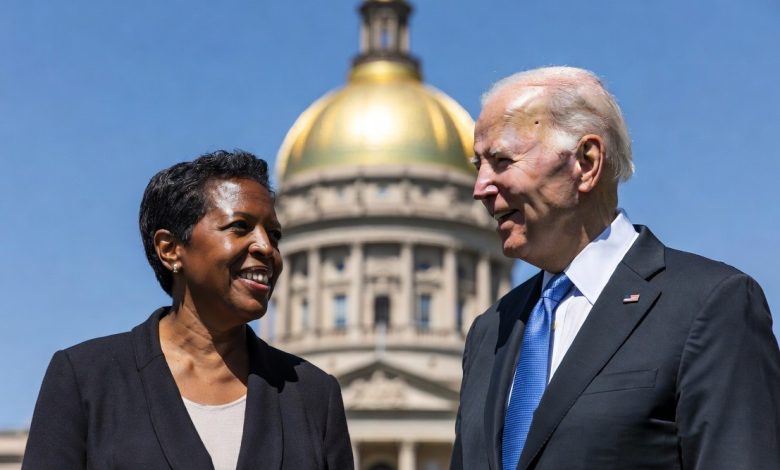
The endorsement from former President Joe Biden played a significant role in boosting Bottoms’ campaign during the final stretch of the primary. Biden’s support signaled a strong vote of confidence in Bottoms’ leadership and her ability to effectively represent the interests of Georgia Democrats. The endorsement also provided her campaign with additional resources and visibility, helping to further consolidate her support among voters.
Biden’s endorsement was strategically timed to coincide with key campaign events and media appearances, maximizing its impact on the electorate. In his endorsement, Biden praised Bottoms for her commitment to public service, her track record of delivering results, and her ability to unite diverse communities. This endorsement served as a powerful validation of her candidacy and helped to propel her to victory in the primary.
Campaign Strategy and Key Issues
Bottoms’ campaign strategy focused on highlighting her experience as mayor of Atlanta and her work in the Biden administration, portraying her as a seasoned leader with a proven ability to address complex challenges. She emphasized her commitment to creating jobs, improving education, and ensuring access to affordable healthcare for all Georgians. Her campaign also prioritized outreach to key demographic groups, including African American voters, young people, and suburban women, who represent a significant portion of the Democratic base in Georgia.
Key issues that Bottoms championed during the primary included expanding Medicaid, investing in renewable energy, and reforming the criminal justice system. She also spoke out strongly against voter suppression efforts and pledged to protect the right to vote for all Georgians. Her consistent focus on these issues, coupled with her ability to effectively communicate her vision for the state, helped to resonate with voters and solidify her position as the leading candidate in the Democratic primary. The recent tensions in the Hormuz Strait could also affect the economy.
Republican Opponent: The Runoff
With Bottoms securing the Democratic nomination, attention now turns to the Republican primary runoff between Lieutenant Governor Burt Jones and healthcare executive Rick Jackson. The winner of this runoff will face Bottoms in the November general election, setting the stage for a highly competitive and closely watched contest. Both Jones and Jackson represent different factions within the Republican Party, and their policy platforms reflect their respective ideologies.
Jones, as the current Lieutenant Governor, has a strong base of support among establishment Republicans and conservative voters. He has emphasized his commitment to fiscal responsibility, limited government, and traditional values. Jackson, on the other hand, has positioned himself as an outsider and a political newcomer, appealing to voters who are looking for a fresh perspective and a change from the status quo. His focus on healthcare policy and his business background may resonate with certain segments of the Republican electorate.
Backgrounds of Jones and Jackson
Burt Jones has been a prominent figure in Georgia politics for several years, serving in the State Senate before becoming Lieutenant Governor. He is known for his conservative views and his strong support for business-friendly policies. Jones has also been a vocal advocate for election integrity and has called for stricter voter ID laws. His experience in government and his connections within the Republican Party make him a formidable candidate in the runoff.
Rick Jackson, while less well-known in political circles, brings a wealth of experience from the healthcare industry. As a billionaire healthcare executive, he has focused his campaign on addressing issues such as healthcare affordability and access. Jackson has also pledged to bring his business acumen to state government, promising to streamline operations and improve efficiency. His outsider status and his focus on healthcare may appeal to voters who are dissatisfied with traditional politicians and policy approaches. The current energy crisis could play a significant role in voters’ decisions.
Georgia’s Evolving Political Landscape
Georgia has undergone significant demographic and political changes in recent years, transforming from a reliably Republican state into a battleground where both parties have a realistic chance of winning statewide elections. The growth of diverse communities, particularly in the Atlanta metropolitan area, has contributed to a shift in the electorate, with more voters identifying as Democrats or independents. This changing landscape has made Georgia a key state in national elections and has intensified the competition between the two parties.
The 2020 presidential election saw Joe Biden narrowly defeat Donald Trump in Georgia, marking the first time a Democrat had won the state in nearly three decades. This victory, coupled with the Democratic wins in the 2021 Senate runoff elections, signaled a significant shift in the state’s political alignment. As a result, both parties are investing heavily in Georgia and are focused on mobilizing their respective bases of support. The situation in Lebanon could also influence voters.
Voter Turnout and Engagement
Voter turnout in Georgia has been on the rise in recent years, reflecting the increasing engagement of citizens in the political process. Both parties have been working to register new voters and to encourage participation in elections. The 2020 election saw record-breaking turnout, and the 2022 midterm elections also witnessed strong participation rates. This trend is expected to continue in the upcoming general election, as both Democrats and Republicans recognize the importance of mobilizing their supporters.
Efforts to increase voter turnout have focused on a variety of strategies, including voter registration drives, educational campaigns, and get-out-the-vote initiatives. Organizations on both sides of the political spectrum are working to engage with voters and to ensure that they have the information and resources they need to participate in elections. The outcome of the general election will likely depend on which party is more successful in mobilizing its base and persuading undecided voters to support their candidate. The situation in the Panama Canal could also influence voters.
National Implications of the Race
The Georgia gubernatorial race has significant national implications, as it could influence the balance of power in the state and have broader implications for the 2028 presidential election. A Democratic victory in Georgia would further solidify the party’s position in the South and could provide a boost to their efforts to win other statewide races in the region. A Republican victory, on the other hand, would reaffirm the party’s dominance in the state and could serve as a springboard for their efforts to regain control of the White House in 2028.
The race is also being closely watched by national political organizations and donors, who are investing heavily in the state. Both parties recognize the importance of Georgia in the national political landscape and are committed to supporting their respective candidates. The outcome of the race will likely be interpreted as a referendum on the direction of the country and could have significant implications for the future of American politics. Any escalation involving Iran could also shift the political landscape.
Challenges Ahead
As Bottoms prepares for the general election, she faces a number of challenges, including uniting the Democratic Party behind her candidacy, effectively communicating her message to a diverse electorate, and combating Republican efforts to suppress voter turnout. She will also need to address concerns about crime, inflation, and other pressing issues that are affecting Georgians across the state. Her ability to navigate these challenges and to articulate a compelling vision for the future will be crucial to her success in the general election.
The Republican candidate will also face challenges, including overcoming divisions within their own party, appealing to moderate voters, and defending their record on key issues. The Republican nominee will need to effectively counter Bottoms’ message and to present a clear alternative to her policy proposals. The general election is expected to be highly competitive, and the outcome will likely depend on which candidate is better able to connect with voters and to mobilize their supporters. Furthermore, the political climate will also be influenced by international issues such as the potential petrodollar crisis.
Expert Analysis
Political analysts and observers have noted that the Georgia gubernatorial race is one of the most closely watched contests in the country, given the state’s changing demographics and its importance in national elections. Experts have pointed out that Bottoms’ experience as mayor of Atlanta and her connections within the Democratic Party give her a strong advantage, but they also caution that the Republican candidate will be a formidable opponent. The outcome of the race is expected to be close, and the campaigns will likely be highly competitive.
Analysts have also noted that the race could be influenced by national trends, such as the economy, the approval ratings of the president, and the political climate in Washington. These factors could impact voter turnout and could sway undecided voters in either direction. The campaigns will need to be nimble and responsive to these changing dynamics in order to effectively compete in the general election. One should also consider the potential fallout from situations such as the Anthropic AI security risks.
Candidate Comparison Table
| Candidate | Party | Key Experience | Key Issues | Strengths | Weaknesses |
|---|---|---|---|---|---|
| Kimberly Bottoms | Democratic | Mayor of Atlanta, Biden Administration | Economic Development, Social Justice, Environmental Protection | Strong name recognition, experienced leader, well-funded campaign | May face challenges uniting the Democratic Party, needs to address concerns about crime and inflation |
| Burt Jones | Republican | Lieutenant Governor, State Senator | Fiscal Responsibility, Limited Government, Traditional Values | Strong support among establishment Republicans, experienced politician | May struggle to appeal to moderate voters, could face challenges overcoming divisions within the Republican Party |
| Rick Jackson | Republican | Healthcare Executive | Healthcare Affordability, Business Efficiency | Outsider status may appeal to voters seeking change, business acumen | Less well-known in political circles, may lack experience in government |
Conclusion
Kimberly Bottoms’ victory in the Georgia Democratic primary marks a significant milestone in her political career and sets the stage for a highly anticipated general election in November. Her ability to unite the Democratic Party, effectively communicate her message, and address the concerns of Georgia voters will be crucial to her success. The race against either Burt Jones or Rick Jackson will be closely watched, not only for its implications within Georgia but also for its potential impact on the national political landscape. As Georgia continues to evolve as a battleground state, the outcome of this election will serve as a key indicator of the direction of the state and the future of American politics. The results could also be impacted by international tensions such as those in the Strait of Hormuz and the integrity of international agreements.
The Georgia gubernatorial election is more than just a contest for the state’s highest office; it is a reflection of the broader political and social trends that are shaping the United States. The outcome will have far-reaching consequences for the state, the region, and the nation as a whole. As voters prepare to cast their ballots, they will be weighing the qualifications, experience, and policy platforms of the candidates, as well as the broader implications of their choice for the future of Georgia. The election is set to take place amidst various global conflicts.
For more information on related topics, consider reading about the China energy crisis, which has implications for global politics. Additionally, you can gain insights into the Hormuz Strait crisis, an important factor for understanding the current geopolitical climate. You can also learn about the petrodollar crisis and the Lebanon border situation. Finally, further information can be found regarding US-Iran negotiations. The upcoming election will occur during a period of both national and global uncertainty, making it a pivotal moment for Georgia and the United States. More information on international efforts can be found at the Council on Foreign Relations website.