Moore Leads Alabama Senate Primary with Trump’s Backing
Introduction
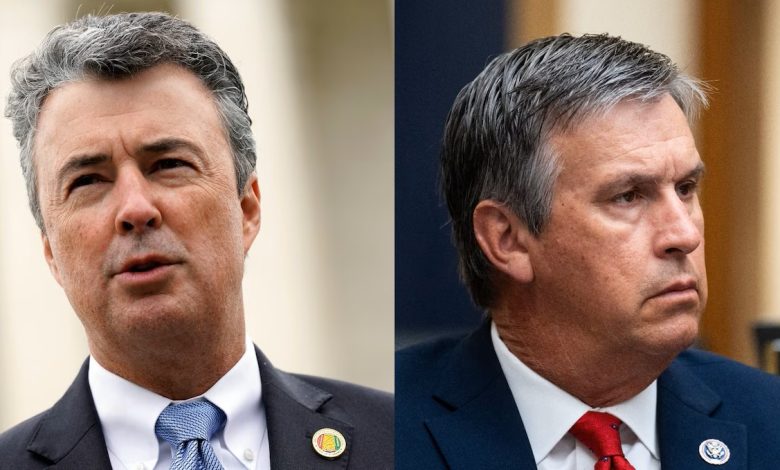
Barry Moore is currently leading a crowded primary field in the Alabama Senate race, significantly boosted by an endorsement from former President Donald Trump. However, despite this advantage, it’s unlikely that Moore will secure the majority needed to win the nomination outright. This sets the stage for a compelling runoff election on June 16, where Moore will likely face either state Attorney General Steve Marshall or former Navy SEAL Jared Hudson. The ultimate winner of this runoff is poised to be the heavy favorite in the general election, marking a pivotal moment for Alabama’s political landscape.
The Alabama Senate Race Heats Up
The race to succeed Sen. Tommy Tuberville, who is vacating his Senate seat to run for governor, has intensified, drawing significant attention and resources from various political factions. The Republican primary, in particular, has become a battleground for different ideologies and endorsements, with Moore emerging as a frontrunner, largely due to his alignment with and support from Donald Trump. The dynamics of this primary election are further complicated by the presence of other strong contenders like Marshall and Hudson, each bringing unique qualifications and appeal to different segments of the Republican base.
The political climate in Alabama, known for its conservative leanings, heavily favors the Republican candidate in the general election. Therefore, the primary runoff is essentially the deciding contest. The candidates are focusing on key issues that resonate with Alabama voters, including economic growth, national security, and conservative social values. The outcome of this election will not only determine who represents Alabama in the U.S. Senate but also reflect the prevailing sentiments and priorities of the state’s electorate.
Donald Trump’s Endorsement
Donald Trump’s endorsement of Barry Moore carries significant weight in Alabama, a state where Trump maintains considerable popularity and influence. Trump’s endorsement, reiterated on Truth Social, underscored Moore’s allegiance to the “America First” agenda and his unwavering support for Trump’s policies. This endorsement not only boosts Moore’s visibility but also consolidates his support among Trump’s loyal base. Trump’s active involvement in the race highlights the importance he places on maintaining influence in key Senate seats and ensuring that his allies are in positions of power.
Trump’s endorsement strategy often involves backing candidates who have demonstrated loyalty to him and his policies, regardless of their previous political experience or standing within the party. This approach can be both a blessing and a curse, as it can galvanize support but also alienate more moderate or establishment Republicans. In Moore’s case, the endorsement provides a significant advantage in the primary but also sets the stage for potential challenges in uniting the party after the runoff, depending on the outcome and the level of support from other factions.
Barry Moore’s Campaign Platform
Barry Moore’s campaign platform is built on a foundation of conservative principles and a commitment to representing the interests of Alabama’s citizens in Washington. Moore emphasizes his dedication to fighting against government overreach, promoting economic growth, and upholding traditional values. His campaign website highlights his focus on issues such as securing the border, reducing the national debt, and protecting the Second Amendment. Moore’s messaging is carefully crafted to appeal to the conservative base in Alabama, positioning him as a strong advocate for their concerns.
Moore’s experience as a former state lawmaker and his current position in Congress provide him with a platform to demonstrate his understanding of the legislative process and his ability to deliver results for his constituents. He frequently references his voting record and his efforts to support President Trump’s agenda during his time in Congress. Moore’s campaign strategy involves actively engaging with voters through rallies, town hall meetings, and social media, aiming to build a strong grassroots network and mobilize support across the state.
The Primary Field Overview
The Republican primary field in Alabama is crowded with candidates, each vying for the opportunity to represent the party in the general election. Besides Barry Moore, the field includes prominent figures such as Steve Marshall and Jared Hudson, as well as other lesser-known candidates who are working to gain traction. The diversity of the field reflects the range of ideologies and priorities within the Republican Party in Alabama. Each candidate brings a unique set of experiences and qualifications, contributing to a dynamic and competitive primary race.
The presence of multiple candidates in the primary has the effect of diluting the vote, making it more difficult for any single candidate to secure a majority. This scenario increases the likelihood of a runoff election, where the top two vote-getters compete head-to-head. The dynamics of the primary race also influence the candidates’ messaging and strategies, as they seek to differentiate themselves from their opponents and appeal to specific segments of the electorate. The primary debates and campaign events provide opportunities for the candidates to articulate their visions for Alabama and address the issues that matter most to voters.
Steve Marshall: A Formidable Challenger
Steve Marshall, the current Attorney General of Alabama, presents a formidable challenge to Barry Moore in the Senate race. Marshall’s extensive legal background and his experience as the state’s top law enforcement officer give him a distinct advantage in terms of credibility and expertise. He has a proven track record of upholding the law and fighting for justice, which resonates with many conservative voters. Marshall’s campaign focuses on issues such as combating crime, protecting religious freedom, and defending the Constitution. His deep roots in Alabama and his strong relationships with local leaders further bolster his campaign.
Marshall’s campaign strategy involves highlighting his accomplishments as Attorney General and contrasting his experience with that of his opponents. He emphasizes his commitment to serving the people of Alabama and his ability to effectively represent their interests in Washington. Marshall also benefits from the support of key figures within the Republican establishment, which provides him with access to resources and networks that can enhance his campaign. His ability to appeal to both conservative and moderate Republicans positions him as a strong contender in the primary race.
Jared Hudson: The Navy SEAL Candidate
Jared Hudson, a former Navy SEAL, brings a unique perspective and set of qualifications to the Alabama Senate race. Hudson’s military service and his background in special operations resonate with voters who prioritize national security and strong leadership. His campaign focuses on issues such as strengthening the military, securing the border, and supporting veterans. Hudson’s experience in high-pressure situations and his commitment to serving his country make him an appealing candidate to many Alabamians.
Hudson’s campaign strategy involves leveraging his military background to project an image of strength and competence. He emphasizes his dedication to defending American values and his willingness to stand up for what he believes in. Hudson also focuses on grassroots outreach, connecting with voters at local events and sharing his story. While he may not have the same level of name recognition as Moore or Marshall, Hudson’s compelling personal narrative and his focus on key issues could help him gain momentum in the race. He could apply military strategies to other sectors such as the army ground drone which are revolutionizing the last tactical mile.
The June 16 Runoff Election
With it being unlikely that any candidate will secure a majority in the initial primary election, the focus shifts to the June 16 runoff. This election will pit the top two vote-getters against each other in a head-to-head contest. The runoff election presents a new set of challenges and opportunities for the candidates, as they must refine their messaging and strategies to appeal to a broader range of voters. The turnout in the runoff election is often lower than in the initial primary, making it crucial for the candidates to mobilize their supporters and get them to the polls.
The dynamics of the runoff election can also be influenced by endorsements from candidates who did not make the cut, as well as by shifts in the political landscape. The candidates will likely engage in more direct comparisons and contrasts, highlighting their strengths and weaknesses relative to their opponent. The runoff election provides a final opportunity for the candidates to make their case to the voters and demonstrate why they are the best choice to represent Alabama in the U.S. Senate.
Tommy Tuberville: Running for Governor
Tommy Tuberville’s decision to vacate his Senate seat and run for governor has created the opportunity for a new generation of leaders to emerge in Alabama. Tuberville, a former college football coach, entered the political arena with limited experience but quickly gained popularity due to his charisma and his alignment with President Trump. His decision to run for governor reflects his ambition to serve in a different capacity and his belief that he can bring his leadership skills to the state’s highest office. Tuberville’s departure from the Senate has opened up a coveted seat, attracting a diverse field of candidates eager to fill his shoes. Given he is leaving the senate, there is less people who could defend situations like the blockade strategy that Trump has extended indefinitely.
Tuberville’s tenure in the Senate was marked by his strong support for conservative policies and his advocacy for Alabama’s interests in Washington. He played a key role in advancing President Trump’s agenda and worked to secure funding for important projects in his home state. Tuberville’s decision to run for governor sets the stage for a competitive and closely watched election, as he will likely face strong opposition from both within his own party and from the Democratic Party. He could have taken inspiration from other people who have transitioned to new careers such as Devaux’s journey from stable worker to breeders cup champion.
Potential Impact of the Election Outcome
The outcome of the Alabama Senate race will have significant implications for the state and for the balance of power in the U.S. Senate. The election of a conservative Republican like Moore, Marshall, or Hudson would likely reinforce the Republican Party’s control of the Senate and advance their legislative agenda. The winner of the election will have the opportunity to shape policy on a wide range of issues, from healthcare and education to national security and economic development. The election will also serve as a gauge of the Republican Party’s strength in the South and the enduring influence of Donald Trump.
The election of a new Senator from Alabama could also have an impact on key committees and legislative priorities in the Senate. The Senator will have the opportunity to serve on committees that are important to Alabama’s interests, such as the Armed Services Committee, the Agriculture Committee, and the Commerce Committee. The Senator will also have the chance to advocate for policies that benefit Alabama’s economy, its environment, and its citizens. The outcome of the election will be closely watched by political observers and stakeholders across the country.
Polling Data and Election Predictions
As the Alabama Senate race progresses, polling data and expert predictions provide valuable insights into the likely outcome. Polls consistently show Barry Moore with a lead in the primary, reflecting the boost from Trump’s endorsement and his strong base of support. However, the polls also indicate that Moore is unlikely to secure a majority in the initial primary, setting the stage for a runoff election. The polling data suggests that Steve Marshall is Moore’s most likely opponent in the runoff, given his strong name recognition and his support from the Republican establishment. The race will have to consider all angles such as the petrodollar crisis that the UAE warned the US about.
Election predictions are based on a variety of factors, including polling data, historical trends, campaign finance reports, and expert analysis. These predictions suggest that the runoff election will be closely contested and that the outcome is uncertain. The candidates’ ability to mobilize their supporters, raise money, and effectively communicate their message will be crucial in determining the winner. The Alabama Senate race is shaping up to be one of the most competitive and closely watched elections of the year.
Summary of Candidates
| Candidate | Background | Key Platform Points | Strengths | Weaknesses |
|---|---|---|---|---|
| Barry Moore | Former state lawmaker, current Congressman | America First agenda, conservative values, support for Trump | Trump endorsement, strong base among Trump supporters | May struggle to appeal to moderate Republicans |
| Steve Marshall | Alabama Attorney General | Combating crime, protecting religious freedom, defending the Constitution | Extensive legal background, support from Republican establishment | May lack the same level of grassroots appeal as Moore |
| Jared Hudson | Former Navy SEAL | Strengthening the military, securing the border, supporting veterans | Military service, strong leadership skills | Lower name recognition compared to Moore and Marshall |
Conclusion
The Alabama Senate primary is a high-stakes contest that will shape the state’s political landscape and have implications for the balance of power in the U.S. Senate. Barry Moore’s lead in the primary, fueled by Donald Trump’s endorsement, positions him as a frontrunner, but the likelihood of a runoff election adds uncertainty to the race. Steve Marshall and Jared Hudson present formidable challenges, each bringing unique strengths and qualifications to the table. The June 16 runoff will be a crucial test of the candidates’ ability to mobilize their supporters and appeal to a broader range of voters. The ultimate winner of the election will have the opportunity to represent Alabama in the Senate and advocate for the state’s interests in Washington. For example they could try to solve problems like the jet fuel crisis that Europe is facing.
The dynamics of this race reflect broader trends in American politics, including the enduring influence of Donald Trump, the divisions within the Republican Party, and the importance of grassroots mobilization. The outcome of the Alabama Senate race will be closely watched by political observers and stakeholders across the country, as it provides valuable insights into the current state of American politics and the future direction of the Republican Party. As the candidates continue to campaign and engage with voters, the focus will be on their ability to articulate their visions for Alabama and address the issues that matter most to the state’s citizens. The race is taking many twists and turns, just like Alex Zanardi’s life.
As the election approaches, it is essential for voters to stay informed and engaged in the political process. By carefully considering the candidates’ qualifications, platforms, and track records, voters can make informed decisions and choose the best representative for Alabama in the U.S. Senate. This election serves as a reminder of the importance of civic participation and the power of the people to shape the future of their state and their nation. The election of new leaders is part of the many changes that happen across the world.
In conclusion, the Alabama Senate primary is a complex and dynamic race with significant implications for the state and the nation. As Barry Moore, Steve Marshall, and Jared Hudson vie for the Republican nomination, the voters of Alabama will ultimately decide who will represent them in the U.S. Senate. The outcome of this election will shape the future of Alabama’s political landscape and influence the direction of the Republican Party for years to come. It is important to look at the situation from all angles, with fair and balanced coverage. Fair and balanced coverage.