WASHINGTON Celebrates 250th Anniversary with Prayer and Patriotism
Introduction
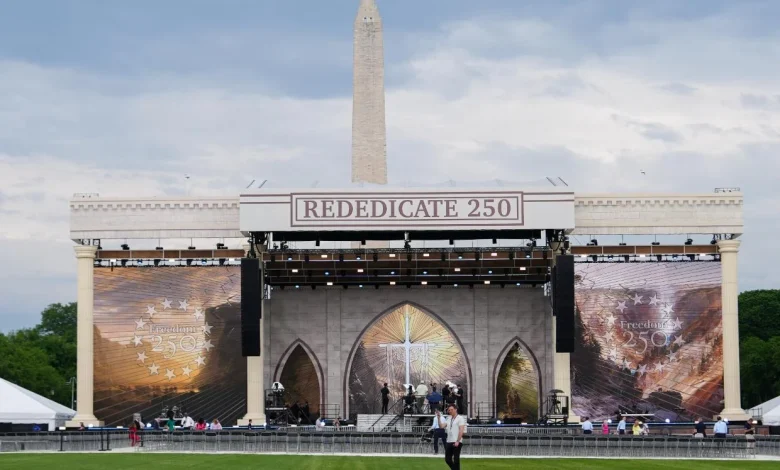
As the United States approached its 250th anniversary in 2026, the nation found itself at a crossroads, grappling with its identity, values, and future direction. A focal point of this national introspection was a large-scale event held on the National Mall in WASHINGTON, D.C., which aimed to celebrate this significant milestone through prayer, worship music, and patriotic speeches. While organizers and supporters presented it as a unifying moment to affirm faith in America, critics voiced concerns about its potential to exclude diverse voices and blur the crucial separation between religion and politics. This event encapsulated the ongoing debates about the role of faith in public life and the challenges of fostering unity in an increasingly polarized society.
The Gathering on the National Mall
The National Mall, often referred to as America’s front yard, served as the symbolic venue for this monumental event. Thousands of people from across the country converged on this iconic space, drawn by the promise of a day filled with spiritual reflection and patriotic fervor. The atmosphere was charged with anticipation as attendees prepared to participate in a program designed to honor the nation’s past while looking ahead to its future. The scale of the gathering was impressive, stretching across a significant portion of the Mall, with attendees representing a wide range of backgrounds and affiliations, all seemingly united by a shared sense of national pride and a desire to commemorate this historic anniversary.
A Day of Prayer and Patriotism
The event’s program was carefully curated to blend religious observance with expressions of national pride. Prayers were offered for the nation’s leaders, its military personnel, and its future, seeking divine guidance and protection. Worship music filled the air, creating an atmosphere of reverence and spiritual upliftment. Interspersed throughout the day were patriotic speeches delivered by prominent figures from various sectors, including politics, religion, and civic leadership. These speeches recounted stories of American resilience, innovation, and commitment to freedom, aiming to inspire a renewed sense of national identity and purpose. The blend of these elements sought to create a powerful and emotional experience for those in attendance, reinforcing their connection to both their faith and their country.
Supporters: Affirmation of Faith
Supporters of the event lauded it as a much-needed public affirmation of faith in America. They argued that in an increasingly secular society, it was essential to create spaces where people could openly express their religious beliefs and celebrate the role of faith in shaping the nation’s history and values. They viewed the gathering as an opportunity to strengthen the moral fabric of the country and to inspire a renewed commitment to the principles of freedom, justice, and equality. According to them, the event served as a powerful reminder of the importance of faith in providing a moral compass for individuals and for the nation as a whole. They emphasized that the event was inclusive and welcoming to all who shared a love for America, regardless of their specific religious background.
Critics: Concerns About Exclusion
However, the event was not without its critics, who raised concerns about its potential to exclude those who did not share the same religious beliefs or political views. They argued that by prominently featuring prayer and worship, the event risked alienating individuals from different faith traditions or those who do not identify with any particular religion. Critics also expressed concerns about the blurring of lines between religion and politics, suggesting that the event could be interpreted as an endorsement of a particular political agenda under the guise of religious expression. They emphasized the importance of maintaining a clear separation between church and state to protect the rights and freedoms of all citizens, regardless of their religious beliefs. The controversy highlights the ongoing tension between religious expression and the principle of inclusivity in a diverse society.
The Role of Religion in American Politics
The intersection of religion and politics has been a recurring theme in American history, dating back to the nation’s founding. The First Amendment to the Constitution guarantees both the freedom of religion and the separation of church and state, but the precise interpretation of these principles has been a subject of ongoing debate. Throughout American history, religious beliefs have played a significant role in shaping political movements and social reforms, from the abolitionist movement to the civil rights movement. However, the use of religion in politics has also been a source of division and conflict, particularly when religious beliefs are used to justify discrimination or exclusion. Understanding this complex history is crucial for navigating the challenges of balancing religious freedom with the need to maintain a fair and inclusive society.
Historical Context: Religion and National Identity
Historically, religion has significantly shaped American national identity. From the Puritans seeking religious freedom to the role of the Black church in the Civil Rights Movement, faith has been intertwined with the nation’s narrative. The concept of American exceptionalism often includes a sense of divine favor, further cementing religion’s place in the national consciousness. However, this connection has also been a source of contention, as different religious groups and secular individuals vie for influence in the public sphere. The challenge lies in recognizing the historical impact of religion while ensuring inclusivity and respecting the separation of church and state [cite: ]. Examining instances of religious hostility provides a lens through which to view the complexities of maintaining religious freedom while addressing societal biases.
Diverse Voices and Perspectives
One of the key challenges in contemporary American society is ensuring that diverse voices and perspectives are heard and respected in the public square. This includes not only different religious beliefs but also a wide range of cultural, ethnic, and socioeconomic backgrounds. Creating spaces where people from diverse backgrounds can come together to share their experiences and perspectives is essential for fostering understanding and building a more inclusive society. It also requires a willingness to engage in difficult conversations about issues such as race, inequality, and discrimination. The heated debates in all-party primary races often reflect these deep-seated divisions and the struggle to find common ground.
The Impact on National Unity and Division
Events like the WASHINGTON gathering have the potential to both unite and divide the nation. On one hand, they can provide a sense of shared identity and purpose for those who participate and can reinforce common values and beliefs. On the other hand, they can alienate those who feel excluded or marginalized, exacerbating existing divisions and fueling social unrest. The key to fostering national unity lies in finding ways to bridge these divides and to create a sense of belonging for all Americans, regardless of their background or beliefs. This requires a commitment to open dialogue, mutual respect, and a willingness to compromise. Understanding the nuances of events like Met Gala 2026 which celebrate cultural expression, offers insight into how shared experiences can foster a sense of community, while also acknowledging the potential for exclusion based on various factors.
Future Implications for Religious Freedom
The debates surrounding the role of religion in public life have significant implications for the future of religious freedom in the United States. As the nation becomes increasingly diverse and secular, it is crucial to find ways to protect the rights of all citizens to practice their faith freely, while also ensuring that no one is discriminated against on the basis of their religious beliefs. This requires a delicate balancing act, but it is essential for maintaining a fair and just society. The legal battles, such as the Trump defamation verdict appeal to the Supreme Court, highlight the ongoing efforts to define the boundaries of free speech and its potential impact on individual rights and societal norms.
Counterpoints: Secularism and Separation of Church and State
Secularism, advocating for the separation of religious institutions from state affairs, presents a counterpoint to the intertwining of religion and national identity. Proponents argue that a secular government ensures fairness and protects the rights of all citizens, regardless of their religious beliefs or lack thereof. The strict separation of church and state, they contend, prevents any one religion from dominating public life and ensures that government policies are based on reason and evidence rather than religious dogma. This perspective is particularly relevant in a diverse society with a multitude of faiths and secular viewpoints. The ongoing debates, like those involving Bill Maher and Gavin Newsom, reflect the broader tensions between secular values and traditional beliefs in the public sphere.
Broader Cultural and Social Impact
The intersection of faith, patriotism, and national identity extends far beyond the political realm, influencing various aspects of American culture and society. It shapes artistic expression, educational curricula, and community initiatives. Understanding this broader impact requires considering diverse perspectives and engaging in constructive dialogue. The cultural and social dynamics are continually evolving, influenced by demographic shifts, technological advancements, and changing societal values. Examining these multifaceted influences provides a more comprehensive understanding of the role of faith and patriotism in shaping the American experience. Examining the impact of cultural events, such as the Baldoni settlement, offers insights into how societal values and legal frameworks interact to shape public discourse and perceptions.
Here is a table summarizing the key viewpoints:
| Viewpoint | Description | Supporting Arguments | Counter Arguments |
|---|---|---|---|
| Supporters | Event as affirmation of faith | Strengthens moral fabric, promotes national values, provides moral compass | Excludes non-religious individuals, blurs line between church and state |
| Critics | Event as exclusionary display | Protects religious freedom, ensures inclusivity, prevents religious dominance | Undermines religious expression, ignores historical role of faith |
| Secularists | Advocates for separation of church and state | Ensures fairness, protects rights, prevents religious dominance | May marginalize religious voices, overlooks faith’s contributions |
Conclusion
The event in WASHINGTON, D.C., celebrating the nation’s 250th anniversary, served as a powerful reminder of the ongoing debates about the role of faith in American public life. While supporters hailed it as a unifying moment to affirm faith in America, critics raised concerns about its potential to exclude diverse voices and blur the separation between religion and politics. These debates reflect the complex challenges of fostering national unity in an increasingly diverse and polarized society. As the United States moves forward, it is essential to find ways to balance religious freedom with the need to maintain a fair and inclusive society, ensuring that all citizens feel valued and respected, regardless of their background or beliefs. The path forward requires open dialogue, mutual understanding, and a willingness to compromise, as the nation continues to grapple with its identity, values, and future direction. The incident involving Narges Mohammadi serves as a stark reminder of the global struggles for human rights and freedom of expression, which often intersect with religious and political ideologies.