Judiciary’s Role: Comey Defends Amidst Indictment Controversy
Judiciary Defends the Judiciary
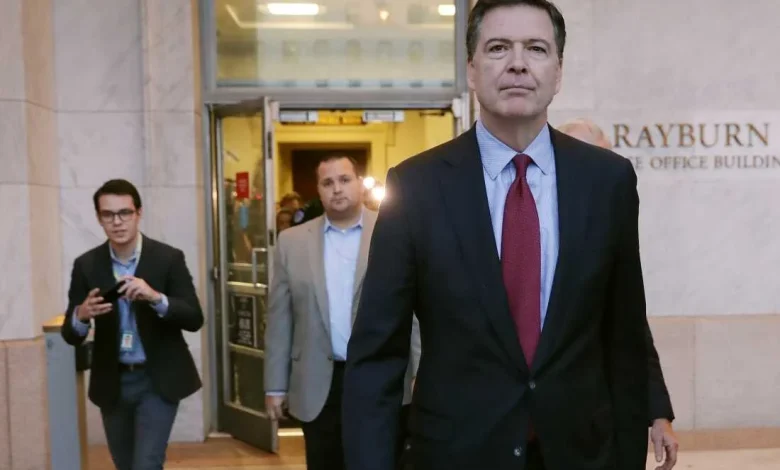
Amidst a backdrop of political turbulence and legal challenges, former FBI Director James Comey has vocally defended the role and integrity of the judiciary within the United States government. Speaking on NBC News’ “Meet the Press,” Comey asserted that the judiciary remains the strongest and most reliable branch of the American government, particularly during times of institutional stress. His comments come at a time when Comey himself faces legal scrutiny, having been indicted on charges related to alleged threats against the president.
Comey stated, “It’s frankly the only leg of our three-legged stool that is still standing in the U.S. government, but it’s standing tall and straight,” underscoring his belief in the judiciary’s resilience and commitment to the rule of law. This declaration arrives when other branches of government face unprecedented levels of public scrutiny and political polarization.
The Indictment of Comey
The legal challenges faced by Comey stem from an incident where he posted a photo of seashells arranged to spell out “86 47.” Prosecutors have interpreted this as a veiled threat against the life of President Donald Trump. According to court documents, this interpretation hinges on the assertion that “86” is a coded message meaning “to kill,” a claim supported by interpretations from within the Trump administration and the Justice Department.
The indictment has sparked a wide range of reactions, highlighting the deep divisions within American society regarding political speech and the interpretation of symbols. The case raises critical questions about the limits of free expression and the threshold at which speech can be considered a credible threat.
The Meaning of ’86’: Controversy and Interpretation
At the heart of the controversy is the term “86,” which has become a focal point of intense debate. Trump administration officials and the Justice Department have argued that, in certain contexts, “86” is a mob term synonymous with eliminating or killing someone. President Trump himself weighed in on the matter, telling reporters, “Well, if anybody knows anything about crime, they know 86 — you know what 86 — it’s a mob term for kill him”.
However, this interpretation is not universally accepted. Restaurant workers, who frequently use the term, provided an alternative explanation to NBC News, stating that “86” is a common expression within the hospitality industry that simply means an item is no longer available or has been removed from the menu. This nonviolent interpretation suggests a significant disconnect between the legal interpretation and its everyday usage.
The differing interpretations of “86” underscore the challenges of interpreting language and symbols, particularly in politically charged environments. The legal case against Comey hinges on establishing that his use of the term was intended as a genuine threat, a task complicated by the term’s multiple meanings and contexts. Understanding the nuances of language is very important, especially when it comes to politics. The U.S. is still involved in backchannel diplomacy with Iran.
Attorney General Blanche’s Stance
Acting Attorney General Todd Blanche has taken a firm stance on the indictment, asserting that the case extends beyond the mere posting of the seashell photo. In an interview on “Meet the Press,” Blanche indicated that the prosecution’s case involves additional evidence and considerations that were not immediately apparent from the initial charges. While the specifics of this additional evidence have not been publicly disclosed, Blanche’s comments suggest a broader legal strategy aimed at demonstrating Comey’s intent and potential motive.
Blanche’s statements highlight the complexities of the legal proceedings and the challenges of prosecuting cases involving symbolic speech. The prosecution must not only prove that Comey’s actions meet the legal threshold for a credible threat but also address concerns about potential First Amendment violations. To address potential violations of freedom of speech, a fair trial is extremely important. There are talks occurring between the U.S. and Iran, which could involve potential risks.
The Judiciary as Guardian of the Rule of Law
Comey’s defense of the judiciary reflects a broader concern about the health of American democracy and the importance of maintaining independent institutions. The judiciary, as envisioned by the nation’s founders, serves as a critical check on the power of the executive and legislative branches, ensuring that laws are applied fairly and consistently. This role is particularly vital during times of political polarization and institutional stress.
The judiciary’s ability to uphold the rule of law depends on its independence and impartiality. Judges must be free from political influence and able to render decisions based solely on the law and the evidence presented. Any erosion of this independence threatens the integrity of the entire legal system and undermines public trust in government. It is important to follow legal guidelines; recently tariffs imposed by the Trump administration were deemed illegal.
Historical Context: The Founders’ Vision
The concept of an independent judiciary is deeply rooted in American history and the philosophical underpinnings of the Constitution. The nation’s founders, drawing on the ideas of Enlightenment thinkers such as Montesquieu and Locke, recognized the importance of separating governmental powers to prevent tyranny and protect individual liberties. The judiciary was conceived as a crucial component of this system of checks and balances, serving as a bulwark against potential abuses of power by the other branches.
The Federalist Papers, a series of essays written by James Madison, Alexander Hamilton, and John Jay, provide valuable insights into the founders’ vision for the judiciary. In Federalist No. 78, Hamilton argued that the judiciary would be “the least dangerous” branch of government because it possesses neither the power of the purse nor the power of the sword. However, he also emphasized its critical role in interpreting the Constitution and ensuring that laws are consistent with its principles. Maintaining historical context provides a good understanding of complex issues.
The Three-Legged Stool of Government
Comey’s analogy of the U.S. government as a “three-legged stool” effectively illustrates the interdependence of the executive, legislative, and judicial branches. Each leg represents a distinct function of government, and the stability of the entire system depends on the strength and integrity of each component. When one leg weakens or falters, the entire structure is compromised.
In Comey’s view, the judiciary is currently the only leg that remains “standing tall and straight,” suggesting that the other two branches may be facing significant challenges. This assessment reflects broader concerns about political polarization, gridlock in Congress, and the erosion of public trust in government institutions. It’s possible that more institutions will face distrust, as there are concerns regarding data access within the WHO.
Public Opinion and Trust in Institutions
Public opinion polls consistently reveal a decline in trust across various government institutions, including the executive branch, Congress, and even the judiciary. This erosion of trust is driven by a variety of factors, including political polarization, partisan gridlock, and perceptions of corruption and incompetence. When public trust erodes, it becomes more difficult for government to function effectively and address pressing societal challenges.
The judiciary, while often viewed as more insulated from politics than the other branches, is not immune to these trends. Perceptions of judicial bias and politicization can undermine public confidence in the courts and erode the legitimacy of their decisions. Maintaining public trust in the judiciary requires transparency, accountability, and a commitment to upholding the rule of law. There are many situations worldwide where the public’s trust has eroded, such as the outrage in Boston regarding wellness vouchers.
Legal and Political Analysis
The legal case against Comey presents a complex interplay of legal and political considerations. From a legal standpoint, the prosecution must demonstrate that Comey’s actions meet the established legal criteria for a credible threat, including intent, means, and opportunity. This requires presenting evidence that goes beyond the mere posting of the seashell photo and establishes a clear and direct connection to a potential act of violence.
From a political perspective, the case raises concerns about the potential for politically motivated prosecutions and the chilling effect on free speech. Critics argue that the indictment may be intended to silence dissent and intimidate those who are critical of the president. The fact that the Justice Department is pursuing charges against a former FBI director who has been critical of the administration raises questions about the impartiality of the legal process.
Potential Implications of the Case
The outcome of the Comey case could have significant implications for the future of free speech and political discourse in the United States. If Comey is convicted, it could embolden prosecutors to pursue similar charges against others who express controversial or unpopular opinions. This could lead to a chilling effect on free speech, as individuals may become more hesitant to express their views for fear of legal repercussions.
On the other hand, if Comey is acquitted, it could send a message that the government’s case was politically motivated and that the Justice Department should exercise greater caution in pursuing cases involving symbolic speech. Regardless of the outcome, the case is likely to spark further debate about the limits of free expression and the role of the judiciary in protecting fundamental rights. There is always a risk when dealing with politicians and holding them accountable. Bill Maher has recently dealt with hypocrisy and a lawsuit.
The Broader Context of Political Discourse
The Comey case unfolds within a broader context of increasingly polarized and contentious political discourse. The rise of social media and the proliferation of fake news have contributed to a climate of distrust and division, making it more difficult to engage in reasoned debate and find common ground. In this environment, even seemingly innocuous actions can be easily misinterpreted and weaponized for political purposes.
The case serves as a reminder of the importance of civility, respect, and a commitment to truth in political discourse. It also underscores the need for careful and nuanced analysis of complex issues, rather than resorting to simplistic slogans and partisan attacks. It is difficult to determine who is telling the truth, even in international conflicts. Pakistan recently detailed a failed deal between the U.S. and Iran.
Conclusion
The indictment of James Comey and his subsequent defense of the judiciary highlight the complex challenges facing American democracy in the 21st century. The case raises fundamental questions about the limits of free speech, the role of the judiciary, and the importance of maintaining public trust in government institutions. As the legal proceedings unfold, it is essential to engage in careful and reasoned analysis, avoiding the temptation to simply embrace partisan narratives. The future of American democracy depends on a commitment to upholding the rule of law, protecting fundamental rights, and fostering a climate of civility and respect in political discourse.
Ultimately, the strength and resilience of the U.S. government, as Comey suggests, relies on the steadfastness of its institutions, particularly the judiciary, in upholding the principles of justice and fairness for all. Ensuring these principles remain intact will require constant vigilance and a commitment to the values that underpin the American experiment. Maintaining vigilance and sticking to key values are extremely important, especially in times of potential war. BlackRock recently upgraded U.S. stocks due to the ongoing war.
| Aspect | Details |
|---|---|
| Comey’s Statement | Former FBI Director Comey defends the judiciary as the ‘only leg still standing.’ |
| Indictment | Comey indicted over a photo of seashells spelling ’86 47,’ alleged as a threat. |
| Meaning of ’86’ | Disputed; interpreted as ‘kill’ by some, ‘item unavailable’ by others. |
| Attorney General’s View | The case extends beyond the photo, hinting at more evidence. |
| Judiciary’s Role | Critical check on executive and legislative branches, ensuring fair application of laws. |