Moscow: Putin Declares Ukraine War Nearing End Amid Victory Day
Introduction
In a series of statements that have reverberated across the globe, Russian President Vladimir Putin announced on Saturday his belief that the conflict in Ukraine is approaching its end. This declaration came mere hours after Putin presided over Moscow’s Victory Day parade, an event significantly scaled back compared to previous years, where he had affirmed Russia’s resolve to achieve victory in Ukraine. The juxtaposition of these pronouncements has ignited intense speculation and analysis regarding the future trajectory of the war and Russia’s strategic intentions. This article delves into the details of Putin’s statements, the context surrounding them, and the potential implications for the ongoing conflict and international relations. Amidst rising tensions, France has also deployed a warship in the Hormuz Strait, adding another layer of complexity to the geopolitical landscape.
Putin’s Declaration of Conclusion
“I think that the matter is coming to an end,” Putin stated to reporters, referring to the Russia-Ukraine war, which has been described as the deadliest conflict in Europe since World War Two. This statement marks a notable shift in tone from previous addresses, where Putin consistently emphasized the determination to continue the “special military operation” until all objectives were met. The reasons behind this change in rhetoric remain a subject of intense debate among political analysts and observers. Some speculate that it could be a tactical maneuver to gauge Western responses, while others suggest it reflects a genuine assessment of the war’s current state and the challenges Russia faces in achieving its initial goals. The conflict has not only resulted in significant human cost and displacement but has also triggered a series of economic sanctions and political repercussions for Russia on the international stage. The halt of grants by the Trump administration was also deemed unconstitutional.
Victory Day Parade: A Symbolic Event
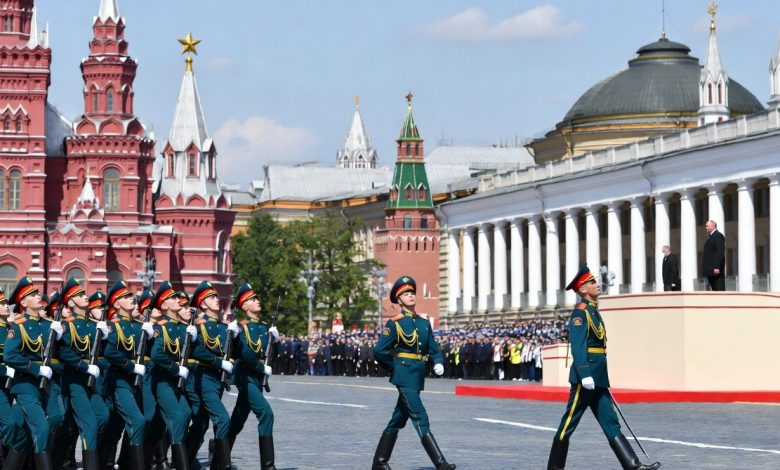
The Victory Day parade in Moscow holds immense symbolic importance in Russia, commemorating the Soviet Union’s victory over Nazi Germany in World War II. This year’s parade, however, was markedly different from previous celebrations, with a noticeable reduction in the scale and scope of military displays. This scaling back has been interpreted by some as a reflection of the strains the Ukraine war has placed on Russia’s military resources and capabilities. Despite the reduced scale, Putin used the occasion to reiterate Russia’s commitment to its war aims in Ukraine, underscoring the Kremlin’s determination to portray the conflict as a continuation of historical struggles against external threats. Such narratives are crucial in maintaining domestic support for the war and justifying the sacrifices it entails. Furthermore, the parade served as a platform for Putin to reinforce his vision of Russia as a defender of traditional values and a counterweight to Western influence. The current crowded race lacks a clear front runner amidst heated all-party primary debates.
Willingness to Negotiate
In addition to suggesting the war was nearing its end, Putin expressed a willingness to negotiate new security arrangements for Europe. This offer comes at a time of heightened tensions between Russia and the West, with relations strained to levels not seen since the Cold War era. The specifics of these proposed security arrangements remain unclear, but they likely involve discussions around NATO expansion, military deployments in Eastern Europe, and the overall balance of power on the continent. Putin’s willingness to engage in such negotiations could be seen as an attempt to de-escalate tensions and seek a diplomatic resolution to the ongoing crisis. However, the success of any such negotiations would depend on the willingness of both sides to compromise and address each other’s legitimate security concerns. The suggestion of negotiations comes at a time when many Americans believe the U.S. is winning the war with Iran.
The Role of Gerhard Schröder
Significantly, Putin stated that his preferred negotiating partner would be Germany’s former Chancellor Gerhard Schröder. Schröder, who served as Chancellor from 1998 to 2005, has maintained close ties with Putin and has been a vocal advocate for closer relations between Germany and Russia. His involvement as a negotiator could potentially provide a channel for communication and dialogue between Russia and the West, given his established relationship with Putin. However, Schröder’s close ties to Russia have also drawn criticism, particularly in light of the Ukraine war, and his role as a negotiator could be controversial. Despite these concerns, his experience and understanding of both Russian and European politics could make him a valuable asset in any potential peace process. The situation also parallels Harris’s 2028 ambitions stirring debate over the 2024 election postmortem.
Historical Context: The Cuban Missile Crisis
Putin’s remarks come against a backdrop of escalating tensions reminiscent of the Cold War era. He acknowledged that Russia’s 2022 invasion of Ukraine had triggered the most serious crisis in relations between Russia and the West since the 1962 Cuban Missile Crisis. During the Cuban Missile Crisis, the world stood on the brink of nuclear war, with the United States and the Soviet Union engaged in a tense standoff over the deployment of Soviet missiles in Cuba. The resolution of that crisis through diplomatic channels underscored the importance of communication and negotiation in preventing catastrophic conflict. Putin’s reference to the Cuban Missile Crisis serves as a stark reminder of the potential consequences of miscalculation and escalation in the current situation. The reference also points to the high stakes involved and the urgent need for a peaceful resolution to the Ukraine war. This comes as Trump appeals the $83 million defamation verdict to the Supreme Court.
The Pausing of Peace Talks
The Kremlin has stated that peace talks brokered by the U.S. President Donald Trump’s administration were on pause. The reasons for the suspension of these talks remain unclear, but they likely involve disagreements over key issues such as territorial concessions, security guarantees, and the future status of Ukraine. The lack of active peace talks underscores the challenges in finding a diplomatic solution to the conflict. Both sides remain entrenched in their positions, and there is a lack of trust and confidence between them. The involvement of external actors, such as the United States and European countries, is seen as crucial in facilitating a meaningful dialogue and bridging the gap between the warring parties. The agency also released a report on Buford’s Bar shooting and the Iran war link.
Russia’s Stated War Aims
Putin has repeatedly vowed to fight on until all of Russia’s various war aims are achieved in what Moscow calls the “special military operation”. These aims have been articulated in various forms over the course of the conflict and include the “demilitarization” and “denazification” of Ukraine, the protection of Russian-speaking populations, and the prevention of NATO expansion eastward. The vagueness and shifting nature of these war aims have made it difficult to assess Russia’s true intentions and the potential for a negotiated settlement. Some analysts believe that Russia’s goals have become more limited over time, focusing primarily on securing control over certain territories in eastern and southern Ukraine. Others argue that Russia’s broader strategic objectives remain unchanged, and that it seeks to fundamentally alter the security architecture of Europe. Similarly, North Korea enhances border artillery, creating implications for analysis.
Putin’s View on the War’s Causes
Putin has consistently presented his view of the causes of the war, placing blame on “globalist” Western leaders. He accuses them of betraying promises that NATO would not expand eastward after the 1989 fall of the Berlin Wall and of attempting to draw Ukraine into the European Union’s orbit. This narrative resonates with a segment of the Russian population that views the West with suspicion and resentment, seeing NATO expansion as a threat to Russia’s security interests. Putin’s portrayal of the war as a defensive measure against Western aggression serves to galvanize domestic support and justify the sacrifices involved. However, this narrative is widely disputed by Western leaders, who argue that NATO is a defensive alliance and that its expansion is a voluntary process based on the sovereign decisions of individual countries. The situation contrasts with the Taoyuan President Lai Ching-Te defying China’s blockade and reinforcing Taiwan’s global presence.
The West and NATO Expansion
The issue of NATO expansion has been a long-standing point of contention between Russia and the West. Russia views NATO’s eastward expansion as a direct threat to its security interests, arguing that it brings the alliance’s military infrastructure closer to its borders. Western leaders, on the other hand, maintain that NATO is a defensive alliance and that its expansion is a voluntary process based on the sovereign decisions of individual countries. They argue that countries seeking to join NATO do so out of a desire to protect themselves from potential aggression and that Russia has no legitimate basis for objecting. The differing perspectives on NATO expansion have contributed to a climate of mistrust and tension between Russia and the West, making it difficult to find common ground on security issues.
Analysis of Putin’s Statements
Putin’s recent statements regarding the Ukraine war should be interpreted with caution and analyzed within the broader context of Russian foreign policy. While his expression of a belief that the war is nearing its end could be seen as a positive signal, it is important to remember that Putin has made similar pronouncements in the past that have not been followed by concrete actions. His willingness to negotiate new security arrangements for Europe could also be a tactical maneuver aimed at testing Western resolve and seeking concessions. The choice of Gerhard Schröder as a potential negotiator suggests a desire to engage in dialogue with the West, but also a preference for dealing with individuals who are sympathetic to Russia’s perspective. Ultimately, the true test of Putin’s intentions will be his actions on the ground in Ukraine and his willingness to compromise on key issues in any potential peace negotiations.
Potential Outcomes and Future Scenarios
The future trajectory of the Ukraine war remains uncertain, with several potential outcomes and scenarios possible. One scenario is a negotiated settlement that results in a ceasefire and a political agreement on the future status of Ukraine. This scenario would likely involve compromises from both sides and the involvement of external actors in guaranteeing the peace. Another scenario is a protracted conflict that continues for months or even years, with neither side able to achieve a decisive victory. This scenario would likely result in further destruction and loss of life, as well as increased tensions between Russia and the West. A third scenario is an escalation of the conflict, potentially involving the use of more advanced weapons or the direct involvement of other countries. This scenario would carry the risk of a wider war and potentially catastrophic consequences. The U.S. military strikes escalate in the Caribbean amid the drug war.
The Implications for Europe
The Russia-Ukraine war has far-reaching implications for Europe, both in terms of security and economics. The conflict has shattered the post-Cold War security order and has led to a significant increase in military spending and defense readiness among European countries. The war has also disrupted energy supplies and trade flows, leading to higher prices and economic uncertainty. European countries are grappling with the challenge of how to balance their security concerns with their economic interests in relation to Russia. The war has also highlighted the importance of European unity and solidarity in the face of external threats. The statements from Moscow coincide with Von der Leyen responding to Trump’s tariff threat.
Conclusion
President Putin’s recent statements indicating that the Ukraine war is nearing its end represent a potentially significant shift in rhetoric, although the true implications remain to be seen. His willingness to negotiate new security arrangements and his choice of Gerhard Schröder as a potential negotiator offer glimmers of hope for a diplomatic resolution. However, the deep-seated mistrust between Russia and the West, coupled with the complex and contested issues at stake, suggest that a peaceful resolution will be a challenging and protracted process. The international community must remain vigilant and actively engaged in promoting dialogue and de-escalation to prevent further bloodshed and ensure a stable and secure future for Europe. The WHO data access concerns rise as the U.S. navigates global health information gaps.
Table: Summary of Key Statements and Implications
| Statement | Implication | Potential Outcome |
|---|---|---|
| War is coming to an end | Potential shift in Russia’s strategic goals | De-escalation of conflict |
| Willingness to negotiate security arrangements | Opportunity for dialogue with the West | New European security framework |
| Preferred negotiator: Gerhard Schröder | Channel for communication with Russia | Controversial but potentially effective negotiation |
| Blame on Western leaders for NATO expansion | Reinforces Russia’s narrative of external threat | Continued tensions between Russia and the West |
For further information on the conflict and its global impact, you can refer to this Council on Foreign Relations resource.