Agency Releases Report on Buford’s Bar Shooting: Iran War Link?
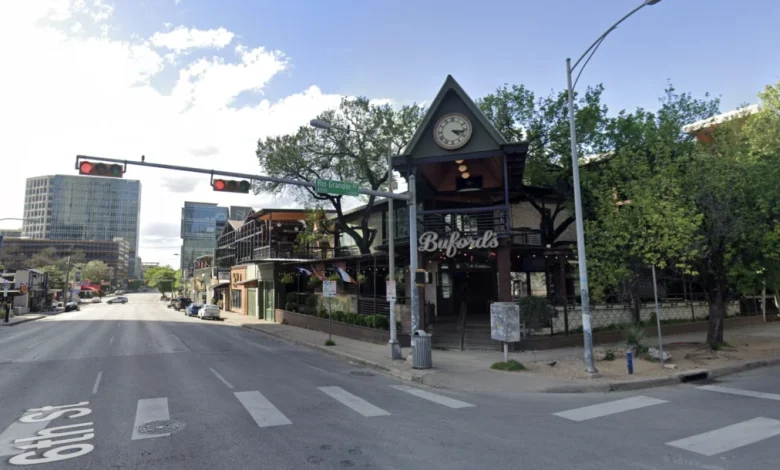
The recent release of a two-page update by an unnamed agency regarding the attack on Buford’s Backyard Beer Garden has stirred significant controversy and debate. The incident, which occurred in the early hours of March 1, culminated in the death of the gunman, Ndiaga Diagne, at the hands of law enforcement. The agency’s report suggests a potential link between Diagne’s actions and the ongoing conflict between the United States, Israel, and Iran, sparking widespread discussion about the motivations behind the attack and the broader implications for national security and community relations.
Introduction
The shooting at Buford’s Backyard Beer Garden has become a focal point for discussions surrounding radicalization, the impact of international conflicts on domestic security, and the potential for lone-wolf attacks. The agency’s report attempts to provide clarity on the events leading up to the shooting, the motivations of the perpetrator, and the factors that may have contributed to the tragic outcome. However, the report’s conclusions have been met with skepticism and criticism from various quarters, with many questioning the strength of the evidence linking Diagne’s actions to the war against Iran. This article delves into the details of the report, examines the evidence presented, and explores the broader context of the shooting, including the political and social factors that may have played a role.
The Shooting Incident at Buford’s Backyard Beer Garden
On March 1, the tranquility of Buford’s Backyard Beer Garden was shattered by gunfire. Ndiaga Diagne, armed and wearing clothing adorned with an Iranian flag design and the words “Property of Allah,” initiated an attack that quickly escalated into a deadly confrontation. Law enforcement responded swiftly, and the situation ended with Diagne’s death. The immediate aftermath of the shooting saw a flurry of activity as investigators descended upon the scene to gather evidence and piece together the sequence of events. The local community was left in shock and mourning, grappling with the senseless violence that had unfolded in their midst. The incident prompted immediate concerns about public safety and the potential for further attacks, leading to increased security measures in the area. This event also triggered broader discussions about gun control, mental health, and the role of law enforcement in preventing and responding to acts of violence. Understanding the precise details of the shooting, including the timeline of events, the weapons used, and the casualties incurred, is crucial for comprehending the agency’s subsequent investigation and its conclusions.
Ndiaga Diagne’s Background and Motives
Central to understanding the Buford’s Backyard Beer Garden shooting is the background and motivations of Ndiaga Diagne. According to the agency’s report, Diagne harbored an admiration for the former Iranian leader, Ayatollah Ali Khamenei. This affinity for Iran and its leadership, combined with the timing of the attack following the joint United States and Israel offensive against Iran, led investigators to believe that Diagne’s actions were likely influenced by the ongoing conflict. The report suggests that Diagne may have been triggered into violent behavior by the war, culminating in what investigators describe as a “violent, impulsive attack.” However, the report acknowledges the absence of direct evidence definitively proving a motive for the shooting. Critics of the report argue that the link between Diagne’s admiration for Khamenei and his decision to commit the attack is speculative at best. They point to the lack of concrete evidence, such as a manifesto or direct communication indicating Diagne’s intentions, as a significant weakness in the agency’s analysis. Understanding Diagne’s personal history, his beliefs, and his potential connections to extremist groups is essential for forming a comprehensive understanding of the factors that may have contributed to the shooting. Furthermore, examining his mental state and any potential history of mental illness is crucial for gaining a more nuanced perspective on his motivations.
Investigative Findings: A Deeper Look
The agency’s two-page update provides a summary of the investigative findings, but a deeper examination of the evidence is warranted. The report highlights Diagne’s clothing, which displayed an Iranian flag design and the phrase “Property of Allah,” as a key indicator of his ideological leanings. Additionally, investigators determined that Diagne admired Ayatollah Ali Khamenei, further reinforcing the connection to Iran. However, the report concedes that there is no direct evidence explicitly stating Diagne’s motive for the shooting. This lack of direct evidence has fueled skepticism about the agency’s conclusions and raised questions about the strength of the link between Diagne’s actions and the war against Iran. The investigation likely involved a thorough review of Diagne’s personal history, including his online activity, his communications, and his relationships with others. Investigators may have also explored potential connections to extremist groups or individuals who could have influenced his thinking. Analyzing the evidence gathered, including witness statements, forensic data, and digital records, is essential for evaluating the validity of the agency’s conclusions. It’s also important to consider alternative explanations for Diagne’s actions, such as mental illness, personal grievances, or other factors that may have contributed to his decision to commit the attack.
The Iran War Connection
The agency’s report posits a connection between the shooting at Buford’s Backyard Beer Garden and the ongoing war involving the United States, Israel, and Iran. This connection is based on the timing of the attack, which occurred shortly after the launch of the joint offensive against Iran, and Diagne’s affinity for Iranian symbols and leaders. Investigators suggest that the war may have acted as a trigger for Diagne, pushing him toward violence. However, this assertion has been met with criticism, with many arguing that it is speculative and lacks sufficient evidence. Critics contend that attributing Diagne’s actions solely to the war oversimplifies the complex factors that may have motivated him. They argue that it is essential to consider other potential influences, such as personal issues, mental health problems, or exposure to extremist ideologies. Furthermore, some critics argue that linking the shooting to the war could have unintended consequences, such as fueling anti-Iranian sentiment or justifying further military action. A nuanced understanding of the relationship between international conflicts and domestic acts of violence is crucial for preventing future tragedies. It is essential to avoid generalizations and to carefully examine the specific circumstances of each case to determine the true motivations behind the actions of individuals like Ndiaga Diagne. The situation in the UAE may further complicate matters.
Ayatollah Ali Khamenei’s Influence
The agency’s report highlights Ndiaga Diagne’s admiration for Ayatollah Ali Khamenei, the former Supreme Leader of Iran, as a potential factor in the Buford’s Backyard Beer Garden shooting. This admiration, coupled with Diagne’s Iranian-themed clothing, suggests a possible ideological alignment with Khamenei’s views. However, the extent to which Khamenei’s teachings or pronouncements may have directly influenced Diagne’s actions remains unclear. It is important to critically examine the nature of Khamenei’s influence and to avoid making generalizations about his followers. Khamenei’s ideology encompasses a range of political, religious, and social views, some of which may be considered controversial or extremist. However, it is not necessarily the case that all individuals who admire Khamenei endorse violence or terrorism. Understanding the specific aspects of Khamenei’s ideology that appealed to Diagne is crucial for gaining a more nuanced understanding of his motivations. It is also important to consider the possibility that Diagne’s admiration for Khamenei was merely a superficial expression of solidarity with Iran, rather than a deep-seated ideological commitment. The death of Ayatollah Ali Khamenei may have also influenced Diagne’s mental state. The complex relationship between Iran and the West also adds layers to this tragedy.
Lone Wolf Attack
The agency’s report suggests that the Buford’s Backyard Beer Garden shooting was a lone-wolf attack, meaning that Ndiaga Diagne acted alone without the direct involvement or support of any organized group or network. This assessment is based on the absence of evidence linking Diagne to any known terrorist organizations or extremist groups. However, it is important to recognize that lone-wolf attackers can still be influenced by external factors, such as online propaganda, radical ideologies, or personal connections to extremist individuals. Even if Diagne acted alone, his actions may have been inspired or motivated by broader ideological trends or geopolitical events. Understanding the characteristics of lone-wolf attackers is crucial for developing effective prevention strategies. These individuals often exhibit signs of radicalization, social isolation, and mental health problems. Identifying and addressing these risk factors can help to prevent future attacks. It is also important to foster community resilience and to promote counter-narratives that challenge extremist ideologies. The incident shares similarities with other events, such as the Shaknovsky manslaughter trial, where individual actions had significant consequences.
Public Reaction and Community Impact
The shooting at Buford’s Backyard Beer Garden sent shockwaves through the local community and sparked a wide range of reactions. Many residents expressed feelings of fear, anger, and sadness in the wake of the tragedy. The incident also raised concerns about public safety and the potential for future attacks. Local leaders and community organizations worked to provide support to the victims and their families, as well as to promote healing and unity. The shooting also triggered broader discussions about gun control, mental health, and the role of law enforcement in preventing and responding to acts of violence. Some community members called for stricter gun laws, while others emphasized the need for improved mental health services. There were also calls for increased community policing and for greater efforts to build trust between law enforcement and the communities they serve. The polarizing nature of the event mirrors the divisions seen in other areas, such as caribou conservation efforts.
Legal and Political Ramifications
The Buford’s Backyard Beer Garden shooting has had significant legal and political ramifications. The agency’s report has been met with scrutiny from lawmakers and advocacy groups, who have raised questions about the strength of the evidence linking Diagne’s actions to the war against Iran. Some politicians have called for further investigation into the shooting, while others have used the incident to advocate for stricter immigration policies or increased military spending. The shooting has also raised complex legal questions about the rights of victims and their families, as well as the responsibilities of law enforcement in preventing and responding to acts of violence. Civil lawsuits may be filed against the shooter’s estate, the bar where the shooting occurred, or other parties who may be deemed responsible for the tragedy. The legal and political fallout from the shooting is likely to continue for months or years to come, as the community grapples with the aftermath of the tragedy and seeks to prevent similar incidents from occurring in the future.
Expert Opinions and Analysis
The agency’s report on the Buford’s Backyard Beer Garden shooting has elicited a range of expert opinions and analysis. Terrorism experts, security analysts, and mental health professionals have weighed in on the report’s findings, offering insights into the motivations of the shooter, the factors that may have contributed to the attack, and the broader implications for national security. Some experts have praised the agency for its thorough investigation, while others have criticized the report for its speculative conclusions and lack of direct evidence. Mental health professionals have emphasized the importance of considering the shooter’s mental state and any potential history of mental illness. They have cautioned against attributing the shooting solely to political or ideological factors, arguing that mental health issues may have played a significant role. Security analysts have focused on the broader implications of the shooting for national security, warning that lone-wolf attacks inspired by extremist ideologies pose a growing threat. They have called for increased vigilance and for greater efforts to counter online propaganda and radicalization. It’s essential to consider these diverse expert perspectives when evaluating the agency’s report and its conclusions. Similar debates occur in other domains, such as the fight over pesticide regulation in the farm bill.
Comparison with Other Incidents
To better understand the Buford’s Backyard Beer Garden shooting, it is helpful to compare it with other similar incidents that have occurred in recent years. By examining the commonalities and differences between these cases, we can gain valuable insights into the factors that contribute to radicalization, lone-wolf attacks, and acts of violence inspired by extremist ideologies. For example, comparing the Buford’s Backyard Beer Garden shooting with other attacks carried out by individuals who admired or supported foreign leaders or political movements can shed light on the role of ideology in motivating violence. Similarly, comparing the shooting with other cases involving individuals with mental health problems can help us to better understand the complex interplay between mental illness and extremist ideologies. By analyzing these comparisons, we can identify patterns and trends that may help to prevent future attacks. These comparisons highlight the need for a multi-faceted approach to counter-terrorism that addresses both ideological and mental health factors. This approach is also relevant in other fields, such as understanding the journey of Devaux from stable worker to champion.
Future Implications and Preventative Measures
The Buford’s Backyard Beer Garden shooting has significant implications for the future, raising concerns about the potential for similar attacks to occur. It underscores the need for effective preventative measures to counter radicalization, identify potential lone-wolf attackers, and address the underlying factors that contribute to violence. These measures may include enhanced community policing, improved mental health services, and efforts to counter online propaganda and extremist ideologies. It is also crucial to foster community resilience and to promote counter-narratives that challenge extremist views. Additionally, strengthening international cooperation and addressing the root causes of conflict can help to reduce the risk of future attacks. The shooting serves as a stark reminder of the need for vigilance and for a proactive approach to preventing violence. By learning from this tragedy and implementing effective preventative measures, we can help to create a safer and more secure society. The Department of Homeland Security provides resources for preventing targeted violence.
Conclusion
The agency’s report on the Buford’s Backyard Beer Garden shooting provides a valuable, albeit controversial, analysis of the events leading up to the tragedy. While the report’s conclusion linking Diagne’s actions to the war against Iran has been met with skepticism, it highlights the complex interplay between international conflicts, extremist ideologies, and individual motivations. The shooting serves as a reminder of the need for vigilance, effective preventative measures, and a comprehensive approach to counter-terrorism. By learning from this tragedy and addressing the underlying factors that contribute to violence, we can help to create a safer and more secure community. Further investigation and analysis are needed to fully understand the motivations behind the shooting and to develop effective strategies for preventing similar incidents from occurring in the future.
| Factor | Description | Implication |
|---|---|---|
| Shooter’s Identity | Ndiaga Diagne, deceased | Potential for understanding motives is limited. |
| Clothing | Iranian flag design, “Property of Allah” | Suggests affinity for Iran or Islamic extremism. |
| Motive | Linked to the Iran war by investigators | Subject to debate; lacks direct evidence. |
| Victims | Patrons of Buford’s Backyard Beer Garden | Community trauma and potential for long-term psychological effects. |
| Law Enforcement Response | Diagne was killed by police | Questions about use of force and de-escalation tactics. |
| Political Context | US/Israel attack on Iran | Potential trigger for individuals with extremist views. |
| Community Impact | Fear, anger, division | Need for healing, unity, and addressing underlying issues. |
| Long-term Implications | Potential for copycat attacks, increased security measures | Need for vigilance and proactive prevention strategies. |