Crowded Race Lacks Clear Front-Runner Amidst Heated All-Party Primary Debates
Introduction
The upcoming June 2 all-party primary is shaping up to be a fiercely contested battle, with a crowded field of candidates vying for attention and support. Recent debates have underscored the lack of a clear front-runner, as participants from both Democratic and Republican parties engage in spirited exchanges. With early voting already underway, the pressure is on for candidates to make a lasting impression on voters. The dynamics of this race are complex, involving a mix of ideologies, personal attacks, and strategic maneuvering aimed at gaining an edge in the polls. This article delves into the key moments from the recent debates, profiles the candidates, analyzes their strategies, and assesses the potential impact on the upcoming primary. The debates have highlighted deep divisions and contrasting visions for the future, making it crucial for voters to understand the nuances of each candidate’s platform. Understanding the political landscape is also important in this time where American energy exports hit record highs amid the Iran war fallout.
Debate Highlights and Key Exchanges
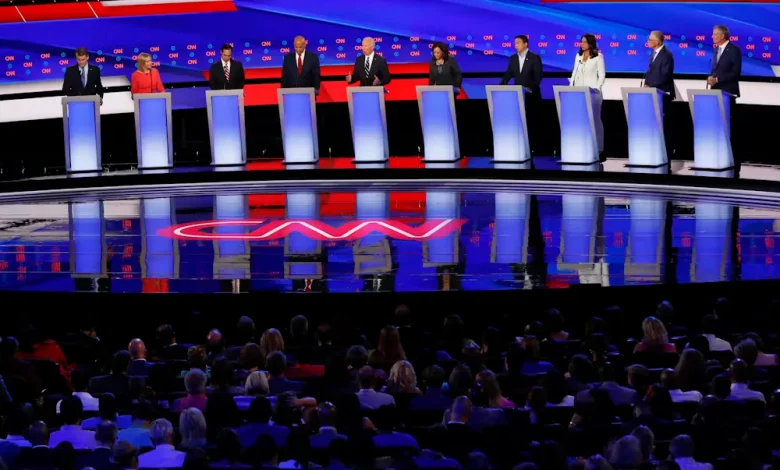
The recent debates have been nothing short of intense, with candidates wasting no time in targeting one another. The moderators’ warnings to avoid a “food fight,” following a particularly tense debate the previous night, were largely ignored as participants launched pointed attacks and defended their positions vigorously. Key exchanges revolved around issues ranging from economic policy and social justice to environmental regulations and foreign affairs. The debates provided a platform for candidates to differentiate themselves, but also exposed vulnerabilities and potential weaknesses that opponents were quick to exploit. The rapid-fire format and the need to capture attention in a crowded field led to some memorable clashes and sound bites that are likely to resonate with voters as they head to the polls. These exchanges underscore the high stakes of the primary and the determination of each candidate to emerge as the leading contender.
Candidates on Stage: A Closer Look
The stage featured a diverse group of candidates, each bringing a unique background and set of priorities to the table. Among the Democrats were Xavier Becerra, Tom Steyer, Katie Porter, and Matt Mahan, while the Republicans were represented by Steve Hilton and Chad Bianco. Xavier Becerra, with his extensive experience in public service, sought to portray himself as a seasoned leader capable of tackling complex challenges. Tom Steyer, the billionaire activist, faced scrutiny over his past business dealings and his evolving stance on key issues. Katie Porter, known for her sharp questioning and progressive policies, aimed to energize the Democratic base with her passionate advocacy. Matt Mahan, the mayor of San Jose, positioned himself as a pragmatic problem-solver focused on local issues. On the Republican side, Steve Hilton emphasized his conservative principles and his commitment to fiscal responsibility, while Chad Bianco focused on law and order and border security. This diverse lineup ensures a multifaceted debate on the critical issues facing the electorate.
Democrats in the Mix
The Democratic candidates presented a range of perspectives and policy proposals, reflecting the diverse ideologies within the party. Xavier Becerra emphasized his commitment to social justice and his track record of fighting for the rights of marginalized communities. He highlighted his experience in healthcare and his efforts to expand access to affordable care. Tom Steyer, despite his wealth, sought to position himself as a champion of environmental causes and a strong advocate for campaign finance reform. However, his past investments in industries that contributed to climate change drew criticism from his opponents. Katie Porter, with her background as a consumer protection advocate, focused on issues such as income inequality and corporate accountability. She called for bold reforms to address systemic problems and empower ordinary citizens. Matt Mahan, representing a more centrist approach, emphasized his focus on local issues such as housing affordability and public safety. He argued for practical solutions that could deliver tangible results for the residents of San Jose. The clashing views can be observed in other cases such as the EU court striking down Hungary’s LGBTQ law.
Republican Voices
The Republican candidates offered contrasting visions for the future, rooted in conservative principles and a commitment to limited government. Steve Hilton emphasized the importance of fiscal responsibility and reducing the size and scope of government. He called for tax cuts and deregulation to stimulate economic growth and create jobs. Chad Bianco, representing a more hardline stance, focused on issues such as law and order and border security. He advocated for stricter immigration enforcement and a crackdown on crime. Both candidates sought to appeal to Republican voters who prioritize traditional values and a strong national defense. Their presence on the stage ensured that conservative perspectives were well-represented in the debates, providing a clear alternative to the Democratic candidates. The rise of Republican voices is occurring even when certain candidates like Greene wins Michigan Senate seat.
The Role of Polling Data
Recent polling data has painted a picture of a tight race, with all the top candidates clustered within the surveys’ margins of error. This suggests that the primary is highly competitive and that the outcome is far from certain. The polling data also reveals key trends and patterns in voter preferences, providing valuable insights into the strengths and weaknesses of each candidate. For example, some polls may show that certain candidates have strong support among specific demographic groups, while others may be more popular among independent voters. Candidates are closely monitoring the polling data to fine-tune their strategies and target their messaging to key constituencies. However, it is important to note that polling data is not always accurate and can be influenced by various factors, such as sample size and question wording. Therefore, candidates should not rely solely on polling data but also focus on grassroots organizing and direct voter engagement to build support.
Attack Lines and Heated Exchanges
The debates were characterized by a series of pointed attacks and heated exchanges, as candidates sought to undermine their opponents and highlight their own strengths. Attack lines focused on a variety of issues, including past voting records, business dealings, and personal conduct. For example, some candidates criticized Tom Steyer for his investments in fossil fuels, while others questioned Xavier Becerra’s effectiveness as a public official. The heated exchanges often reflected deep ideological divisions and personal animosities among the candidates. While such exchanges can be entertaining for viewers, they also risk alienating voters who are turned off by negativity and partisan bickering. Candidates must strike a delicate balance between forcefully defending their positions and avoiding personal attacks that could backfire.
Mahan vs. MAGA: A Clash of Ideologies
One of the most memorable moments of the debates came when San Jose Mayor Matt Mahan directly criticized the Republican candidates, accusing them of offering divisive “MAGA” leadership. This attack underscored the deep ideological chasm between the Democratic and Republican parties and highlighted the central role that former President Donald Trump continues to play in American politics. Mahan’s attack was a calculated attempt to rally Democratic voters and portray the Republican candidates as out of touch with mainstream values. However, it also risked alienating Republican voters and reinforcing partisan divisions. The exchange illustrates the challenges that candidates face in navigating a highly polarized political environment, where even seemingly innocuous statements can be interpreted through a partisan lens.
Steyer’s Billionaire Status Under Scrutiny
Tom Steyer’s billionaire status became a recurring theme throughout the debates, as opponents questioned his credibility as a champion of ordinary citizens. Critics argued that Steyer’s wealth made him inherently out of touch with the struggles of working-class families and that his past business dealings were inconsistent with his professed values. Matt Mahan, in particular, singled out Steyer for criticism, saying that he was now against everything he made his money in. Steyer defended himself by arguing that his wealth allowed him to pursue philanthropic causes and advocate for policies that benefit society as a whole. He also pointed to his efforts to combat climate change and promote campaign finance reform as evidence of his commitment to public service. However, the attacks on Steyer’s wealth underscored the challenges that wealthy candidates face in convincing voters that they are genuinely concerned about the needs of ordinary people.
Moderator’s Warning and Debate Conduct
Prior to the start of the debate, the moderators issued a stern warning to the candidates to avoid a “food fight” following another tense debate. Despite this, the candidates didn’t hold back from going after one another. The moderators’ warning reflects a growing concern about the tone and tenor of political debates, which are often characterized by personal attacks and interruptions. While spirited debate is essential to a healthy democracy, excessive negativity and incivility can turn off voters and undermine public trust in the political process. Candidates have a responsibility to engage in respectful dialogue and focus on the issues, rather than resorting to personal attacks and name-calling. The ability to engage in civil discourse is a hallmark of leadership and a prerequisite for effective governance.
Impact on Early Voting
With ballots for early voting already sent out, the debates took on added significance as candidates sought to make a final impression on voters before they cast their ballots. The debates provided a crucial opportunity for candidates to reach undecided voters and persuade them to support their campaigns. The exchanges and attack lines from the debates are likely to be replayed and dissected in the media, shaping public perceptions of the candidates and influencing voter choices. Candidates who performed well in the debates may see a surge in support, while those who stumbled or made gaffes may suffer a decline in the polls. The impact of the debates on early voting will not be fully known until the primary election is held, but it is clear that they played a significant role in shaping the dynamics of the race.
Analysis of Candidate Strategies
The candidates employed a variety of strategies in their efforts to win over voters. Some focused on appealing to specific demographic groups, while others sought to build a broad coalition of support. Some emphasized their experience and qualifications, while others highlighted their policy proposals and vision for the future. Matt Mahan sought to position himself as a pragmatic problem-solver focused on local issues, while Tom Steyer attempted to portray himself as a champion of progressive causes. Steve Hilton emphasized his conservative principles, while Chad Bianco focused on law and order. The effectiveness of these strategies will depend on a variety of factors, including the candidates’ ability to connect with voters, the resonance of their messages, and the overall political climate. A summary of candidate strategies can be seen in the table below.
| Candidate | Party | Strategy |
|---|---|---|
| Xavier Becerra | Democrat | Emphasize experience and social justice record. |
| Tom Steyer | Democrat | Promote environmental activism and campaign finance reform. |
| Katie Porter | Democrat | Focus on income inequality and corporate accountability. |
| Matt Mahan | Democrat | Highlight local issues and pragmatic solutions. |
| Steve Hilton | Republican | Advocate for fiscal responsibility and limited government. |
| Chad Bianco | Republican | Focus on law and order and border security. |
Conclusion
The crowded all-party primary race remains highly competitive, with no clear front-runner emerging amidst the heated debates. The candidates have engaged in spirited exchanges, highlighting their differing ideologies and policy proposals. With early voting already underway, the pressure is on for candidates to make a lasting impression on voters. The outcome of the primary will depend on a variety of factors, including the candidates’ ability to connect with voters, the resonance of their messages, and the overall political climate. As voters head to the polls, they will be faced with a crucial decision that will shape the future of their communities and the direction of the country. Similarly, decisions are important when the U.S. shifts its oldest asset to China. The coming weeks will be decisive as candidates make their final push to secure victory in this closely watched primary election. One thing is clear, the debates have played a pivotal role in shaping the narrative of this election cycle, and the voters will ultimately determine who emerges victorious. As the all-party primary approaches, the candidates must refine their strategies and communicate their visions effectively to capture the support of undecided voters. The debates have laid bare the fault lines within both parties and have highlighted the diverse perspectives that exist within the electorate. The next few weeks will be a test of the candidates’ ability to mobilize their supporters and persuade those who remain on the fence. The crowded nature of the field ensures that every vote will count, and the outcome is likely to be determined by the candidates who can best connect with the concerns and aspirations of the voters. As the political landscape continues to evolve, it is crucial for citizens to remain informed and engaged in the democratic process, and the results of this primary will undoubtedly have far-reaching consequences for the region and the nation as a whole. Another event that would have consequences for the nation is the Space Force combat debut in Operation Epic Fury. In the midst of all the political happenings, one needs to be aware of the current situation, such as the surge in gold exports and the potential risks that can arise. More information on political events can be found on globaleprism.com.


One Comment