Blockade Strategy: Trump Extends Hormuz Standoff Indefinitely
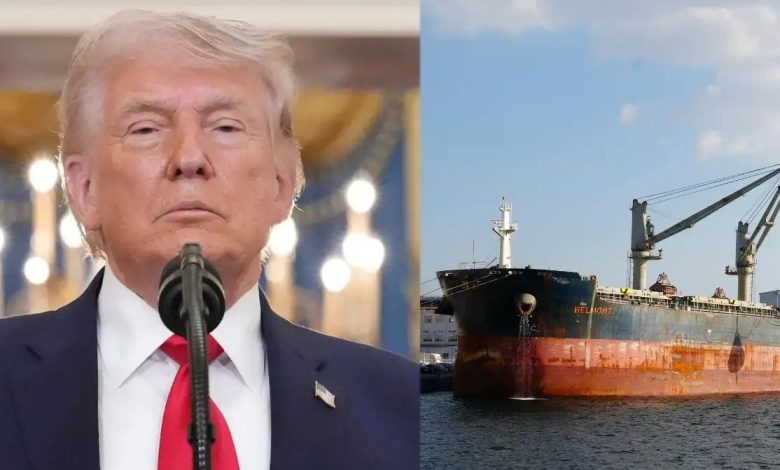
Blockade operations are now the defining feature of the United States’ strategy in the Middle East. President Donald Trump has officially decided how the current phase of the Iran war ends—or rather, how it persists. Reports indicate that the administration is preparing for an extended U.S. naval blockade of the Strait of Hormuz, choosing to settle into a permanent low-intensity standoff rather than force a definitive military or diplomatic resolution. The president apparently sees both available off-ramps—pulling out of the conflict entirely or resuming high-intensity combat operations—as carrying significantly more risk than maintaining the current naval blockade indefinitely. This strategic pivot follows separate reporting that the intelligence community was directed to rigorously assess the risks of declaring a unilateral victory and pulling American forces back from the conflict altogether. Both data points point in the exact same direction: Trump is choosing to wait out the crisis, shifting the burden of escalation back onto Tehran while absorbing the domestic economic friction that such a standoff guarantees. The logic underpinning this decision is undeniably brutal, yet entirely coherent from a military and geopolitical standpoint.
The Brutal Logic Behind the Extended Standoff
In the high-stakes chess match of Middle Eastern geopolitics, maintaining a Hormuz standoff represents a calculated gamble. The Pentagon and the White House have closely evaluated the trajectory of the ongoing Iran war, realizing that dramatic actions yield equally dramatic and unpredictable consequences. Resuming a heavy bombing campaign is no longer viewed as a viable option for forcing a quick capitulation. Instead, military planners recognize that further kinetic action only entrenches Iranian resistance and depletes critical American resources. The decision to enforce an ongoing blockade is born not out of a desire for endless war, but out of a stark realization that all other alternatives offer far worse outcomes for American strategic interests.
Avoiding the Depletion of JASSM-ER Missiles
A primary driver behind this shift to an indefinite blockade is the harsh reality of military logistics and munitions stockpiles. Resuming bombing campaigns burns through highly advanced, heavily relied-upon JASSM-ER (Joint Air-to-Surface Standoff Missile – Extended Range) missiles at an unsustainable rate. These precision-guided munitions are critical to American power projection globally, yet the Pentagon cannot easily replace them. Production lines are limited by complex supply chains, microelectronic shortages, and manufacturing capacity constraints, meaning that missiles expended today cannot be fully replaced for years. Depleting these critical reserves in the Middle East leaves the United States dangerously exposed in other potential theaters of conflict, particularly in the Indo-Pacific. Furthermore, an escalated bombing campaign risks significantly more American casualties and almost certainly fails to extract the core nuclear concessions that Iran steadfastly refuses to make. As defense analysts at organizations like the RAND Corporation have consistently noted, tactical strikes rarely alter the fundamental strategic calculus of a heavily entrenched adversary like Tehran.
The Political Risk of a Clean Iranian Victory
Conversely, walking away with no deal is completely unpalatable to the Trump administration. The intelligence community’s assessment regarding a unilateral declaration of victory concluded that such a move would be universally perceived as a retreat. Pulling out entirely hands Iran a clean, unquestionable political victory. It broadcasts a dangerous message to every global adversary: American military pressure is ephemeral and can simply be outwaited. Such a withdrawal would embolden Iranian proxy networks across Lebanon, Syria, Iraq, and Yemen, unraveling decades of regional deterrence. By issuing a blockade ultimatum and sustaining the naval presence, the U.S. avoids the optics of defeat while keeping the pressure firmly applied to Tehran’s primary economic artery: oil exports.
Economic Fallout of a Permanent Low-Intensity Confrontation
But there is a very real, tangible cost to adopting an “indefinite blockade” as a grand strategy. The American economy is deeply intertwined with global energy markets, and artificially constraining the flow of oil through the world’s most critical chokepoint has immediate macroeconomic consequences. The Iran war is morphing into a permanent low-intensity confrontation, and everyday Americans are bearing the brunt of the financial fallout. The strategy prioritizes long-term geopolitical leverage over short-term economic relief, testing the resilience of American consumers and industrial sectors alike.
Gas Prices at $4.18 and the Midterm Elections
The most visible consequence of this blockade strategy is the price at the pump. With the Strait of Hormuz effectively closed to Iranian crude and global shipping heavily disrupted, oil markets are pricing in a sustained risk premium. American gas prices already at $4.18 a gallon show no signs of easing while the naval standoff continues. Heading into a contentious midterm election cycle, this presents a massive political liability for the incumbent administration. High fuel costs act as a regressive tax on the American consumer, driving inflation across the broader economy and dampening consumer sentiment. The administration is essentially betting that voters will stomach the economic pain in exchange for a projection of absolute strength on the world stage. However, historical precedent suggests that prolonged domestic economic hardship can quickly erode support for complex foreign policy maneuvers.
Fertilizer Costs and Global Supply Chain Fractures
Beyond the fuel pumps, the blockade is wreaking havoc on agricultural and manufacturing supply chains. Fertilizer prices, heavily dependent on natural gas and international shipping lanes, are currently sitting at a staggering 90% above pre-war levels. This spike directly threatens agricultural yields, driving up food prices and further fueling domestic inflation. Moreover, the standoff contributes to fractured global shipping networks. Shipping insurance premiums for vessels operating anywhere near the Persian Gulf have skyrocketed, forcing cargo companies to reroute, delay shipments, or pass astronomical costs down the line. The longer the blockade holds, the deeper these economic fractures become, cementing a high-cost environment for global trade.
Strategic Options Comparison
| Strategic Option | Military Risk Profile | Economic Impact (Domestic/Global) | Geopolitical Outcome |
|---|---|---|---|
| Resume Combat Operations | High: Rapid depletion of JASSM-ER stocks; elevated casualty risk. | Severe: Massive oil price spikes due to active regional war zone. | Low Probability of Success: Fails to force nuclear concessions. |
| Unilateral Withdrawal | Low: Conserves munitions and removes troops from harm’s way. | Stabilizing: Oil markets cool down, easing inflation. | Disastrous: Hands Iran a clean victory; erodes global US deterrence. |
| Indefinite Naval Blockade | Moderate: Naval asset fatigue; ongoing asymmetric threat exposure. | Sustained Pain: Gas locked above $4.18; fertilizer up 90%. | Advantageous: Slowly degrades Iranian economy; maintains maximum leverage. |
The New Reality at the Strait of Hormuz
Maintaining the blockade transforms the Strait of Hormuz from a thoroughfare of global commerce into a heavily militarized containment zone. The U.S. Navy, particularly the Fifth Fleet, is now tasked with enforcing this perimeter in perpetuity. This requires a massive rotation of Carrier Strike Groups, guided-missile destroyers, and maritime patrol aircraft. It places immense strain on naval readiness and maintenance schedules, essentially anchoring a massive portion of American sea power to a single, highly volatile geographic coordinate. The daily reality for sailors operating in this theater is one of extreme tension, as they enforce sanctions while navigating the crowded, narrow waters of the Persian Gulf.
Asymmetric Warfare and Cyber Threats
Iran, naturally, is not sitting idly by as its economy is slowly strangled. A permanent blockade invites a permanent asymmetric response. The Iranian Revolutionary Guard Corps (IRGC) continues to engage in harassment tactics, frequently attempting to board commercial ships or utilizing swarms of fast-attack craft to test American defensive perimeters. Beyond the physical realm, Tehran is heavily deploying cyber attacks against regional infrastructure, allied shipping databases, and even Western financial institutions. This low-intensity shadow war is designed to inflict continuous micro-costs on the United States and its allies, ensuring that the blockade remains an uncomfortable and risky endeavor. Iran’s strategy is clear: make the enforcement of the blockade so costly and chaotic that the political will in Washington eventually fractures.
Diplomatic Off-Ramps Replaced by Infinite Leverage
Trump’s decision essentially tables any immediate hopes for a comprehensive diplomatic settlement. By locking in the blockade, the administration is accumulating infinite leverage, slowly degrading the Iranian economy month by month. The rial continues to plummet, domestic inflation inside Iran is spiraling out of control, and state revenues are plummeting. The White House calculates that this sustained, suffocating pressure is the only mechanism that can eventually force Tehran to capitulate on the nuclear issue and regional proxy funding. The strategy preserves the United States’ negotiating power for whenever a genuine, unforced diplomatic opening emerges.
Waiting for Tehran to Crack First
Ultimately, this extended blockade is a colossal game of geopolitical chicken. The administration believes that the structural weaknesses of the Iranian regime will cause it to break before the American electorate demands a change in course due to $4 gas and stubborn inflation. The U.S. Navy will continue its patrols, the intelligence community will continue to monitor the degradation of Iranian military capabilities, and the global economy will simply have to adjust to the new, expensive normal. The Iran war may not end with a spectacular treaty signing or a definitive battlefield victory; instead, it is ending by freezing into a permanent, highly tense status quo, waiting to see whether Washington or Tehran will be the first to blink under the immense pressure of their own domestic constraints.