Agent Survives WHCD Shooting: Secret Service Vest Succeeds
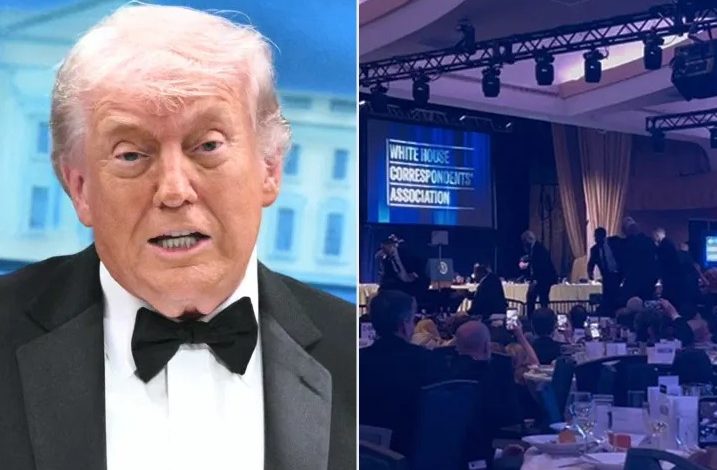
Agent recovery operations reached a highly optimistic milestone today as the United States Secret Service officer who was shot during the devastating security breach at the White House Correspondents’ Dinner was officially discharged from a Washington D.C. medical facility. Stepping out into the daylight surrounded by heavily armed tactical units and applauding hospital staff, the agent became a living testament to modern ballistic engineering. In a weekend characterized by widespread systemic breakdowns, credential spoofing, and catastrophic perimeter collapses, the performance of the agent’s protective vest stands out as the single undisputed victory. The vest did its job, absorbing the lethal kinetic energy of a close-range firearm discharge, thereby preventing a fatality that would have fundamentally altered the landscape of American political security forever.
Agent Discharged After Survival at White House Correspondents Dinner
The release of the agent from the trauma ward was an emotional, albeit highly secured, event. Medical professionals involved in the agent’s care detailed the severe blunt force trauma sustained when the ballistic panel intercepted the incoming round, noting that the sheer force resulted in cracked ribs and extensive deep tissue bruising. However, they were unequivocally clear: had the projectile penetrated the vest, the impact would have been instantly fatal. The White House Correspondents’ Dinner, traditionally an evening of bipartisan mingling and journalistic celebration, devolved into unimaginable chaos when a shooter managed to bypass multiple layers of supposed security. Yet, amidst the screaming crowds and shattered glassware of the Washington Hilton, this agent stood their ground, putting themselves between the assailant and high-level protectees. The successful hospital discharge today is not merely a personal triumph for the officer and their family; it represents a crucial validation of the equipment procurement protocols utilized by federal law enforcement agencies.
The Critical Role of Advanced Body Armor
Protective equipment is often taken for granted in the visual theater of political security, but its critical role cannot be overstated. Modern protective vests are complex composite structures designed to trap and deform incoming projectiles, dispersing the kinetic energy across a wide surface area. The agent in question was wearing a state-of-the-art Level IIIA custom-fitted concealment vest, constructed from proprietary woven synthetic fibers layered with ultra-high-molecular-weight polyethylene. When the bullet struck the central mass of the agent’s chest, the micro-fibers caught the spinning projectile, stretching and breaking to absorb the immense energy. This rapid deceleration prevented penetration. Experts note that the operational life cycle of a vest is instantly terminated upon impact, meaning the life-saving piece of equipment has now been logged into federal evidence to undergo extensive metallurgical and ballistic analysis. This analysis will help the National Institute of Justice further refine survival standards for next-generation armor systems.
A Genuine Success in a Weekend of Security Failures
The survival of the agent is the sole bright spot in what is universally being described as a weekend of genuine failures. The Department of Homeland Security has already initiated a top-down review of the colossal blunders that permitted a loaded firearm to enter one of the most secure social events on the planet. From magnetometer bypasses orchestrated through suspected insider negligence, to the spoofing of highly restricted press credentials, every security checkpoint failed catastrophically. The perimeter security was breached with alarming ease, raising immediate questions about the vetting processes for temporary event staff and private contractors. In stark contrast to these institutional failures, the individual tactical response and the physical equipment performed flawlessly. The vest doing its job is a stark reminder that while human error and administrative oversights can compromise the safest environments, properly engineered defense mechanisms remain the ultimate safety net.
Timeline of the Unprecedented WHCD Attack
To fully grasp the magnitude of the vest’s success, one must examine the timeline of the unprecedented WHCD attack. At approximately 9:42 PM, as keynote speeches were underway, the assailant moved from a blind spot near the service elevators toward the VIP staging area. At 9:44 PM, the first shot rang out. The targeted Secret Service agent, recognizing the threat instantly, initiated a rapid deployment to shield their protectee, a split-second decision that put the agent directly in the line of fire. The impact occurred at 9:44:03 PM. Within less than two seconds, counter-assault team members returned fire and subdued the threat. By 9:46 PM, the wounded agent was being dragged to a secure triage zone while the VIPs were evacuated through subterranean routes. This rapid sequence of events highlights how quickly a secure environment can turn lethal, and how equipment failure during those crucial milliseconds would have spelled absolute disaster.
How Secret Service Protocols Saved a Life
Beyond the vest, the embedded Secret Service protocols proved instrumental in saving the agent’s life and preventing further casualties. The immediate reaction to the gunshot was textbook: ‘cover and evacuate.’ The agent did not freeze; rather, they expanded their physical profile to absorb the threat while simultaneously pushing the protectee downward and away from the attack vector. This deeply ingrained muscle memory is the result of thousands of hours of grueling simulation training at the Secret Service training facility in Beltsville, Maryland. Furthermore, the presence of an on-site, fully equipped trauma medical team meant that the agent received advanced tactical medical care within thirty seconds of the impact. The application of chest seals, rapid assessment of the blunt force trauma, and the immediate deployment to a Level 1 trauma center ensured that the internal injuries caused by the vest’s backface deformation did not lead to secondary fatal complications.
Vests Doing Their Job: Modern Ballistic Technology
To understand the mechanics behind this life-saving event, it is helpful to look at the different tiers of modern ballistic technology. The Secret Service relies on gear rigorously tested against evolving threats.
| Threat Level | Caliber Protection | Typical Use Case |
|---|---|---|
| Level IIA | 9mm, .40 S&W | Standard low-profile concealment for low-risk details |
| Level II | 9mm (high velocity), .357 Mag | Standard patrol officers and municipal police |
| Level IIIA | .357 SIG, .44 Magnum | Secret Service, Federal Agents, VIP Protection |
| Level III & IV | Rifle rounds (5.56mm, 7.62mm armor-piercing) | SWAT, Counter-Assault Teams, Military Operations |
The agent was wearing Level IIIA armor, specifically designed to stop handgun rounds while remaining concealable beneath formal evening wear—a necessity for black-tie events like the White House Correspondents’ Dinner. The vest’s ability to halt a high-velocity close-range round without transferring lethal blunt trauma to the agent’s cardiac region is an engineering marvel that justifies the agency’s massive budget for protective research.
Reevaluating Washington DC Event Security
In the aftermath of the shooting, Washington D.C. is undergoing a massive reevaluation of event security protocols. The realization that a determined adversary could infiltrate an event boasting cabinet members, military leaders, and media elites has sent shockwaves through the capital. Lawmakers are demanding answers regarding the glaring vulnerabilities exposed over the weekend. This incident is not occurring in a vacuum; it fits into a broader pattern of an increasingly heightened domestic threat matrix. Security experts are pointing out that vulnerabilities exist across various infrastructure levels, much like the birthright citizenship debate reignited by air force base IED plot, which similarly exposed glaring gaps in perimeter defense at highly sensitive installations. Moving forward, events of this magnitude may no longer be hosted at civilian hotels, with proposals already surfacing to relocate such gatherings to secured military bases or heavily fortified government compounds.
Immediate Fallout and Political Reactions
The immediate political fallout has been swift and brutal. Opposition leaders are calling for the resignation of key security directors, while administration officials are scrambling to reassure the public that the government remains secure. The shooting has exacerbated existing political tensions, occurring against a backdrop of intense partisan division, as progressives envision woke 2 can it right trump era wrongs and conservatives demand a return to draconian security measures. The debate over how much access the press and the public should have to elected officials is reaching a boiling point. The White House Correspondents’ Dinner, a century-old tradition symbolizing the freedom of the press and transparency, may be permanently altered. The idea that a vest was the only thing preventing a national tragedy has sobered politicians on both sides of the aisle, temporarily uniting them in their demand for a comprehensive overhaul of federal protective services.
Comparing the Breach to Recent Global Escalations
This domestic security failure is particularly alarming when viewed through the lens of recent global escalations. The world is experiencing a surge in asymmetrical attacks and intelligence breakdowns. The inability to detect a threat at the WHCD mirrors other high-profile intelligence failures around the world, such as when the Israel Supreme court erupts in chaos over October 7 inquiry hearing. In both cases, multi-billion dollar intelligence apparatuses failed to anticipate and neutralize imminent threats, leading to catastrophic physical breaches. The global security environment is incredibly tense, and adversaries are keenly observing these domestic vulnerabilities. When the most heavily guarded individuals in the United States are shown to be accessible to a lone shooter, the deterrent effect of American security is severely diminished on the world stage.
Protective Details Under Increasing Scrutiny
Federal protective details are currently operating under increasing scrutiny and immense operational strain. The Secret Service is being tasked with protecting a growing number of high-risk individuals while simultaneously managing massive logistical challenges associated with international travel and domestic campaigning. Resources are stretched to their absolute limits. For instance, massive federal resources are continually diverted to manage complex international security postures, such as the deployment of U.S. jets to UAE hedges Iran peace talks. This global stretching means domestic details are often relying heavily on local law enforcement and private security contractors to fill the gaps in perimeter defense—a reliance that proved disastrous at the Washington Hilton. The need for a massive recruitment, training, and funding surge for federal protective details has never been more apparent.
What Happens Next for the Recovering Officer
As the recovering officer begins their journey toward full physical rehabilitation, the road ahead involves intensive medical and psychological support. While the vest prevented lethal penetration, the physical impact of a bullet traveling at over 1,200 feet per second causes severe micro-fractures, deep pulmonary bruising, and potential nerve damage. The agent will undergo weeks of physical therapy to restore full mobility. Beyond the physical toll, the agency is providing comprehensive psychological counseling to address the trauma of surviving a near-death experience in the line of duty. Administrative leave is mandatory, but colleagues express no doubt that this highly decorated officer will seek to return to active duty once medically cleared. The bravery displayed by the agent is already the subject of internal commendation reviews, with high-level medals of valor widely expected to be awarded in the coming months.
The Ongoing Investigation and Search for Answers
Simultaneously, the ongoing investigation into the shooting is ramping up. A joint task force comprising the FBI, the Secret Service, and the ATF is meticulously tracing the origin of the firearm, the method of credential forgery, and the exact timeline of the perimeter breach. Investigators are conducting thousands of interviews, analyzing terabytes of security footage, and executing search warrants across multiple states. The public demands answers, and the pressure on law enforcement to provide a transparent accounting of the weekend’s genuine failures is immense. Ultimately, the survival of the agent provides a small measure of comfort to a shaken nation. The vest did its job, transforming what would have been an incredibly dark day in American history into a story of resilience, courage, and the triumph of life-saving technology over malicious intent.