Iran Leadership Divide: Internal Cracks Stall US Talks
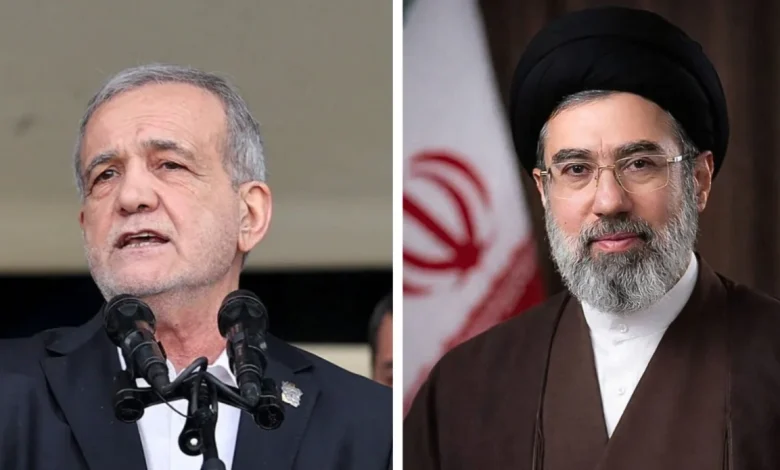
Iran leadership is currently its own worst enemy, functioning as the primary obstacle in ongoing negotiations with the United States. Following a brutal 38-day bombing campaign that left the nation’s infrastructure bleeding, the anticipated diplomatic resolution remains paralyzed. The cracks inside Tehran’s upper echelons are spilling into public view in ways that did not happen during the peak of the conflict. This unprecedented internal fracture reveals a government at war with itself, where hardliners in the Islamic Revolutionary Guard Corps (IRGC) and the Iranian parliament are openly attacking diplomatic figures like Parliament Speaker Mohammad Bagher Ghalibaf and Foreign Minister Abbas Araghchi. The stakes have never been higher, yet the regime’s inability to present a unified front threatens to unravel any potential for sanctions relief and economic recovery.
Iran Leadership Divide: The Real Negotiating Obstacle
The geopolitical narrative has long framed the United States and its stringent sanctions as the primary hurdle to peace and stability in the Middle East. However, the current reality demonstrates that the most significant barrier to a viable nuclear agreement or ceasefire is rooted deep within Tehran. The internal divisions are no longer confined to closed-door meetings in the Supreme National Security Council; they are being broadcast across state-aligned media. This public discord hands Washington significant leverage, as mediators observe an Iranian delegation that goes vague the moment specifics are demanded. The inability to commit to terms previously deemed acceptable showcases a profound paralysis at the core of the Iranian state.
Hardliners vs. Diplomats in Post-War Tehran
The post-war environment in Iran has catalyzed a vicious power struggle between two primary factions: the ultraconservative hardliners and the pragmatic diplomats. The diplomats, led by figures such as Araghchi and implicitly supported by President Masoud Pezeshkian, recognize the dire need for immediate economic resuscitation. The country is hemorrhaging financially after enduring over a month of relentless military strikes. Sanctions relief is not merely a political victory for this faction; it is an existential necessity for the nation’s survival. Conversely, the hardliners view any concession to the West as a betrayal of the Islamic Republic’s revolutionary ethos. This ideological rigidity prevents the pragmatic compromises required to finalize international agreements, leaving the diplomatic corps effectively neutered on the global stage.
The Revolutionary Guard’s Newfound Power
Newly empowered after the war, the IRGC has consolidated its grip on both the military and political apparatuses of the state. Despite the massive infrastructural damage inflicted by the 38-day bombing campaign, the IRGC emerged with its core command structures largely intact and its control over strategic assets, such as the Strait of Hormuz, unyielding. This survival has emboldened the Guard to assert dominance over foreign policy, traditionally the domain of the Ministry of Foreign Affairs. The IRGC’s hardline commanders are actively seeking to walk back the concessions already offered by the diplomats during initial negotiation rounds. Their ascendance represents a structural shift in Tehran’s power dynamics, making any diplomatic outreach inherently fragile.
The Stalled Nuclear File and Public Attacks
The immediate casualty of this internal strife is the nuclear file. Round one of the recent talks saw Iranian negotiators attempting to establish a baseline for discussions, signaling a willingness to engage on previously taboo subjects to secure sanctions relief. However, this pragmatic approach triggered a fierce domestic backlash. Hardliners are publicly accusing the negotiating team of compromising national security and weakening Iran’s bargaining position. This overt criticism is rare and indicates a breakdown in the regime’s traditional method of consensus-building before engaging internationally.
Backlash Against Ghalibaf and Araghchi
Ghalibaf and Araghchi find themselves in the crosshairs of an aggressive smear campaign orchestrated by ultraconservative lawmakers. These attacks are not merely political posturing; they represent a coordinated effort to delegitimize the diplomatic faction. State-aligned media platforms, usually tightly controlled to project regime unity, are now amplifying the voices of dissent. By targeting the architects of the negotiation strategy, the hardliners are sending a clear message to both domestic audiences and international mediators: the diplomats do not have the final say. This dynamic severely undermines the credibility of the Iranian delegation, as counterparts question their authority to bind the state to any agreement.
Strategic Mistakes Revealed During Pakistan Talks
The depth of the divide was starkly exposed during recent mediations. As detailed in reports on how Pakistan mediates U.S.-Iran talks, one ultraconservative Iranian lawmaker who was part of the delegation utilized state-aligned media to condemn the entire diplomatic endeavor. He labeled the talks “a strategic mistake,” arguing that the negotiators handed Washington critical leverage simply by agreeing to discuss the nuclear program. This unprecedented public rebuke from a delegation member essentially sabotaged the momentum of the talks. It demonstrated to American negotiators that the Iranian team was fundamentally divided, prompting the U.S. to push harder on specifics, knowing the Iranian side would inevitably retreat into ambiguity to avoid further domestic fallout.
| Faction | Key Figures | Primary Objective | Stance on US Negotiations |
|---|---|---|---|
| Diplomats / Pragmatists | Araghchi, Ghalibaf, Pezeshkian | Economic recovery, sanctions relief | Willing to make tactical concessions on the nuclear file for economic survival. |
| IRGC / Hardliners | Revolutionary Guard Commanders, Ultraconservative MPs | Regime survival, military dominance | View negotiations as a strategic mistake; demand U.S. capitulation and refuse nuclear compromises. |
The Absence of Mojtaba Khamenei
Perhaps the most destabilizing element of the current crisis is the glaring absence at the center of the power structure. The transition of authority has been shrouded in mystery, and the individual widely expected to consolidate control remains out of sight. The lack of decisive leadership at the absolute top creates a vacuum that allows factional infighting to spiral out of control. Without a supreme arbiter to enforce consensus, the hardliners and diplomats are locked in a zero-sum game that neither can definitively win, leaving the state’s foreign policy completely adrift.
Seclusion and Rumors of Injury
Mojtaba Khamenei has not been seen publicly since the abrupt shift in leadership dynamics. U.S. and Israeli intelligence officials, alongside key regional mediators, broadly agree that he is secluded. Rampant speculation suggests he may be severely injured or otherwise incapacitated, unable to communicate freely or impose his will on the warring factions. This situation is comprehensively analyzed in discussions regarding Mojtaba Khamenei’s role in the unprecedented hardline regime. Historically, the Supreme Leader would make the difficult, final call to accept a ceasefire or a controversial diplomatic deal, absorbing the political cost. Currently, the man who theoretically holds that power cannot—or will not—exercise it, paralyzing the entire apparatus of the state.
U.S. Leverage and Trump’s Response
The United States is acutely aware of the internal chaos consuming Tehran and is adjusting its strategy accordingly. The Trump administration has been highly vocal about these divisions, using them to justify the slow pace of negotiations and to assert American dominance in the diplomatic arena. By publicly highlighting the fractures within the Iranian leadership, Washington further isolates the diplomatic faction in Tehran, making any potential compromise look like a capitulation to American pressure. This psychological warfare is proving highly effective in keeping the Iranian delegation off-balance.
The Illusion of Unity in Tehran
In a desperate bid for damage control, the Iranian leadership attempted to project a united front. Ghalibaf, Araghchi, and Pezeshkian issued nearly identical, coordinated statements declaring that “in Iran there are no extremists or moderates.” However, in the realm of Middle Eastern geopolitics, unanimous and overly orchestrated denials of disunity usually serve only to confirm the exact opposite. This transparent attempt to mask the internal bleeding did little to reassure international observers. The reality remains that while Iran defies U.S. demands in fierce negotiations outwardly, it is rotting from within due to a lack of coherent executive authority.
Economic Bleeding vs. Military Strength
The painful irony of Iran’s current geopolitical standing is the stark contrast between its resilient military posture and its collapsing economy. Emerging from 38 days of intense bombardment, the state is undoubtedly battered, yet it retains formidable strategic leverage. The regime remains intact, and its capacity to disrupt global trade via the Strait of Hormuz is a potent deterrent against total war. However, this military strength is rendered useless at the negotiating table because there is no domestic consensus on how to utilize it to secure relief for the civilian population.
The hardliners believe that military resilience alone will eventually force the West to yield, a massive miscalculation of international resolve. They look to external economic lifelines, such as the rumored China-Iran deal to open the Strait of Hormuz, to bypass Western sanctions entirely. Yet, these theoretical agreements offer little immediate relief to a populace suffering under hyperinflation and resource scarcity. The diplomats understand that military leverage must be traded for economic survival, but they lack the political capital to execute such a transaction. Independent analysts monitoring geopolitical developments in the Middle East confirm that without a unified decision-making body, Iran’s military advantages will continue to be overshadowed by its internal political collapse.
Ultimately, the standoff is a tragic masterclass in political paralysis. The factions are mutually destructive: the diplomats cannot secure an agreement without the backing of the hardliners, and the hardliners cannot save the economy without the expertise of the diplomats. As long as this bitter civil conflict persists within the halls of power, the Iranian people will continue to pay the price of 38 days of bombing, and international mediators will be left waiting for an authoritative voice that may never come.