Donald Trump YMCA dance: The Viral Campaign Rally Phenomenon
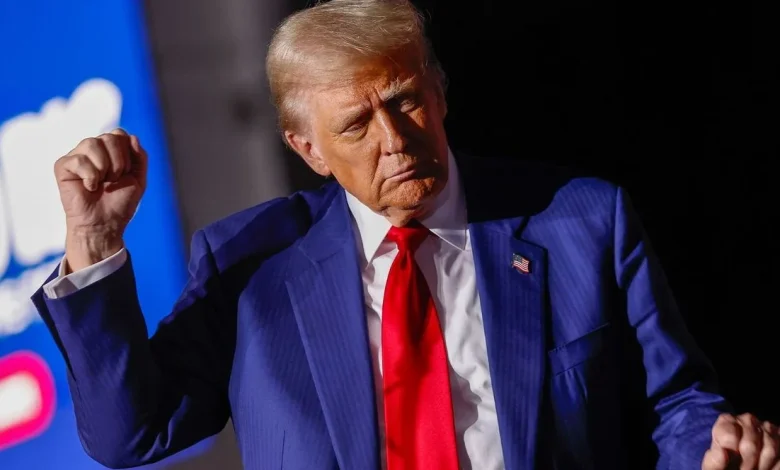
Donald Trump YMCA dance routines began as a spontaneous moment of celebration but rapidly evolved into a strictly anticipated closing ritual at political rallies across the United States. During the final stretches of his campaigns, the former President started lingering on stage after his speeches concluded. As the opening horns of the iconic 1978 disco hit blared through the stadium speakers, he began incorporating a rhythmic, bouncing step accompanied by alternating fist pumps. This simple, unchoreographed movement struck an immediate chord with his supporters. The origins of this phenomenon can be traced back to a desire to end highly charged, lengthy political speeches on a note of triumphant levity. Rather than immediately exiting the podium in a traditional, stoic manner, the dance served as a visual cue that the hard political work was done for the evening, and it was time to celebrate. Observers noted that the routine humanized him to his base, transforming a billionaire politician into a relatable figure enjoying a universally recognized party anthem. Over time, the routine became more exaggerated and codified, with crowds anticipating the exact moment the beat would drop. The sheer predictability of the moment became a feature, not a bug, establishing a powerful shared experience among attendees.
The Origins of the Phenomenon
The organic development of this political trademark demonstrates the fluid nature of modern campaigning. Initially, the post-speech environment was a standard affair of waving and pointing while generic background music played. However, the introduction of high-energy disco fundamentally altered the atmosphere. The candidate’s decision to sway to the beat rather than immediately depart signaled a shift from formal address to communal celebration. This transition was critical in establishing the rallies not merely as political events, but as cultural gatherings where the primary objective was emotional engagement. The visual of the stage, bathed in red and blue lights, with the central figure dancing, created a striking tableau that photographers and videographers eagerly captured, ensuring the moment reached well beyond the physical confines of the stadium.
The Village People Connection
The choice of track is fascinating given the cultural history of The Village People. Formed in the late 1970s, the group was a staple of the underground disco scene and heavily associated with LGBTQ+ culture. ‘Y.M.C.A.’ itself is a double-entendre-laden track that became a global smash hit, peaking at number two on the Billboard Hot 100. The juxtaposition of a deeply conservative political movement adopting an anthem rooted in disco and marginalized subcultures is a supreme irony not lost on political and cultural commentators. Victor Willis, the lead singer of The Village People, has had a complicated relationship with the usage of the track. Initially, Willis stated that the music was for everyone and he did not strictly object to it being played at rallies, so long as it was legally licensed through performing rights organizations. However, as the political climate intensified, requests were occasionally made to cease the usage of the group’s likeness and specific songs, though the track remained a staple. The campaign’s insistence on maintaining the song despite occasional pushback underscores how vital the anthem had become to their overarching event branding.
Mechanics of the Signature Moves
Analyzing the actual physical movements of the routine provides insight into its viral appeal. Unlike complex choreography that might require rhythm or professional training, this specific performance is characterized by its stiff, repetitive, and almost marching-band-like simplicity. It typically begins with a slight bend in the knees, establishing a grounded rhythm. From there, the arms are brought up, fists clenched, and pumped back and forth in a motion akin to operating an elliptical machine or mimicking a boxer’s warm-up. Occasionally, this is interspersed with pointing directly into the crowd, a classic political gesture used to simulate a personal connection with thousands of individual attendees simultaneously. The sheer awkwardness of the movement is precisely what makes it endearing to his followers. It does not attempt to be smooth or polished; rather, it leans entirely into an authentic, dad-dance aesthetic that resonates with middle America. This lack of polish is a deliberate rejection of the highly curated, focus-group-tested body language typical of contemporary politicians. By embracing a slightly offbeat and humorous physical expression, the campaign successfully manufactured a recurring viral moment that supporters felt compelled to emulate.
Political Theater and Campaign Branding
Modern political campaigns are as much about producing engaging theater as they are about policy distribution, and this routine serves as a masterclass in event branding. Rallies are exhaustingly long affairs, often requiring attendees to wait in lines for hours, stand in extreme weather conditions, and listen to a litany of opening speakers before the main event. By the time the closing remarks are delivered, crowd fatigue is a genuine risk. Injecting a highly recognizable, high-energy pop song paired with a signature physical routine revitalizes the audience instantly. It transforms the atmosphere from a formal political gathering into a rock concert. The visual of tens of thousands of people wearing red hats, moving in unison, and cheering as the candidate performs his signature moves creates a powerful, indelible image of momentum and enthusiasm. Campaign managers understand that optics matter just as much as rhetoric. The recurring dance provides endless footage for campaign advertisements, hype videos, and fundraising emails. It projects an image of vitality, confidence, and unstoppable joy—attributes that are strategically crucial when attempting to persuade undecided voters or mobilize a massive grassroots base.
Music as a Psychological Tool
The psychological impact of music in political settings cannot be overstated. Music bypasses the logical centers of the brain and taps directly into emotion, memory, and group identity. When ‘Y.M.C.A.’ plays, it does not evoke thoughts of tax policy, foreign relations, or judicial appointments; it evokes memories of weddings, sporting events, bar mitzvahs, and joyous communal gatherings. By anchoring his rally’s conclusion to this specific emotional trigger, the campaign fundamentally alters how attendees remember the event. They leave not just feeling politically motivated, but neurologically rewarded, carrying a rush of endorphins and adrenaline. This psychological conditioning ensures that supporters associate the candidate with feelings of happiness and communal belonging. Furthermore, the sheer volume of the music—often blasted at concert-level decibels—forces a physical reaction, making it impossible for the crowd not to move to the beat. The psychological merging of a universally beloved party anthem with a populist political message creates an incredibly sticky and effective piece of psychological marketing that has rarely been matched in modern electoral history.
Contrasting Traditional Political Decorum
Historically, the expected decorum for a United States President or presidential candidate has been rooted in solemnity, dignity, and a certain patrician stiffness. Figures like George Washington, Abraham Lincoln, and even modern equivalents like Barack Obama or Mitt Romney operated within a narrow band of acceptable physical expression. Moving outside this band often invited ridicule. However, the current era of politics has seen a complete disruption of these traditional norms. The routine perfectly encapsulates this paradigm shift. By openly engaging in what many would consider an unserious or silly act on a national stage, the standard-bearer of the populist movement signals a rejection of elite, establishment expectations. It is a visual representation of his broader political message: ‘I am not one of them, I do not play by their rules, and I do not care about their standards.’ This blatant disregard for traditional political decorum is exactly what his base loves about him. It drives political opponents and traditional media commentators to distraction, which in turn only reinforces the loyalty of the supporters who view the criticism as out-of-touch elitism.
The Social Media Amplification
The true power of this cultural phenomenon was realized not just in the stadiums, but across the digital landscape. Social media platforms served as the perfect accelerant for the routine, turning a regional rally moment into a global internet sensation. In the modern attention economy, politicians compete not just with each other, but with celebrities, influencers, and endless streams of entertainment for the public’s focus. The dance provided bite-sized, highly visual, and easily shareable content that algorithmically thrived on platforms like Instagram, Twitter, and Facebook. Supporters would capture the moment from various angles in the crowd, adding their own captions and music overlays before broadcasting it to their networks. This organic, user-generated content is far more valuable than official campaign advertising because it carries the authenticity of a peer recommendation. It created a FOMO (Fear Of Missing Out) effect, encouraging more people to attend rallies in person just to witness and record the dance themselves. The amplification loop between real-world events and digital distribution solidified the routine’s status as a dominant cultural touchstone of the election cycle.
Virality on Video Platforms
Video-first platforms fundamentally altered how the public engaged with the routine. Unlike static images or text-based reporting, video captures the energy, the audio, and the motion that makes the dance compelling. Creators across the political spectrum began interacting with the footage. Supporters created compilation videos, cutting together dozens of different performances to highlight the consistency and joy of the movement. These supercuts often garnered millions of views, serving as free, high-impact campaign commercials. Conversely, detractors also shared the videos, often attempting to mock or parody the stiffness of the moves. However, in the realm of algorithmic engagement, all attention is good attention. The sheer volume of comments, shares, and watch-time driven by both supporters and critics pushed the content further into the mainstream. It became impossible to log onto a major video platform without encountering some variation of the dance, effectively ensuring that the campaign remained at the absolute forefront of the national consciousness during crucial voting periods.
The Memeification of Modern Politics
The ‘memeification’ of modern politics is a defining characteristic of contemporary elections, and this specific routine is a prime example of the trend. Memes are cultural units of information that spread rapidly, mutating and adapting as they go. The dance was quickly separated from its original context and inserted into entirely new scenarios via digital editing. Users superimposed the dancing figure onto historical events, into popular movies, and into surreal, abstract landscapes. This constant mutation kept the imagery fresh and relevant long past its normal expiration date in the news cycle. By becoming a versatile meme, the routine transcended strict politics and entered the broader cultural lexicon. It demonstrated how a single, spontaneous physical action could be commodified by the internet into a ubiquitous digital asset. The campaign itself occasionally acknowledged and leaned into these memes, understanding that capturing the humor and creativity of the internet was a crucial component of winning the digital ground game.
A Deep Dive into the Rally Playlist
While ‘Y.M.C.A.’ is undoubtedly the crown jewel of the rally playlist, the broader musical selection plays a critical role in setting the tone for these massive events. The campaign’s audio landscape is a meticulously curated mix of classic rock, 80s pop, patriotic anthems, and operatic crescendos. This eclectic mix is designed to appeal to a broad demographic spanning multiple generations, creating a unifying sonic environment.
| Song Title | Artist | Typical Rally Placement | Crowd Reaction |
|---|---|---|---|
| YMCA | Village People | Closing / Walk-off | High Energy, Synchronized Dancing |
| Macho Man | Village People | Pre-speech Warm-up | Enthusiastic Cheering |
| Tiny Dancer | Elton John | Mid-Rally Background | Subdued, Nostalgic |
| Fortunate Son | Creedence Clearwater Revival | Air Force One Landing | Patriotic Excitement |
The data table above illustrates the strategic placement of various tracks throughout the event. Notice how the tempo and energy levels are manipulated to guide the audience’s emotional state. The buildup to the candidate’s arrival is often scored with soaring, defiant rock anthems, while the exit is exclusively reserved for universally recognized, high-bpm party tracks. This structure mirrors the pacing of a professional sporting event or a major stadium concert, proving that the organizers deeply understand crowd psychology and the power of auditory framing.
Criticisms and Public Backlash
Despite its overwhelming popularity among supporters, the routine has not been without its fierce critics. Pundits and opposition figures have frequently criticized the display as inappropriate and deeply unserious, particularly when performed during periods of national crisis or immediately following speeches detailing grim statistics. Critics argue that the jarring juxtaposition of discussing existential national threats followed immediately by a joyous, disco-infused dance routine undermines the gravity of the office and the seriousness of the issues at hand. Furthermore, there have been recurring legal and ethical debates regarding the use of intellectual property. Numerous musical artists and their estates have issued cease-and-desist letters, objecting to their life’s work being associated with a political platform they do not support. These public disputes occasionally overshadowed the events themselves, leading to debates about the moral right of politicians to co-opt cultural art for partisan gain. Despite these legitimate criticisms and the occasional legal friction, the campaign largely ignored the backlash, correctly calculating that the enthusiasm generated among their base vastly outweighed the negative press from cultural commentators.
The Lasting Cultural Legacy
As historians and political scientists analyze this era of American politics, the Donald Trump YMCA dance will undoubtedly be highlighted as a defining artifact of populist political communication. It represents a specific moment in time when the barriers between entertainment, internet culture, and high-stakes national politics completely dissolved. Future politicians and campaign managers will study this phenomenon to understand how authenticity—even when it manifests as awkward or unconventional—can forge a far stronger bond with voters than highly polished, traditional statesmanship. The routine proved that voters are often looking for a charismatic figurehead who can entertain and project strength through joy, rather than a dry policy wonk. Whether viewed as a masterstroke of populist branding or a symbol of the decline of serious political discourse, the reality remains that the dance left an indelible mark on the electoral landscape. It redefined what a political rally could look and feel like, ensuring that the intersection of disco music and presidential campaigning will forever be etched into the annals of American political history.