Crypto Market Today: Comprehensive Analysis and 2026 Trends
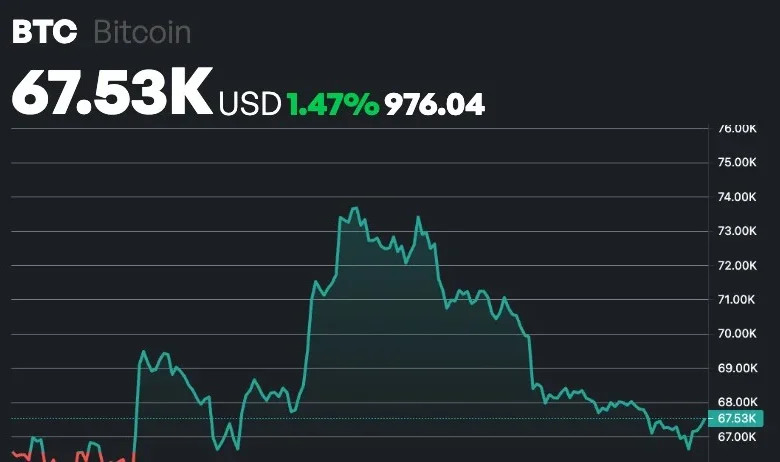
Crypto Market Today stands as a testament to the profound evolution of decentralized finance, digital assets, and blockchain infrastructure. As we navigate the complexities of the global financial landscape in 2026, the digital asset ecosystem has transformed from a speculative frontier into a foundational pillar of modern investment portfolios. This comprehensive analysis dives deeply into the underlying mechanics, institutional adoption metrics, macroeconomic influences, and technological breakthroughs that are currently dictating market movements. Investors, developers, and traditional institutions alike must understand that the current environment is heavily influenced by a convergence of regulatory clarity and technological maturation. The days of unbridled volatility driven solely by retail speculation have given way to a more measured, institutionally driven market structure. In this extensive report, we will dissect the multifaceted factors contributing to the state of the cryptocurrency space, providing actionable insights and a thorough breakdown of sector-by-sector performance to help stakeholders navigate the decentralized economy.
Crypto Market Today: Overview of Current Dynamics
The global cryptocurrency market capitalization has achieved unprecedented stability and growth, characterized by deeper liquidity pools and enhanced market efficiency. Unlike previous market cycles characterized by boom-and-bust paradigms, the current ecosystem demonstrates profound resilience. Structural changes in how liquidity is provided, alongside sophisticated market-making algorithms, have suppressed historical volatility, allowing larger capital allocators to participate without generating extreme price dislocations. We are witnessing an era where digital asset correlation with traditional equities fluctuates based on real-time economic data rather than isolated speculative fervor. Moreover, the integration of Real World Assets (RWAs) onto blockchain networks has bridged the gap between traditional finance (TradFi) and decentralized finance (DeFi), bringing trillions of dollars of potential value into the on-chain ecosystem. This foundational shift ensures that market dynamics are driven by intrinsic utility, yield generation, and cross-border settlement efficiencies rather than mere sentiment.
Institutional Inflows and ETF Impacts in 2026
Institutional participation is no longer an abstract projection; it is the primary engine driving market liquidity and asset valuation. The deployment of capital by sovereign wealth funds, endowments, and major pension funds marks a paradigm shift in asset allocation strategies. These entities are utilizing digital assets to diversify their portfolios and capture uncorrelated alpha.
Bitcoin Spot ETFs: A Maturing Asset Class
The successful integration of Bitcoin Spot Exchange-Traded Funds (ETFs) across major global exchanges has permanently altered the market structure. These financial instruments have demystified Bitcoin for legacy investors, providing a regulated, insured, and accessible avenue for exposure. The consistent daily inflows into these ETFs have effectively absorbed excess mining issuance, leading to a supply-side shock that structurally supports higher price floors. Furthermore, the advent of options trading on these ETFs has introduced sophisticated hedging strategies, allowing institutional participants to manage downside risk while participating in upside potential. The accumulation behavior observed in these funds underscores a long-term holding thesis, heavily reducing the circulating supply available on spot exchanges.
Ethereum and Smart Contract Alternatives
Beyond Bitcoin, institutional capital is aggressively targeting smart contract platforms, with Ethereum leading the charge. The narrative surrounding Ethereum has shifted from a mere technology platform to an internet-native settlement layer generating real yield. Staking mechanisms have effectively created a baseline risk-free rate for the digital economy. Institutions are actively participating in network validation, capturing staking rewards that often outpace traditional fixed-income instruments. Furthermore, institutional interest is expanding to alternative Layer 1 blockchains that offer specialized execution environments, such as parallelized processing and enhanced data availability, highlighting a nuanced understanding of blockchain architectures among traditional asset managers.
Macroeconomic Factors Driving the Crypto Market Today
Cryptocurrency valuations do not exist in a vacuum; they are acutely sensitive to the broader macroeconomic climate. Global liquidity cycles, central bank balance sheet adjustments, and geopolitical developments exert significant pressure on digital asset price action.
Interest Rates and Central Bank Policies
The monetary policy decisions enacted by the Federal Reserve and the European Central Bank play a crucial role in determining the risk appetite of global investors. As central banks navigate the delicate balance between managing inflation and fostering economic growth, shifts in interest rates directly impact capital flows into risk-on assets like cryptocurrencies. A dovish pivot or an expansion of the M2 money supply historically correlates with substantial appreciation in the crypto market, as investors seek higher-yielding opportunities outside of fiat-denominated bonds. Conversely, restrictive monetary environments stress-test the digital asset market, rewarding protocols with sustainable revenue models and heavily penalizing speculative tokens with inflationary tokenomics.
Inflation Hedges and Digital Scarcity
The concept of digital scarcity has been fiercely validated in an era where fiat currency debasement remains a persistent concern. Bitcoin’s programmatic supply cap and predictable emission schedule provide a stark contrast to discretionary monetary policies. Corporate treasuries and institutional investors increasingly view Bitcoin as a pristine collateral asset and a modern mechanism to preserve purchasing power. This macroeconomic backdrop continues to elevate the narrative of digital gold, prompting sovereign nations to explore digital asset reserves and further cementing the asset class’s role in the global financial system.
Regulatory Landscape: Clarity Emerging Globally
The establishment of comprehensive regulatory frameworks has been a watershed development for the cryptocurrency market. Regulatory clarity mitigates institutional anxiety and provides the necessary guidelines for building compliant, scalable financial products.
US Regulatory Jurisdictions
In the United States, the delineation of authority between the Securities and Exchange Commission (SEC) and the Commodity Futures Trading Commission (CFTC) has evolved, leading to clearer classifications of digital assets. The establishment of specific criteria distinguishing decentralized commodities from investment contracts has spurred a new wave of compliant innovation. Safe harbor provisions and tailored disclosure requirements for token issuers have encouraged domestic development, halting the offshore migration of cryptographic talent and capital. This harmonized approach ensures consumer protection while fostering an environment where decentralized technologies can thrive.
The MiCA Framework in Europe
The implementation of the Markets in Crypto-Assets (MiCA) regulation in the European Union has set a global standard for digital asset oversight. MiCA provides legal certainty for crypto-asset service providers (CASPs), stablecoin issuers, and trading platforms operating across member states. By offering a unified licensing regime, the EU has positioned itself as a highly attractive jurisdiction for institutional crypto enterprises. The stringent but transparent requirements surrounding reserve management for stablecoins have virtually eliminated the systemic risks associated with unbacked digital fiat equivalents, thereby enhancing overall market integrity.
Technological Upgrades and Network Evolutions
The underlying technology of the crypto market is undergoing rapid iteration, solving legacy issues of scalability, interoperability, and user experience.
Layer 2 Scaling Solutions
Layer 2 networks built atop foundational blockchains have dramatically increased transaction throughput while driving execution costs to fractions of a cent. Optimistic rollups have achieved widespread adoption, serving as the primary hub for decentralized finance applications. The maturation of these scaling solutions ensures that consumer-facing applications, ranging from micro-payments to decentralized social media, can operate seamlessly without congesting the underlying settlement layer. The interoperability between these Layer 2 ecosystems has also vastly improved, minimizing liquidity fragmentation and enhancing the overall efficiency of cross-chain capital deployment.
Zero-Knowledge Proofs Integration
The integration of Zero-Knowledge (ZK) proofs represents the vanguard of cryptographic innovation. ZK-rollups not only offer superior scaling capabilities by securely compressing transaction data but also provide critical privacy enhancements. This technology is proving indispensable for institutional use cases, allowing enterprises to execute complex smart contracts and settle transactions on public blockchains without exposing proprietary financial data. The deployment of ZK-EVMs (Zero-Knowledge Ethereum Virtual Machines) has unified the privacy benefits of zero-knowledge cryptography with the robust developer ecosystem of Ethereum.
Sector Performance: DeFi, DePIN, and Infrastructure
Evaluating the crypto market requires a granular look at the various sectors that compose the broader ecosystem. From decentralized finance to physical infrastructure, the diversification of utility is expanding rapidly.
| Asset Sector | 2025 Market Share | 2026 Market Share | Year-Over-Year Growth | Primary Driver |
|---|---|---|---|---|
| Layer 1 Blockchains | 45% | 40% | +12% | Institutional Staking & Settlement |
| Layer 2 Solutions | 15% | 22% | +65% | Scalability & Micro-transactions |
| DeFi Protocols | 20% | 18% | +8% | Real World Asset Integration |
| DePIN (Physical Infra) | 5% | 12% | +140% | Decentralized Compute & Storage |
| Web3 Gaming & NFTs | 15% | 8% | -10% | Market Consolidation |
As illustrated in the data table above, the most significant growth vector has been Decentralized Physical Infrastructure Networks (DePIN). By incentivizing the deployment of hardware for compute power, wireless networks, and data storage, blockchain networks are interfacing directly with the physical world. Decentralized finance continues to mature, heavily leaning into the tokenization of Real World Assets such as Treasury bills, real estate, and private credit. According to data aggregated by major market aggregators, the total value locked across these platforms reflects a flight to quality, with capital favoring audited, blue-chip protocols offering sustainable yields over inflationary token emissions.
Future Outlook: What Lies Ahead for Digital Assets
Looking ahead, the trajectory of the cryptocurrency market appears inextricably linked to continuous technological innovation and deepening institutional integration. We anticipate an acceleration in the tokenization of traditional financial instruments, which will radically enhance market liquidity and operational efficiency across global markets. Advancements in modular blockchain architectures will allow developers to customize execution and consensus layers, fostering an environment of hyperscalable applications. Additionally, as artificial intelligence intersects with blockchain technology, we foresee the emergence of autonomous economic agents executing complex DeFi strategies natively on-chain. Investors must remain vigilant, prioritizing assets with verifiable utility, strong developer ecosystems, and resilient economic models. The maturation phase of the crypto market is here, cementing digital assets as a permanent, dynamic force in the global economy.