O.J. Simpson Excluded from New Bills Stadium Wall of Fame 2026
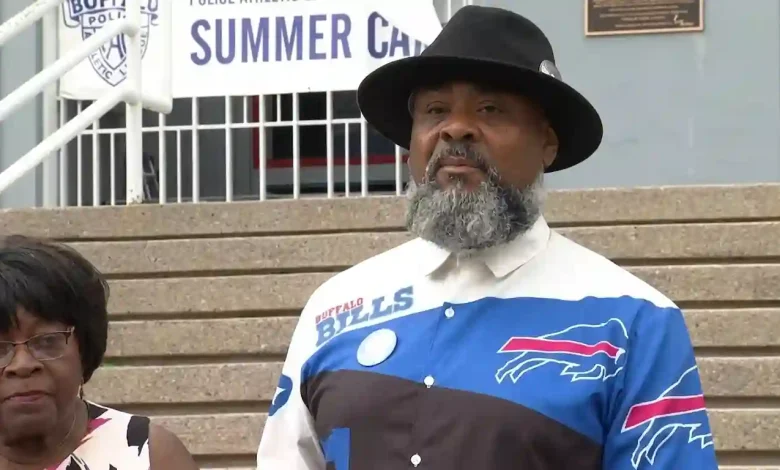
Table of Contents
O.J. Simpson will no longer be commemorated by the Buffalo Bills as they transition to their brand-new home, officially concluding a decades-long debate regarding how the franchise should handle the legacy of its most polarizing and controversial figure. Following the completion of their breathtaking new stadium—a state-of-the-art facility constructed over a grueling three-year period at a cost of $2.1 billion—the organization made the formal decision to completely exclude the late running back from their legendary Wall of Fame exhibits. While the old, now-demolished stadium served as a quiet placeholder for his name on the stadium walls, the brand-new venue represents a hard, uncompromising reset for the franchise’s public image. On June 23, 2026, the Bills hosted an official ribbon-cutting ceremony that ushered in a fresh, highly anticipated era of Western New York football, making it absolutely clear that some parts of their past are best left behind.
A Definitive Line in the Sand for the Buffalo Bills
The official announcement of Simpson’s exclusion from the new facility sent shockwaves through the NFL landscape, ending years of organizational ambiguity. Pete Guelli, the Buffalo Bills’ chief operating officer and president of business operations, delivered a brief but powerful statement detailing the team’s position on the matter: “We have made an organizational decision that he is not a fit to display inside our new stadium and Family Circle”. By calling it a collective “organizational decision,” the franchise has made a permanent, unified choice to sever ties with the athlete who once defined their offensive identity in the 1970s.
Historically, the Bills under previous leadership, specifically the late founder and owner Ralph Wilson, chose to distance themselves silently rather than taking explicit actions. Although Simpson was never officially removed from the physical Wall of Fame inside the aging stadium, his presence was largely ignored and unacknowledged. He was rarely invited to official team events, his iconic number 32 jersey was never formally retired despite not being reissued for decades, and the team actively avoided referencing his historic on-field accomplishments in official marketing collateral. This latest decision from current owners Terry and Kim Pegula, executed by Pete Guelli, represents a proactive, highly transparent strategy. The organization is no longer content with passive distancing; they are active in establishing that the new era of Bills football is built on a foundation of modern community standards, ethical alignment, and absolute integrity.
O.J. Simpson’s Fall from Legend to Pariah
The Athletic Pinnacle of No. 32
Drafted as the No. 1 overall pick in the 1969 NFL Draft out of the University of Southern California (USC), Simpson was expected to revolutionize the position of running back. He did exactly that. After winning the prestigious 1968 Heisman Trophy, he went on to construct one of the most prolific and statistically dominant rushing careers in pro football history. Over his nine seasons in Buffalo, Simpson established single-game and single-season records that stood for generations.
The absolute pinnacle of his athletic career came in 1973 when he rushed for 2,003 yards in just 14 regular-season games, becoming the first player in NFL history to break the 2,000-yard milestone. That year, he earned NFL Most Valuable Player (MVP) honors and cemented his status as a beloved national icon. His devastating speed, vision, and agility made him a five-time first-team All-Pro and a six-time Pro Bowl selection. Simpson gained 10,183 yards with the Bills, placing him second in franchise history behind only fellow Pro Football Hall of Famer Thurman Thomas. His franchise single-game record of 273 rushing yards against the Detroit Lions in 1976 remains the sixth-highest output in NFL history, a testament to his on-field greatness.
The Crime, the Civil Verdict, and a Tarnished Legacy
However, Simpson’s stellar accomplishments on the turf were completely and irrevocably overshadowed by the horrific events of June 12, 1994, when his ex-wife Nicole Brown Simpson and her friend Ronald Goldman were found brutally stabbed to death outside her Brentwood, Los Angeles condominium. Simpson was subsequently arrested after an infamous, low-speed highway chase in a white Ford Bronco, leading to what many called the “Trial of the Century.”
While Simpson was famously acquitted of the double murder charges in a criminal court in 1995, his public reputation was permanently destroyed. A subsequent 1997 civil court trial found him liable for the wrongful deaths of Nicole Brown Simpson and Ronald Goldman, ordering him to pay $33.5 million to the victims’ families—a judgment he spent the rest of his life largely evading. In 2007, Simpson’s legal troubles compounded when he led a group of armed men into a Las Vegas hotel room to steal sports memorabilia he claimed belonged to him. He was convicted of armed robbery and kidnapping, serving nine years in a Nevada state prison before his release on parole in 2017. Simpson passed away in April 2024 at the age of 76 due to prostate cancer, leaving behind a dual legacy: a brilliant athletic pioneer and a deeply tarnished, infamous cultural figure.
The New Highmark Stadium: A $2.1 Billion Engineering Marvel
Architectural Innovation and Modern Amenities
The venue that will host the Buffalo Bills’ next chapter is a jaw-dropping physical structure designed to reflect the resilience and passion of the Western New York community. Designed by the global sports architecture firm Populous, the new Highmark Stadium cost $2.1 billion to construct and represents one of the largest infrastructure projects in regional history. The stadium features an optimized seating capacity of 60,108—intentionally reduced by roughly 10,000 seats compared to the old venue to optimize sightlines, elevate acoustic levels, and provide a more intimate and intimidating atmosphere for opposing teams.
Architecturally, the building is specifically engineered to combat the severe weather patterns common to Orchard Park. The exterior of the facility features a perforated metal facade designed by Populous to redirect high-velocity winds. A massive, 360-degree canopy curves over the structure, sheltering more than 60 percent of the seating bowl from the heavy snow and rain that frequently rolls off Lake Erie. Crucially, the field itself represents a major upgrade, transitioning from artificial turf to a natural grass field. This playing surface is supported by underground heating coils designed to prevent the soil from freezing during late-season games, along with automated grow lights and the world’s largest stadium-integrated snow-melt system that monitors roof sensor accumulations automatically.
The “Family Circle” and the Restructured Wall of Fame
Rather than simply transferring the exact assets of the old stadium’s Wall of Fame, the Bills have entirely reimagined how they pay homage to their history. In the old venue, the Wall of Fame was painted inside the seating bowl, visible to all fans during broadcasts. In the new facility, the franchise is introducing the “Family Circle,” an expansive, beautifully landscaped plaza situated directly in front of the primary stadium entrance.
This plaza will host customized plaques honoring the franchise’s legendary figures, allowing fans to interact with the team’s history up close before entering the gates. Because of this structural change, every single plaque and tribute had to be newly manufactured and curated. This physical migration offered the Bills’ leadership a perfect, natural inflection point to evaluate which players aligned with the team’s modern standards. Consequently, while 30 legendary players, coaches, and administrators will see their legacies permanently cast in bronze in the “Family Circle”, Simpson’s name has been completely stripped from the roster.
| Wall of Fame Legend | Position / Role | Tenure with Bills | Key Accolades & Status in New Stadium |
|---|---|---|---|
| O.J. Simpson | Running Back | 1969–1977 | Excluded; 1973 MVP, 2,003 rushing yards (14 games) |
| Jim Kelly | Quarterback | 1986–1996 | Included; Pro Football Hall of Fame, led Bills to 4 Super Bowls |
| Thurman Thomas | Running Back | 1988–1999 | Included; Franchise leading rusher (11,938 yards), 1991 NFL MVP |
| Bruce Smith | Defensive End | 1985–1999 | Included; NFL’s all-time sack leader (200 sacks), 2x Defensive Player of the Year |
| Marv Levy | Head Coach | 1986–1997 | Included; Winningest coach in franchise history, Hall of Famer |
Analyzing the Business Decisions Behind the Exclusion
Mitigating Corporate Risk and Aligning with Fans
In the modern sports ecosystem, a franchise is not merely a football team; it is a multi-billion-dollar brand integrated with global corporate partners. Highmark Blue Cross Blue Shield, the primary naming rights partner for both the old and new stadiums, has invested heavily in the franchise’s community-centric messaging. For a facility that relies on public tax contributions and corporate investments, maintaining a massive, public-facing monument to a figure associated with domestic violence and double homicide is an unnecessary public relations liability.
By curating the “Family Circle” without Simpson, Pete Guelli and the Bills’ front office are aligning the brand with modern consumer expectations. Today’s corporate sponsors demand alignment on ethical standards and brand safety. Honoring Simpson in a brand-new, $2.1 billion monument would have triggered intense media scrutiny, complicated sponsorship negotiations, and alienated portions of the fan base. The team’s active decision to remove his plaque minimizes these corporate vulnerabilities, ensuring that the grand opening of the facility remains a celebratory milestone focused entirely on the future.
The Contrast: Buffalo Bills vs. Pro Football Hall of Fame
The Bills’ decision presents a fascinating contrast to how national bodies handle controversial figures. Simpson was inducted into the Pro Football Hall of Fame in Canton, Ohio, in 1985. Despite his subsequent legal battles and public disgrace, his bronze bust remains on display in Canton. The Hall of Fame has consistently maintained a strict policy regarding enshrinees: the honor is awarded strictly for on-field performance during a player’s career, and there is no mechanism or precedent for removing a member due to post-career actions.
Unlike national institutions, local NFL franchises possess complete autonomy over their stadium displays, team history, and honors. The Bills are under no obligation to align their stadium tributes with the Pro Football Hall of Fame. By removing Simpson from the local “Family Circle” while his bust remains in Canton, the Bills are asserting that their stadium is a private, family-friendly space representing the values of Western New York, rather than an objective historical museum. For more details on team policies and league-wide decisions, fans can monitor updates on national media portals such as AP News.
Moving Forward: Western New York’s New Era
As the old Highmark Stadium is slowly demolished across the street, a symbolic chapter of Buffalo sports history is being dismantled with it. The Bills have made it clear that their history is not a static museum, but a living narrative that can be shaped to reflect the values of the present generation. When the Bills step onto the natural grass field of their new home for the regular-season opener against the Detroit Lions on September 17, 2026, they will do so with their eyes firmly fixed on a Super Bowl-caliber future.
The exclusion of O.J. Simpson is more than just a minor administrative detail; it is a symbolic cleansing of the franchise’s ledger. It allows “Bills Mafia”—the team’s legendary, passionate fan base—to celebrate their history without having to defend or ignore the dark shadow of their first superstar’s post-career life. In their gorgeous, wind-sheltered, state-of-the-art cathedral, the Buffalo Bills have created a space dedicated strictly to sporting excellence, community unity, and a future untethered to the ghosts of the past.




One Comment