President Donald Trump’s Crypto Holdings Pass $1 Billion Mark
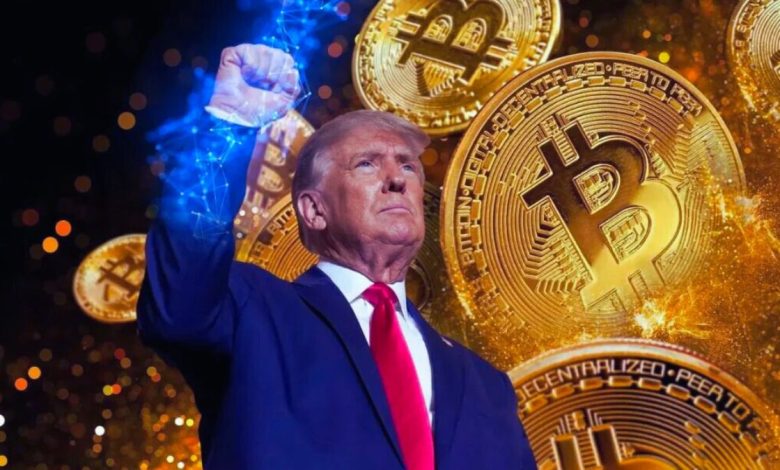
Table of Contents
President Donald Trump has once again shattered financial expectations and institutional norms, according to a massive federal filing that details a staggering personal windfall from the digital asset sector. On Tuesday, the U.S. Office of Government Ethics (OGE) released a gargantuan 927-page financial disclosure document detailing President Trump’s financial interests and income for 2025—the historic first year of his second term in the White House. The bombshell disclosure reveals that Trump generated more than $635 million from a licensing agreement with a cryptocurrency group specializing in “meme” coins bearing his name. This spectacular licensing revenue, combined with other decentralized finance (DeFi) initiatives, has officially propelled the president’s total cryptocurrency holdings and digital asset earnings past the $1 billion threshold.
Introduction to the Historic Financial Disclosure
The release of the mandatory financial disclosure report on Tuesday has pulled back the curtain on the president’s highly lucrative business operations. In 2025, the digital asset markets experienced a monumental surge, and the disclosure form demonstrates that President Trump’s finances benefited immensely from this upward trend. This extensive 927-page federal accounting represents a dramatic escalation from previous disclosures and details a wide array of revenue streams, placing digital assets at the absolute center of his personal wealth strategy.
Historically, sitting presidents have maintained relatively simplistic portfolios while in office, primarily holding treasury bills, diversified mutual funds, or book royalties. President Trump’s dual role as both the developer of massive cryptocurrency platforms and the nation’s chief regulatory policymaker has turned that tradition on its head. With a personal fortune that Forbes estimates has climbed to $6.5 billion in 2026, the intersection of executive power and decentralized finance has emerged as a central narrative of his second administration.
Breaking Down President Donald Trump’s Billion-Dollar Crypto Windfall
The sheer scale of President Trump’s digital asset earnings has stunned financial analysts and political watchdogs alike. According to the OGE filing, his transition from traditional real estate mogul to a high-volume cryptocurrency player was fully realized in 2025. This transition was powered by two main drivers: the licensing of his personal brand to speculative memecoins and active participation in a decentralized finance platform co-managed by his family members.
The $TRUMP Memecoin Royalty Deal
The single largest contributor to Trump’s crypto-related revenue stream was a licensing agreement with Celebration Coins, which manages the “$TRUMP” memecoin. Operating under the corporate umbrella of CIC Digital LLC—an entity held entirely by the Donald J. Trump Revocable Trust—this deal brought in approximately $635 million in royalties. The memecoin, which featured iconic imagery of the president, became a speculative sensation during the 2024 presidential campaign and skyrocketed to a peak price of $74.24 just days before his second inauguration in January 2025. Although Coinbase data indicates the token’s market price has since contracted sharply to around $1.67, the licensing structure ensured that the president accumulated fixed royalties and equity distributions, shielding his personal profits from the token’s subsequent market depreciation.
World Liberty Financial Token and Equity Sales
Beyond meme coins, the Trump family’s primary decentralized finance vehicle, World Liberty Financial (WLF), generated monumental returns. The disclosure indicates that Trump reported over $515 million in direct income from $WLF token sales, alongside $65 million from the sale of equity in the holding firm that controls WLF. Co-founded in late 2024 by his sons, Donald Jr. and Eric Trump, alongside Zack and Alex Witkoff, the startup rapidly capitalized on the president’s political momentum. According to reports from the Associated Press, the venture attracted massive liquidity from both retail investors and international institutions, quickly making it one of the most lucrative assets in the Trump portfolio.
Stablecoin Transactions and Cold Storage Bitcoin
In addition to direct token sales, the filing outlines $196 million in net proceeds from stablecoin transactions via Stablecoin Holdco LLC. This entity is responsible for the USD1 stablecoin, a digital asset pegged to the U.S. dollar that is designed to act as a secure medium of exchange within the WLF ecosystem. Furthermore, the disclosure revealed the president’s personal, direct holdings in blue-chip cryptocurrencies. Under CIC Digital LLC, the form lists a “Cryptocurrency Wallet Virtual Bitcoin Key” held in cold storage, with a valuation marked at “Over $50,000,000”—the highest possible reporting bracket on the OGE form. Because the OGE does not require precise figures above this threshold, the actual market value of the president’s Bitcoin holdings is estimated to be significantly higher. The wallet also holds an Ethereum cold key valued between $5 million and $25 million, as well as a staked Ethereum position that yielded over $510,000 in validator rewards.
Comparative Analysis of Presidential Disclosure Sizes
The disparity in length between President Trump’s 927-page OGE Form 278e and those of his contemporaries underscores the vast difference in how modern leaders manage their personal wealth. Traditional ethics guidelines for U.S. presidents historically encouraged the liquidation of active business holdings in favor of blind trusts composed of broad-market index funds, municipal bonds, or cash reserves. Below is a comparative breakdown showing how the latest disclosure compares to historical filings and the filings of other administration officials.
| Presidential Figure | Form Length (Pages) | Key Cryptocurrency Holdings / Revenue (2025) | Primary Income Sources Reported |
|---|---|---|---|
| President Donald Trump | 927 pages | Over $1 billion (including $635M in $TRUMP memecoin royalties, $515M+ in WLF token sales) | Cryptocurrency ventures, real estate, licensing, legal settlements |
| Vice President JD Vance | 17 pages | $250,000 to $500,000 in Bitcoin | Book royalties, venture capital investments, digital assets |
| President Joe Biden (Final Year) | 11 pages | $0 (None reported) | Book royalties, pensions, interest income |
| President Barack Obama (Final Year) | 8 pages | $0 (None reported) | Book royalties, treasury bonds, index funds |
This traditional approach is starkly evident when looking at past filings. President Barack Obama’s final OGE disclosure was a concise eight pages, reflecting a portfolio dominated by Treasury bonds, passive index funds, and standard royalties from his bestselling books. Similarly, President Joe Biden’s final disclosure comprised just 11 pages, consisting of modest real estate holdings, standard federal pensions, and minor book royalties. Even Vice President JD Vance’s OGE form, while reflecting a more modern venture-capital-oriented background, was a compact 17 pages. Vance’s filing did, however, list a personal holding of Bitcoin valued between $250,000 and $500,000, confirming that the second-in-command has also embraced digital assets.
In contrast, Trump’s 927-page document represents a dense network of hundreds of individual LLCs, foreign licensing partnerships, commercial real estate holdings, and a complex matrix of decentralized digital wallets. The sheer scale of the document highlights a profound departure from the hands-off financial posture of previous commanders-in-chief, showcasing a highly active, diversified, and largely self-branded business empire operated concurrently with the presidency.
Other Revenue Streams: Real Estate, Legal Settlements, and Branded Goods
While cryptocurrency dominated the headlines, President Trump’s traditional brick-and-mortar operations and unconventional merchandising ventures continued to yield substantial returns. The filing shows that his real estate, hotel, and golf club assets remains incredibly healthy, generating over $290 million (with some estimates placing the total real estate-related income as high as $620 million depending on asset categories). Flagship properties like the Mar-a-Lago Club in Palm Beach, Florida, Trump National Doral, and the Bedminster golf resort experienced surging revenues, driven in part by their elevated status as hubs of political and social activity during his second term.
Adding to this massive cash flow was an unexpected windfall from legal disputes. Trump reported receiving $86.5 million in settlements resulting from five separate lawsuits against major technology and media platforms, including ABC, CBS, YouTube, Meta, and X (formerly Twitter). These settlements resolved long-standing litigation surrounding account suspensions, media coverage, and intellectual property rights.
Furthermore, Trump capitalized on his core base of supporters through highly targeted merchandising campaigns. The disclosure reveals $4.7 million in income from the sale of high-end, Trump-branded watches, alongside millions more from “God Bless the USA” Bibles, branded sneakers, and other commemorative products. This multifaceted monetization strategy demonstrates how the Trump brand has evolved into an all-encompassing retail and digital force.
Ethics, Governance, and Potential Conflicts of Interest
The revelation that a sitting president has generated more than $1 billion in income from an industry he actively regulates has reignited intense debate over executive ethics and conflicts of interest. Since taking office in January 2025, the Trump administration has pursued an aggressive pro-cryptocurrency agenda, signaling a complete reversal of the previous administration’s regulatory crackdowns.
Through executive orders and the appointment of industry-friendly officials to key regulatory positions, the administration has successfully fostered a highly favorable environment for digital assets. Critics and ethics watchdogs, such as Public Citizen, argue that these policy shifts create an inherent conflict of interest. Because the president, his sons, and close associates directly profit from token sales and memecoin royalties, any government policy that boosts the crypto market directly increases their personal net worth.
The controversy was further amplified last year by a high-profile transaction involving World Liberty Financial. An Abu Dhabi government-owned wealth fund reportedly used WLF’s USD1 stablecoin to facilitate a multibillion-dollar investment in Binance, a prominent international cryptocurrency exchange. This transaction drew intense scrutiny because it occurred shortly after President Trump issued a presidential pardon to Binance co-founder Changpeng Zhao for financial crimes. While the president has vigorously denied any link between the pardon and the wealth fund’s transactions, ethics experts warn that such overlaps between sovereign wealth, regulatory relief, and personal corporate profits represent an unprecedented challenge to federal conflict-of-interest standards.
The Political Fallout and Administration Response
The publication of the OGE filing has triggered a predictable partisan divide on Capitol Hill. Progressive lawmakers have immediately called for legislative action to restrict sitting presidents and vice presidents from owning or operating active business ventures, particularly highly volatile digital assets. Congressional Democrats are currently pushing for hearings to investigate the degree of coordination between the White House policy team and the operators of World Liberty Financial.
Conversely, congressional Republicans and administration allies have rallied around the president, celebrating his financial success as a triumph of American capitalism. In an official statement, White House Deputy Press Secretary Anna Kelly strongly rejected any allegations of unethical conduct, stating that “neither the President nor his family has ever engaged—or will ever engage—in conflicts of interest.” Kelly emphasized that Trump had “proudly made the United States the crypto capital of the world,” arguing that the administration’s policies were designed to foster broad economic growth and maintain America’s competitive edge in global financial technology.
Conclusion: A New Era of Executive Wealth
Ultimately, the 2025 financial disclosure of President Donald Trump serves as a historical turning point for the American presidency. It highlights how the boundary between public service and private enterprise has been permanently altered in the digital age. By translating political capital into over a billion dollars of decentralized crypto wealth, Trump has established a new paradigm for executive assets that bypasses traditional financial systems. As the OGE report circulates and watchdogs analyze its dense, 927-page ledger, the debate will continue over whether this represents an innovative evolution of personal liberty or a profound challenge to democratic governance. What remains undeniable, however, is that cryptocurrency has elevated the Trump financial empire to unprecedented heights, cementing his status as both a political force and a digital asset titan.





One Comment