Drone Interceptor Technology Tested to Bolster Air Defences 2026
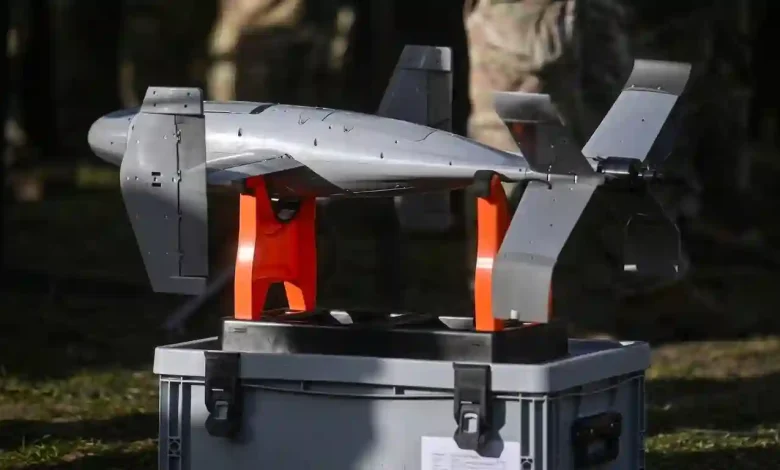
Table of Contents
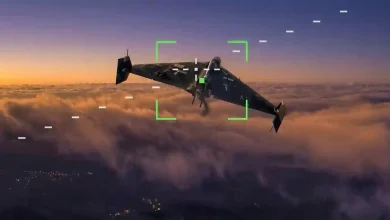
Drone interceptor technology took center stage along the windswept coast of the North Sea as a sleek, high-velocity unmanned aerial vehicle roared down a disused runway at a decommissioned Dutch airbase, punched through low-altitude cloud cover, and executed an autonomous kinetic intercept against a fast-moving mock hostile target. The demonstration, executed with pinpoint precision, marks an operational milestone for software developer Intelic and the Netherlands Ministry of Defence. Intelic, operating under a €30-million ($33.5-million) procurement contract with the Dutch government, is developing specialized software stacks and autonomous flight systems engineered specifically to close the widening gap in short-range and point-defense interception.
As modern conflict increasingly pivots to swarms of expendable one-way attack drones, traditional surface-to-air missile networks face structural exhaustion and crippling economic asymmetry. The trial illustrates how agile European commercial and defense-tech startups are rapidly transitioning cutting-edge robotics from proving grounds directly into operational envelopes. By verifying target telemetry in fractions of a second using edge-processed computer vision, the platform proves that rapid-response, low-cost interceptors can reliably dismantle aerial threats without burning multimillion-dollar interceptor missiles, creating a vital technical blueprint currently being scaled to bolster European defenses and supply front-line forces in Eastern Europe.
The North Sea Proving Grounds: High-Velocity Interception
The decommissioned coastal facility, selected for its open maritime air corridor and challenging North Sea weather conditions, provided an authentic operational testing environment. Modern air defense systems must perform reliably under adverse environmental constraints, including low visibility, salt fog, high winds, and severe electronic interference. During the engagement exercise, an aerial target simulating the flight profile and thermal signature of an incoming Shahed-136 loitering munition was introduced into the test sector at high cruising velocity.
Within seconds of target ingress, radar telemetry picked up the threat vector. The interceptor, powered by a high-thrust propulsion unit optimized for sprint speeds exceeding several hundred kilometers per hour, achieved ignition from its stationary launcher. Rather than relying on human piloting through radio control links—which remain inherently susceptible to electronic countermeasures—the drone utilized pre-programmed launch trajectories before switching to onboard computational control, accelerating directly toward the predicted intercept basket.
The coastal exercise highlighted the urgency surrounding rapid deployment cycles. European militaries, observing the evolving character of aerial saturation strikes, recognize that legacy air defense doctrines are ill-equipped for low-altitude drone strikes. Deploying high-velocity interceptors capable of immediate scramble profiles offers mobile formations and critical infrastructure installations an active shield capable of neutralizing incoming munitions miles before they reach defended perimeters.
The Intelic Breakthrough and Dutch Defence Modernization
Intelic’s €30-million procurement agreement with the Dutch Defence Ministry represents a structural evolution in how military procurement agencies partner with private software houses. Historically, defense hardware development spanned decades, yielding exquisite, exorbitantly expensive platforms. By contrast, the partnership between Intelic and the Dutch military mirrors commercial software development iterations, emphasizing rapid prototyping, open-architecture modularity, and frequent field testing.
This contracting model accelerates deployment schedules to keep pace with rapidly changing tactical environments. Recognizing that software defines capability in modern combat, the Dutch armed forces are actively modernizing their command systems through partnerships that bring commercial algorithmic innovations into operational units. Software improvements developed during these coastal trials are integrated and deployed across system revisions in weeks rather than fiscal quarters, establishing an adaptive feedback loop critical for contested operational theaters.
The investment reflects broader strategic alignment across the continent. Rather than operating in isolated national silos, Dutch defense leadership is cultivating sovereign technological capabilities that interface seamlessly with NATO standards and allied command structures. This proactive industrial posture ensures that defense hardware can receive continuous over-the-air firmware upgrades to overcome evolving adversary electronic warfare tactics.
Sensor Fusion: Real-Time Radar and AI Verification
At the technological core of the North Sea demonstration is an advanced sensor fusion engine combining traditional pulse-Doppler radar feeds with high-frame-rate optical cameras governed by machine learning algorithms. While ground-based radar excels at initial threat detection and coarse spatial tracking, radar clutter near ground or sea surfaces frequently generates false positives, complicating automated engagement orders.
To solve this challenge, Intelic’s system architecture deploys convolutional neural networks running directly on power-efficient edge microprocessors embedded within the interceptor’s avionics package. As the drone closes range on the radar-vectored coordinates, its onboard electro-optical seekers awaken, scanning the engagement cone to visually classify the target. The neural network scrutinizes geometric contours, propeller signatures, and flight stabilization dynamics to confirm target identity within milliseconds.
This optical validation eliminates risks of fratricide or engagement against decoys, civil unmanned aircraft, or wildlife. In an environment shaped by widespread stringent AI regulation demand, the integration of fail-safe operational parameters ensures algorithmic targeting complies with established rules of engagement while retaining the split-second reaction speed required to defeat supersonic or diving terminal-phase threats.
Countering Loitering Munitions and Asymmetric Threats
The tactical realities of the ongoing war in Ukraine have exposed severe structural deficits in global air defense doctrine. Russian forces continue to bombard Ukrainian population centers, energy nodes, and military logistics hubs using mass-manufactured Geran-2 (Shahed-variant) loitering munitions combined with cruise and ballistic missiles. Because these attack drones fly low, track irregular waypoints, and possess small radar cross-sections, detecting and eliminating them demands continuous vigilance across hundreds of miles of frontline and rear airspace.
Relying exclusively on mobile gun teams equipped with searchlights and pickup-mounted machine guns requires vast personnel commitments and yields inconsistent interception rates during inclement weather or nighttime raids. Conversely, firing Patriot, NASAMS, or IRIS-T surface-to-air missiles creates rapid operational depletion. An interceptor platform capable of chasing down, matching velocity, and executing hard-kill kinetic attacks introduces a transformative intermediate layer of defense.
Equipped with either a direct hit-to-kill kinetic nosecone or a proximity-fused fragmentation charge, high-speed interceptor drones can be deployed in decentralized clusters around critical installations. When radar networks indicate an incoming saturation attack, multiple interceptors can scramble simultaneously, clearing airspace sectors before threats breach localized point defenses.
Accelerated Deployment: Fortifying Ukraine Against Drone Strikes
The lessons drawn from the North Sea test site are directly tied to the contested skies over Kyiv, Kharkiv, and Odesa. Through bilateral military assistance programs and direct venture funding, the technology honed by Intelic is tailored for fast-track integration into Ukraine’s air defense architecture. European governments are using their domestic innovation pipelines to supply frontline units with scalable countermeasures capable of sustaining prolonged attritional conflict.
Collaborative frameworks, including the recent strategic Ukraine defense deal, have created direct channels for European defense firms to pressure-test their emerging software in Ukrainian operational zones. Ukrainian engineers provide granular telemetry from active combat zones, including detailed signal profiles of Russian radio jamming, GPS spoofing protocols, and anti-aircraft evasion maneuvers. Intelic continuously updates its models against this data, ensuring that platforms sent east can navigate hostile electromagnetic environments.
This rapid deployment feedback loop drastically cuts research and development lead times. Technologies that previously spent years in bureaucratic evaluation are now undergoing field verification, iterative optimization, and mass production in condensed timeframes, establishing a high-velocity technological pipeline between Western test centers and Eastern European combat zones.
Solving the Air Defense Economic Asymmetry Dilemma
The mathematics of modern air defense heavily favors the attacker when low-cost drones are pitted against high-end guided missiles. A standard Shahed-type loitering munition costs approximately $20,000 to $50,000 to produce and field. In contrast, an advanced interceptor missile fired from systems like Patriot or NASAMS commands a price tag ranging between $1.2 million and $4 million per shot.
This financial imbalance creates an unsustainable burn rate for defending nations. Attackers can deliberately launch waves of cheap drones not necessarily to strike primary targets, but to exhaust interceptor inventories and bankrupt air defense networks prior to launching heavier cruise or ballistic strikes. By driving the per-unit production cost of high-speed drone interceptors down to a fraction of traditional missile costs, European manufacturers are resetting the economic calculus.
Utilizing commercial off-the-shelf composite airframes, additive manufacturing for propulsion components, and mass-market edge computing hardware, systems like Intelic’s can be manufactured in volume at manageable expense. This cost parity allows military commanders to authorize multi-vehicle salvos against incoming swarms without worrying about depleting strategic missile stockpiles needed to deter conventional ballistic threats.
Technical Architecture and Interceptor Performance Matrix
To contextualize where high-velocity drone interceptors fit within integrated air defense systems, the following matrix compares the Intelic-tested platform architecture against existing counter-UAS modalities currently operating across European and Ukrainian theaters:
| System Parameter | High-Velocity Drone Interceptor | Man-Portable Air Defense (MANPADS) | Heavy Surface-to-Air Missile (SAM) | Mobile Anti-Aircraft Gun Teams |
|---|---|---|---|---|
| Propulsion Type | Solid Rocket / Micro-Jet Hybrid | Solid Fuel Rocket Motor | Multi-Stage Solid Rocket | Internal Combustion (Truck Mounted) |
| Engagement Velocity | Mach 0.6 – 0.8+ (Sprint Profile) | Mach 1.5 – 2.5 | Mach 3.0 – 5.0+ | N/A (Stationary Ballistic Fire) |
| Guidance System | Ground Radar + Onboard Edge AI Vision | Infrared / Ultraviolet Seeker | Active/Semi-Active Radar Homing | Manual / Electro-Optical / Radar |
| Average Cost per Shot | $15,000 – $45,000 | $80,000 – $150,000 | $1,200,000 – $4,000,000 | $1,000 – $5,000 (Ammunition Only) |
| Engagement Ceiling | Up to 4,000 meters | Up to 3,500 – 4,500 meters | Up to 25,000+ meters | Up to 2,000 meters |
| Swarm Defense Feasibility | Extremely High (Autonomous Allocation) | Low (Single-Target Manual Reload) | Moderate (Capacity Constrained) | Moderate (Range Constrained) |
| EW Resistance | High (Autonomous Terminal Optical Track) | Immune (Passive IR) | High (Resistant to Basic Jammers) | High (Optical Targeting) |
Scaling Industrial Production Across the European Defense Ecosystem
The successful test at the North Sea facility comes at a defining moment for the continent’s military readiness. European capitals are confronting structural underinvestment in weapons manufacturing capacity, prompting widespread calls to build integrated production networks capable of wartime surging. The deployment of drone interceptors aligns directly with wider European space and aerial defense initiatives designed to ensure strategic sovereignty across air and space domains.
As national defense budgets expand to meet NATO modernization standards, ministries of defense are actively seeking agile manufacturing alternatives to massive defense conglomerates. Small, software-driven enterprises are proving capable of out-innovating legacy defense primes by adopting distributed manufacturing models. By leveraging local automated assembly plants across the Netherlands, Germany, and Poland, drone components can be sourced without vulnerability to single-point maritime supply disruptions.
This initiative dovetails with emerging plans for a deeply coordinated European defense posture capable of providing persistent continental deterrence. Building autonomous counter-air capabilities directly within European borders ensures that allied nations retain tactical operational flexibility regardless of shifts in overseas political leadership or overseas supply chain embargoes.
Next-Generation Multi-Layered Air Shield Integration
Deploying standalone interceptors is only the first step toward comprehensive aerial protection. To be fully effective on contested battlefields, autonomous drones must integrate smoothly into multi-tiered Integrated Air and Missile Defense (IAMD) command networks. Current research teams are linking these platforms with broader unmanned defense architecture ecosystems to ensure seamless digital handoffs between long-range early warning radars, mid-tier missile batteries, and short-range interceptor swarms.
Under this unified command concept, automated battle management systems instantly calculate incoming threat vectors, assigning each incoming projectile to the most cost-effective defensive asset. High-end ballistic missiles remain the responsibility of heavy surface-to-air systems, while waves of cruise missiles and attack drones are intercepted mid-flight by forward-deployed drone swarms. These multi-domain engagements utilize precision strike packages tailored to preserve critical defensive supplies while maintaining near-impenetrable coverage zones over sensitive civilian and strategic infrastructure.
Furthermore, deploying cutting-edge visual confirmation and target tracking algorithms addresses critical legal and ethical obligations. Amid extensive international discussions surrounding autonomous systems, defense authorities maintain strict operational protocols ensuring human-on-the-loop authorization during intercept commands. Concurrently, the deployment of autonomous combat algorithms for terminal phase intercept navigation guarantees maximum accuracy when electronic jamming cuts off communication links between operators and aircraft.
The successful trial along the Dutch coast proves that the future of low-altitude air defense has moved beyond traditional conceptual design. By marrying high-velocity aerodynamic engineering with edge-computed artificial intelligence and rapid software deployment cycles, Intelic and the Dutch Ministry of Defence have laid the groundwork for an adaptable, cost-effective counter-drone shield that will redefine the defense of European skies and provide immediate, decisive capability to allied forces standing on the frontlines of modern aerial combat.