Automakers Urge Congress for 2026 BAN on Chinese Connected Vehicles
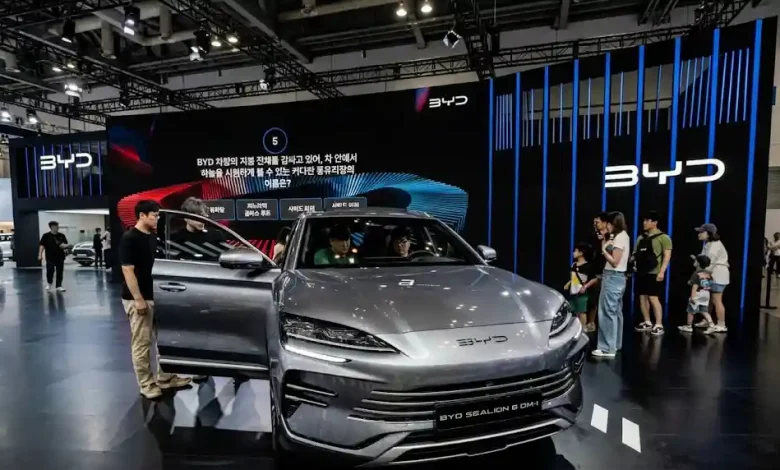
Table of Contents
Automakers representing the major forces in the domestic and international automotive sectors are issuing a stark, unprecedented warning to federal lawmakers: codify a permanent, statutory ban on Chinese connected vehicles and their components, or face an existential threat to American national security and domestic industry. In a highly anticipated letter addressed to both Democratic and Republican leadership in the House of Representatives and Senate, the Alliance for Automotive Innovation (AAI) urged Congress to quickly pass legislation before the current legislative session wraps up on January 3, 2027. This aggressive lobbying effort, first reported by Bloomberg News, underscores the mounting panic among Western car manufacturers as heavily subsidized Chinese companies, such as BYD and Geely, rapidly expand their export footprints across Europe, South-East Asia, and Latin America.
The geopolitical friction surrounding automotive supply chains is a natural extension of the broader intensifying AI race with China, where tech dominance translates directly to strategic leverage. Historically, the automotive industry has relied on traditional hardware manufacturing; however, modern vehicles have evolved into highly complex software ecosystems. Because these vehicles continuously collect geo-spatial data, consumer habits, and structural camera footage, they pose an unprecedented intelligence and cybersecurity threat if manufactured or programmed by foreign adversaries.
The Coalition’s Urgent Appeal to Congress
The Alliance for Automotive Innovation, led by President and CEO John Bozzella, represents the absolute heavyweights of the global automotive sector, including General Motors, Ford, Toyota, Volkswagen, Hyundai, and Honda. In the letter sent on Thursday, Bozzella laid out a clear timeline, warning that the window for preventive action is closing. While high tariffs and administrative regulations currently insulate the American market from a flood of Chinese electric vehicles (EVs), the industry is demanding a permanent legislative firewall that cannot be easily dismantled by changing administrative priorities.
“Right now, Chinese automakers are dumping subsidized vehicles with connected software and hardware around the world,” Bozzella wrote. “This hasn’t happened inside the U.S. yet, but given the scale and urgency of this threat, we urge you to enact a Chinese vehicle, software and hardware ban before adjourning this year and make this policy the law of the land”. These statutory measures resemble the tightening frameworks of modern U.S. economic sanctions aimed at curtailing tech proliferation. By pushing for a statutory ban, the automotive alliance wants to preemptively block any loophole that would allow Chinese manufacturers to set up local production facilities in neighboring nations like Mexico or Canada to bypass existing tariffs.
Deciphering the Connected Vehicle Security Act of 2026
Legislative momentum has already begun building in Washington. In July 2026, the Senate Commerce Committee advanced the Connected Vehicle Security Act of 2026, a bipartisan bill sponsored by Representatives John Moolenaar and Debbie Dingell in the House, and key senators. This bill seeks to permanently codify restrictions on vehicles containing software or advanced communications hardware developed in China or Russia. However, translating regulatory intent into airtight law has introduced several complex challenges that Congress must resolve before the final vote.
This aggressive legislative posture mirrors a coordinated, strategic financial offensive often deployed to contain foreign adversaries. By introducing strict compliance regulations, lawmakers are attempting to squeeze out foreign-developed code from the domestic supply chain entirely. The proposed legislation, however, is not without its domestic complications, as international joint ventures and global investment portfolios complicate the simple definition of a ‘Chinese vehicle.’
The Ownership Threshold Dilemma
One of the primary roadblocks in passing the Connected Vehicle Security Act of 2026 is its current definition of foreign control. As originally written, the Senate Commerce Committee’s bill proposes a strict ban on any vehicle produced by a manufacturer in which Chinese state or corporate entities hold more than a 15% stake. During a committee markup, lawmakers—including Senator Ted Cruz—pointed out that this low threshold would inadvertently ban several legacy Western brands from selling cars in the United States.
Specifically, German luxury automaker Mercedes-Benz would be entirely shut out of the U.S. market under the current text. Roughly 20% of Mercedes-Benz’s shares are held by two major Chinese investors: state-owned BAIC Group and Geely founder Li Shufu. To address this, the Alliance for Automotive Innovation has been actively negotiating with lawmakers to refine the legislation. John Bozzella emphasized the importance of working with Congress to “achieve a balanced policy so all our member companies continue to succeed and thrive inside the U.S.” This delicate balance shows that while automakers support the spirit of the ban, the globalized nature of automotive investment makes blunt legal instruments highly problematic.
Cyber Vulnerabilities and National Security Risks
The primary justification for a permanent ban centers on national security. Modern vehicles are no longer merely mechanical machines; they are fully integrated IoT (Internet of Things) devices. A typical late-model electric or connected vehicle contains hundreds of microprocessors, multiple cameras, radar, lidar sensors, GPS trackers, and high-frequency communication modules. If the operating software or central hardware of these vehicles is controlled by a hostile foreign state, the risks are manifold.
Much like the supply chain vulnerabilities exposed during a geopolitical oil supply crisis, a reliance on foreign automotive electronics introduces profound systemic risk. If millions of connected cars with Chinese-designed software were operating on U.S. streets, they would have the capability to map military installations, monitor electrical grids, record conversations of government officials, and track the real-time movement of citizens. Furthermore, the threat of remote kinetic disruption—such as a coordinated software command to disable vehicle braking systems or turn off engines simultaneously—could paralyze the nation’s transportation infrastructure.
Connected Vehicles as Modern Computers on Wheels
As the U.S. Department of Commerce has repeatedly warned, the capabilities of modern electric vehicle computers are immense. They can receive over-the-air (OTA) updates, access cellular networks, and communicate with other smart city devices. The modern connected car depends on deep integration of cloud capabilities, far outpacing typical business computing tools like advanced AI like Gemini Enterprise in terms of kinetic physical risk. While an AI model in an office processes text and data, an EV computer manages physical kinetic energy moving at highway speeds.
A malicious over-the-air software update could cause severe infrastructure blockades, which in turn could lead to massive disruptions in cyber insurance markets. Insurance carriers would find themselves completely unable to underwrite risks where a foreign government could systematically disable fleet safety systems at will. Thus, the transition to connected vehicles has elevated automotive policy from a simple trade debate to a core pillar of national defense strategy.
Economic Dumping and the Battle for Global EV Dominance
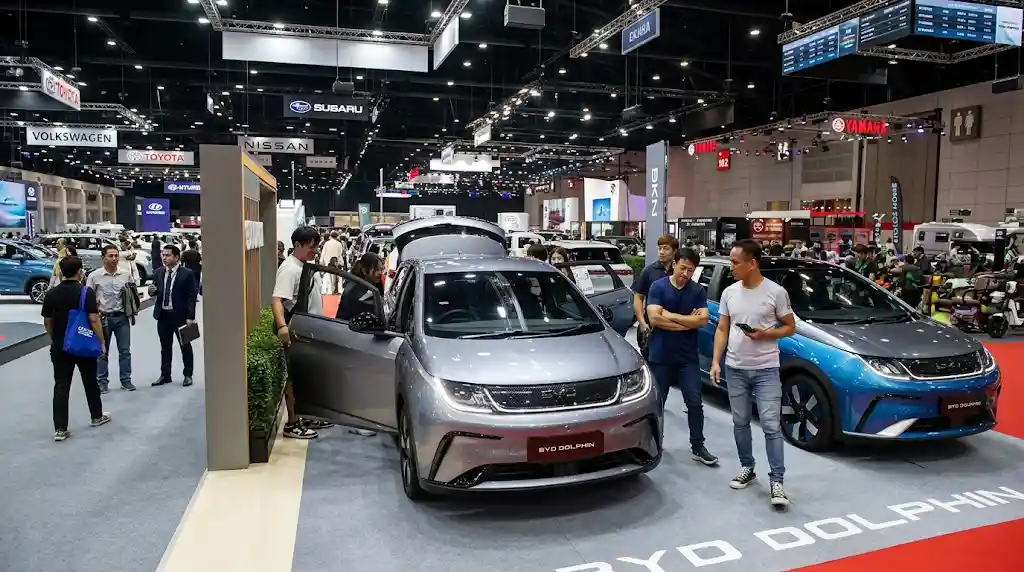
Beyond the cyber threat, automakers are facing an existential economic challenge. The Chinese domestic market is currently experiencing sluggish demand and intense price wars, forcing companies like BYD, Geely, and Chery to aggressively export their subsidized inventory. Backed by massive state subsidies, cheap manufacturing, and highly consolidated battery supply chains, Chinese manufacturers can produce high-quality, tech-heavy electric vehicles at prices that Western manufacturers cannot match.
While some economists at recent critical Jackson Hole meetings debate the inflationary effects of severe protectionist tariffs, automakers view a complete ban as the only viable defense. High tariffs can be absorbed by heavily subsidized companies, or bypassed via localized assembly plants. A permanent statutory ban on the underlying hardware and software, however, creates an absolute barrier to entry. This ensures that even if a Chinese company attempts to build cars in Mexico under the United States-Mexico-Canada Agreement (USMCA), the vehicle would still be legally barred from entering the U.S. market due to its internal electronics.
Comparative Analysis of Regulatory Actions
To understand the scope of the proposed legislative ban, it is helpful to contrast the multiple overlapping regulatory and statutory measures currently active or proposed in the United States. While the executive branch has taken significant action, automakers argue that only Congress can provide the permanent, unshakeable legal foundation required to protect the domestic automotive base over the next decade.
| Regulatory Action | Key Authority / Body | Scope of Restrictions | Key Limitations & Risks |
|---|---|---|---|
| Commerce Dept. Connected Vehicle Rule (Jan 2025) | Executive Branch (BIS) | Bans Chinese/Russian vehicle connectivity software (2027) & hardware (2029) | Can be repealed or modified by subsequent presidential administrations. |
| Connected Vehicle Security Act of 2026 | Legislative Branch (Congress) | Codifies software/hardware bans into permanent federal law with strict enforcement | Its 15% ownership threshold currently threatens legacy Western brands like Mercedes-Benz. |
| Section 301 Tariff Increases | Executive Branch (USTR) | Imposes 100% tariffs on Chinese-made electric vehicles | Does not stop vehicles manufactured in third-party countries (e.g., Mexico, Canada). |
The Commerce Department’s 2025 Framework
The groundwork for these policies was laid in January 2025, when the Bureau of Industry and Security (BIS) finalized a rule prohibiting certain transactions involving connected vehicles with links to China or Russia. The executive order set an aggressive timeline: banning foreign software in model year 2027 and banning foreign hardware by 2029. While this was a major victory for domestic automakers, executive rules are always subject to litigation and political swings.
Just as threats to physical maritime trade routes in global shipping lanes like the Strait of Hormuz can halt global manufacturing, a compromise in connected car infrastructure represents a structural choke point. If the 2025 framework is weakened or overturned by future administrations, the U.S. domestic manufacturing core would be immediately exposed to asymmetric competition. This is why the Alliance for Automotive Innovation is demanding that Congress enshrine these exact parameters into law immediately, removing any regulatory uncertainty.
Navigating the Legislative Path Ahead
The road to passing the Connected Vehicle Security Act of 2026 will require intense negotiation. Lawmakers must rewrite the ownership threshold rules to ensure that companies like Mercedes-Benz are granted waivers or that the 15% ceiling is adjusted to target actual state control rather than passive investment. Furthermore, the upcoming mid-term elections in November 2026 present a major scheduling challenge, as the legislative calendar before the January 3, 2027 adjournment is extremely tight.
Despite these challenges, there is rare, broad bipartisan consensus on the issue of Chinese tech. Both Democrats and Republicans recognize that the future of U.S. industrial policy relies on maintaining a robust, secure domestic automotive sector. If Congress can successfully amend the bill to protect joint-venture partners while permanently excluding Chinese state-subsidized connected tech, it will mark one of the most significant protectionist national security laws of the decade.