US strikes on Iran 2026: Trump Threatens Infrastructure Warfare
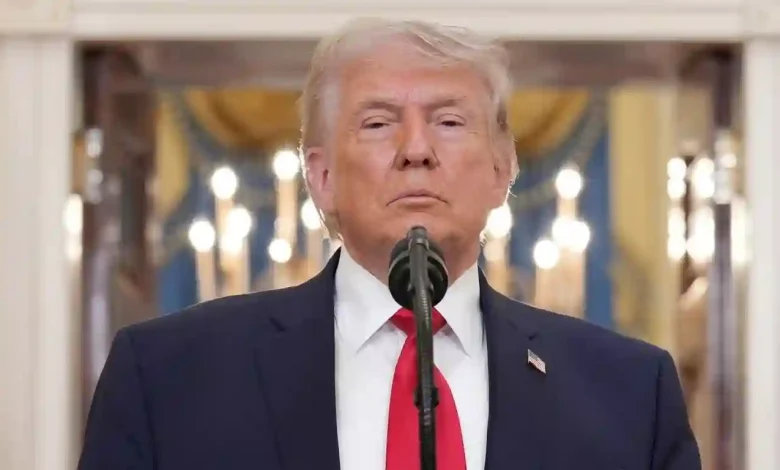
Table of Contents
US strikes carried out by U.S. Central Command (CENTCOM) against targets inside the Islamic Republic of Iran reached their twelfth consecutive night on Wednesday, July 22, 2026. This intensive aerial campaign represents a severe escalation of hostilities in the Middle East, marking a critical turning point in what has rapidly transformed into the 2026 Iran war. The ongoing conflict has paralyzed commercial shipping corridors, threatened global energy security, and triggered a major military confrontation between Washington and Tehran. Despite a brief pause in fighting earlier this summer, the diplomatic avenue collapsed completely as regional proxies and direct state actions collided, leaving the Persian Gulf on the precipice of full-scale war.
The Pentagon, along with top-tier defense officials, maintains that keeping maritime trade lanes open is a non-negotiable objective. However, the ground reality tells a different story. In the face of persistent drone, cruise missile, and sea mine operations conducted by the Islamic Revolutionary Guard Corps (IRGC), commercial shipping transiting the Strait of Hormuz has slowed to a crawl. In an effort to re-establish deterrence and force the reopening of the strategic channel, the Trump administration has opted for a relentless campaign of daily airstrikes, targeting crucial Iranian naval and defense infrastructure scattered across the country’s southern provinces.
The Escalation of the 2026 Persian Gulf Conflict
The current cycle of violence escalated rapidly over the past month. What began as localized defensive maneuvers by Western naval escorts quickly transformed into broad offensive actions aimed at dismantling Iran’s coastal anti-access/area-denial (A2/AD) networks. US military command structure, operating under direct orders from President Donald Trump, initiated this sustained bombing campaign to degrade Tehran’s capacity to disrupt merchant vessels. By reaching the twelfth consecutive night of strikes, the scale of this intervention has surpassed previous modern conflicts in the region, drawing comparisons to the classic “Tanker War” of the 1980s but with far more advanced missile and drone technologies.
This massive campaign is a direct response to weeks of renewed Iranian aggression. In late June and early July, the IRGC began deploying sea mines along the shipping lanes hugging the Omani coast. This route had previously served as a relative safe haven for commercial tankers seeking to bypass the contested waters of the northern Persian Gulf. By extending their operations into these neutral corridors, Iranian forces effectively squeezed global shipping, leading to the collapse of international maritime trade through the strait. Consequently, the United States responded with overwhelming firepower, demonstrating that it would not allow a vital global artery to be held hostage by unilateral military action.
CENTCOM Operations and Targeted Infrastructure
According to official statements released by U.S. Central Command, Wednesday’s military operations focused on several critical nodes of Iran’s defensive apparatus. Strike packages consisting of long-range B-1B Lancer bombers, carrier-based strike fighters, and sea-launched Tomahawk land-attack cruise missiles successfully hit targets including maritime capabilities, missile and drone storage facilities, coastal surveillance sites, and air defense assets. This intensive bombardment followed on the heels of the highly disruptive strikes on Iran on the 11th consecutive night, during which key coastal radar facilities were systematically neutralized.
CENTCOM officials emphasized that these strikes are specifically designed to reduce Iran’s capability to launch anti-ship weapons against civilian mariners. However, the Pentagon’s focus has progressively shifted. While early rounds of strikes targeted active missile batteries, recent operations have begun to target supporting logistics and regional command bases. Military analysts note that by dismantling storage warehouses and production facilities, the US hopes to permanently weaken the IRGC’s ability to wage a prolonged war of attrition along its sprawling southern coastlines.
Assessing the Damage in Southern and Southwestern Iran
Reports trickling out of southwestern and southern Iran describe massive explosions rocking multiple industrial and military hubs. In the strategic Khuzestan province, a key location near the southwestern city of Ahwaz was heavily hit by US missile attacks, according to regional media. Local authorities reported that the targeted site housed major logistics facilities utilized by the IRGC Ground Forces and maritime missile units. Furthermore, a strike near the Shalamcheh border crossing with Iraq resulted in at least two dead and eleven injured, underscoring the lethal nature of the ongoing campaign and its proximity to key geopolitical boundaries.
Perhaps most alarming was a reported strike on a power station located near the Bushehr nuclear power plant. This attack marks a dramatic shift towards targeting dual-use civilian infrastructure. In the heart of the waterway, the strategic Iranian island of Larak, which sits directly inside the narrowest point of the Strait of Hormuz, was hit by a heavy missile strike, destroying key coastal surveillance radars. Simultaneously, the United States has intensified its enforcement of a unilateral U.S. blockade on Iran, with CENTCOM reporting that its forces have redirected nine commercial vessels and disabled another to prevent trade flowing to and from Iranian ports.
Donald Trump’s “Bridge for a Ship” Retaliation Policy
As the aerial campaign enters its second week, political rhetoric from Washington has reached a fever pitch. In a series of highly charged social media posts, President Donald Trump issued a stark, direct warning to the leadership in Tehran. Trump declared that from this point forward, the United States would adopt an uncompromising “bridge-for-a-ship” retaliation strategy. Specifically, the President threatened that the US military will bomb and destroy one major bridge or power plant in Iran—including critical infrastructure in or near the capital city of Tehran—for every single attack launched by Iran on a vessel in the Strait of Hormuz.
This aggressive posture has sent shockwaves through international diplomatic circles. By threatening to target civilian infrastructure in the capital, the Trump administration is effectively redrawing the rules of engagement. This hardline stance comes after the fragile Iran-US conflict truce collapsed, leading to a rapid breakdown of backchannel negotiations. Critics argue that targeting bridges and municipal power grids could trigger a humanitarian crisis and provoke an unmitigated regional response, while supporters maintain that only such extreme deterrence can force Iran to cease its attacks on commercial shipping.
Energy Chokepoints Under Siege: Hormuz vs. Bab al-Mandeb
The geopolitical struggle is no longer confined to the Persian Gulf. While the eyes of the world have been focused on the Strait of Hormuz, a secondary, equally dangerous front has opened in the Red Sea. The simultaneous destabilization of both the Strait of Hormuz and the Bab al-Mandeb strait represents a worst-case scenario for global maritime trade. If both chokepoints are closed or heavily restricted, the shipping lanes connecting Europe, Asia, and the Americas will face unprecedented delays, forcing nearly all sea commerce to undertake the arduous and costly journey around the Cape of Good Hope.
The Red Sea Escalation: Houthis Attack Tankers “Encelia” and “Layla”
On Wednesday, Yemen’s Iran-backed Houthi rebel group followed through on their threats by launching a qualitative military operation targeting two Saudi-flagged oil tankers, the Encelia and the Layla, in the Red Sea. Houthi military spokesmen announced that the vessels were targeted with a barrage of ballistic missiles, cruise missiles, and explosive-laden drones. According to the rebels, the tankers were struck because they violated a naval blockade declared by the group against Saudi ports. The Saudi Arabian state news agency (SPA) later confirmed that the Encelia had indeed been struck, causing a fire on its bow, though fortunately, all crew members escaped unharmed.
This bold strike in the Red Sea illustrates that the Bab al-Mandeb gateway threatened by Houthi forces is now actively compromised. By coordinating their attacks with Iran’s defensive actions in the Gulf, the Houthis are effectively acting as a force multiplier for Tehran. The dual-pronged assault on regional waterways has made it clear that Western maritime forces are stretched thin, struggling to secure thousands of miles of vital sea lanes against asymmetric, low-cost warfare.
Economic Shockwaves: Global Oil Markets in Turmoil
The immediate consequence of this dual-chokepoint escalation has been felt across global financial and energy markets. Oil prices surged on international exchanges as traders reacted to the real possibility of a prolonged shutdown of the Middle East’s energy export infrastructure. Historically, about 25% of the world’s seaborne oil trade and 20% of global liquefied natural gas (LNG) pass through the Strait of Hormuz. With traffic slowing to a fraction of its normal volume, energy analysts warn that a prolonged conflict could push oil prices past historic highs, triggering global inflation and economic slowdowns.
Every time regional tensions surge, insurance underwriters raise premiums for vessels operating in the Persian Gulf and Red Sea, making it financially unviable for many commercial fleets to operate. While the Pentagon insists that the Strait of Hormuz remains technically open, the extreme risks of sea mines and missile attacks have caused most major shipping conglomerates to suspend operations in the area. The table below outlines the current status of the strategic chokepoints as of July 2026.
| Chokepoint | Global Oil Traffic (Pre-War) | Primary Strategic Threats | Current Operational Status |
|---|---|---|---|
| Strait of Hormuz | ~21 million barrels/day | IRGC sea mines, coastal cruise missiles, drone attacks, direct naval interceptions | Slowing traffic; highly restricted; under active US naval blockade of Iranian ports |
| Bab al-Mandeb (Red Sea) | ~8.8 million barrels/day | Houthi ballistic/cruise missiles, water-borne improvised explosive devices (WBIEDs) | Severe threat level; active targeting of tankers; high-risk zone with active ship fires |
| Suez Canal | ~9 million barrels/day | Downstream blockage, regional instability, insurance spikes | Underutilized due to Bab al-Mandeb security crisis and vessel rerouting |
The Iranian Defense Doctrine: “Eye for an Eye” Threat
Faced with unrelenting airstrikes, Iran has refused to capitulate. Following the 10th night of strikes, Iranian Foreign Minister Seyed Abbas Araghchi made it clear that Tehran is prepared to wage an all-out war of economic defense. Speaking to regional media, Araghchi declared that Iran’s defense doctrine is defined by a strict “eye-for-an-eye” policy. He warned that any aggression targeting Iran’s infrastructure, particularly its energy or power networks, would compel an immediate, powerful, and decisive response against American assets and regional allies.
This threat was echoed by Iran’s military high command, specifically the Khatam al-Anbiya Central Headquarters. In a stern warning issued late Wednesday, military officials stated that if President Trump follows through on his threats to destroy Iranian bridges or power plants, the Iranian armed forces “will not allow the export of even a single drop of oil” from the Persian Gulf. Tehran warned that all regional energy, gas, electricity, and economic facilities hosting or cooperating with American forces would become legitimate military targets. This stance sets up a highly volatile scenario where any tactical strike could trigger a massive regional infrastructure war, devastating energy grids across Kuwait, Saudi Arabia, and the United Arab Emirates.
Strategic Implications: The Future of Gulf Escort Operations
As the Strait of Hormuz conflict escalates, the international community finds itself in uncharted territory. The current U.S.-led naval escort operations have had limited success in fully securing the waterway. While warships have successfully intercepted numerous incoming drones and missiles, they cannot completely eliminate the threat of stealthily deployed sea mines or saturation attacks. The economic cost of maintaining a massive naval presence in the Gulf, combined with the rising cost of kinetic interceptors, makes the current strategy highly expensive and difficult to sustain over the long term.
Furthermore, the geopolitical divide is widening. While Western allies have largely backed the U.S. freedom of navigation operations, other major energy-consuming nations, particularly in Asia, are growing increasingly desperate for a diplomatic solution. If the Strait of Hormuz remains restricted for several more months, the resulting shift in energy supply chains could permanently alter global trade dynamics, forcing a heavier reliance on overland pipelines and alternative energy sources. For now, with Washington committed to a campaign of daily airstrikes and Tehran doubling down on its asymmetrical defense, the path toward peace remains entirely blocked.