Houthi Embargo Targets Saudi Shipping as Tanker Burns in Hormuz 2026
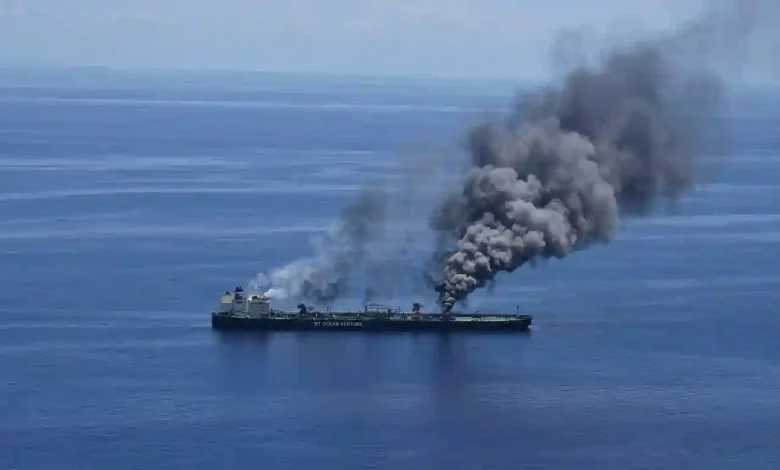
Table of Contents
Houthi rebels have plunged the Middle East into a fresh maritime security crisis, declaring an immediate naval blockade on Saudi Arabia while a projectile strike in the strategic Strait of Hormuz left a commercial product tanker ablaze. These twin developments represent a dramatic escalation in a region already destabilized by weeks of conflict. For the first time in years, the relative peace between Yemen’s Iran-backed Houthi movement and the Kingdom of Saudi Arabia has shattered, threatening global shipping lanes that handle billions of dollars in oil and goods. Simultaneously, the attack on the Maltese-flagged tanker Kavomaleas in the Strait of Hormuz underscores the extreme volatility facing commercial ships attempting to navigate these vital waterways.
As these twin crises unfold, the international community faces the chilling prospect of a double-chokepoint blockade. With the Houthis targeting the southern entrance to the Red Sea and Iranian-backed operations putting pressure on the Persian Gulf, the global shipping industry is entering uncharted waters. This article provides a comprehensive, deeply detailed analysis of the Houthi maritime embargo, the direct attack on the Kavomaleas in the Strait of Hormuz, and the cascading geopolitical and economic consequences of these events.
The Houthi Declaration: Demanding a Maritime Embargo
The situation escalated rapidly on Monday when the Houthi military spokesperson, Yahya Saree, released a video statement announcing an immediate maritime embargo against Saudi Arabia. Saree declared that the blockade was based on the equation of “an eye for an eye,” and was in direct retaliation for what the Houthis characterize as Saudi Arabia’s continued blockades against Yemeni ports and airports. Saree warned that any further escalation by Riyadh would be met with “a comprehensive and decisive escalation” from Houthi forces.
Adding weight to the declaration, Nasruddin Amer, the deputy head of the Houthi media office, posted on the social media platform X that the Bab el-Mandeb strait would be closed to Saudi-bound and Saudi-owned vessels. The Bab el-Mandeb, a 32-kilometer-wide strait situated at the southern tip of the Arabian Peninsula, serves as the gatekeeper to the Red Sea. Approximately 12% of all global maritime trade, including a fourth of global container trade, transits through this narrow passage en route to the Suez Canal. The Houthi declaration represents a major threat, adding to a string of maritime incidents, such as when another tanker seized in Gulf of Aden disrupted regional routes.
Behind the Escalation: A Broken Truce and Airport Strikes
The sudden flare-up between the Houthis and Saudi Arabia disrupts a fragile, de facto truce that had been largely maintained since 2022. Yemen’s civil war, which began in 2014 when Houthi rebels seized the capital, Sanaa, led to a protracted conflict that drew in a Saudi-led coalition in 2015. While a UN-brokered truce in 2022 brought a temporary halt to full-scale warfare, the political situation remained a frozen stalemate with Yemen divided into separate Houthi-administered and internationally-recognized government zones.
Tensions reached a breaking point when Sanaa International Airport, under Houthi control, was targeted by airstrikes. The internationally-recognized Yemeni government claimed responsibility for the strike, stating it was aimed at preventing an Iranian cargo plane from landing. However, the Houthis immediately blamed Saudi Arabia, pointing to the Kingdom’s leadership of the military coalition. In swift retaliation, Houthi forces launched strikes against Saudi Arabia’s Abha Airport, effectively ending years of quiet on the Saudi-Yemeni border and setting the stage for the newly declared maritime blockade.
The Burning Tanker in the Strait of Hormuz
While the Red Sea faces a looming blockade, the situation in the Strait of Hormuz has grown equally perilous. The United Kingdom Maritime Trade Operations (UKMTO) reported that a merchant vessel had caught fire after being struck by an unidentified projectile. The incident took place approximately 8 nautical miles northwest of Kumzar, Oman, a strategic location directly overlooking the Strait of Hormuz, where one-fifth of the world’s liquefied natural gas (LNG) and petroleum products traditionally transit.
The strike forced the crew to abandon ship as the fire raged out of control. According to the UKMTO, the crew members were successfully rescued by a local tugboat and are reported to be safe. However, the vessel was left unmanned and adrift, with the fire still burning. This dramatic incident is a direct consequence of the ongoing escalation between international powers vying for regional supremacy, heightening the broader Strait of Hormuz conflict that has simmered for months.
Details of the Attack on the Maltese-Flagged Kavomaleas
Maritime security firms, including Vanguard and PurpleTrac, have identified the stricken vessel as the Kavomaleas, a 2025-built, Maltese-flagged product tanker. The vessel is operated by Dynacom Tankers Management, a Greek shipping company controlled by the prominent shipowner George Procopiou. Procopiou has been noted in maritime reports for continuing to trade tankers through the Strait of Hormuz despite the severe geopolitical risks associated with the corridor in recent months.
The Joint Maritime Information Centre (JMIC) confirmed that the threat level in the Strait remains at “Severe,” with deliberate hostile actions assessed as highly likely. The JMIC had recorded numerous separate Iranian-backed attacks on shipping in the Strait of Hormuz. The attack on the Kavomaleas marks another dangerous data point, illustrating that even ships with turned-off Automatic Identification Systems (AIS) remain vulnerable to high-tech projectile strikes and aggressive routing pressure from regional actors.
Regional Implications of the Twin Maritime Crises
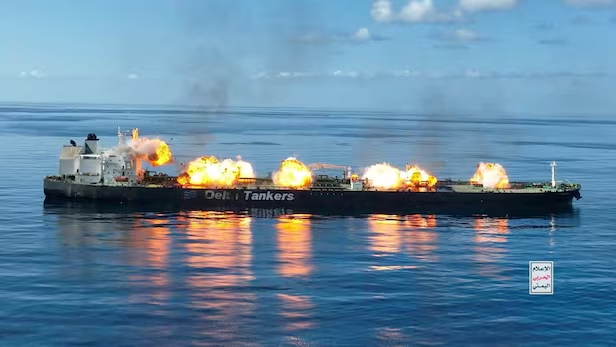
The simultaneous crises in the Bab el-Mandeb and the Strait of Hormuz place global commerce in an incredibly tight squeeze. Never before have both chokepoints been threatened so explicitly at the exact same time. The following comparison table outlines the physical and geopolitical attributes of these two critical waterways, illustrating the scale of the threat facing international maritime shipping:
| Feature / Detail | Bab el-Mandeb Strait | Strait of Hormuz |
|---|---|---|
| Geographic Location | Connects the Red Sea to the Gulf of Aden | Connects the Persian Gulf to the Gulf of Oman |
| Primary Regional Controller(s) | Bordered by Yemen, Djibouti, and Eritrea | Bordered by Iran and Oman |
| Global Trade Volume | Approx. 12% of global maritime trade (gateway to Suez Canal) | Over 20% of global petroleum and liquid natural gas (LNG) |
| Primary Strategic Users | Saudi Arabia (Red Sea ports), Egypt, Europe, Asia | Saudi Arabia, UAE, Iraq, Kuwait, Qatar, Iran |
| Recent Incidents | Immediate Houthi-declared maritime embargo against Saudi Arabia | Missile/projectile strike on Maltese-flagged tanker Kavomaleas |
| Key Alternatives | Cape of Good Hope route (adds 10-14 transit days) | Saudi East-West Pipeline to Red Sea (Yanbu port) |
With both paths compromised, the risk of naval blockades, reminiscent of previous blockades in the Persian Gulf, could cripple maritime transport. Shipping lines must now choose between navigating high-risk war zones or bypassing the region entirely, adding thousands of miles and weeks of transit time to their journeys.
Impact on Saudi Oil Supply Routes
The Houthi embargo poses an immediate and acute threat to Saudi Arabia’s strategic energy mitigation plans. Over the past year, as Iran intensified its grip on the Strait of Hormuz, Riyadh increasingly relied on its East-West Pipeline. This pipeline allows Saudi Arabia to bypass the Persian Gulf entirely, transporting millions of barrels of crude oil daily across the Arabian Peninsula to the port of Yanbu on the Red Sea. From Yanbu, tankers could safely transport Saudi crude to international customers via the Red Sea and the Bab el-Mandeb strait.
However, the Houthi-declared embargo on Saudi-bound and Saudi-flagged shipping threatens this very lifeline. By declaring the Bab el-Mandeb closed to Saudi vessels, the Houthis have essentially targeted the exit point of the East-West Pipeline’s marine supply chain. This move effectively traps Saudi oil on both sides of the peninsula: blocked by Iran in the Persian Gulf, and blocked by the Houthis in the Red Sea. This coordinated pressure highlights the strategic synergy between Tehran and its Yemeni allies, designed to isolate Saudi Arabia economically.
Broader Geopolitical Context: US-Iran Escalation
The maritime conflict is deeply intertwined with the broader confrontation between the United States and Iran. Observers note that the Houthis, as a core member of Iran’s “Axis of Resistance,” are coordinating their maneuvers with Tehran’s broader campaign to pressure the West. These tensions have recently translated into kinetic clashes, with strategic military airstrikes intensifying across the Middle East daily.
In response to attacks on coalition logistics and personnel, foreign military forces have executed retaliatory bombardments. These hostilities have resulted in several casualties, particularly after recent strikes on Allied personnel stationing in the theater. The United States military, via CENTCOM, has continued to launch waves of airstrikes against Houthi radar installations, mobile missile launchers, and drone assembly facilities in Yemen, yet these defensive operations have clearly failed to deter the Houthi leadership from declaring this ambitious embargo against Saudi Arabia.
The Threat to Global Energy Security and Shipping Rates
The economic ramifications of these dual maritime crises are reverberating through global financial markets. Marine insurance underwriters have already reacted to the attack on the Kavomaleas and the Houthi declaration by raising “war risk” premiums to unprecedented levels. For many shipping companies, the cost of securing coverage for transits through the Red Sea or the Persian Gulf has become economically prohibitive, forcing them to detour around the Cape of Good Hope.
This massive shift in global shipping traffic has triggered a sharp rise in dry bulk and container freight rates. As vessels are forced to take longer routes, the global supply of available shipping capacity is squeezed, leading to delays and higher costs for consumer goods, raw materials, and agricultural products. Financial analysts and global market observers, including those highlighting how a severe global economic risk could trigger systemic crises, warn of severe long-term impacts on global supply chains if the blockades are sustained.
Future Outlook and International Diplomatic Efforts
As the burning wreckage of the Kavomaleas drifts in the Strait of Hormuz and Houthi forces prepare to enforce their embargo, diplomatic channels are working at a feverish pace. Oman, which shares borders with both Yemen and the Strait of Hormuz, is attempting to broker a diplomatic de-escalation between the warring factions. Omani officials are urging the Houthis to retract their blockade threat in exchange for a resumption of localized talks regarding the status of Yemeni airports and civil servant salaries.
However, the path to peace is fraught with obstacles. With the United States and Iran locked in a cycle of escalatory military actions, local conflicts are increasingly absorbed into the larger geopolitical chess game. If Saudi Arabia decides to respond to the Houthi maritime embargo with direct military force in Yemen, it could reignite a full-scale regional war, ending any hope of preserving the 2022 truce. The coming days will be critical in determining whether international diplomacy can secure these vital global arteries, or if the world must prepare for a prolonged era of restricted maritime navigation and heightened global energy insecurity.