Gasoline prices climb above $4 amid Middle East conflict 2026
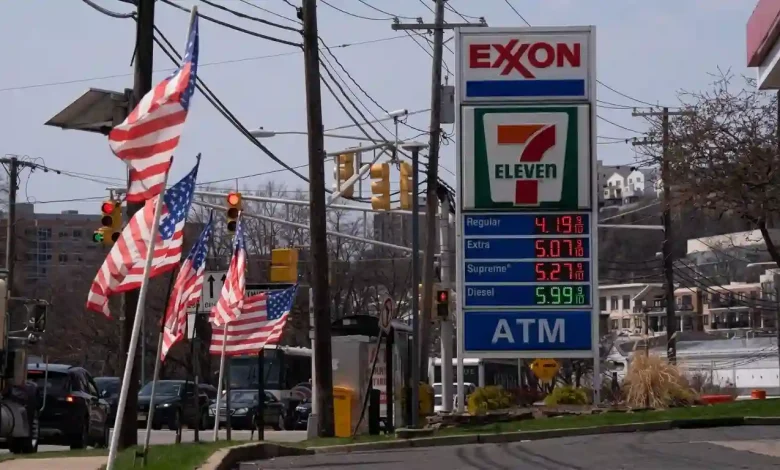
Table of Contents
Gasoline prices in the United States have crossed the painful threshold of $4 per gallon, presenting a stark reversal from the brief respite consumers enjoyed during the early summer months. According to daily fuel data published by the American Automobile Association (AAA), the national average for regular unleaded gasoline settled at $4.003 per gallon. For millions of American drivers, crossing this mark represents more than just a psychological barrier; it signals a direct squeeze on household budgets at a time when other core living expenses remain stubbornly elevated.
Only weeks earlier, during the month of June, retail fuel prices had drifted lower, dropping to a national average of roughly $3.79 per gallon. This drop was primarily driven by a temporary easing of crude oil prices and high operational rates at domestic refineries. However, the subsequent rebound in early July has been both rapid and relentless. This swift price appreciation is not an isolated event but rather a symptom of a broader, systemic convergence of geopolitical shocks, domestic refinery disruptions, and structurally tight inventories. As the summer driving season reaches its traditional mid-to-late peak, gasoline demand remains highly resilient. Families are continuing to travel, and transport networks are operating at full capacity. This steady consumption, juxtaposed against a sharply constrained supply side, has created the perfect environment for retail fuel prices to surge back over the $4 threshold.
Gasoline :The Rebound of Fuel Prices Beyond the $4-a-Gallon Mark
The return of high gasoline prices has taken many market observers by surprise, particularly given the temporary stabilization of global crude markets in the preceding months. While crude oil represents the single largest component cost of finished gasoline, the current price spiral highlights a growing decoupling between the cost of unrefined petroleum and the final price paid by consumers at the pump. This divergence is driven primarily by the high premiums commanded by refiners who convert heavy and sweet crudes into finished motor fuels. Retail margins have also expanded as station owners anticipate higher wholesale replacement costs in the coming weeks.
Regionally, the price burden is not evenly distributed. In states like California, Washington, and Oregon, prices have jumped well past the $5.00 mark, driven by stringent state-level environmental regulations, localized refining deficits, and high fuel taxes. Meanwhile, the Midwest and Gulf Coast states, which benefit from proximity to major refining centers and pipelines, are seeing prices climb into the high $3.70s and $3.80s, dragging the national average past the $4.003 mark. Regardless of regional variation, the upward trend is uniform, showing no signs of slowing down as external market pressures continue to build.
The U.S.-Iran Conflict and the Strait of Hormuz Chokepoint
This fuel-price rebound is tightly coupled with intensifying military actions in the Persian Gulf. As the U.S. airstrikes against Iran enter seventh night of ongoing hostilities, maritime traffic in the region is experiencing severe disruptions. The conflict has escalated beyond targeted skirmishes into a full-scale regional crisis, directly threatening the transport corridors that handle a significant share of the world’s energy trade.
The escalation has created unprecedented anxiety as Iran airstrikes escalate in response, targeting U.S. military assets. Concurrently, reports indicate that Iran adapts ballistic missiles to evade U.S. defensive systems, complicating security for transport vessels in the Strait of Hormuz. Iranian authorities have declared that maritime traffic through the Strait of Hormuz has plummeted close to zero, asserting that the strait will remain blocked as long as U.S. military activities persist in their territorial vicinity.
This situation marks the most intense seventh night of U.S. military engagement in the area, significantly squeezing global oil lanes. The Strait of Hormuz acts as the ultimate throat of the global energy sector. Over 20 million barrels of crude oil and refined petroleum products flow through this narrow waterway daily, representing roughly a fifth of global consumption. With shipping insurance rates skyrocketing and major tankers refusing to transit the area, the maritime blockade has triggered immediate panic across global supply chains.
Beyond the direct theater of war, international diplomatic tensions are soaring, especially after an Iran-backed proxy banned by UK triggered a wider crackdown on aligned regional groups. The diplomatic isolation of these actors, combined with direct kinetic engagement by Western forces, has effectively shut down key Persian Gulf supply routes, forcing traders and refiners to look for alternative, costlier options.
The Refining Bottleneck: Why Fuels are Spiking Faster Than Crude
While crude oil prices have indeed drifted higher, nearing $90 a barrel for Brent, the real story lies in the retail fuel markets, where gasoline and diesel are appreciating far faster than crude itself. According to financial analysts at Morgan Stanley, the core issue facing the global energy market is not necessarily an absolute shortage of crude oil, but rather a lack of processing capacity.
In a recent note to clients, Morgan Stanley analysts led by Martijn Rats observed that the “real bottleneck” in the global energy system is refining, more so than crude supply. “For now, there isn’t enough refining capacity running to turn the available crude into product,” the analysts wrote. This imbalance “keeps a lid on crude, and at the same time leaves product markets scrambling”.
This refining deficit is driven by several overlapping factors: refineries globally have been running at maximum utilization for several years, leading to deferred maintenance and an elevated risk of unplanned outages; environmental regulations and a structural shift toward renewable energy sources have discouraged capital investment in new fossil-fuel refining infrastructure; and the loss of Russian refining capacity, heavily impacted by ongoing conflict and targeting in Europe, has removed hundreds of thousands of barrels of daily diesel and gasoline output from the global pool. Consequently, when a sudden supply shock like the U.S.-Iran war occurs, the system has no spare margin. Refineries simply cannot scale up production fast enough to offset the missing refined imports, causing pump prices to spike regardless of minor fluctuations in the price of crude oil.
Global Impact: A Squeeze on European Diesel and Road Fuels
The fuel crisis is by no means confined to North America. Across the Atlantic, European countries are grappling with an equally severe squeeze on road fuels, particularly diesel. In Europe, gasoline prices are rapidly approaching seasonal highs not seen since the immediate aftermath of the invasion of Ukraine in 2022. The structural dependence of European logistics on diesel means that any disruption in refined product flows immediately ripples through the commercial transport network, raising shipping tariffs and food transport costs across the continent.
Europe has historically been highly dependent on diesel imports to fuel its massive commercial transport and trucking sectors. With supply lines from the Middle East severely compromised due to the closure of the Strait of Hormuz and the Red Sea route, European inventories are declining rapidly. Morgan Stanley’s supply and demand modeling points toward European diesel stockpiles falling to multi-year lows by the end of the year.
The lack of alternative supply routes means that Europe is forced to compete directly with Latin America and Asia for U.S.-refined products. This international competition drives up prices for consumers globally, linking American pump prices directly to European deficits. The situation is further exacerbated by the physical distance and extended shipping times required to reroute products around the Cape of Good Hope, adding immense freight costs to every barrel delivered.
| Energy Metric | Pre-Escalation Average (June 2026) | Current Average (July 2026) | Historical Peak Benchmark |
|---|---|---|---|
| U.S. Regular Unleaded Gas | $3.790 / gal | $4.003 / gal | $5.016 / gal (June 2022) |
| Brent Crude Oil (per barrel) | $78.50 – $82.00 | $89.50 – $91.00 | $122.00 (March 2022) |
| Strait of Hormuz Tanker Traffic | Normal Operating Volume | Severely Restricted (Near Zero) | Normal Operating Volume |
| European Diesel Inventories | 5-Year Historical Average | Multi-Year Low Projections | Record Deficit Levels |
Domestic Political Fallout and the Peak Summer Driving Season
This supply squeeze is occurring when American consumer demand is typically at its peak, particularly following the heavy driving demand from the July 4th holiday period, which was already impacted by historic U.S. heat wave events across the country. Extreme temperatures not only boost consumer demand for fuel-intensive travel but also strain electrical grids, occasionally forcing refineries to curtail operations to avoid blackouts.
The political stakes of $4-a-gallon gas are incredibly high. Historically, rising fuel costs have served as a potent driver of voter dissatisfaction. High gasoline prices function as a direct tax on working-class households, eroding disposable income and dragging down consumer confidence. Political analysts point out that persistently high fuel prices could heavily impact upcoming congressional and midterm elections, where control of key legislative bodies hangs in the balance.
For the administration, the options are limited. Releasing more crude oil from the Strategic Petroleum Reserve (SPR) offers little relief if the domestic refining sector is already running at 95%+ capacity and cannot process that crude into usable gasoline. This realization has left policymakers scrambling for alternative measures, though few viable short-term solutions exist on the supply side.
Inflationary Threats and Central Bank Dilemmas
Beyond the immediate political landscape, the primary macroeconomic threat posed by the fuel spike is inflation. Central banks around the globe, including the Federal Reserve and the European Central Bank, have spent the past several years aggressively raising interest rates to curb post-pandemic inflation. Just as inflation metrics began to stabilize near target levels, this fresh energy shock threatens to undo those gains.
High energy costs have a cascading effect on the broader economy. Because diesel and gasoline power the global logistical network, a spike in fuel prices instantly raises the cost of transporting food, manufacturing inputs, and consumer goods. This leads to secondary inflation spikes across multiple non-energy sectors. Retailers, facing higher shipping bills, are forced to pass these expenses directly to consumers, which risks triggering a wage-price spiral.
This renewed inflationary pressure comes at a delicate time for the domestic economy. High energy costs compound the pressure on a labor market that is already experiencing instability, marked by corporate restructuring and AI-driven layoffs across multiple sectors. If central banks are forced to keep interest rates higher for longer to combat energy-driven inflation, the likelihood of a deeper economic slowdown increases significantly, making the elusive “soft landing” nearly impossible to achieve.
The Outlook: Balancing Depleted Stockpiles and Refined Yields
In addition to geopolitical threats, domestic refineries have also had to contend with erratic weather patterns, including sudden storms and extreme wildfire risk that have caused localized power outages across refining corridors. These climate-related disruptions, when combined with geopolitical friction, leave the global energy market with virtually no safety margin. Any unplanned outage at a major refinery on the Gulf Coast could now send gasoline prices soaring by an additional 20 to 30 cents within days.
Moving forward, the path of fuel prices will depend heavily on the duration of the U.S.-Iran conflict and the speed at which refining capacities can adapt. Until the maritime transit corridors are secured or global refining output increases, drivers should prepare for a sustained period of high pump prices. Central banks will remain on high alert, watching for signs that this energy crunch is feeding into core inflation metrics. For now, the road ahead remains highly volatile, with the global economy once again vulnerable to the shifting winds of Middle Eastern geopolitics.




One Comment