Nashville Zoo Fights Proposed Adjacent Data Center
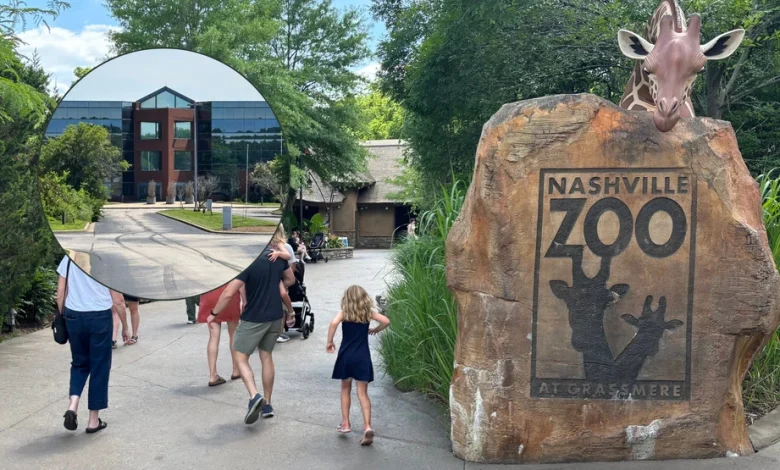
Nashville Zoo, Tennessee’s premier wildlife sanctuary and top regional attraction, has found itself at the center of an unprecedented environmental and planning dispute. The institution is aggressively moving to block the construction of a proposed 69,000-square-foot data center slated for development directly adjacent to its property. This high-stakes conflict highlights the growing friction between the rapid expansion of physical digital infrastructure—specifically artificial intelligence (AI) data centers—and the preservation of local ecosystems and delicate wildlife habitats.
Atlanta-based technology infrastructure provider DC Blox has filed grading and building permits with Metro Nashville officials to construct a single-story, 69,220-square-foot facility at 648 Grassmere Park. Located on a 23.5-acre parcel currently owned by MarketStreet Enterprises, the development would replace two existing office buildings. While tech developers emphasize the standard economic benefits and technological necessity of such regional hubs, zoo leadership and conservation experts warn that placing an industrial complex of this magnitude so close to vulnerable animals represents an ecological hazard with unpredictable, potentially devastating consequences.
Nashville Zoo Confronts Impending Industrial Threat
The sudden revelation of DC Blox’s plans has mobilized the leadership of the Nashville Zoo. Zoo President and CEO Rick Schwartz expressed deep concern and unwavering opposition to the development. “We are vehemently opposed to having a data center so close to animals,” Schwartz stated. This opposition is not a generalized resistance to technological progress or digital infrastructure. Rather, it represents a targeted defense of a highly sensitive biological sanctuary. The Nashville Zoo houses over 3,000 animals across 188 acres of land, serving as both a primary tourist destination welcoming over 1.4 million visitors annually and an international beacon for wildlife conservation. The introduction of heavy, continuous industrial processes directly adjacent to their borders threatens decades of delicate conservation efforts and carefully calibrated habitats.
Why the Proposed DC Blox Facility Has Sparked Nationwide Outrage
To understand the scale of public concern, one must examine the broader context of data center developments across the United States. Traditionally, data centers—which house the specialized computer servers that power cloud computing, software-as-a-service, and artificial intelligence models—are constructed in heavy industrial corridors, away from dense residential areas and ecological sanctuaries. They are, by definition, heavy industrial facilities. They require tremendous electricity, continuous liquid cooling systems, large backup diesel generators, and vast mechanical fans that run non-stop. Siting such an enterprise adjacent to an active zoological park is almost entirely unprecedented in modern urban planning, triggering alarms from zoologists, environmentalists, and local community leaders alike.
The Proximity Problem: Fifty Yards from Precious Wildlife
The planned location of the DC Blox data center at 648 Grassmere Park shares a direct boundary line with the zoo. Crucially, the physical footprint of the 69,220-square-foot facility would put it a mere 50 yards—roughly 150 feet—from several of the zoo’s primary animal holding enclosures and public exhibits. In zoological management, 50 yards is an incredibly narrow buffer zone. This distance provides almost no protection against structural vibrations, low-frequency sound, exhaust fumes, or ambient light. Standard concrete sound barriers and decorative vegetative buffers, which are often proposed by developers as mitigation strategies, are ineffective against the persistent, long-wave acoustic and atmospheric disruptions associated with high-throughput computing centers.
Clouded Leopards and Okapis: Sensitive Species at Direct Risk
Among the animal populations most vulnerable to this planned industrial site is the zoo’s world-renowned clouded leopard breeding program. Clouded leopards, which hail originally from the dense forests of Southeast Asia, are notorious for their high sensitivity to environmental stressors. Nashville Zoo has bred more clouded leopards than any other institution globally, holding some of the most genetically valuable individuals of this endangered species in the world population. These leopards are highly territorial and reactive; elevated noise levels can severely impair their breeding habits, induce high stress, and even lead to mother leopards abandoning or harming their offspring.
In addition, the zoo has been preparing to introduce okapis—a rare, elusive mammal from the Congo rainforest. Okapis possess exceptionally large ears and an incredibly refined sense of hearing, which they use to navigate and detect predators in the wild. Introducing a skittish species like the okapi to an environment adjacent to a humming industrial facility would jeopardize their health and prevent successful acclimatization.
Assessing the Sound and Light Impacts of 24/7 Data Centers
The mechanical realities of a modern data center mean that the adjacent habitats would be subjected to continuous, 24/7 environmental perturbations. Unlike standard office buildings that empty out at night, data centers operate at peak capacity around the clock. The heat generated by thousands of stacked servers is immense, requiring powerful cooling systems that never shut down. These mechanical systems present dual threats of acoustic and visual pollution that are entirely incompatible with wildlife husbandry.
The Constant Hum: Acoustic Hazards of Cooling Infrastructure
The acoustic signature of a data center is characterized by a low-frequency hum, generated by the constant rotation of cooling fans, water chillers, and HVAC compressors. This continuous hum typically ranges between 70 to 85 decibels near the source, which can carry over significant distances. For animals, who possess sensory ranges far exceeding those of humans, chronic exposure to low-frequency noise is associated with elevated systemic cortisol levels, sleep fragmentation, and immune suppression. Furthermore, the facility must periodically test its high-output backup diesel generators. These tests produce sudden, high-decibel acoustic shocks that can mimic explosions or thunder, risking widespread panic and physical injury among flight-prone herd animals.
Disruption of Photo Periods and Circadian Rhythms
Visual pollution is another major concern. Many of the exotic species at the Nashville Zoo rely on precise photoperiods—the natural cycle of daylight and darkness—to regulate their hormonal balances, reproductive cycles, and seasonal behaviors. Rick Schwartz emphasized that “the light pollution, all of those things affect animals, affect their photo periods, affect their life cycles”. The security lighting, perimeter floodlights, and warning indicators required for a high-security data center would bleed over the boundary line, artificially illuminating the night sky and disrupting the circadian rhythms of nocturnal and diurnal animals alike.
Environmental and Community Strain: Water, Power, and Resources
Beyond the immediate localized impacts on animal behavior, the proposed DC Blox facility raises significant regional ecological questions. Data centers are notoriously resource-intensive. A facility of this scale can consume hundreds of thousands of gallons of water daily, primarily utilizing evaporative cooling towers to keep servers within safe operating temperatures. This massive water draw can strain South Nashville’s municipal water infrastructure and potentially impact local watersheds. Warm, chemically treated discharge water also presents filtration challenges, posing risks to nearby natural streams and runoff areas. Furthermore, the local power grid, managed by the Tennessee Valley Authority (TVA), is already experiencing severe constraints due to regional population growth. Adding a massive, non-stop industrial energy user threatens to strain regional grids and drive up local utility costs.
| Category | Proposed Data Center (DC Blox Project) | Nashville Zoo Ecological Baseline |
|---|---|---|
| Facility Size & Land Area | 69,220-square-foot single-story building on 23.5 acres | 188-acre conservation park supporting 3,000+ animals |
| Physical Proximity | Adjoining the eastern boundary (648 Grassmere Park) | Animal habitats situated as close as 50 yards from the boundary line |
| Operational Features & Infrastructure | Industrial HVAC cooling units, backup diesel generators, high-voltage substations | Highly controlled acoustic environments, natural photoperiods, sensitive breeding zones |
| Primary Key Risks Identified | Continuous low-frequency noise (up to 85-100 dB), light spillage, heat islands, grid drain | Disruption of mating behaviors, elevated cortisol in fauna, habitat abandonment |
| Critical Species Affected | Digital infrastructure servers and network management units | Clouded leopards (world-leading breeding line), okapi, Southeast Asian avifauna |
Public Resistance and the Massive Petition Drive
The local community has responded with rapid, intense solidarity. Within days of the zoo’s leadership voicing their concerns, an official online petition was launched on Change.org to raise public awareness and gather signatures opposing the industrial zoning permits. The response was unprecedented: the petition quickly amassed over 150,000 signatures, climbing past 160,000 as community members, conservationists, and regional leaders added their names. This massive groundswell of public opposition highlights the deep cultural value the community places on the zoo. Residents of the surrounding South Nashville neighborhoods have also joined the fight, citing concerns over increased commercial traffic, potential declines in residential property values, and the aesthetic erosion of a historic conservation area.
The Battle for Municipal Approval: Zoning and Permit Status
Currently, the proposed data center project remains in its preliminary developmental stages. The 23.5-acre property at 648 Grassmere Park has not yet been sold by MarketStreet Enterprises to DC Blox. The developers are in the process of seeking the necessary grading and construction permits from Metro Nashville departments. However, because the site is located in an office park zone, the transition to a high-density industrial data center has drawn sharp scrutiny from local planners. Nashville Mayor Freddie O’Connell’s administration and the Metro Nashville Council are under heavy pressure to review the zoning ordinances and demand comprehensive, independent environmental and acoustic impact assessments before granting any variances or permits. Opponents argue that allowing such construction without rigorous ecological studies represents an egregious planning failure.
Navigating the Intersection of Technology and Conservation
The clash between the Nashville Zoo and DC Blox is a localized manifestation of a global challenge: balancing the unstoppable march of digital transformation with environmental preservation. As our society relies increasingly on artificial intelligence, cloud storage, and rapid telecommunications, the physical infrastructure of the internet must expand. However, this expansion cannot come at the expense of our planet’s most vulnerable inhabitants. The current zoning battle demonstrates that tech developers must implement proactive, ethical site-selection criteria. Siting heavy industrial projects adjacent to wildlife sanctuaries, national parks, or active breeding facilities is fundamentally unsustainable. The resolution of this conflict in Middle Tennessee may well set a major legal and planning precedent for how municipalities worldwide regulate tech infrastructure in the future.