Robin Pendery: Denali Ranger Dies in Crevasse Fall
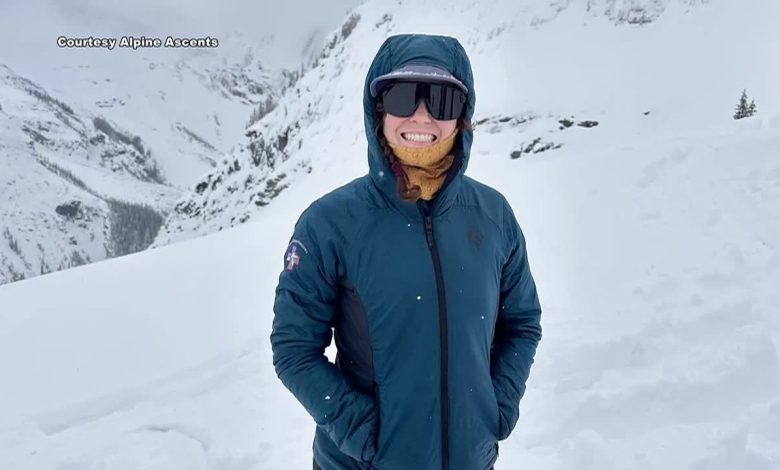
Robin Pendery, a seasonal mountaineering ranger with the National Park Service, tragically died on Thursday, June 4, 2026, after falling into a deep crevasse near the 14,000-Foot Camp on Mount McKinley. The National Park Service (NPS) confirmed the devastating incident in an official statement released on Friday, expressing profound heartbreak over the loss of a key member of the park’s specialized search and rescue team. At the time of the fatal fall, Pendery was assigned to climbing patrol duties in one of the most demanding alpine environments in North America. Her sudden passing marks the fourth mountaineering death on the peak within the span of a single week, underscoring a remarkably treacherous start to the 2026 climbing season and illustrating the severe, unpredictable dangers faced by those who dedicate their lives to protecting high-altitude climbers.
The Fatal Incident Near 14,000-Foot Camp
On the afternoon of Thursday, June 4, 2026, at approximately 2:00 p.m., the tranquil but hazardous landscape around Mount McKinley’s 14,000-Foot Camp was fractured by an emergency. Ranger Robin Pendery was on a routine climbing patrol near the camp when she fell into a glacier crevasse. According to the official safety report first reported by CBS News, search and rescue personnel stationed at the camp responded immediately to the location. Despite their rapid deployment of complex crevasse rescue hauling systems and immediate medical interventions on-site, the injuries and conditions sustained during the fall were too severe, and Pendery did not survive.
Climbing patrols on Mount McKinley are highly coordinated operations designed to assist the public, monitor route conditions, and maintain emergency preparedness. Rangers travel in roped teams to mitigate glacier hazards, yet the ever-shifting nature of glacial ice means that even the most calculated steps carry inherent risks. The NPS has launched a comprehensive investigation to determine the exact sequence of events, equipment configuration, and environmental variables that contributed to this tragic fall, aiming to extract critical safety insights from the tragedy.
Robin Pendery: A Legacy of Courage, Medicine, and Alpine Expertise
Robin Pendery, originally from Enumclaw, Washington, lived a life defined by a deep passion for the wilderness, alpine safety, and human care. Enumclaw, situated in the shadow of Mount Rainier, served as the ideal breeding ground for her legendary love of high-altitude environments. Her mountaineering journey was not a mere hobby; it was a career path built on a decade of rigorous training, leadership, and service. She joined the Denali National Park and Preserve mountaineering staff as a seasonal ranger in 2024, bringing an elite level of experience to the legendary Alaska Range.
Before her tenure with the National Park Service, Pendery established a sterling reputation in the outdoor community of the Pacific Northwest. Beginning in 2015, she worked extensively as a professional mountain guide for Alpine Ascents International, a ski patroller, and a certified avalanche forecaster. Her colleagues remember her as an energetic, exceptionally skilled professional who possessed a rare combination of technical climbing mastery and an approachable, calming presence. Whether leading clients up glacial slopes or analyzing snowpack stability, she prioritized safety, education, and team cohesion above all else.
Bridging the Worlds of Mountain Rescue and Emergency Medicine
What set Pendery apart as an elite mountaineer was her remarkable capability to bridge the gap between high-altitude rescue and professional medical care. During the winter off-season, she worked full-time as an emergency department (ED) nurse in Seattle, Washington. This dual professional identity made her an invaluable asset to the Denali ranger program. High-altitude search and rescue operations often require rangers to administer complex, trauma-level medical interventions under extreme conditions, where help is hours or even days away due to weather.
As an ED nurse, Pendery was trained to handle high-stress, chaotic medical emergencies with precision and speed. On the mountain, this translated to a level of operational preparedness that saved lives. Whether addressing severe frostbite, high-altitude pulmonary edema (HAPE), or traumatic injuries from falls, her presence at the 14,000-Foot Camp provided a critical safety net for hundreds of climbers attempting the summit. Her loss is felt not only by the mountaineering community but also by her healthcare colleagues in Seattle, who admired her dedication to both fields.
The Critical Role of the 14,000-Foot Camp
The 14,000-Foot Camp, technically situated at an elevation of 14,200 feet, is the beating heart of the West Buttress climbing route on Mount McKinley. Far from a simple collection of tents, it serves as an advanced high-altitude operational base staffed continuously by mountaineering rangers and volunteer medical personnel throughout the peak season from late April through July. Accessible by specialized high-altitude helicopters under clear weather conditions, the camp is equipped with communication repeaters, emergency medical supplies, and temporary shelters used to stabilize injured climbers before evacuation.
In a field update published by the National Park Service on Monday, June 1, 2026, the agency noted that Robin Pendery and Ranger Chelsea Bomba were currently “in charge” of managing the 14,000-Foot Camp. The responsibilities of running this camp are immense. Rangers at this station must coordinate rescue operations on the upper mountain, monitor extreme weather patterns, brief climbing teams on current route safety, and manage the complex logistics of high-altitude waste and resource distribution. To be placed in charge of the 14k camp is a testament to a ranger’s exceptional leadership, technical competence, and administrative reliability.
Understanding the Severe Crevasse Hazards of Mount McKinley
Crevasses represent one of the most persistent and terrifying hazards of glacier travel on Mount McKinley. The massive Kahiltna Glacier, which serves as the primary approach for the West Buttress route, is a dynamic river of ice flowing over uneven, rocky bedrock. As the ice bends and stretches under the pull of gravity, immense tension cracks, or crevasses, open up. These chasms can range from narrow cracks to massive, bottomless voids hundreds of feet deep.
The primary danger of crevasses lies in their concealment. Throughout the winter and spring, heavy snowfall covers these open chasms, creating thin, fragile “snow bridges” that appear solid to the naked eye. As temperatures rise during the late spring and summer months, these snow bridges undergo isothermal warming, weakening their structural integrity. A bridge that supported a roped team in May can easily collapse under a single climber’s weight in June. Navigating this terrain requires constant vigilance, precise route selection, and mastery of self-arrest and team hauling techniques to pull a fallen teammate out of the ice before hypothermia or trauma takes hold.
A Deadly 2026 Season on North America’s Highest Peak
The 2026 climbing season on Mount McKinley has started in a remarkably tragic fashion. The mountain, which was officially renamed Mount McKinley in 2025 by federal action while still widely known colloquially as Denali, attracts approximately 1,000 registered climbers annually, predominantly between late May and early July. However, the extreme weather, severe high altitude, and technically demanding routes make it one of the deadliest peaks in the world, with over 130 recorded fatalities since 1903. This season has seen an alarmingly high concentration of severe incidents within an incredibly short timeframe.
Rangers and safety officials have urged climbing teams to exercise extreme caution, perform rigorous self-assessments, and utilize additional protective measures such as snow pickets on exposed traverses. The table below outlines the major fatal mountaineering incidents on Mount McKinley during the harrowing early weeks of the 2026 season, highlighting the severe environmental challenges that mountaineers and rangers must navigate.
| Date of Incident | Location on Route | Type of Alpine Hazard | Casualties and Rescue Outcome |
|---|---|---|---|
| May 28, 2026 | Denali Pass / “The Autobahn” (18,200 ft) | Roped team cascade fall on 45-degree hard blue ice | 3 fatalities (Inese Pučeka, Vija Olte, Renārs Kunigs-Salaks); 1 critically injured climber rescued via long-line helicopter extraction (Mārtiņš Bilzēns). |
| June 4, 2026 | Near 14,000-Foot Camp (14,200 ft) | Glacial crevasse collapse during climbing patrol | 1 fatality (Seasonal Mountaineering Ranger Robin Pendery); immediate on-site rescue efforts unsuccessful. |
The Catastrophic Latvian Expedition Fall on the Autobahn
Just one week prior to the loss of Ranger Robin Pendery, the mountaineering community was devastated by another massive tragedy on the same peak. On Wednesday, May 27, 2026, a seven-member Latvian national expedition was ascending the classic West Buttress route, positioning themselves less than 2,000 feet from the 20,310-foot summit. While traversing a notoriously dangerous, 45-degree slope of hard blue ice just below Denali Pass (18,200 feet), known internationally by guides as “The Autobahn,” a catastrophic roped-team cascade fall occurred.
The fall initiated a chain reaction, sliding four climbers approximately 300 meters down the steep, unforgiving face of ice and snow. Due to severe, turbulent weather and extreme winds, high-altitude rescue helicopters were initially unable to land. On Thursday afternoon, May 28, Denali National Park’s search and rescue team successfully performed a daring, high-altitude long-line extraction to save Mārtiņš Bilzēns, who was evacuated in critical condition. Tragically, three elite Latvian climbers—Inese Pučeka, Vija Olte, and Renārs Kunigs-Salaks—perished in the fall, marking one of the worst single-day climbing disasters on the mountain in years.
Rescue Efforts and the Active National Park Service Investigation
Following the crevasse fall on Thursday afternoon, park search and rescue units immediately initiated their emergency protocols. The proximity of the accident to the 14,000-Foot Camp allowed other rangers to reach the scene within minutes. However, glacier crevasse extractions are extraordinarily complex. The extreme cold within the ice chasm, combined with potential impact trauma against solid ice walls and the risk of the victim becoming wedged, creates a highly compressed timeline for survival. Despite the heroic efforts of her colleagues, Pendery succumbed to her injuries.
The National Park Service, in conjunction with occupational safety teams and wilderness accident investigators, has launched an active investigation into the incident. These rigorous investigations are standard procedure following any line-of-duty death. Investigators will analyze the route conditions at the time, the structural state of the specific crevasse snow bridge, the performance of the climbing and safety gear, and the communications timeline. The goal is to piece together a precise understanding of the accident, which will be compiled into an official report to help refine glacier travel protocols and safety standards for rangers and climbers worldwide.
Reflecting on the Sacred Bond of Mountaineering Rangers
The loss of Robin Pendery has left an irreplaceable void in the tight-knit family of mountaineering rangers. Denali National Park and Preserve Superintendent Brooke Merrell expressed the collective heartbreak of the agency in a statement on Friday, stating, “We are heartbroken by the loss of a member of our Denali family. Our mountaineering rangers dedicate themselves to serving visitors and helping others in one of the most challenging environments in the world. Today, we mourn the loss of a valued colleague, friend and teammate. Our thoughts are with Robin’s family and loved ones.”
Mountaineering rangers share a unique and sacred bond. They live isolated for weeks at a time in small, wind-battered tents on freezing glaciers, depending entirely on each other for survival. They are a rare breed of public servants who possess both the physical elite-level capacity to climb the world’s most brutal peaks and the compassionate drive to save others. Robin Pendery’s legacy as a mountain guide, a life-saving emergency department nurse, and a dedicated National Park Service ranger represents the absolute pinnacle of this noble calling. Her courage, medical expertise, and profound love for the high peaks will continue to inspire those who step onto the icy slopes of Mount McKinley.