Beijing Hikes: Exploring the Great Wall’s Wild Sections
Introduction
Beijing, a city known for its bustling urban life and historical landmarks, also serves as a gateway to some of the most stunning natural landscapes in China. Among these, the Great Wall stands as a testament to human ingenuity and perseverance. While many sections of the Wall have been meticulously restored and attract large crowds, the “wild” sections offer a different experience—one of solitude, challenge, and raw beauty. These unrestored portions of the Wall, often more difficult to access, provide a unique glimpse into the Wall’s history and the natural environment surrounding it. This article delves into the experience of hiking one of these wild sections near Beijing, exploring the challenges, rewards, and significance of preserving these historical treasures.
Meeting Old Cheng: Your Guide to the Wild Wall
The journey began in the Huairou district, north of Beijing, where our news team met Old Cheng, a 70-year-old local resident who has spent much of his life exploring and maintaining the wild sections of the Great Wall. Cheng, a native of Huairou, greeted us with a warm smile and a palpable enthusiasm for the landscape he knows so well. Dressed in a shiny red safety helmet and a bright blue work vest, he exuded both authority and approachability. Cheng’s role was not just that of a guide; he was a custodian of the Wall’s history and a protector of its natural environment. His deep knowledge of the area and his commitment to its preservation made him an invaluable companion for our expedition. Without individuals like Old Cheng, these historical treasures would be more challenging to access and appreciate.
The Yan Mountains: A Rugged Backdrop
The Yan Mountains, a mountain range that stretches across northern China, provide a dramatic backdrop for the wild sections of the Great Wall. These mountains are characterized by steep ridges, rocky terrain, and dense vegetation, creating a challenging yet rewarding environment for hikers. The mountains’ ruggedness has historically served as a natural barrier, contributing to the strategic importance of the Great Wall. As the minivans carrying our team snaked through the mountains, the anticipation grew, knowing that we were about to embark on a journey through both history and nature. The Yan Mountains not only add to the aesthetic appeal of the Great Wall but also play a crucial role in preserving its historical integrity. The isolation and difficulty of access afforded by the mountains have helped to protect these sections from excessive tourism and development.
The Ascent Begins: A Test of Endurance
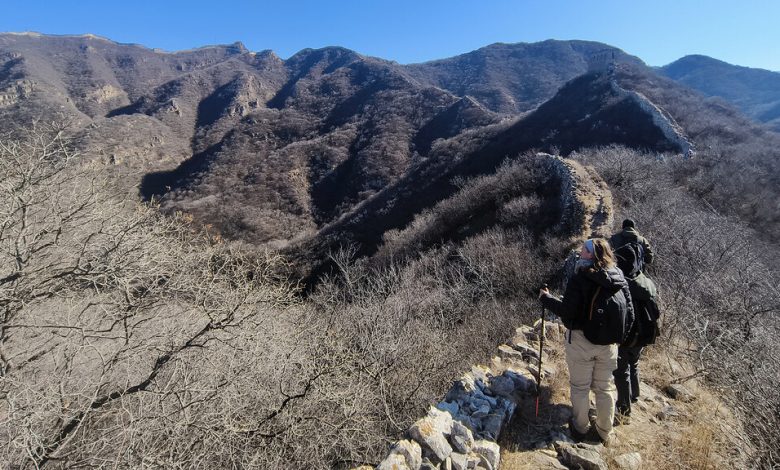
The hike began on a seemingly gentle flat road, but it quickly transformed into a vertical, narrow dirt path strewn with loose stone and rock. The mid-May sun beat down relentlessly, testing the endurance of our team. Each step required careful consideration, as the loose footing threatened to send us sliding back down the slope. The ascent was not merely a physical challenge but also a mental one, demanding focus and determination. Despite the difficulties, the stunning views that unfolded with each upward step provided ample motivation. The panoramic vistas of the Yan Mountains and the snaking Wall in the distance were a constant reminder of the unique experience we were undertaking. This initial part of the hike set the tone for the rest of the journey, highlighting the demanding yet rewarding nature of exploring the wild sections of the Great Wall. Proper preparation, including appropriate footwear, sufficient water, and sun protection, is essential for anyone considering such a hike. Hikers in Yellowstone National Park also face risks and require preparation, but in a different environment.
<h2 id="mules-on-the-Mountain: Ancient Transportation
Adding to the surreal nature of the experience were the three mules we encountered, ferrying bags of cement up a shorter, even steeper dirt track. These animals, seemingly unfazed by the challenging terrain, were a testament to the enduring methods of transportation still used in some parts of China. The mules’ cargo of cement hinted at ongoing preservation efforts, as local communities work to maintain and reinforce the Wall’s structure. Their presence served as a reminder of the human effort involved in preserving this historical site. The sight of these hardworking animals navigating the treacherous slopes was both humbling and inspiring, underscoring the connection between the past and the present. The use of mules also minimizes the environmental impact compared to modern machinery. This form of transport aligns with sustainable tourism practices, preserving the natural integrity of the area, similar to how caribou conservation efforts in Alaska aim to balance human activity with environmental protection.
The Wild Wall Experience: Unrestored Beauty
Reaching the wild sections of the Great Wall was an awe-inspiring experience. Unlike the restored sections, these parts of the Wall retained their original, weathered appearance. Crumbling towers, overgrown vegetation, and uneven stone surfaces told a story of centuries of exposure to the elements. The sense of history was palpable, as if the Wall itself was whispering tales of battles, emperors, and dynasties. Walking along these unrestored sections, one could truly appreciate the scale and ambition of the original construction. The experience was not just about seeing the Wall but about feeling connected to its past. The wild sections offer a unique opportunity for introspection and reflection, away from the crowds and commercialism of more popular tourist destinations. The beauty of the wild Wall lies in its authenticity, its ability to transport visitors back in time and connect them with the human spirit that built it.
Challenges of Preservation: Balancing Tourism and Conservation
Preserving the wild sections of the Great Wall presents a unique set of challenges. On one hand, there is a desire to protect these historical sites from further deterioration and potential damage caused by tourism. On the other hand, there is a need to make them accessible to those who wish to experience their beauty and historical significance. Balancing these competing interests requires careful planning and sustainable tourism practices. One approach involves limiting the number of visitors allowed on the wild sections, implementing stricter regulations regarding waste disposal and environmental impact, and promoting responsible hiking practices. Additionally, ongoing maintenance and restoration efforts are necessary to stabilize the Wall’s structure and prevent further collapse. These efforts must be carried out in a way that preserves the Wall’s original character and avoids excessive modernization. The challenge lies in finding a way to share this historical treasure with the world while ensuring its preservation for future generations.
Historical Significance: More Than Just a Wall
The Great Wall is more than just a physical structure; it is a symbol of Chinese history, culture, and identity. Originally built to defend against nomadic invaders, the Wall has served as a strategic barrier, a trade route, and a symbol of national unity. Its construction spanned centuries and involved the labor of countless workers, representing a massive investment of human effort and resources. The Wall has witnessed countless historical events, from dynastic changes to foreign invasions, and its presence has shaped the course of Chinese history. Exploring the wild sections of the Wall provides a unique opportunity to connect with this rich historical legacy. Walking along the ancient stones, one can imagine the soldiers who once stood guard, the merchants who traversed its paths, and the emperors who oversaw its construction. The Great Wall is a living testament to the enduring spirit of the Chinese people and their unwavering commitment to preserving their cultural heritage. The historical significance of the Great Wall is similar to that of other historical sites around the world, like those potentially affected by conflicts in the Middle East.
Environmental Impact: Respecting the Landscape
Exploring the wild sections of the Great Wall requires a deep respect for the environment. The fragile ecosystem surrounding the Wall is vulnerable to damage from excessive tourism, pollution, and unsustainable practices. Hikers must take care to minimize their impact by staying on designated trails, avoiding disturbing vegetation or wildlife, and properly disposing of waste. Sustainable tourism practices are essential to preserving the natural beauty of the area. This includes supporting local communities, promoting eco-friendly transportation, and educating visitors about the importance of environmental conservation. By adopting a responsible approach to tourism, we can ensure that future generations will be able to enjoy the natural and historical wonders of the Great Wall. Similarly, responsible waste disposal practices are important in areas like Yellowstone to prevent harm from bear attacks.
Tourism and Local Economy: A Boost for Huairou
Tourism plays a vital role in the local economy of Huairou, providing employment opportunities and generating revenue for local businesses. The wild sections of the Great Wall, while less accessible than the restored sections, still attract a significant number of visitors, contributing to the region’s economic growth. Local residents, like Old Cheng, often serve as guides, providing valuable services and insights to tourists. Supporting these local guides and businesses helps to ensure that the benefits of tourism are shared throughout the community. Sustainable tourism practices can also help to promote economic development in a way that is environmentally and culturally responsible. By investing in infrastructure, education, and conservation efforts, we can create a thriving tourism industry that benefits both visitors and local communities. The economic benefits of tourism can also help to incentivize the preservation of historical sites, ensuring that they are maintained for future generations.
Preparing for the Hike: Essential Tips
Hiking the wild sections of the Great Wall requires careful preparation and planning. Before embarking on your journey, it is essential to research the specific section you plan to visit, assess your fitness level, and pack accordingly. Here are some essential tips to ensure a safe and enjoyable hike:
- Wear appropriate footwear: Sturdy hiking boots with good ankle support are crucial for navigating the uneven terrain.
- Bring plenty of water: Staying hydrated is essential, especially during hot weather.
- Pack sunscreen, a hat, and sunglasses: Protect yourself from the sun’s harmful rays.
- Bring a map and compass or GPS device: Navigating the wild sections can be challenging, so it is important to have a reliable way to find your way.
- Inform someone of your plans: Let a friend or family member know your itinerary and expected return time.
- Bring a first-aid kit: Be prepared for minor injuries and emergencies.
- Respect the environment: Stay on designated trails, avoid disturbing vegetation or wildlife, and properly dispose of waste.
- Consider hiring a local guide: A knowledgeable guide can enhance your experience and provide valuable insights into the history and culture of the area.
Proper preparation is key to ensuring a safe and rewarding hike. Ignoring preparation can lead to negative consequences, similar to the risks faced by hikers in other natural environments.
Conclusion
Exploring the wild sections of the Great Wall is an unforgettable experience that offers a unique blend of history, nature, and adventure. These unrestored portions of the Wall provide a glimpse into the past, allowing visitors to connect with the human spirit that built this iconic landmark. While the hike can be challenging, the rewards are immeasurable. From the stunning views of the Yan Mountains to the sense of accomplishment upon reaching the Wall, every moment is filled with wonder and inspiration. By adopting sustainable tourism practices and respecting the environment, we can ensure that future generations will have the opportunity to experience the beauty and historical significance of the wild sections of the Great Wall. The Wall stands as a testament to human perseverance, cultural heritage, and the enduring power of nature. The journey to explore it is a journey into the heart of China’s rich past and its promising future.
| Aspect | Restored Sections | Wild Sections |
|---|---|---|
| Accessibility | Easily accessible, well-maintained paths | Difficult access, rugged and uneven terrain |
| Crowds | Large crowds, popular tourist destinations | Fewer crowds, more secluded experience |
| Condition | Meticulously restored, modern amenities | Unrestored, original weathered appearance |
| Historical Authenticity | Some historical elements lost due to restoration | Retains original historical character |
| Environmental Impact | Higher environmental impact due to tourism | Lower environmental impact, requires responsible tourism |
| Experience | More comfortable, less challenging | More challenging, adventurous, and authentic |
| Preservation | Ongoing restoration and maintenance | Requires careful preservation to balance tourism and conservation |
| Local Economy | Significant contribution to local economy | Supports local guides and businesses, sustainable tourism |
For further reading on responsible tourism, visit Responsible Travel.
Learn more about events shaping global perspectives on Taiwan’s presence in Eswatini [internal link: https://globaleprism.com/taoyuan-president-lai-ching-te-defies-chinas-blockade-reinforces-taiwans-global-presence-in-eswatini-visit/].
Explore the implications of China’s silicon wafer target and its global impact [internal link: https://globaleprism.com/chinas-silicon-wafer-target-70-domestic-use-by-2026/].
Read about rising tensions and naval deployments in areas around the world [internal link: https://globaleprism.com/hormuz-strait-france-deploys-warship-amidst-rising-tensions/].
Understand concerns about data access and global health information gaps [internal link: https://globaleprism.com/who-data-access-concerns-rise-as-us-navigates-global-health-information-gaps/].