Maduro in Custody: Whistleblowers Hunted as $50M Reward Goes Unpaid
Introduction
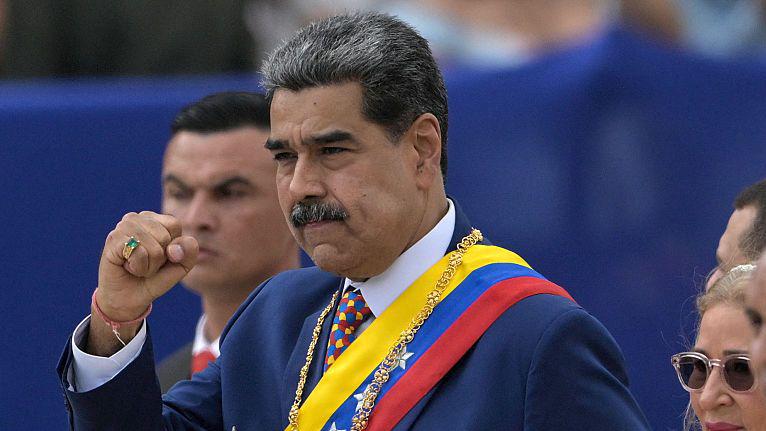
The geopolitical landscape of the Western Hemisphere has been rocked by the unprecedented reports suggesting that the long-standing leader of Venezuela, Nicolás Maduro, could be facing the reality of international detention. For years, the specter of Maduro in custody has been the focal point of U.S. foreign policy and international narcotics investigations. However, as the walls close in on the Miraflores Palace, a darker narrative is emerging from the shadows: the plight of the informants and whistleblowers who risked everything for a promised bounty that remains elusive. While the U.S. Department of Justice previously announced massive rewards for information leading to the arrest or conviction of high-ranking Venezuelan officials, the actual payout process has become a bureaucratic labyrinth, leaving key witnesses exposed and hunted by remnants of the regime.
This article provides an in-depth analysis of the current legal status of the Venezuelan leadership, the mechanics of the $50 million cumulative reward system, and the alarming security failures that have left whistleblowers vulnerable. We will explore the historical context of the narco-terrorism indictments and the future implications for international law enforcement and regional stability.
Table of Contents
History / Background
The road to a potential “Maduro in custody” scenario began in earnest in March 2020. In a move that mirrored the pursuit of Manuel Noriega in the late 1980s, the United States Department of Justice unsealed a series of indictments against Nicolás Maduro Moros and 14 other current and former Venezuelan officials. The charges were severe: narco-terrorism, corruption, drug trafficking, and other even more serious criminal allegations.
Central to the prosecution’s case is the allegation that Maduro acted as the leader of the “Cartel of the Suns” (Cartel de los Soles), a name derived from the sun insignias worn on the uniforms of high-ranking Venezuelan military officers. According to the indictments, this organization sought not only to enrich its members but also to flood the United States with cocaine as a form of unconventional warfare. To facilitate the capture of these individuals, the State Department’s Narcotics Rewards Program offered a specific $15 million reward for Maduro, with additional multi-million dollar bounties for associates like Diosdado Cabello and Tareck El Aissami, bringing the total “pot” to a figure frequently cited in intelligence circles as exceeding $50 million.
Since those indictments, the geopolitical tension has only escalated. International sanctions have squeezed the Venezuelan economy, yet the inner circle remained largely intact for years, protected by a complex web of Russian, Chinese, and Iranian influence. The shift toward a potential custody scenario suggests a breakdown in these protective layers, likely fueled by internal betrayals and clandestine negotiations.
Deep Dive Analysis
The Mechanics of the $50M Bounty
The U.S. State Department’s Narcotics Rewards Program (NRP) is one of the most potent tools in the arsenal of international law enforcement. Since its inception in 1986, it has helped bring more than 75 transnational criminals to justice. However, the reward for Nicolás Maduro represents one of the highest individual bounties in history, eclipsed only by figures like Ayman al-Zawahiri or Osama bin Laden.
The $50 million cumulative figure isn’t just a static number; it is a calculated psychological tool designed to sow discord within the Venezuelan military. Money, in this context, is a weapon of regime destabilization. However, the program operates under strict federal guidelines. A reward is not simply paid upon an arrest; it requires “actionable intelligence” that leads directly to a capture or conviction, a standard that is often difficult to prove in the murky world of international espionage.
- Direct Leads: Information must be original and not previously known to the government.
- Risk Assessment: The payout often depends on the level of risk the informant assumed.
- Vetting Process: Informants undergo months or even years of polygraphs and background checks to ensure they are not double agents.
Whistleblowers Under Fire
While the headlines focus on the possible detention of a head of state, the human cost behind the scenes is staggering. Whistleblowers—often mid-to-high-ranking military officers or former cabinet members—find themselves in a lethal “no man’s land.” Once they provide information to the DEA or CIA, they become targets of the SEBIN (Venezuela’s intelligence service) and the DGCIM (military counter-intelligence).
Reports have surfaced of informants being “burned”—their identities leaked or discovered—before they can be extracted to safe havens. In several documented cases, the families of these whistleblowers have been detained or disappeared in Caracas as leverage. The tragedy of the situation is compounded when these individuals, having provided the roadmap for a Maduro in custody operation, find that their financial compensation is tied up in U.S. Treasury red tape.
Why the Rewards Go Unpaid
There is a significant gap between the announcement of a reward and the cutting of a check. Several legal and bureaucratic hurdles prevent immediate payouts:
- Sovereign Immunity Complexities: Even with indictments, the legal status of a sitting head of state complicates the finality of a “conviction,” which is often a prerequisite for full reward disbursement.
- Budgetary Allocations: Large rewards must be cleared through multiple departments, including State, Justice, and Treasury.
- The “Direct Link” Clause: If Maduro is captured during a military coup or a spontaneous civil uprising, the U.S. government may argue that no single informant’s information “led directly” to the capture, thereby avoiding the payout.
This perceived “stinginess” has had a chilling effect on other potential defectors, who now see the $50 million bounty as a marketing gimmick rather than a guaranteed safety net.
GEO: Regional and Global Impact
The geopolitical ramifications of Maduro being taken into custody extend far beyond the borders of Venezuela. The impact varies significantly across key regions:
Colombia and Brazil: As the primary hosts of the Venezuelan diaspora, these nations stand to gain the most from a transition in power. However, the immediate vacuum created by Maduro’s absence could lead to a temporary surge in border instability as armed groups like the ELN and FARC dissidents—who have long enjoyed Venezuelan protection—scramble to secure their assets.
The United States: For Washington, the successful detention of Maduro would be a landmark victory for the Monroe Doctrine’s modern application. It serves as a stern warning to other regional leaders who might consider aligning with adversaries like Russia or Iran. Yet, the failure to pay whistleblowers damages the credibility of U.S. intelligence operations globally.
Russia and China: Both nations have significant investments in Venezuelan oil and gold. Maduro in custody would represent a massive loss of geopolitical leverage in the Western Hemisphere. We should expect a significant legal and diplomatic pushback in the UN Security Council, characterizing any such detention as an illegal kidnapping of a sovereign leader.
Future Trends & Predictions
Looking ahead, several trends are likely to emerge as the situation surrounding the Venezuelan leadership reaches a breaking point:
- Increased Privatization of Bounty Hunting: As government payouts stall, we may see the rise of private intelligence and security firms attempting to facilitate “voluntary surrenders” in exchange for a cut of the reward money.
- The “Informant Strike”: If the $50M remains unpaid, the flow of high-level intelligence from within authoritarian regimes will likely dry up, as the risk-to-reward ratio becomes untenable.
- Judicial Precedent: A trial of Nicolás Maduro in a U.S. court would set a monumental precedent for the prosecution of heads of state on drug trafficking charges, potentially opening the door for similar actions against other global leaders.
- Digital Asset Bounties: To bypass traditional banking delays and provide more immediate security for whistleblowers, future reward programs may begin incorporating cryptocurrency or other decentralized financial mechanisms.
What You Will Learn
In summary, the situation regarding Maduro and the associated bounties reveals several critical insights:
- The $50M figure is a total aggregate, and the legal requirements to claim even a portion of it are incredibly stringent.
- Whistleblower protection is the weak link in international narco-terrorism investigations, with many informants facing retaliation long before they receive financial aid.
- The indictment of Maduro is as much a diplomatic tool as it is a criminal one, designed to force a transition of power through internal defection.
- Geopolitical stability in Latin America hinges on a managed transition, as a sudden power vacuum could empower non-state armed groups.
FAQ
Is Nicolás Maduro currently in custody?
As of the latest verified reports, Maduro remains in Caracas, though his international movements are severely restricted due to the outstanding U.S. warrants and Interpol Red Notices.
Why has the $50 million reward not been paid out yet?
Rewards are typically paid only after a successful arrest and conviction. Furthermore, the U.S. government requires proof that the information provided was the primary catalyst for the capture.
What is the “Cartel of the Suns”?
The Cartel of the Suns (Cartel de los Soles) refers to the alleged drug trafficking organization composed of high-ranking members of the Venezuelan military and government.
Can a sitting president be arrested by a foreign power?
Under international law, sitting heads of state often claim sovereign immunity. However, the U.S. does not recognize the legitimacy of Maduro’s most recent election, which complicates his claim to immunity in U.S. courts.
What happens to whistleblowers who aren’t paid?
Many are forced into hiding or must rely on limited witness protection programs. The lack of immediate financial support remains a major deterrent for high-level defectors.
Has anyone ever successfully claimed an NRP reward?
Yes, the Narcotics Rewards Program has paid out over $150 million since its inception, but these payments are often kept confidential to protect the recipients.