Iranian missile barrage strikes Beersheba chemical plant
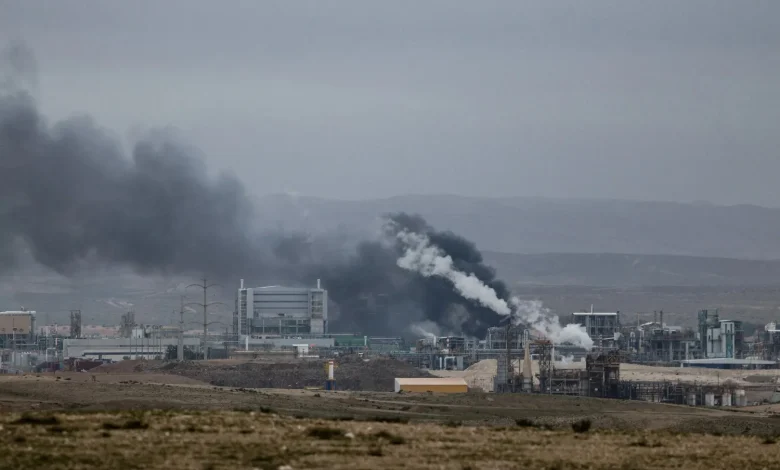
Iranian missile barrage attacks have fundamentally altered the strategic landscape of the Middle East this week, marking a profound escalation in the ongoing shadow war between the two regional powers. Following a sustained campaign of precision strikes targeting vital Iranian infrastructure, Tehran has retaliated with an unprecedented volley of ballistic and cruise missiles directed at southern Israel. The primary casualty of this heavy bombardment was a major industrial zone, resulting in a catastrophic fire at a chemical plant near the city of Beersheba. This incident not only represents a significant failure of deterrence but also introduces severe environmental and civilian hazards into an already volatile conflict. As emergency responders battle the toxic blaze and military strategists recalibrate their defensive postures, the international community watches with mounting alarm.
Iranian Missile Barrage Hits Southern Israel
The assault began in the early hours of Sunday morning, exploiting a brief window of atmospheric interference that challenged early warning radar systems. The Iranian missile barrage consisted of dozens of high-speed projectiles, including both older generation Scud variants and highly advanced, precision-guided Fateh-110 ballistic missiles. While the Iron Dome, David’s Sling, and Arrow defense systems successfully intercepted the majority of the incoming threats over unpopulated areas, several missiles managed to penetrate the defensive umbrella. The saturation tactic employed by the Islamic Revolutionary Guard Corps (IRGC) was designed specifically to overwhelm the interceptor batteries guarding the strategic southern corridor of Israel. The city of Beersheba, often referred to as the capital of the Negev, quickly found itself at the epicenter of this renewed kinetic engagement. The psychological impact on the local populace has been profound, with air raid sirens wailing continuously and thousands forced into fortified bunkers for extended periods. This direct hit on sovereign territory underscores a dangerous shift from proxy warfare to direct state-on-state confrontation.
The Chemical Plant Explosion Near Beersheba
The most devastating consequence of the barrage was the direct impact on a prominent chemical processing facility situated on the industrial outskirts of Beersheba. The plant, which specializes in the synthesis of agricultural fertilizers, industrial solvents, and potentially volatile ammonia-based compounds, suffered multiple direct hits. The resulting explosions shattered containment vessels, immediately igniting a massive, uncontrolled fire that sent thick, acrid plumes of black smoke into the lower atmosphere. Witnesses reported secondary detonations occurring hours after the initial strike, further complicating firefighting efforts. The thermal signature of the blaze was so intense that it was registered by commercial weather satellites in low Earth orbit. Hazardous materials teams have detected elevated levels of toxic airborne particulates in the immediate vicinity, raising severe public health concerns. The destruction of this facility not only disrupts domestic supply chains but also poses a long-term environmental catastrophe as chemical runoff threatens to contaminate local groundwater reserves.
Emergency Response and Civilian Evacuations
In the immediate aftermath of the chemical plant explosion, the Israeli Home Front Command initiated a massive emergency response protocol. A localized state of emergency was declared for a twenty-kilometer radius surrounding the facility. Specialized HAZMAT units, supported by military engineers, were deployed to contain the toxic fire and prevent the spread of chemical agents into nearby residential neighborhoods. Evacuation orders were swiftly issued for several communities lying directly downwind of the toxic plume, displacing thousands of families overnight. Shelters were rapidly upgraded with advanced air filtration systems to protect those who could not be immediately relocated. First responders faced harrowing conditions, battling intense heat and volatile chemical reactions while dressed in cumbersome Level A protective suits. Medical centers in Beersheba and surrounding areas activated mass casualty protocols, treating hundreds of civilians for respiratory distress and chemical exposure. The logistical nightmare of managing a mass evacuation under the constant threat of further missile strikes has heavily strained local municipal resources.
Context: Expanded Attacks on Iranian Infrastructure
To comprehend the sheer magnitude of the Iranian missile barrage, one must analyze the preceding series of covert and overt operations conducted against Iranian assets. Over the past three months, a sophisticated campaign of sabotage and targeted airstrikes has systematically dismantled critical nodes within Iran’s military-industrial complex. These expanded attacks on Iranian infrastructure included precision drone strikes on drone manufacturing facilities in Isfahan, mysterious explosions at solid-fuel mixing plants utilized for ballistic missile production, and crippling cyberattacks that temporarily paralyzed the national energy grid. Intelligence analysts suggest that these preemptive measures were designed to degrade Tehran’s ability to supply proxy forces across the region and delay their nuclear enrichment programs. However, this aggressive deterrence strategy inevitably forced Iran into a corner, compelling the regime to respond forcefully to maintain domestic credibility and project regional strength. The devastating retaliation on Beersheba is a direct consequence of this escalating tit-for-tat dynamic.
Cyber and Kinetic Strikes on Iranian Soil
The prelude to the current crisis involved a seamless integration of kinetic military operations and advanced cyber warfare. Israeli cyber units allegedly breached the command and control networks of several Iranian petrochemical refineries, causing localized shutdowns and significant economic damage. Concurrently, specialized aerial task forces executed deep-penetration strikes against subterranean weapon storage bunkers located in the Zagros Mountains. These operations severely humiliated the Iranian defense establishment and prompted a vow of severe retribution from the Supreme Leader. The intricate dance of escalation has pushed both nations into uncharted territory. Understanding the broader scope, analysts point to the ongoing Iran Israel war ceasefire talks which have now been entirely derailed by this recent exchange of fire. The collapse of diplomatic backchannels has left military force as the primary means of communication between the two adversaries.
Environmental and Economic Ramifications
The destruction of the Beersheba chemical plant extends far beyond immediate tactical losses; it represents a significant economic blow with severe environmental consequences. The facility was a critical node in the national production of agricultural fertilizers, and its sudden loss will likely trigger a sharp increase in domestic food production costs. Furthermore, the environmental cleanup is projected to cost billions of shekels and take several years to complete. Soil remediation, water purification, and long-term health monitoring for exposed residents will place a heavy burden on the national treasury. The economic instability is compounded by internal political friction, as seen in the recent Tel Aviv protests, which have challenged the government’s handling of both domestic policy and national security. The convergence of an environmental disaster, economic disruption, and political unrest creates a highly volatile domestic situation.
| Hazard Level | Distance from Epicenter | Primary Threat | Required Action |
|---|---|---|---|
| Red Zone (Critical) | 0 – 5 km | Lethal chemical exposure, secondary explosions, severe thermal radiation | Immediate mandatory evacuation; absolute restriction of civilian movement. |
| Orange Zone (Severe) | 5 – 12 km | High concentrations of airborne toxins, respiratory hazards, falling debris | Shelter-in-place with sealed windows; utilize certified air filtration systems. |
| Yellow Zone (Moderate) | 12 – 25 km | Mild respiratory irritation, particulate fallout, acidic precipitation | Limit outdoor activities; monitor local emergency broadcasts continuously. |
| Green Zone (Caution) | 25+ km | Trace atmospheric anomalies, potential supply chain disruptions | Maintain standard readiness; prepare emergency kits and vital supplies. |
Global Market Reactions and Commodity Shifts
The reverberations of the attack have sent shockwaves through global financial markets. Brent crude prices surged by eight percent within hours of the news breaking, reflecting fears of a broader regional war that could disrupt global energy supplies. The chemical sector also experienced significant volatility, with global fertilizer prices spiking in anticipation of supply shortages. Disruptions in the region severely affect the Strait of Hormuz news 2026 global shipping lanes, as insurance premiums for commercial vessels traversing the Middle East have skyrocketed. International investors are rapidly moving capital into safe-haven assets such as gold and sovereign bonds, anticipating a prolonged period of geopolitical instability. According to analysts speaking to international observers, the compounding economic effects of this single missile strike demonstrate the extreme fragility of the interconnected global supply chain when confronted with localized military conflicts.
Geopolitical Fallout: A Region on the Brink
The international diplomatic response has been swift but largely ineffective in cooling the mounting tensions. The United Nations Security Council convened an emergency session, resulting in fractured debates and mutual accusations between geopolitical blocs. Western nations have uniformly condemned the Iranian missile barrage, pledging unwavering support for Israel’s right to self-defense while simultaneously urging restraint to prevent a full-scale regional conflagration. Conversely, nations allied with or sympathetic to Tehran have framed the strike as a legitimate and proportional response to preceding Israeli aggression. This deep polarization effectively paralyzes international peacekeeping mechanisms, leaving the region teetering on the brink of an all-out war. The United States has accelerated the deployment of additional naval carrier strike groups and advanced missile defense batteries to the Eastern Mediterranean and the Persian Gulf, signaling a robust commitment to regional stability but also raising the risk of American forces becoming directly entangled in the crossfire.
Military Technology: Interceptors vs. Ballistic Missiles
The technological duel witnessed in the skies over Beersheba provides critical data for military analysts worldwide. The engagement tested the absolute limits of multi-layered, integrated air defense networks against a synchronized, complex attack vector. Iran’s use of maneuverable re-entry vehicles (MaRVs) and advanced electronic countermeasures challenged the targeting algorithms of the Arrow 3 and David’s Sling interceptors. While the defense systems performed admirably under immense pressure, the fact that several missiles achieved their target indicates that even the most advanced shields are not impenetrable against a dedicated saturation attack. To track and intercept these evolving threats, the military increasingly relies on sophisticated data integration platforms like the Pentagon Palantir AI framework, which utilizes machine learning to predict missile trajectories and optimize interceptor allocation in real-time. This conflict is rapidly becoming a testing ground for next-generation warfare technologies, with lessons learned here likely to shape global defense procurement for decades.
Strategic Implications for Future Conflict
Looking forward, the destruction of the chemical plant near Beersheba establishes a dangerous new precedent for targeting civilian-industrial infrastructure. By successfully striking a facility with severe environmental hazard potential, Iran has demonstrated a willingness to inflict long-term, asymmetric damage that goes beyond traditional military casualties. This tactic forces Israeli defense planners to fundamentally reassess their infrastructure hardening and critical asset protection strategies. The concept of absolute deterrence has been shattered, replaced by a grim reality of mutual vulnerability. As both sides prepare for the inevitable next phase of this escalating conflict, the focus will likely shift toward massive, preemptive counter-force strikes designed to neutralize launch capabilities before they can be deployed. The window for a diplomatic off-ramp is rapidly closing, and without immediate and decisive international intervention, the region may soon witness a catastrophic escalation that will drag multiple nations into a devastating, prolonged war. The ashes settling over Beersheba serve as a dark omen for the future of Middle Eastern security.