Tel Aviv Protests Spark Regime Change Demands: The Geopolitical Irony
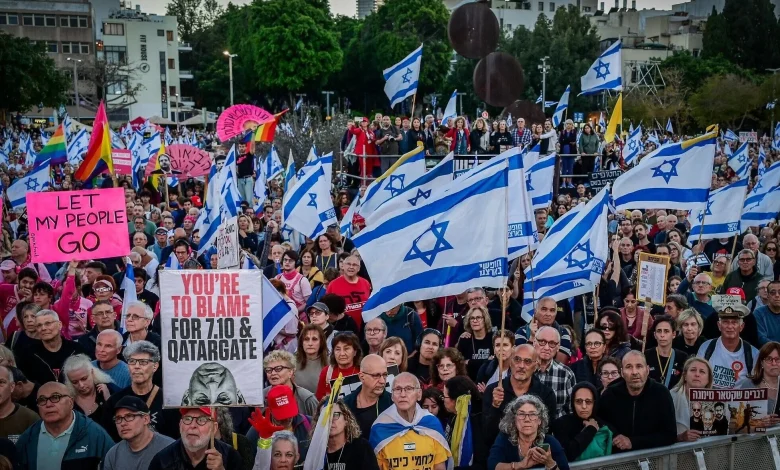
Tel Aviv has become the epicenter of a seismic political shift as tens of thousands of citizens and settlers pour into the streets demanding an immediate regime change. In a profound twist of geopolitical irony, the very demographic that has historically supported hardline stances calling for the toppling of the Iranian government is now directing that exact sentiment toward their own leadership in Israel. This massive social upheaval is not merely a passing phase of civil unrest; it represents a fundamental fracture in the social contract of the nation, driven by deep-seated frustrations over security failures, economic stagnation, and a perceived erosion of democratic norms. As the international community watches these historic demonstrations unfold, the implications stretch far beyond the borders of Israel, threatening to reshape the delicate balance of power across the entire Middle East.
Tel Aviv’s Unprecedented Uprising
The streets of the city, particularly the iconic Kaplan Street and the Ayalon Highway, have been transformed into sprawling arenas of democratic expression. The sheer volume of protesters—ranging from secular urbanites to disillusioned settlers from the periphery—marks a critical turning point in domestic politics. For years, the political establishment maintained a fragile coalition by rallying the public around external threats. However, that narrative has violently fractured. Citizens are no longer willing to accept the status quo, and the demand for sweeping leadership changes has never been louder. The rhetoric used in these protests is startlingly direct, borrowing phrases historically reserved for hostile foreign adversaries. The call for an overhaul of the ruling apparatus highlights a profound lack of faith in the current administration’s ability to govern effectively or protect its populace.
The Catalyst Behind the Mass Mobilization
Understanding the root causes of this unprecedented mobilization requires examining a confluence of compounding crises. The initial sparks of discontent were lit by controversial judicial overhauls, but the fire has since been fueled by ongoing security vulnerabilities and a devastating hostage crisis that has left the nation traumatized. The government’s inability to secure a decisive and safe resolution has shattered the illusion of an impenetrable security state. Furthermore, the economic burden of prolonged conflict has alienated the middle class, which bears the brunt of taxation and military service. The combination of these factors has created a perfect storm of civil disobedience, culminating in the bold demands for a complete systemic reboot.
The Profound Irony: From Iran to Israel
Perhaps the most fascinating aspect of these massive protests is the stark irony of the terminology being deployed. For decades, Israeli political figures and their constituents have loudly advocated for regime change in Tehran, framing the Iranian government as an existential threat that must be dismantled from within by its own people. Now, in a dramatic reversal of fortune, Israeli citizens are holding up mirrors to their own leadership. The juxtaposition is jarring: the same political commentators who championed the rights of Iranian dissidents to overthrow their oppressors are now grappling with millions of Israelis demanding the ouster of their own democratically elected, yet highly polarizing, leaders. This ideological boomerang has not gone unnoticed by international observers, who view it as a testament to the universal desire for accountable governance.
Historical Rhetoric Regarding Tehran
To fully grasp this irony, one must review the historical rhetoric. Israeli policy has long been predicated on the belief that a fundamental change in Iran’s leadership is the only path to lasting regional stability. Speeches at the United Nations, diplomatic missions in Washington, and domestic political campaigns have all heavily featured the necessity of a new regime in Iran. Today, the protest signs in major Israeli intersections echo these exact sentiments, albeit directed domestically. This shift indicates that the populace recognizes the dangers of entrenched political power, regardless of whether that power is wielded in Tehran or Jerusalem. It is a striking evolution of political consciousness that forces a reevaluation of how statecraft is managed.
Economic Repercussions of Domestic Instability
The ongoing unrest is exacting a severe toll on the national economy. The tech sector, often heralded as the engine of the nation’s economic growth, is experiencing significant capital flight. Investors are increasingly wary of the volatile political climate, leading to a sharp decline in foreign direct investment. The shekel has faced unprecedented fluctuations, and inflation continues to erode the purchasing power of everyday citizens. Small businesses are shuttering at alarming rates as consumer confidence plummets. The government’s budget, heavily skewed toward defense and maintaining the political coalition, leaves little room for the economic stimulus required to stabilize the markets. If the demands for regime change are not addressed, the long-term economic damage could take decades to reverse.
The Intersection of Geopolitics and Trade
The domestic economic woes are inevitably intertwined with broader geopolitical dynamics. As the nation focuses inward on its political crises, its ability to project stability outward is severely compromised. This vulnerability has cascading effects on regional trade agreements and maritime security. For instance, the ongoing disruptions in the Middle East have a direct impact on global shipping lanes. Observers analyzing the global shipping dynamics understand that any instability in key Middle Eastern nations can trigger massive supply chain bottlenecks. The current political paralysis in Israel only adds another layer of unpredictability to an already volatile region, forcing international markets to price in an ever-increasing risk premium.
International Perspectives on the Israeli Crisis
The global community is monitoring the situation with a mixture of concern and strategic calculation. Western allies, who have traditionally offered unwavering support, are finding it increasingly difficult to navigate the diplomatic tightrope. The sheer scale of the domestic opposition complicates bilateral relations, as foreign governments must balance their strategic partnerships with the current administration against the clear democratic will of the protesting populace. Leaders in Washington and London are holding emergency consultations to assess the viability of the current Israeli government. The unfolding events are drawing parallels to other global geopolitical maneuvers, such as those seen when Operation Epic Fury reshaped strategic alliances.
Diplomatic Strains with Key Allies
The demands for regime change have introduced unprecedented friction into historical alliances. The United States, in particular, is facing immense pressure to publicly address the democratic backsliding and internal turmoil. The traditional diplomatic cover provided at international forums is eroding as the protests highlight the deep divisions within Israeli society. European nations, already critical of certain domestic policies, are viewing the mass demonstrations as validation of their concerns. This diplomatic isolation could severely hamper the nation’s ability to negotiate favorably on the international stage, further weakening the current administration’s grip on power.
Data Breakdown: Comparative Rhetoric
To illustrate the dramatic shift in political discourse, it is helpful to analyze the key themes and demands that have characterized foreign policy versus domestic grievances over the past decade. The table below highlights the striking similarities between the historical calls for change in Iran and the current demands echoing through Israeli streets.
| Political Context | Primary Demands | Target of Grievance | Core Motivation |
|---|---|---|---|
| Pre-2024 Policy on Iran | Dismantlement of theocratic/authoritarian structures | Iranian Ayatollahs | Regional security and human rights |
| 2026 Domestic Protests | Ouster of the current political coalition | Israeli Government | Democratic preservation and economic survival |
| International Reaction to Iran | Sanctions and diplomatic isolation | Regime Leadership | Nuclear containment |
| International Reaction to Israel | Diplomatic caution and calls for democratic reform | Current Administration | Maintaining regional stability |
Regional Security and the Broader Middle East
The internal political earthquake is sending shockwaves throughout the broader Middle East. Adversaries are closely watching the civil unrest, calculating how a weakened and distracted Israeli government might alter the regional security paradigm. The deterrence factor, built over decades of military dominance, is being undermined by the visible fracturing of national unity. This period of vulnerability could embolden non-state actors and hostile nations to test boundaries, leading to an escalation of border conflicts. The irony of the situation is palpable: in demanding a regime change to secure a better future, the populace has inadvertently created a window of strategic vulnerability that threatens the very security they seek to preserve.
Maritime Flashpoints and the Energy Crisis
Any escalation of conflict resulting from this domestic instability will inevitably spill over into critical economic zones. The Middle East remains the central artery for global energy supplies, and regional instability routinely threatens these vital pathways. The interconnectedness of global energy markets means that a political crisis in Israel can easily contribute to a broader global energy crisis. As tensions rise, leaders worldwide are forced to react. Recent high-level discussions, such as the Middle East oil crisis dialogues, underscore the urgent need to insulate the global economy from localized political implosions. For a broader understanding of how the international press is covering the wider regional implications, you can read more through comprehensive Middle East coverage from leading news outlets.
The Path Forward for the Government
As the protests show no signs of abating, the current administration faces a perilous road ahead. The options are increasingly limited and fraught with risk. Attempting to suppress the demonstrations through legislative action or law enforcement will only validate the protesters’ claims of authoritarian overreach, likely drawing severe international condemnation. Conversely, conceding to the demands for early elections or significant structural reforms could lead to the collapse of the fragile ruling coalition. The political landscape has been permanently altered, and the era of relying on external threats to unify a fractured populace appears to have ended. The citizens have found their voice, and the profound irony of their demands will echo through the annals of political history for generations to come.