Gene Shalit Turns 100: The Iconic Critic’s Century & Legacy
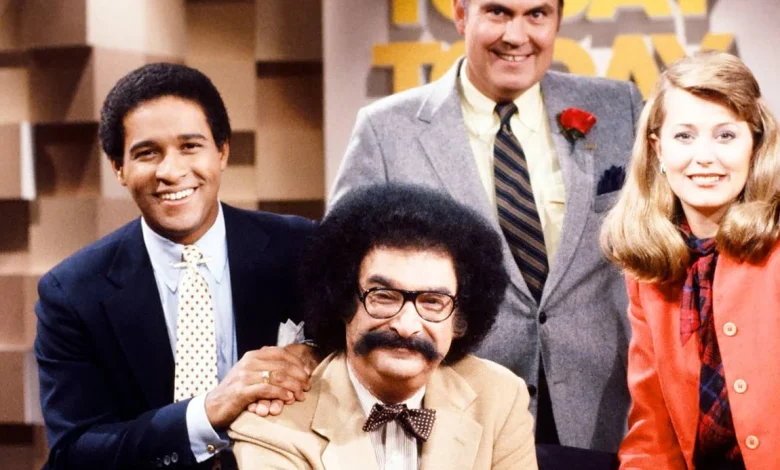
Gene Shalit stands as an enduring pillar of American broadcast journalism, instantly recognizable to millions by his brilliantly bushy handlebar mustache, eccentric bow ties, and unparalleled mastery of witty puns. On March 25, 2026, the legendary television personality, film critic, and beloved author reached an extraordinary milestone: his 100th birthday. Having spent exactly four decades shaping the cultural discourse as a permanent fixture on network morning lineups, his life’s work represents a bygone era of thoughtful, deeply entertaining media criticism. While contemporary audiences might know him best through animated parodies or viral clips of his unforgettable on-air aesthetic, those who grew up watching morning news programs remember him as the definitive voice of cinematic and literary recommendations. This comprehensive retrospective explores his century of life, tracing his journey from an ambitious young writer in New Jersey to an undisputed icon of the American television landscape.
Gene Shalit Reaches a Centenary Milestone
As the sun rose on Wednesday, March 25, 2026, the global entertainment community paused to celebrate the 100th birthday of a genuine broadcasting trailblazer. Turning a century old is an extraordinary feat of longevity, and the occasion was marked by widespread admiration from both former colleagues and loyal viewers who cherished his daily presence in their homes. Although the retired critic has maintained a notoriously private lifestyle since his departure from the spotlight in 2010, the historic occasion prompted a massive flood of heartfelt tributes across broadcast networks and social media platforms alike. During the broadcast of his longtime network home, renowned weatherman and co-anchor Al Roker paid a touching on-air tribute to his former colleague. In a deeply nostalgic segment, Roker honored the centenarian by including him in the famous morning show tradition of wishing viewers a happy 100th birthday using a customized Smucker’s jam jar. Roker affectionately recalled the sheer magnitude of the retired critic’s influence, praising his spectacular knowledge of the industry and his uncanny ability to connect with everyday people. According to close family sources, the centenarian opted for a quiet, intimate celebration in the beautiful Berkshire mountains of Massachusetts, surrounded by his six children and five grandchildren, all while eagerly preparing to watch his beloved New York Mets gear up for opening day.
The Early Years: From New Jersey to Journalism
Long before he became the face of national entertainment reporting, the foundational years of his youth were defined by a profound love for the written word. Born on March 25, 1926, in New York City, he was subsequently raised in the bustling towns of Newark and Morristown, New Jersey. Even during the volatile economic period of the Great Depression, his family recognized and nurtured his inherent gift for storytelling and comedy. As a teenager attending Morristown High School, he quickly distinguished himself from his peers by authoring a wildly popular humor column for the school newspaper playfully titled The Korn Krib. This early foray into comedy writing showcased his unique knack for entertaining readers with clever wordplay and lighthearted observations, a stylistic hallmark that would ultimately define his entire professional career. Driven by an insatiable passion for writing, he relocated to the Midwest to study journalism at the prestigious University of Illinois at Urbana-Champaign. While on campus, he immersed himself in the bustling world of student media. Taking on multiple demanding roles at The Daily Illini, he served as both a sports editor and a dedicated humor columnist, proving unequivocally that he could make absolutely any topic captivating for his readership. In recognition of his enduring impact on the institution, he was later inducted into the Illini Media Hall of Fame in 2007.
Forging a Path in Freelance Media
Before achieving nationwide television fame, he steadily built a formidable reputation in print media. Throughout the 1960s, he successfully navigated the intensely competitive landscape of freelance journalism. He began formally reviewing the arts in 1967, contributing sharp, insightful articles to a staggering array of major national publications. His byline frequently graced the pages of Cosmopolitan, TV Guide, Seventeen, Glamour, Look, McCall’s, and The New York Times. Additionally, he enjoyed a highly successful twelve-year tenure writing long-form reviews for Ladies’ Home Journal. Interestingly, his early career also included a brief but fascinating stint working behind the scenes in public relations; in the early 1960s, he served as a press agent for a young television host named Dick Clark, helping shape Clark’s image just prior to the explosive national rise of American Bandstand.
The Today Show Era (1970-2010): A 40-Year Legacy
The trajectory of morning television was forever altered when he first stepped in front of the network cameras. What began as a modest part-time engagement quickly blossomed into a foundational broadcasting role that would last for precisely forty years, cementing his status as a trusted voice in millions of American households. In 1970, he officially joined the network as a part-time contributor. By January 15, 1973, his overwhelming popularity with audiences earned him a permanent full-time position as the primary film and book critic. For the next four decades, he delivered his reviews with a highly distinctive style that perfectly blended sharp critical insights, powerful wordplay, and an undeniable warmth. He did not simply critique media; he celebrated the sheer joy of entertainment. From 1970 to 1982, he also extended his reach through the national airwaves, broadcasting a widely successful daily essay titled Man About Anything for the network radio syndication, which quickly became one of the most widely carried radio features in the entire country.
Unforgettable Celebrity Interviews and Sharp Wit
His tenure was consistently marked by countless interviews with the Hollywood elite, literary giants, and emerging artistic talents. He possessed a rare, disarming interview style that consistently elicited genuine, unguarded moments from heavily media-trained celebrities. Whether he was playfully interacting with the legendary stage actress Carol Channing, charming the iconic Sofia Loren to the point where she playfully ran her hands through his trademark fuzzy hair, or sitting down with a group of unknown actors who had just wrapped a little science fiction film called Star Wars, his approach was always rooted in an authentic, warm curiosity. He routinely prioritized the human element over aggressive journalistic interrogation, making his segments a beloved and comforting staple of early morning routines across the nation.
The Signature Absent-Minded Professor Aesthetic
In the visually driven medium of television, building a recognizable personal brand is paramount, and few broadcasters have ever achieved a visual identity as instantly recognizable as his. Embracing what critics and fans alike affectionately dubbed the absent-minded professor trope, he deliberately cultivated a remarkably colorful and eccentric on-air appearance. His look was anchored by a spectacularly overgrown handlebar mustache, a wildly untamed mane of frizzy hair, oversized circular glasses, and an endless rotation of vibrant, whimsically patterned bow ties. This distinctive aesthetic set him entirely apart from the polished, heavily manicured news anchors of his era. It instantly telegraphed to viewers that his specific segments were a designated, safe space for joy, unpretentious humor, and intellectual playfulness. The mustache became so legendary that it frequently overshadowed the films he was reviewing, standing as a triumph of personal branding in an era of corporate conformity.
A Pop Culture Phenomenon: Parodies and Animation
When a broadcaster becomes a deeply ingrained part of the daily American routine, their influence naturally bleeds into the broader landscape of popular culture. Because his stylistic and vocal mannerisms were so uniquely exaggerated, he inevitably became a favorite target for comedic impersonators, sketch comedians, and skilled animators. On the sketch comedy circuit, his larger-than-life persona provided endless, rich material. Comedians Jon Lovitz and Horatio Sanz famously spoofed his energetic, pun-heavy delivery on Saturday Night Live. The legendary sketch program Second City Television featured a brilliant parody by actor Eugene Levy. Even the subversive puppet realm of The Muppet Show: Sex and Violence introduced a character visually inspired by him. In the realm of late-night talk shows, he frequently participated in the joke himself; David Letterman once famously executed a surreal visual gag by pretending to squash his voluminous hair between two giant comedy hammers. Furthermore, Seth MacFarlane’s animated juggernaut Family Guy referenced him on numerous occasions, introducing his legendary status to an entirely new generation of younger viewers who may have missed his initial broadcasting peak.
Immortalized as Gene Scallop in SpongeBob
Perhaps the most beloved animated tribute occurred in the underwater town of Bikini Bottom. He achieved immense cross-generational fame when he was playfully immortalized as the fiercely critical, bespectacled fish food critic Gene Scallop in a highly iconic episode of SpongeBob SquarePants. In the episode, the character visits the Krusty Krab, gives a mixed review but absolutely loves the famous Krabby Patty, leading to an unforgettable musical number. He also enthusiastically lent his own actual voice to a fictionalized version of himself in the animated series The Critic, proving definitively that he possessed an excellent sense of humor regarding his own fame and cultural perception.
Personal Life, Family, and Triumphs Beyond the Screen
Behind the flamboyant bow ties and the rapid-fire morning puns was a fiercely devoted family man who navigated profound personal triumphs and devastating losses with quiet dignity and unshakable resilience. In 1950, he married the absolute love of his life, Nancy Lewis. The couple built a vibrant, loving home, residing for many years in the quiet suburban enclave of Leonia, New Jersey. Together, they raised six ambitious children: Willa, Peter, Emily, Amanda, Nevin, and Andrew. Tragically, he endured immense emotional heartbreak when Nancy passed away from aggressive cancer in August 1978. Despite the devastating, untimely loss, he chose never to remarry, instead pouring his entire heart and remaining energy into raising his children and advancing his demanding network career. His children have gone on to achieve remarkable success in their own respective, diverse fields. His daughter, Willa, is a highly accomplished artist, sculptor, and social entrepreneur who famously produced the landmark theatrical run of The Vagina Monologues and co-founded V-Day, a global non-profit movement aimed at ending violence against women. His son, Dr. Peter, is a widely respected physician and a recognized national authority on healthcare for gay men and progressive HIV treatment. His daughter Emily, a talented writer, pianist, and fierce advocate for multiple sclerosis patients, sadly passed away from ovarian cancer in November 2012 at the age of 55.
Retirement in the Berkshires: Life After 2010
On November 11, 2010, after precisely forty years of early morning wake-up calls and thousands of passionately delivered reviews, he finally decided to step away from the grueling broadcast schedule. In typical understated fashion, he announced his retirement with a characteristically succinct and humorous statement: It’s enough already. Following his departure, he aggressively retreated from the demanding public eye, seeking a tranquil, slower pace of life. Relocating to the serene town of Stockbridge in the beautiful Berkshire Mountains of Massachusetts, he dedicated his golden retirement years strictly to his family, his beloved pet cat Fellini, and his lifelong passion for watching baseball. He made only one notable return to television in December 2015, making a brief, heartwarming appearance to honor the network retirement of his longtime friend and colleague, Willard Scott.
| Category | Details |
|---|---|
| Full Name | Eugene Shalit |
| Date of Birth | March 25, 1926 |
| Milestone Reached | 100th Birthday (Centenarian) |
| Education | University of Illinois at Urbana-Champaign |
| Spouse | Nancy Lewis (m. 1950-1978; her death) |
| Children | Willa, Peter, Emily, Amanda, Nevin, Andrew |
| Primary Network | NBC (Morning Broadcasts, 1970-2010) |
| Signature Aesthetic | Handlebar mustache, fuzzy hair, circular glasses, bow ties |
The Grand 100th Birthday Celebration
When the historic 100th birthday finally arrived in 2026, the global outpour of affection was universally staggering. Network executives, former co-hosts, and international fans united to send their absolute best wishes to the beloved film critic. Through NBC’s morning programming, the nation collectively reminisced about a golden era of entertainment journalism where deep intellect, boundless warmth, and unapologetic quirkiness reigned supreme. The massive centennial celebration served as a poignant reminder that his profound cultural footprint extends far beyond the thousands of films and books he masterfully reviewed; it rests firmly in the enduring joy, intellectual stimulation, and infectious laughter he successfully brought to multiple generations of viewers starting their busy days.
Conclusion: The Cultural Footprint of Gene Shalit
The unparalleled television legacy of this morning broadcast pioneer is safely secured in the revered annals of American media history. Reaching the monumental, awe-inspiring age of 100 is a testament not only to his physical longevity but to the enduring, timeless nature of his immense cultural impact across the globe. From the ambitious, starry-eyed high school humorist meticulously typing out jokes in New Jersey to the definitive, undisputed voice of national pop culture critique, his journey is a brilliant masterclass in career authenticity. He fundamentally proved that sharp intellectual criticism does not require an impenetrable shield of academic pretense or stern delivery; rather, it can be seamlessly delivered with a wildly fuzzy mustache, an impossibly vibrant bow tie, and an absolutely unapologetic love for the deeply entertaining magic of human storytelling.