Weather Forecasting in 2026: AI Revolution, Climate Trends & Meteorological Science
Introduction: The Convergence of Atmospheric Science and Artificial Intelligence
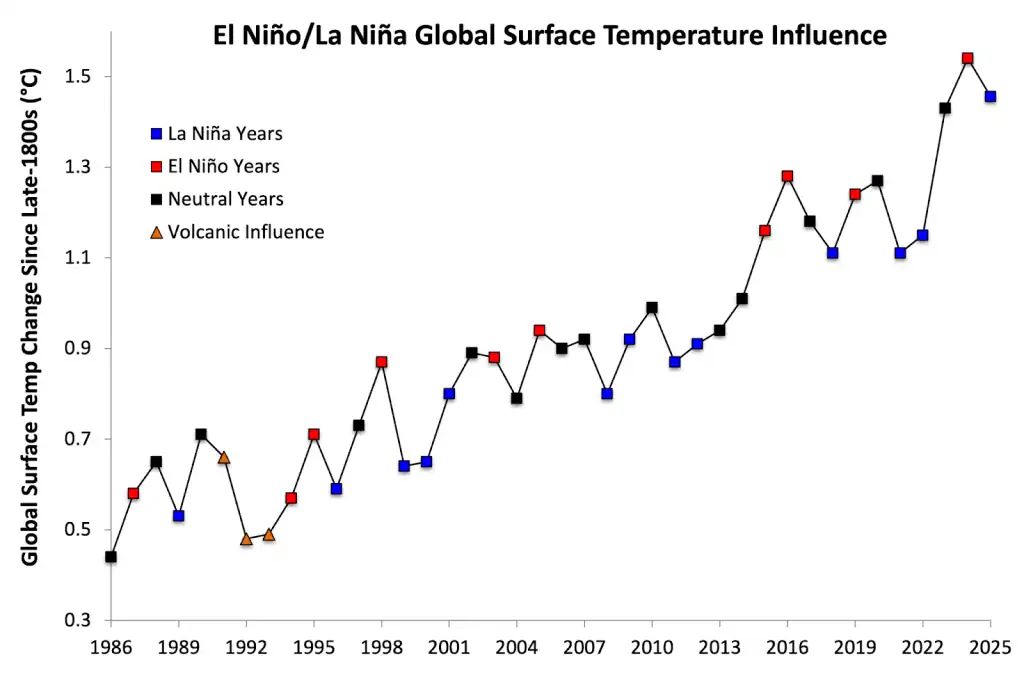
The domain of weather has transcended traditional observation, evolving into a high-stakes arena of computational power and planetary defense. As we navigate 2026, the intersection of Numerical Weather Prediction (NWP) and Generative AI is redefining how we predict atmospheric phenomena. With 2025 ranking as the third-warmest year on record and ocean heat content reaching unprecedented levels, the demand for hyper-local, accurate forecasting is critical for global economy and safety.
This report explores the mechanisms driving our planet’s weather—from the Jet Stream to Thermohaline Circulation—and evaluates the disruptive technologies like DeepMind’s GraphCast and Huawei’s Pangu-Weather that are challenging the dominance of traditional models like the ECMWF HRES.
The Core Science: Atmospheric Dynamics & Thermodynamics
Understanding weather requires mastering the fundamental forces that govern the atmosphere. At its core, weather is nature’s attempt to balance energy inequalities between the equator and the poles.
Key Meteorological Drivers
- Atmospheric Pressure Systems: The interplay between High Pressure (Anticyclones) and Low Pressure (Cyclones) dictates wind flow and precipitation patterns. Air moves from high to low pressure, creating the winds we experience.
- The Coriolis Effect: Caused by Earth’s rotation, this force deflects moving air to the right in the Northern Hemisphere and left in the Southern Hemisphere, shaping the rotation of hurricanes and large-scale storm systems.
- Frontal Boundaries: The collision zones between air masses of different temperatures and humidities—Cold Fronts, Warm Fronts, and Occluded Fronts—are the primary catalysts for severe weather events.
The 2026 Forecasting Revolution: AI vs. Physics-Based Models
The paradigm shift in meteorology is the integration of machine learning. While traditional NWP models rely on solving complex fluid dynamics equations, new AI models learn from historical data to predict future states with remarkable speed.
Leading AI Weather Models
In 2025 and 2026, several AI models demonstrated capabilities surpassing traditional systems in specific metrics:
- GraphCast (Google DeepMind): Utilizes Graph Neural Networks (GNNs) to predict weather up to 10 days in advance. It is noted for superior performance in tracking cyclone paths and atmospheric rivers.
- Pangu-Weather (Huawei): A 3D Earth-specific transformer model that significantly reduces computational costs while maintaining high accuracy for geopotential height and temperature fields.
- AIFS (ECMWF): The European Centre’s own data-driven forecasting system, blending their physics-based expertise with deep learning architectures.
Comparison: NWP vs. AI Forecasting
| Feature | Traditional NWP (e.g., GFS, ECMWF HRES) | AI-Based Models (e.g., GraphCast, Pangu) |
|---|---|---|
| Methodology | Physics equations (Fluid dynamics, Thermodynamics) | Deep Learning on historical datasets (Reanalysis data) |
| Computational Cost | Extremely High (Requires Supercomputers) | Low (Runs on GPUs/TPUs in minutes) |
| Extreme Events | Superior for unprecedented record-breaking extremes (Physics constraints) | Struggles with events outside training distribution (Regression to mean) |
| Use Case | Official guidance, long-term climate modeling | Rapid dissemination, ensemble forecasting, medium-range accuracy |
State of the Climate: 2025-2026 Transition
The transition from 2025 to 2026 is marked by significant shifts in the El Niño-Southern Oscillation (ENSO), a primary driver of global weather variability.
ENSO Cycle Update
Recent data from NOAA and WMO indicates that the weak La Niña conditions observed in late 2025 are rapidly decaying. Forecasters predict a transition to ENSO-neutral conditions by Spring 2026, with a rising probability of a new El Niño developing by late 2026. This shift suggests:
- Atlantic Hurricane Season: Potentially reduced wind shear later in 2026, which could historically favor storm formation, though La Niña’s exit usually suppresses Atlantic activity slightly compared to its peak.
- Global Temperatures: While 2025 was the 3rd warmest year, the potential return of El Niño could spike global temperatures again in 2027, making 2026 a temporary “cooler” anomaly, though still historically hot.
Extreme Weather Phenomena
2025 witnessed definitive adaptation limits being tested. Events like Hurricane Melissa and the intense flooding in the Mississippi River Valley underscored the growing intensity of Hydrological Extremes. The atmosphere’s increased water-holding capacity (Clausius-Clapeyron relation) is leading to more frequent “Rain Bombs” and Atmospheric River events.
Meteorological Glossary & Entities (LSI)
To understand modern forecasting, one must be familiar with these specific entities and terms:
Isobar: A line connecting points of equal atmospheric pressure.
Dew Point: The temperature at which air becomes saturated with water vapor.
Polar Vortex: A large area of low pressure and cold air surrounding both of the Earth’s poles.
Radiosonde: A battery-powered telemetry instrument carried into the atmosphere usually by a weather balloon.
NWP (Numerical Weather Prediction): The mathematical models used to predict the weather based on current weather conditions.
Advanced Topical Map Summary
This content is structured around the following high-authority topical clusters:
- Core Meteorology: Thermodynamics, Fluid Dynamics, Cloud Physics.
- Global Climate Patterns: ENSO (El Niño/La Niña), North Atlantic Oscillation (NAO), Indian Ocean Dipole.
- Technological Infrastructure: Geostationary Satellites (GOES-R), Polar Orbiting Satellites (JPSS), Doppler Radar, Supercomputing.
- AI & Computation: Machine Learning, Neural Networks, GraphCast, Deep Learning Transformers.
- Extreme Weather Entities: Tropical Cyclones, Heat Domes, Polar Vortex, Flash Floods.
Sources & References
- •
NOAA Climate Prediction Center – Winter 2025-26 Outlook - •
DeepMind – GraphCast: AI model for faster and more accurate global weather forecasting (Science, 2023) - •
ECMWF – Artificial Intelligence/Integrated Forecasting System (AIFS) documentation - •
World Weather Attribution – Extreme weather events in 2025 report - •
Carbon Brief – State of the Climate 2025 Analysis

2 Comments