Venezuela’s Crossroads: The Maduro Era and the Geopolitics of Survival
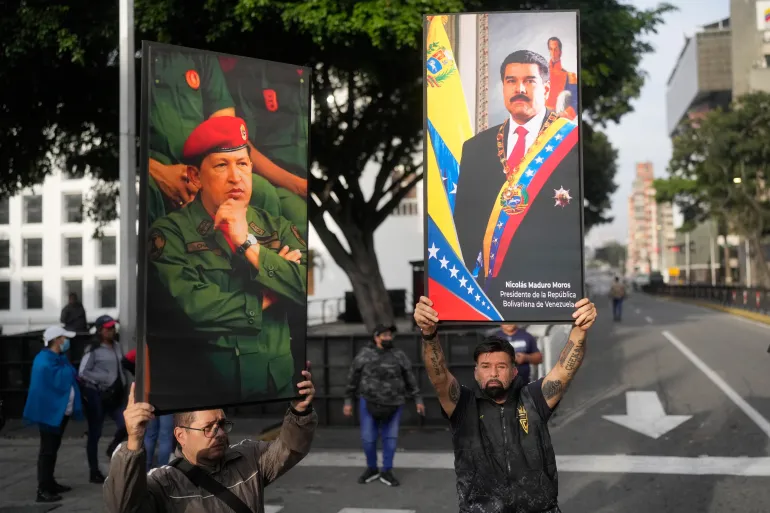
The narrative of modern Venezuela is a complex tapestry woven with threads of vast resource wealth, ideological fervor, and profound systemic collapse. At the center of this geopolitical storm stands Nicolás Maduro, a figure who has defied persistent predictions of his political demise.
Inheriting the mantle of the Bolivarian Revolution from Hugo Chávez, Maduro has presided over one of the most dramatic economic contractions in peace-time history. Yet, his grip on power remains firm, supported by a loyal military apparatus and strategic international alliances.
Understanding the current state of Venezuela requires looking beyond the headlines of hyperinflation. It demands a deep dive into the structural shifts within the United Socialist Party of Venezuela (PSUV) and the fractured opposition that struggles to present a unified front.
The Consolidation of Power in Miraflores
When Nicolás Maduro took office in 2013, he lacked the charisma and military pedigree of his predecessor. Many analysts viewed him as a transitional figure. However, through a combination of purging internal rivals and restructuring the judiciary, he solidified his authority over the Miraflores Palace.
The creation of the National Constituent Assembly in 2017 was a pivotal moment. It effectively sidelined the opposition-controlled National Assembly, allowing the executive branch to govern by decree. This move drew condemnation from the United States and the European Union but was instrumental in maintaining regime stability.
Maduro’s survival strategy relies heavily on the Bolivarian National Armed Forces (FANB). By placing military officials in key economic and cabinet positions, the administration has created a symbiotic relationship between the barracks and the state bureaucracy.
Economic Collapse and the Oil curse
Venezuela possesses the world’s largest proven oil reserves. Historically, PDVSA (the state-owned oil and natural gas company) was the engine of the nation’s economy. Under years of mismanagement, lack of investment, and later, crippling sanctions, production has plummeted.
The collapse of oil revenue exposed the fragility of a rentier state. Without petrodollars to subsidize imports, shortages of food and medicine became rampant. This triggered a hyperinflationary spiral that decimated the bolívar, the local currency.
In a surprising pragmatic turn, the Maduro administration has recently allowed a de facto dollarization of the economy. While not official policy, the circulation of US dollars has stabilized inflation rates slightly and returned some goods to store shelves, albeit at prices unaffordable for the public sector workforce.
Comparative Economic Indicators
The following table illustrates the dramatic shifts in Venezuela’s economic landscape over the last decade, highlighting the impact of the crisis and subsequent sanctions.
| Indicator | 2013 (Maduro Takes Office) | 2018 (Peak Crisis) | 2023-2024 (Est.) |
|---|---|---|---|
| Oil Production (bpd) | ~2.4 Million | ~1.3 Million | ~800,000 |
| Inflation Rate | ~56% | ~65,000% | ~190% |
| GDP Growth | +1.3% | -19.6% | +4% (Stabilizing) |
| Poverty Rate | ~29% | ~85% | ~82% |
The Geopolitical Chessboard
Venezuela has become a proxy battleground for great power competition in the Western Hemisphere. The United States has employed a strategy of “maximum pressure,” utilizing broad economic sanctions to isolate the regime. These measures blocked PDVSA from American markets and froze assets abroad.
In response, Maduro pivoted East. Russia and China have provided critical economic lifelines and diplomatic cover at the United Nations. Russia, in particular, has offered military technical assistance, while China remains a key creditor.
More recently, relations with Iran have deepened. Tehran has supplied gasoline and technicians to repair Venezuela’s crumbling refineries, illustrating how sanctioned nations are building parallel trade networks to bypass Western financial systems.
The Humanitarian Exodus
The socio-economic implosion has triggered the largest displacement crisis in Latin American history. According to the UN Refugee Agency, over 7.7 million Venezuelans have left the country. This exodus has strained social services in neighboring Colombia, Peru, and Brazil.
This migration is not just a demographic shift; it represents a massive “brain drain.” Engineers, doctors, and educators have fled, leaving a void in human capital that hampers recovery efforts. The remittances sent back by this diaspora have become a crucial safety net for families remaining in the country.
Political Opposition and the Path Forward
The Venezuelan opposition has faced significant challenges. Strategies have ranged from participating in elections to boycotting them, and from street protests to attempting to install an interim government under figures like Juan Guaidó.
The interim government strategy eventually lost momentum and international recognition. Now, the focus has shifted back to the electoral route. Leaders like María Corina Machado have galvanized support, yet the government often utilizes disqualifications to bar popular challengers from the ballot.
Recent negotiations, such as the Barbados Agreement, signaled a potential thaw. The US temporarily eased oil sanctions in exchange for electoral guarantees. However, the reinstatement of sanctions following the disqualification of opposition candidates highlights the volatility of these diplomatic efforts.
Future Scenarios
Looking ahead, the stability of the Maduro regime depends on oil prices and the ability to circumvent sanctions. If global energy demands rise, Venezuela’s heavy crude becomes a valuable geopolitical asset.
Conversely, internal dissatisfaction remains a dormant volcano. While the military remains loyal, the disparity between the dollarized elite and the impoverished majority creates a persistent tension. The future of Venezuela hangs between entrenched authoritarianism and the faint, difficult hope of democratic transition.
Sources & References
- •
United Nations High Commissioner for Refugees (UNHCR) – Venezuela Situation - •
International Monetary Fund (IMF) – World Economic Outlook Database - •
OPEC Annual Statistical Bulletin - •
Human Rights Watch – World Report: Venezuela - •
Congressional Research Service – Venezuela: Background and U.S. Relations
One Comment