Ukraine Strikes Russia’s #2 Oil Refinery Again: Will Oil Hit $200?
Ukraine has decisively escalated its ongoing energy war with a devastating, highly coordinated drone strike that has once again paralyzed Russia’s second-largest oil refinery. Coming in late March 2026, this unprecedented military and economic maneuver has sent shockwaves through the global geopolitical landscape, fundamentally destabilizing the world’s energy markets. The immediate aftermath of the strike has triggered a cascade of dire warnings from Moscow and international financial centers alike. With Putin’s energy envoy publicly predicting that crude oil prices will swiftly breach the $150 per barrel threshold, and multiple Fortune 500 energy and logistics CEOs bracing their shareholders for a worst-case scenario of $200 per barrel, the global economy stands on the precipice of a historic inflationary shock. This detailed analysis unpacks the strategic ramifications of the refinery attack, the ensuing commodity market panic, the technological evolution of drone warfare, and the broader macroeconomic fallout that threatens to redefine international trade and inflation metrics for the foreseeable future.
- The Strategic Bombing of Russia’s Second-Largest Refinery
- Assessing the Damage and Operational Standstill
- Global Oil Markets React: The March to $150 Per Barrel
- Putin’s Envoy Sounds the Alarm on Global Supply Chains
- Why CEOs Are Preparing for $200 Crude Oil
- The Ripple Effect on Global Economies and Logistics
- The Tactical Shift in Ukrainian Drone Warfare
- A New Era of Commodity Volatility in 2026
The Strategic Bombing of Russia’s Second-Largest Refinery
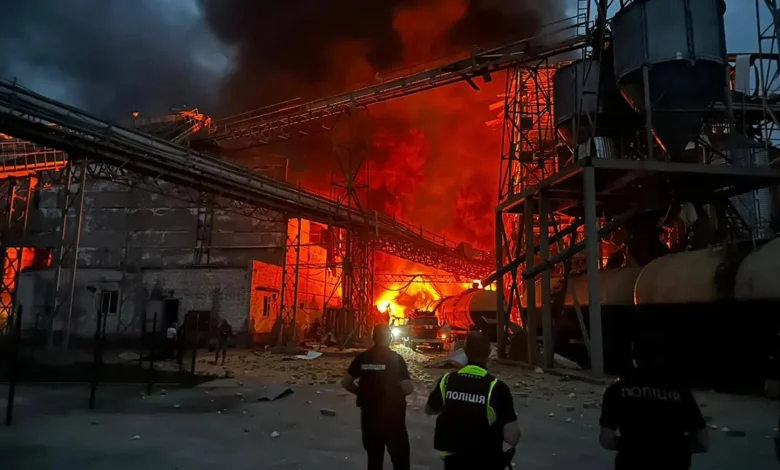
The strategic targeting of Russia’s critical hydrocarbon infrastructure is not a new tactic, but the scale and precision of this latest operation represent a massive leap in operational capabilities. The targeted facility, long considered a crown jewel in Russia’s downstream energy sector, processes hundreds of thousands of barrels of crude oil per day, converting raw extraction into high-margin diesel, aviation fuel, and gasoline. By striking the primary distillation units and the highly volatile cracking towers, the operation maximized structural damage while minimizing the payload required. Intelligence reports indicate that a swarm of advanced, low-observable autonomous drones bypassed multiple layers of Russian electronic warfare jamming and surface-to-air missile defenses. This event bears striking similarities to other recent infrastructure disruptions, such as the catastrophic Ust-Luga port fire, which previously crippled Russian export logistics. The destruction of the refinery’s primary catalytic cracking unit means that Russia cannot simply reroute crude; it loses the ability to produce refined products, creating severe domestic fuel shortages that will directly impact its military supply lines and internal civilian economy.
Assessing the Damage and Operational Standstill
Assessing the physical and financial damage reveals a catastrophic timeline for recovery. Energy analysts estimate that the refinery will be offline for a minimum of eight to twelve months. Under normal circumstances, repairing a primary distillation unit requires specialized engineering and massive capital investment. However, under the current regime of stringent Western sanctions, Russia is virtually cut off from the European and American manufacturers that produce the specialized compressors, turbines, and control systems required to rebuild modern refinery infrastructure. Consequently, Moscow is forced to cannibalize parts from older facilities or rely on inferior, gray-market components sourced through intermediaries, an approach that vastly increases the risk of industrial accidents upon restarting operations. The operational standstill immediately removes millions of gallons of refined diesel and jet fuel from both the Russian domestic market and its remaining shadow-fleet export networks, creating a vacuum that international markets are rushing to price in.
Global Oil Markets React: The March to $150 Per Barrel
The immediate reaction from the global oil markets has been nothing short of explosive. Brent crude and West Texas Intermediate (WTI) benchmarks saw their largest single-day percentage spikes since the onset of the conflict, surging aggressively as algorithmic trading desks and commodity hedge funds scrambled to cover short positions. The concept of the geopolitical risk premium has returned with a vengeance. For years, markets had somewhat normalized the conflict, assuming that Russian crude would continue to find its way to market via complex shadow shipping networks to Asia. However, the realization that Ukraine possesses both the will and the capability to systematically dismantle the physical infrastructure that processes this crude has shattered that complacency. The market panic is further exacerbated by concurrent global tensions, mirroring the intense commodity volatility previously seen during the Iran-Israel war geopolitical impact analysis. In response to the refinery strike, speculative buying has driven futures contracts into extreme backwardation, a market condition where near-term demand outstrips future supply expectations, signaling acute, immediate physical shortages.
Putin’s Envoy Sounds the Alarm on Global Supply Chains
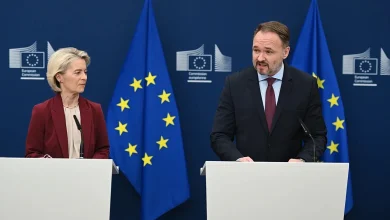
Adding fuel to the speculative fire, Putin’s energy envoy delivered a highly publicized and combative address, explicitly warning that the continuous degradation of Russian infrastructure will inevitably force global crude prices past the $150 per barrel mark. This rhetoric is a calculated element of Moscow’s hybrid warfare strategy. By stoking fear of astronomical energy costs, Russia aims to fracture Western political resolve and coerce energy-dependent nations into pressuring Ukraine to halt its infrastructure attacks. The envoy’s statements detailed how the loss of Russian refined products would force traditional buyers to compete aggressively for Middle Eastern and American output, creating a bidding war that would stretch global supply chains to their absolute breaking point. Furthermore, Moscow has threatened retaliatory strikes against energy infrastructure supplying Europe, raising the specter of a wider, uncontrolled energy war that could easily trigger force majeure declarations across major international shipping channels.
Why CEOs Are Preparing for $200 Crude Oil
While $150 per barrel is the immediate fear, multiple chief executive officers across the shipping, aviation, and logistics sectors are privately and publicly modeling scenarios where crude reaches an unthinkable $200 per barrel. This is not mere hyperbole; it is a mathematical consequence of inelastic demand colliding with fragile supply networks. If Russia’s refining capacity is permanently degraded, and OPEC+ nations maintain their strict production quotas to maximize revenue, the market has no excess buffer to absorb any further shocks. Transport CEOs are particularly vulnerable. Jet fuel and marine bunker fuel costs represent the largest variable expenses for these industries. If oil reaches $200, the cost of moving goods across the Pacific or the Atlantic will triple, effectively wiping out profit margins and forcing unprecedented freight rate hikes. To contextualize the broader macro environment, these executives are relying on data provided by entities like the International Energy Agency (IEA) reports, which continue to revise global supply forecasts downward in the wake of the attacks.
Geopolitical Risk Premium Hits Unprecedented Levels
The geopolitical risk premium—the extra amount buyers are willing to pay for immediate physical delivery due to fear of future disruptions—is currently driving market behavior more than actual supply-demand fundamentals. Traders are not just pricing in the loss of this single Russian refinery; they are pricing in the probability that Ukraine will strike the remaining top-tier facilities. If three or four of Russia’s mega-refineries are incapacitated simultaneously, millions of barrels of crude will be stranded internally, unable to be processed or exported efficiently. This scenario creates a massive bottleneck that chokes off government revenue while simultaneously starving the global market of vital distillates.
The Ripple Effect on Global Economies and Logistics
The downstream macroeconomic consequences of a prolonged period of hyper-elevated oil prices are devastating. Since the post-pandemic recovery, global central banks have fought a grueling battle against inflation. A sudden surge in energy costs to $150 or $200 per barrel threatens to undo years of monetary tightening. Higher fuel costs directly translate into higher prices for everything from agricultural fertilizers and raw materials to consumer goods sitting on supermarket shelves. This dynamic forces central banks into an impossible dilemma: resume hiking interest rates to combat energy-driven inflation—thereby risking a deep, synchronized global recession—or accept structurally higher inflation, which destroys consumer purchasing power. The interconnectedness of these events heavily influences domestic political landscapes as well, drawing parallels to the economic anxieties shaping Donald Trump’s geopolitical shifts and market impacts in the current election cycle. Energy security has suddenly returned as the paramount issue for industrialized economies, exposing the fragility of a globalized system that relies on just-in-time delivery and cheap hydrocarbon fuel.
Energy Independence vs. Inflationary Pressures
As governments scramble to secure alternative energy sources, the debate over domestic energy independence has reached a fever pitch. Western nations are heavily incentivizing domestic production, but establishing new refining capacity or drastically expanding renewable grids requires years of lead time and trillions in capital investment. In the interim, consumers bear the brunt of the inflationary wave. Energy poverty, once considered an issue relegated to developing nations, is becoming a pressing concern for the middle classes in Europe and North America. Governments are being forced to consider drastic measures, including strategic petroleum reserve releases, windfall taxes on energy majors, and heavy subsidies for public transportation to stave off widespread civil unrest stemming from astronomical living costs.
The Tactical Shift in Ukrainian Drone Warfare
The operational success of this refinery strike underscores a monumental tactical shift in modern asymmetric warfare. Ukraine has rapidly accelerated its indigenous drone manufacturing capabilities, transitioning from reliance on off-the-shelf commercial drones to deploying highly sophisticated, long-range loitering munitions capable of autonomous navigation. These new platforms utilize advanced terrain-mapping algorithms and AI-driven target recognition to identify the most vulnerable, high-value components of industrial facilities, such as distillation columns and control rooms. By flying at extremely low altitudes, they evade traditional radar detection, rendering Russia’s multi-billion-dollar air defense networks largely obsolete against this specific threat matrix. This democratization of precision-strike capability means that a relatively low-cost weapon system—often costing tens of thousands of dollars—can inflict billions of dollars in economic damage, shifting the cost-benefit calculus of modern warfare heavily in favor of the agile attacker.
A New Era of Commodity Volatility in 2026
As we navigate through the remainder of 2026, the destruction of Russia’s second-largest oil refinery stands as a watershed moment in the intersection of military conflict and global economics. The era of stable, predictable commodity prices has definitively ended, replaced by an environment of extreme volatility driven by real-time geopolitical events. Investors and institutional funds are rapidly diversifying their portfolios, seeking safe havens not only in traditional assets but also in precious metals, as detailed in recent silver price dynamics reports. The reality is stark: as long as critical energy infrastructure remains a viable and highly effective military target, the threat of $150 to $200 oil will loom large over the global economy. Companies, consumers, and governments must fundamentally reassess their energy strategies, supply chain resilience, and economic forecasts to survive in a world where the weaponization of energy infrastructure is the new standard of warfare.
| Oil Price Scenario | Market Catalyst | Expected Economic Impact | Logistics Sector Consequence |
|---|---|---|---|
| $100 – $120 / Barrel | Baseline tension; partial refinery capacity offline. | Elevated inflation, delayed central bank rate cuts. | Moderate freight rate increases; surcharges applied. |
| $120 – $150 / Barrel | Putin’s Envoy Prediction; multiple refineries destroyed. | Severe global inflation spike, potential mild recession. | Major supply chain delays; bankruptcies in small carriers. |
| $150 – $200 / Barrel | CEO Worst-Case; wider Middle East / European energy war. | Global economic recession; massive wealth destruction. | Paralyzed shipping routes; emergency government interventions. |
Ultimately, the resilience of the global market will be tested like never before. The continued destruction of Russian refining capacity not only alters the trajectory of the immediate military conflict but permanently redraws the map of global energy distribution, demanding unprecedented adaptation from every sector of the international economy.